
Stress and Reward Dysregulation in Neuropsychiatric Disorders: From Mechanisms to Clinical Applications

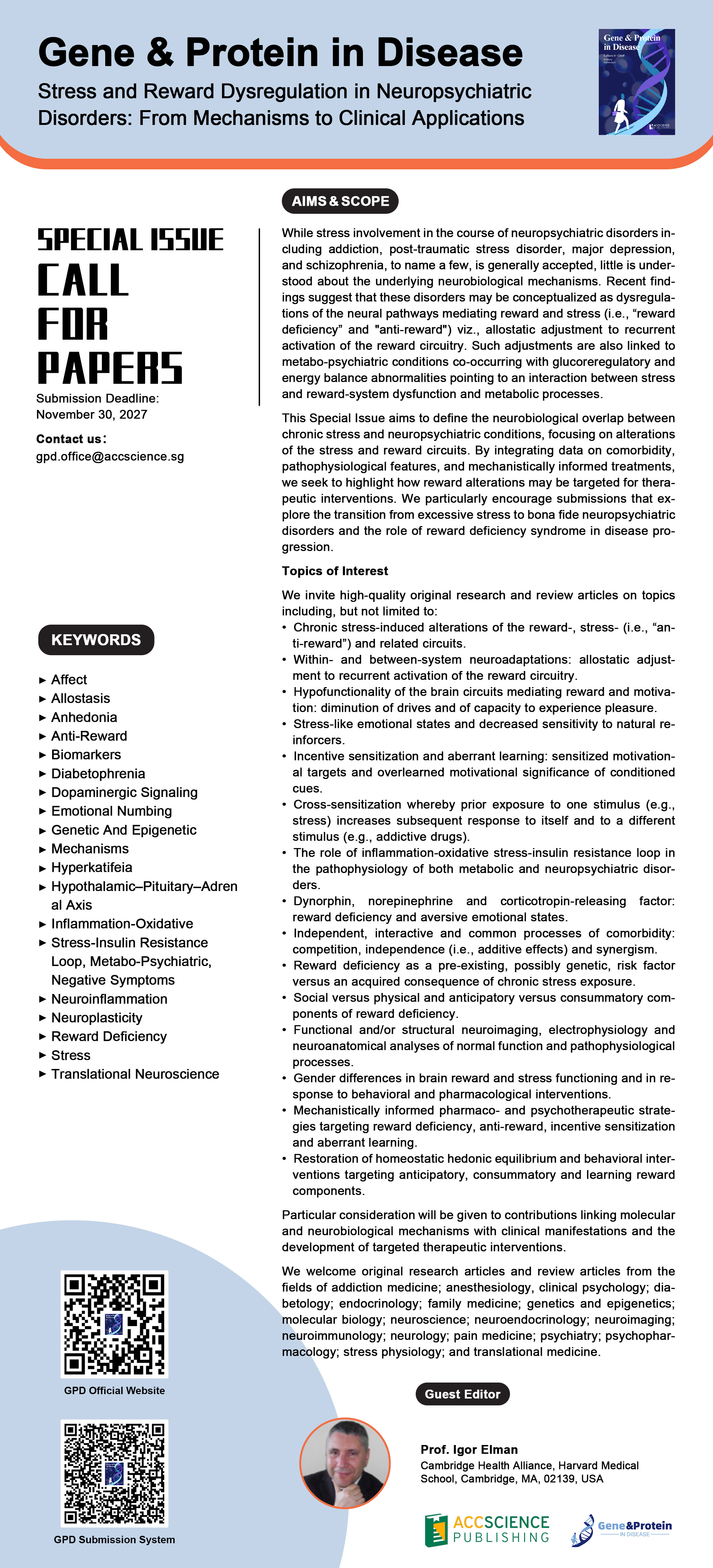
Aims and Scope
While stress involvement in the course of neuropsychiatric disorders including addiction, post-traumatic stress disorder, major depression, and schizophrenia, to name a few, is generally accepted, little is understood about the underlying neurobiological mechanisms. Recent findings suggest that these disorders may be conceptualized as dysregulations of the neural pathways mediating reward and stress (i.e., “reward deficiency” and "anti-reward") viz., allostatic adjustment to recurrent activation of the reward circuitry. Such adjustments are also linked to metabo-psychiatric conditions co-occurring with glucoreregulatory and energy balance abnormalities pointing to an interaction between stress and reward-system dysfunction and metabolic processes.
This Special Issue aims to define the neurobiological overlap between chronic stress and neuropsychiatric conditions, focusing on alterations of the stress and reward circuits. By integrating data on comorbidity, pathophysiological features, and mechanistically informed treatments, we seek to highlight how reward alterations may be targeted for therapeutic interventions. We particularly encourage submissions that explore the transition from excessive stress to bona fide neuropsychiatric disorders and the role of reward deficiency syndrome in disease progression.
Topics of Interest
We invite high-quality original research and review articles on topics including, but not limited to:
- Chronic stress-induced alterations of the reward-, stress- (i.e., “anti-reward”) and related circuits.
- Within- and between-system neuroadaptations: allostatic adjustment to recurrent activation of the reward circuitry.
- Hypofunctionality of the brain circuits mediating reward and motivation: diminution of drives and of capacity to experience pleasure.
- Stress-like emotional states and decreased sensitivity to natural reinforcers.
- Incentive sensitization and aberrant learning: sensitized motivational targets and overlearned motivational significance of conditioned cues.
- Cross-sensitization whereby prior exposure to one stimulus (e.g., stress) increases subsequent response to itself and to a different stimulus (e.g., addictive drugs).
- The role of inflammation-oxidative stress-insulin resistance loop in the pathophysiology of both metabolic and neuropsychiatric disorders.
- Dynorphin, norepinephrine and corticotropin-releasing factor: reward deficiency and aversive emotional states.
- Independent, interactive and common processes of comorbidity: competition, independence (i.e., additive effects) and synergism.
- Reward deficiency as a pre-existing, possibly genetic, risk factor versus an acquired consequence of chronic stress exposure.
- Social versus physical and anticipatory versus consummatory components of reward deficiency.
- Functional and/or structural neuroimaging, electrophysiology and neuroanatomical analyses of normal function and pathophysiological processes.
- Gender differences in brain reward and stress functioning and in response to behavioral and pharmacological interventions.
- Mechanistically informed pharmaco- and psychotherapeutic strategies targeting reward deficiency, anti-reward, incentive sensitization and aberrant learning.
- Restoration of homeostatic hedonic equilibrium and behavioral interventions targeting anticipatory, consummatory and learning reward components.
Particular consideration will be given to contributions linking molecular and neurobiological mechanisms with clinical manifestations and the development of targeted therapeutic interventions.
We welcome original research articles and review articles from the fields of addiction medicine; anesthesiology, clinical psychology; diabetology; endocrinology; family medicine; genetics and epigenetics; molecular biology; neuroscience; neuroendocrinology; neuroimaging; neuroimmunology; neurology; pain medicine; psychiatry; psychopharmacology; stress physiology; and translational medicine.