

1. Western University of Health Sciences, Graduate School of Biomedical Science, Pomona, CA, United States;
2. Department of Psychiatry Wright University Boonshoft School of Medicine, Dayton, OH, United States;
3. Human Integrated Services Unit University of Vermont Center for Clinical & Translational Science, College of Medicine, Burlington, VT, United StatesGenetics of Alcoholism; Neuropsychiatry and Genetics; Nutritional Genetics; Pharmacogenetics
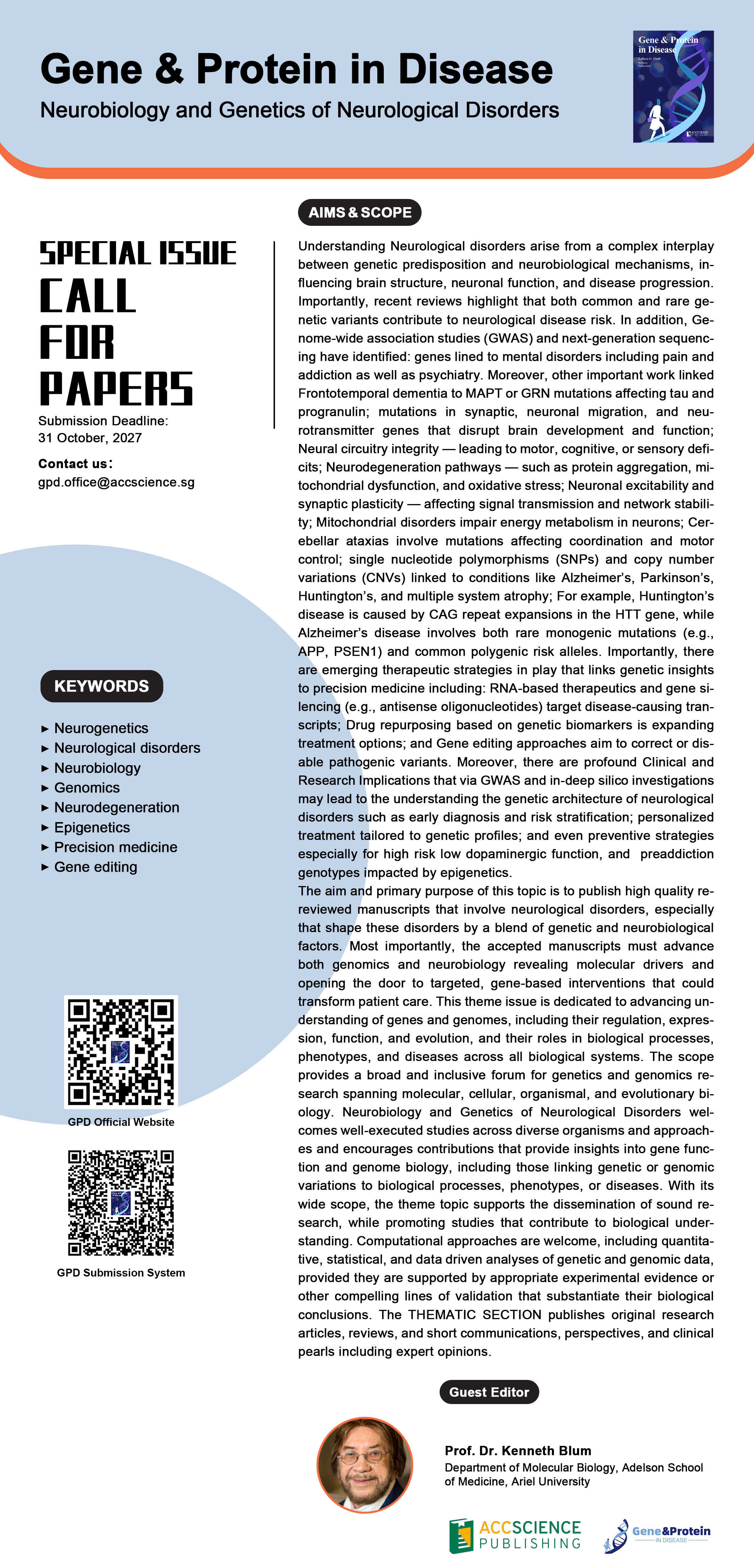
Understanding Neurological disorders arise from a complex interplay between genetic predisposition and neurobiological mechanisms, influencing brain structure, neuronal function, and disease progression. Importantly, recent reviews highlight that both common and rare genetic variants contribute to neurological disease risk. In addition, Genome-wide association studies (GWAS) and next-generation sequencing have identified: genes lined to mental disorders including pain and addiction as well as psychiatry. Moreover, other important work linked Frontotemporal dementia to MAPT or GRN mutations affecting tau and progranulin; mutations in synaptic, neuronal migration, and neurotransmitter genes that disrupt brain development and function; Neural circuitry integrity — leading to motor, cognitive, or sensory deficits; Neurodegeneration pathways — such as protein aggregation, mitochondrial dysfunction, and oxidative stress; Neuronal excitability and synaptic plasticity — affecting signal transmission and network stability; Mitochondrial disorders impair energy metabolism in neurons; Cerebellar ataxias involve mutations affecting coordination and motor control; single nucleotide polymorphisms (SNPs) and copy number variations (CNVs) linked to conditions like Alzheimer’s, Parkinson’s, Huntington’s, and multiple system atrophy; For example, Huntington’s disease is caused by CAG repeat expansions in the HTT gene, while Alzheimer’s disease involves both rare monogenic mutations (e.g., APP, PSEN1) and common polygenic risk alleles. Importantly, there are emerging therapeutic strategies in play that links genetic insights to precision medicine including: RNA-based therapeutics and gene silencing (e.g., antisense oligonucleotides) target disease-causing transcripts; Drug repurposing based on genetic biomarkers is expanding treatment options; and Gene editing approaches aim to correct or disable pathogenic variants. Moreover, there are profound Clinical and Research Implications that via GWAS and in-deep silico investigations may lead to the understanding the genetic architecture of neurological disorders such as early diagnosis and risk stratification; personalized treatment tailored to genetic profiles; and even preventive strategies especially for high risk low dopaminergic function, and preaddiction genotypes impacted by epigenetics.
The aim and primary purpose of this topic is to publish high quality rereviewed manuscripts that involve neurological disorders, especially that shape these disorders by a blend of genetic and neurobiological factors. Most importantly, the accepted manuscripts must advance both genomics and neurobiology revealing molecular drivers and opening the door to targeted, gene-based interventions that could transform patient care. This theme issue is dedicated to advancing understanding of genes and genomes, including their regulation, expression, function, and evolution, and their roles in biological processes, phenotypes, and diseases across all biological systems. The scope provides a broad and inclusive forum for genetics and genomics research spanning molecular, cellular, organismal, and evolutionary biology. Neurobiology and Genetics of Neurological Disorders welcomes well-executed studies across diverse organisms and approaches and encourages contributions that provide insights into gene function and genome biology, including those linking genetic or genomic variations to biological processes, phenotypes, or diseases. With its wide scope, the theme topic supports the dissemination of sound research, while promoting studies that contribute to biological understanding. Computational approaches are welcome, including quantitative, statistical, and data driven analyses of genetic and genomic data, provided they are supported by appropriate experimental evidence or other compelling lines of validation that substantiate their biological conclusions. The THEMATIC SECTION publishes original research articles, reviews, and short communications, perspectives, and clinical pearls including expert opinions.