




Research scholar, Symbiosis International (Deemed University), Pune, IndiaHospital Management, Healthcare
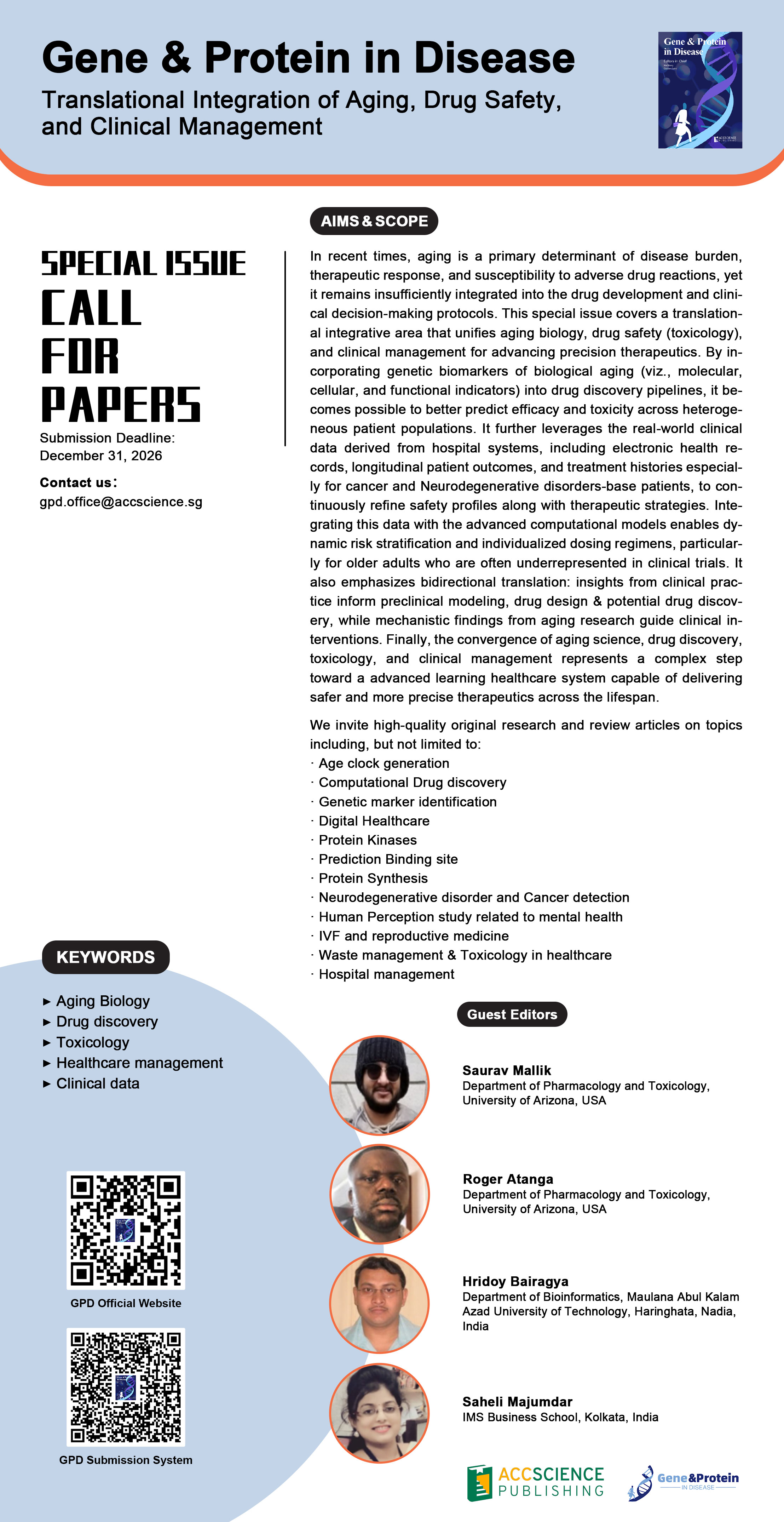
In recent times, aging is a primary determinant of disease burden, therapeutic response, and susceptibility to adverse drug reactions, yet it remains insufficiently integrated into the drug development and clinical decision-making protocols. This special issue covers a translational integrative area that unifies aging biology, drug safety (toxicology), and clinical management for advancing precision therapeutics. By incorporating genetic biomarkers of biological aging (viz., molecular, cellular, and functional indicators) into drug discovery pipelines, it becomes possible to better predict efficacy and toxicity across heterogeneous patient populations. It further leverages the real-world clinical data derived from hospital systems, including electronic health records, longitudinal patient outcomes, and treatment histories especially for cancer and Neurodegenerative disorders-base patients, to continuously refine safety profiles along with therapeutic strategies. Integrating this data with the advanced computational models enables dynamic risk stratification and individualized dosing regimens, particularly for older adults who are often underrepresented in clinical trials. It also emphasizes bidirectional translation: insights from clinical practice inform preclinical modeling, drug design & potential drug discovery, while mechanistic findings from aging research guide clinical interventions. Finally, the convergence of aging science, drug discovery, toxicology, and clinical management represents a complex step toward a advanced learning healthcare system capable of delivering safer and more precise therapeutics across the lifespan.
We invite high-quality original research and review articles on topics including, but not limited to:
- Age clock generation
- Computational Drug discovery
- Genetic marker identification
- Digital Healthcare
- Protein Kinases
- Prediction Binding site
- Protein Synthesis
- Neurodegenerative disorder and Cancer detection
- Human Perception study related to mental health
- IVF and reproductive medicine
- Waste management & Toxicology in healthcare
- Hospital management