
Application and design of artificial intelligence in computer-aided drug design for ischemic stroke

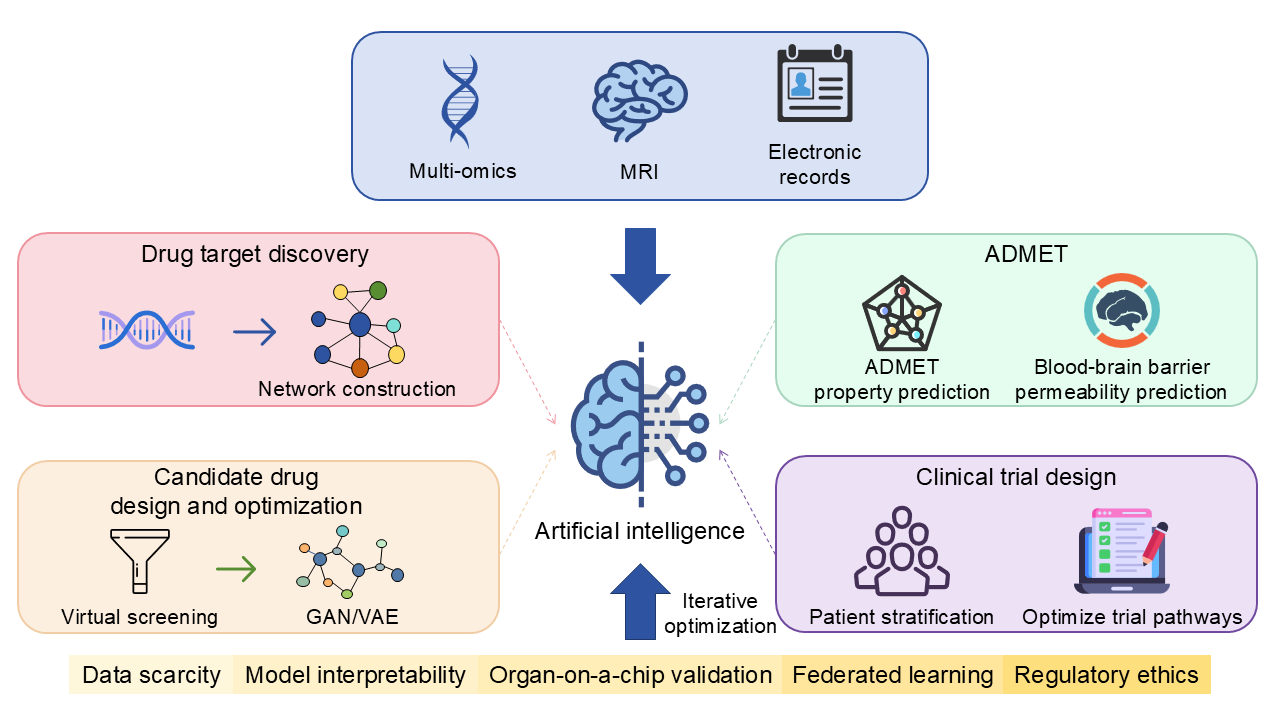
The development of drugs for ischemic stroke has long been plagued by the dilemma of high investment, high attrition, and low translational success rates. This narrative review summarizes the application of artificial intelligence (AI) in ischemic stroke drug design, specifically encompassing intelligent target mining, the generation and optimization of lead compounds, early prediction of pharmacokinetics/toxicity (ADMET), and the optimization of clinical trial protocols. Although AI-aided drug design has progressed from a theoretical concept to practical validation, significant challenges remain in data quality, model interpretability, and clinical translation. However, with ongoing efforts such as the construction of high-quality multimodal databases and the advancement of explainable AI models, artificial intelligence holds considerable promise for continuously driving the discovery of novel therapeutics for stroke treatment.
- Tao T, Liu M, Chen M, et al. Natural medicine in neuroprotection for ischemic stroke: Challenges and prospective. Pharmacol Ther. 2020;216:107695. doi: 10.1016/j.pharmthera.2020.107695
- Hilkens NA, Casolla B, Leung TW, de Leeuw FE. Stroke. Lancet. 2024;403(10446):2820-2836. doi: 10.1016/s0140-6736(24)00642-1
- Tang X, Jiang L, Luo Y, et al. Leukoaraiosis and acute ischemic stroke. Eur J Neurosci. 2021;54(6):6202-6213. doi: 10.1111/ejn.15406
- Hurford R, Sekhar A, Hughes TAT, Muir KW. Diagnosis and management of acute ischaemic stroke. Pract Neurol. 2020;20(4):304-316. doi: 10.1136/practneurol-2020-002557
- Zhao M, Wang J, Liu G, et al. Multi-Target and Multi- Phase Adjunctive Cerebral Protection for Acute Ischemic Stroke in the Reperfusion Era. Biomolecules. 20 2024;14(9) doi:10.3390/biom14091181
- Bansal S, Sangha KS, Khatri P. Drug treatment of acute ischemic stroke. Am J Cardiovasc Drugs. 2013;13(1):57-69. doi: 10.1007/s40256-013-0007-6
- Chamorro Á, Dirnagl U, Urra X, Planas AM. Neuroprotection in acute stroke: targeting excitotoxicity, oxidative and nitrosative stress, and inflammation. Lancet Neurol. 2016;15(8):869-881. doi: 10.1016/s1474-4422(16)00114-9
- Li Y, Yang J, Zhang Y, Meng Q, Bender A, Chen X. Computational drug repositioning for ischemic stroke: neuroprotective drug discovery. Future Med Chem. 2021;13(15):1271-1283. doi: 10.4155/fmc-2021-0022
- Zhong F, Xing J, Li X, et al. Artificial intelligence in drug design. Sci China Life Sci. 2018;61(10):1191-1204. doi: 10.1007/s11427-018-9342-2
- Meng XF, Zheng Z, Yang L, Yang C, Li XL, Hao YF. Dynamic mechanisms and targeted interventions in cerebral ischemia-reperfusion injury: pathological cascade from ischemia to reperfusion and promising therapeutic strategies. Front Neurosci 2025; 18:191649533. doi: 10.3389/fnins.2025.1649533
- Seo S, Lee JW. Applications of Big Data and AI-Driven Technologies in CADD (Computer-Aided Drug Design). Methods Mol Biol. 2024;2714:295-305. doi: 10.1007/978-1-0716-3441-7_16
- Wu Z, Chen S, Wang Y, et al. Current perspectives and trend of computer-aided drug design: a review and bibliometric analysis. Int J Surg. 2024;110(6):3848-3878. doi: 10.1097/js9.0000000000001289
- Zhao LL, Ciallella HL, Aleksunes LM, Zhu H. Advancing computer-aided drug discovery (CADD) by big data and data-driven machine learning modeling. Drug Discov Today. 2020;25(9):1624-1638. doi: 10.1016/j.drudis.2020.07.005
- Khoei TT, Slimane HO, Kaabouch N. Deep learning: systematic review, models, challenges, and research directions. Neural Comput Appl. 2023;35(31):23103-23124. doi: 10.1007/s00521-023-08957-4
- Zhang Y, Luo M, Wu P, Wu S, Lee TY, Bai C. Application of Computational Biology and Artificial Intelligence in Drug Design. Int J Mol Sci. 2022;23(21). doi: 10.3390/ijms232113568
- Sortino M, Trovato B, Chiaramonte R, et al. The Role of Artificial Intelligence and Professional Expertise in Adapted Physical Activity Prescription for Orthopedic Rehabilitation. J Funct Morphol Kinesiol. 2026;11(1):113. doi: 10.3390/jfmk11010113
- Peng JJ, Zhang YY, Li RF, et al. Hybrid approach for drug-target interaction predictions in ischemic stroke models. Artif Intell Med. 2025;161:103067. doi: 10.1016/j.artmed.2025.103067
- Li Z, Zhang X, Ding L, et al. Rationale and design of the GOLDEN BRIDGE II: a cluster-randomised multifaceted intervention trial of an artificial intelligence-based cerebrovascular disease clinical decision support system to improve stroke outcomes and care quality in China. Stroke Vasc Neurol. 2024;9(6):723-729. doi: 10.1136/svn-2023-002411
- Qin C, Yang S, Chu YH, et al. Signaling pathways involved in ischemic stroke: molecular mechanisms and therapeutic interventions. Signal Transduct Target Ther. 2022;7(1):215. doi: 10.1038/s41392-022-01064-1
- Zhou J, Lei Y, Zhang S, Liu Y, Yi D. Panaxadiol Attenuates Neuronal Oxidative Stress and Apoptosis in Cerebral Ischemia/Reperfusion Injury via Regulation of the JAK3/ STAT3/HIF-1α Signaling Pathway. CNS Neurosci Ther. 2025;31(2):e70233. doi: 10.1111/cns.70233
- Pun FW, Ozerov IV, Zhavoronkov A. AI-powered therapeutic target discovery. Trends Pharmacol Sci. 2023;44(9):561-572. doi: 10.1016/j.tips.2023.06.010
- Jia J, Niu L, Feng P, et al. Identification of Novel Biomarkers for Ischemic Stroke Through Integrated Bioinformatics Analysis and Machine Learning. J Mol Neurosci. 2025;75(1):13. doi: 10.1007/s12031-025-02309-8
- Hei C, Li X, Wang R, et al. Machine learning analysis of gene expression profiles of pyroptosis-related differentially expressed genes in ischemic stroke revealed potential targets for drug repurposing. Sci Rep. 2025;15(1):7035. doi: 10.1038/s41598-024-83555-5
- Liu L, Cai Y, Deng C. Identification of ANXA3 as a biomarker associated with pyroptosis in ischemic stroke. Eur J Med Res. 2023;28(1):596. doi: 10.1186/s40001-023-01564-y
- Mo J, Ning D, Chen S, et al. Construction of a diagnostic prediction model for ischemic stroke using lactylation-related genes. Front Mol Neurosci. 2025;18:1672374. doi: 10.3389/fnmol.2025.1672374
- Gupta R, Srivastava D, Sahu M, Tiwari S, Ambasta RK, Kumar P. Artificial intelligence to deep learning: machine intelligence approach for drug discovery. Mol Divers. 2021;25(3):1315-1360. doi: 10.1007/s11030-021-10217-3
- Doytchinova I. Drug design—past, present, future. Molecules. 2022;27(5):1496. doi: 10.3390/molecules27051496
- Ferreira LG, Dos Santos RN, Oliva G, Andricopulo AD. Molecular docking and structure-based drug design strategies. Molecules. 2015;20(7):13384-421. doi: 10.3390/molecules200713384
- Jastrzębski S, Szymczak M, Pocha A, et al. Emulating Docking Results Using a Deep Neural Network: A New Perspective for Virtual Screening. J Chem Inf Model. 2020;60(9):4246-4262. doi: 10.1021/acs.jcim.9b01202
- Gu S, Shen C, Zhang X, et al. Benchmarking AI-powered docking methods from the perspective of virtual screening. Nat Mach Intell. 2025;7(3):509-520. doi: 10.1038/s42256-025-00993-0
- Cao Z, Sciabola S, Wang Y. Large-Scale Pretraining Improves Sample Efficiency of Active Learning-Based Virtual Screening. J Chem Inf Model. 2024;64(6):1882-1891. doi: 10.1021/acs.jcim.3c01938
- Jiang J, Li D, Wang G, Wei GW. Recent advances in machine learning predictions of protein-ligand binding affinities. Curr Opin Struct Biol. 2026;96:103193. doi: 10.1016/j.sbi.2025.103193
- Yang L, Yang G, Chen X, et al. Deep Scoring Neural Network Replacing the Scoring Function Components to Improve the Performance of Structure-Based Molecular Docking. ACS Chem Neurosci. 2021;12(12):2133-2142. doi: 10.1021/acschemneuro.1c00110
- Liu J, Wang P, Lian P, Qin J. An ischemic stroke-on-a-chip model integrated with machine learning for screening of drug candidates. Lab Chip. 2025;25(24):6517-6532. doi: 10.1039/d5lc00517e
- Ashtawy HM, Mahapatra NR. Machine-learning scoring functions for identifying native poses of ligands docked to known and novel proteins. BMC Bioinform. 2015;16 Suppl 6(Suppl 6):S3. doi: 10.1186/1471-2105-16-s6-s3
- Meng Q, Liu Q, Mi Y, et al. Multi-dimensional data-driven computational drug repurposing strategy for screening novel neuroprotective agents in ischemic stroke. Theranostics. 2025;15(15):7653-7676. doi: 10.7150/thno.112608
- Zhou J, Li C, Yue Y, Kim YK, Park S. Multitarget Natural Compounds for Ischemic Stroke Treatment: Integration of Deep Learning Prediction and Experimental Validation. J Chem Inf Model. 2025;65(7):3309-3323. doi: 10.1021/acs.jcim.5c00135
- Kapoor S, Narayanan A. Leakage and the reproducibility crisis in machine-learning-based science. Patterns. 2023;4(9):100804. doi: 10.1016/j.patter.2023.100804
- Starcke J, Spadafora J, Spadafora J, Spadafora P, Toma M. The Effect of Data Leakage and Feature Selection on Machine Learning Performance for Early Parkinson’s Disease Detection. Bioengineering. 2025;12(8):845. doi: 10.3390/bioengineering12080845
- Chen L, Blay V, Ballester PJ, Houston DR. SCORCH2: A Generalized Heterogeneous Consensus Model for High- Enrichment Interaction-Based Virtual Screening. Adv Sci. 2025;12(42):e08318. doi: 10.1002/advs.202508318
- Quiroga R, Villarreal MA. Developing Generalizable Scoring Functions for Molecular Docking: Challenges and Perspectives. Curr Med Chem. 2025;32(28):5960-5972. doi: 10.2174/0109298673334469241017053508
- Ocana A, Pandiella A, Privat C, et al. Integrating artificial intelligence in drug discovery and early drug development: a transformative approach. Biomark Res. 2025;13(1):45. doi: 10.1186/s40364-025-00758-2
- Jayasrilakshmi S, Mahapatra A. Generative AI in medicine: A thorough examination of applications, challenges, and future perspectives. Comput Biol Med. 2026;203:111469. doi: 10.1016/j.compbiomed.2026.111469
- Hu C, Li S, Yang C, et al. ScaffoldGVAE: scaffold generation and hopping of drug molecules via a variational autoencoder based on multi-view graph neural networks. J Cheminform. 2023;15(1):91. doi: 10.1186/s13321-023-00766-0
- Özçelik R, Grisoni F. How evaluation choices distort the outcome of generative drug discovery. J Cheminform. 2025;17(1):169. doi: 10.1186/s13321-025-01108-y
- van den Broek RL, Patel S, van Westen GJP, Jespers W, Sherman W. In Search of Beautiful Molecules: A Perspective on Generative Modeling for Drug Design. J Chem Inf Model. 2025;65(18):9383-9397. doi: 10.1021/acs.jcim.5c01203
- Yi JC, Yang ZY, Zhao WT, et al. ChemMORT: an automatic ADMET optimization platform using deep learning and multi-objective particle swarm optimization. Brief Bioinform. 2024;25(2)doi:10.1093/bib/bbae008
- Wang M, Li S, Wang J, et al. ClickGen: Directed exploration of synthesizable chemical space via modular reactions and reinforcement learning. Nat Commun. 2024;15(1):10127. doi: 10.1038/s41467-024-54456-y
- Bhowmik D, Zhang P, Fox Z, Irle S, Gounley J. Enhancing molecular design efficiency: Uniting language models and generative networks with genetic algorithms. Patterns. 2024;5(4):100947. doi: 10.1016/j.patter.2024.100947
- Yoshizawa T, Ishida S, Sato T, Ohta M, Honma T, Terayama K. A data-driven generative strategy to avoid reward hacking in multi-objective molecular design. Nat Commun. 2025;16(1):2409. doi: 10.1038/s41467-025-57582-3
- Dulsat J, López-Nieto B, Estrada-Tejedor R, Borrell JI. Evaluation of Free Online ADMET Tools for Academic or Small Biotech Environments. Molecules. 2023;28(2)776. doi: 10.3390/molecules28020776
- Ferreira LLG, Andricopulo AD. ADMET modeling approaches in drug discovery. Drug Discov Today. 2019;24(5):1157-1165. doi: 10.1016/j.drudis.2019.03.015
- Fan NN, Chen J, Wang JH, Chen ZS, Yang YF. Bridging data and drug development: Machine learning approaches for next-generation ADMET prediction. Drug Discov Today. 2025;30(11)104487. doi: 10.1016/j.drudis.2025.104487
- Zhang JY, Li HL, Zhang YC, et al. Computational toxicology in drug discovery: applications of artificial intelligence in ADMET and toxicity prediction. Brief Bioinform. 2025;26(5) bbaf533. doi: 10.1093/bib/bbaf533
- Peteani G, Huynh MTD, Gerebtzoff G, Rodríguez-Pérez R. Application of machine learning models for property prediction to targeted protein degraders. Nat Commun. 2024;15(1):5764. doi: 10.1038/s41467-024-49979-3
- Fang C, Wang Y, Grater R, et al. Prospective Validation of Machine Learning Algorithms for Absorption, Distribution, Metabolism, and Excretion Prediction: An Industrial Perspective. J Chem Inf Model. 2023;63(11):3263-3274. doi: 10.1021/acs.jcim.3c00160
- Han H, Shaker B, Lee JH, et al. Employing Automated Machine Learning (AutoML) Methods to Facilitate the In Silico ADMET Properties Prediction. J Chem Inf Model. 2025;65(7):3215-3225. doi: 10.1021/acs.jcim.4c02122
- Myung Y, de Sá AGC, Ascher DB. Deep-PK: deep learning for small molecule pharmacokinetic and toxicity prediction. Nucleic Acids Res. 2024;52(W1):W469-w475. doi: 10.1093/nar/gkae254
- Pyka P, Garbo S, Murzyn A, et al. Unlocking the potential of higher-molecular-weight 5-HT(7)R ligands: Synthesis, affinity, and ADMET examination. Bioorg Chem. 2024;151:107668. doi: 10.1016/j.bioorg.2024.107668
- Blicharz-Futera K, Kamiński M, Grychowska K, Canale V, Zajdel P. Current development in sulfonamide derivatives to enable CNS-drug discovery. Bioorg Chem. 2025;156:108076. doi: 10.1016/j.bioorg.2024.108076
- Yang JS, Huang ET, Liao KY, et al. Artificial intelligence-driven prediction and validation of blood-brain barrier permeability and absorption, distribution, metabolism, excretion profiles in natural product research laboratory compounds. Biomedicine. 2024;14(4):82-91. doi: 10.37796/2211-8039.1474
- Meng F, Xi Y, Huang J, Ayers PW. A curated diverse molecular database of blood-brain barrier permeability with chemical descriptors. Sci Data. 2021;8(1):289. doi: 10.1038/s41597-021-01069-5
- Storchmannová K, Balouch M, Juračka J, Štěpánek F, Berka K. Meta-Analysis of Permeability Literature Data Shows Possibilities and Limitations of Popular Methods. Mol Pharm. 2025;22(3):1293-1304. doi: 10.1021/acs.molpharmaceut.4c00975
- Li P, Hua L, Ma Z, Hu W, Liu Y, Zhu J. Conformalized Graph Learning for Molecular ADMET Property Prediction and Reliable Uncertainty Quantification. J Chem Inf Model. 2024;64(23):8705-8717. doi: 10.1021/acs.jcim.4c01139
- Yildirim Z, Swanson K, Wu X, Zou J, Wu J. Next-Gen Therapeutics: Pioneering Drug Discovery with iPSCs, Genomics, AI, and Clinical Trials in a Dish. Annu Rev Pharmacol Toxicol. 2025;65(1):71-90. doi: 10.1146/annurev-pharmtox-022724-095035
- Ding L, Mane R, Wu Z, et al. Data-driven clustering approach to identify novel phenotypes using multiple biomarkers in acute ischaemic stroke: A retrospective, multicentre cohort study. eClinicalMedicine. 2022;53:101639. doi: 10.1016/j.eclinm.2022.101639
- Aliper A, Kudrin R, Polykovskiy D, et al. Prediction of Clinical Trials Outcomes Based on Target Choice and Clinical Trial Design with Multi-Modal Artificial Intelligence. Clin Pharmacol Ther. 2023;114(5):972-980. doi: 10.1002/cpt.3008
- Kim H, Kim JT, Lee H, et al. Deep Learning-Based Automatic Classification of Stroke Size in Patients With Atrial Fibrillation. J Stroke. 2025;27(3):405-408. doi: 10.5853/jos.2025.00423
- Dong Z, Huang Z, Hu H, et al. Development and validation of an interpretable machine learning model to predict malignant cerebral edema after endovascular treatment in acute anterior circulation large vessel occlusion stroke. Front Neurol. 2026;161694030. doi: 10.3389/fneur.2025.1694030
- Nies KPH, Smits LJM, van Kuijk SMJ, et al. Individualized MRI-Based Stroke Prediction Score Using Plaque Vulnerability for Symptomatic Carotid Artery Disease Patients (IMPROVE). Stroke. 2025;56(8):2068-2078. doi: 10.1161/strokeaha.124.050020
- Abraham S, Carone D, Mielke O, et al. Automatically quantified follow-up imaging biomarkers predict clinical outcomes after acute ischemic stroke. Front Neurol. 2025;16:1483138. doi: 10.3389/fneur.2025.1483138
- Tao X, Shen S, Yang L, et al. Clinically oriented deep learning framework for automated vessel wall segmentation in black-blood MRI: a multi-center study. Eur Radiol. 2025. doi: 10.1007/s00330-025-12161-4
- Santo B, Poppenberg K, Ciecierska S-S, et al. Machine Learning Models Incorporating Clot Histomics and Transcriptomics Predict Functional Outcome After Mechanical Thrombectomy in Acute Ischemic Stroke. Meeting Abstract. Neurosurgery. 2025;71:235-235. doi: 10.1227/neu.0000000000003360_1379
- Taylor A, Castle A, Merino JG, Hsia A, Kidwell CS, Warach S. Optimizing stroke clinical trial design: estimating the proportion of eligible patients. Stroke. 2010;41(10):2236-8. doi: 10.1161/strokeaha.110.578252
- Park Y, Nycklemoe S. MARGO: Machine Learning-Assisted Adaptive Randomization for Group Sequential Trials Based on Overlap Weights. Stat Med. 2025;44(15-17):e70158. doi: 10.1002/sim.70158
- Mangalam M. AI-driven dynamic grouping for adaptive clinical trials: Rethinking randomization in precision medicine. Artif Intell Med. 2025;170:103272. doi: 10.1016/j.artmed.2025.103272
- Kp Jayatunga M, Ayers M, Bruens L, Jayanth D, Meier C. How successful are AI-discovered drugs in clinical trials? A first analysis and emerging lessons. Drug Discov Today. 2024;29(6):104009. doi: 10.1016/j.drudis.2024.104009
- Vora N, Shah S, Patel P, Shah M. Artificial intelligence and multi-omics in drug discovery: A deep learning-powered revolution. Cure Care. 2025:100011. doi: 10.1016/j.ccwv.2025.100011
- Dharmasivam M, Kaya B, Akinware A, Azad MG, Richardson DR. Leading artificial intelligence-driven drug discovery platforms: 2025 landscape and global outlook. Pharmacol Rev. 2026;78(1):100102. doi: 10.1016/j.pharmr.2025.100102
- Bassey GE, Daniel EA, Okesina KB, Odetayo AF. Transformative Role of Artificial Intelligence in Drug Discovery and Translational Medicine: Innovations, Challenges, and Future Prospects. Drug Des Devel Ther. 2025;19:7493-7502. doi: 10.2147/dddt.S538269
- Paul D, Sanap G, Shenoy S, Kalyane D, Kalia K, Tekade RK. Artificial intelligence in drug discovery and development. Drug Discov Today. 2021;26(1):80-93. doi: 10.1016/j.drudis.2020.10.010
- Wang W, Kiik M, Peek N, et al. A systematic review of machine learning models for predicting outcomes of stroke with structured data. PLoS ONE. 2020;15(6):e0234722. doi: 10.1371/journal.pone.0234722
- Razfar N, Kashef R, Mohammadi F. PSA-FL-CDM: A Novel Federated Learning-Based Consensus Model for Post-Stroke Assessment. Sensors. 2024;24(16)5095. doi: 10.3390/s24165095
- Yang J, Xie H, Huang L, Gao Z, Shen S. Predicting the Prognosis of Stroke Patients Based on Personalized Federated Learning. J Internet Technol. 2024;25(6):815-824. doi: 10.70003/160792642024112506002
- Hadley AJ, Pulliam CL. Enhancing Activity Recognition After Stroke: Generative Adversarial Networks for Kinematic Data Augmentation. Sensors. 2024;24(21)6861. doi: 10.3390/s24216861
- Wang Y, Wang K, Hou J, Ye Z, Lin C, Li X. A modified generative adversarial networks method for assisting the diagnosis of deep venous thrombosis complications in stroke patients. Sci Rep. 2025;15(1)22372. doi: 10.1038/s41598-025-04880-x
- Islam MS, Hussain I, Rahman MM, Park SJ, Hossain MA. Explainable Artificial Intelligence Model for Stroke Prediction Using EEG Signal. Sensors. 2022;22(24). doi: 10.3390/s22249859
- Alqadi MM, Vidal SGM. Artificial Intelligence in Vascular Neurology: Applications, Challenges, and a Review of AI Tools for Stroke Imaging, Clinical Decision Making, and Outcome Prediction Models. Curr Neurol Neurosci Rep. 2025;25(1):34. doi: 10.1007/s11910-025-01422-w
- Chen Y, Wang J, Zou Q, et al. DrugDAGT: a dual-attention graph transformer with contrastive learning improves drug-drug interaction prediction. BMC Biol. 2024;22(1):233. doi: 10.1186/s12915-024-02030-9
- Lamens A, Bajorath J. Generation of Molecular Counterfactuals for Explainable Machine Learning Based on Core-Substituent Recombination. ChemMedChem. 2024;19(3):e202300586. doi: 10.1002/cmdc.202300586
- Maziarka Ł, Majchrowski D, Danel T, et al. Relative molecule self-attention transformer. J Cheminform. 2024;16(1):3. doi: 10.1186/s13321-023-00789-7
- Kunapinun A, Suthakorn J, Siravaman D, Songsaeng D. Toward AI-Powered Neurovascular Intervention: From Imaging to XR-Robotic Convergence. Stroke. 2025. doi: 10.1161/strokeaha.125.053121
- Lombardozzi G, Szebényi K, Giorgi C, et al. Next-Gen Stroke Models: The Promise of Assembloids and Organ-on-a-Chip Systems. Cells. 2025;14(24):1986. doi: 10.3390/cells14241986
- Deshmukh AD, Wagner JK. FDA Draft Guidelines for AI and the Need for Ethical Frameworks. JAMA Pediatr. 2025;179(9):937-938. doi: 10.1001/jamapediatrics.2025.1979
- Morino E, Tokita D. AI in clinical trials: Current status, challenges, and future directions for emergency infectious disease clinical trials -Insights from the 2025 iCROWN Symposium. Glob Health Med. 2026;8(1):70-71. doi: 10.35772/ghm.2026.01014
- Singh R, Zhou K, Auclair JR. Reimagining drug regulation in the age of AI: a framework for the AI-enabled Ecosystem for Therapeutics. Front Med. 2025;12:1679611. doi: 10.3389/fmed.2025.1679611
- Yi PH, Bachina P, Bharti B, et al. Pitfalls and Best Practices in Evaluation of AI Algorithmic Biases in Radiology. Radiology. 2025;315(2):e241674. doi: 10.1148/radiol.241674
- Ponce-Bobadilla AV, Bräm D, Farnoud A, et al. Predictive AI in Clinical Pharmacology: A Call to Action to Develop Robust Benchmarking Practices. CPT Pharmacometrics Syst Pharmacol. 2026;15(1):e70155. doi: 10.1002/psp4.70155
- van Tilborg D, Rossen L, Grisoni F. Molecular deep learning at the edge of chemical space. Nat Mach Intell. 2026;8(4):575- 587. doi: 10.1038/s42256-026-01216-w
- Ghislat G, Hernandez-Hernandez S, Piyawajanusorn C, Ballester PJ. Data-centric challenges with the application and adoption of artificial intelligence for drug discovery. Expert Opin Drug Discov. 2024;19(11):1297-1307. doi: 10.1080/17460441.2024.2403639
- Friebe M. AI in radiology and interventions: a structured narrative review of workflow automation, accuracy, and efficiency gains of today and what’s coming. Int J Comput Assist Radiol Surg. 2026;21(1):1-10. doi: 10.1007/s11548-025-03547-2
- Furukawa S, Uchida H, Kishimoto T. Artificial Intelligence in Drug Discovery and Development: Raising Quality per Decision. Pharmacopsychiatry. 2026;59(03):103-116. doi: 10.1055/a-2810-8972
- Zöller N, Berger J, Lin I, et al. Human-AI collectives most accurately diagnose clinical vignettes. Proc Natl Acad Sci USA. 2025;122(24):e2426153122. doi: 10.1073/pnas.2426153122
- Daidone M, Ferrantelli S, Tuttolomondo A. Machine learning applications in stroke medicine: advancements, challenges, and future prospectives. Neural Regen Res. 2024;19(4):769-773. doi: 10.4103/1673-5374.382228