
Uncovering novel species and bioactive compounds from psychrophilic actinobacteria: A concise review

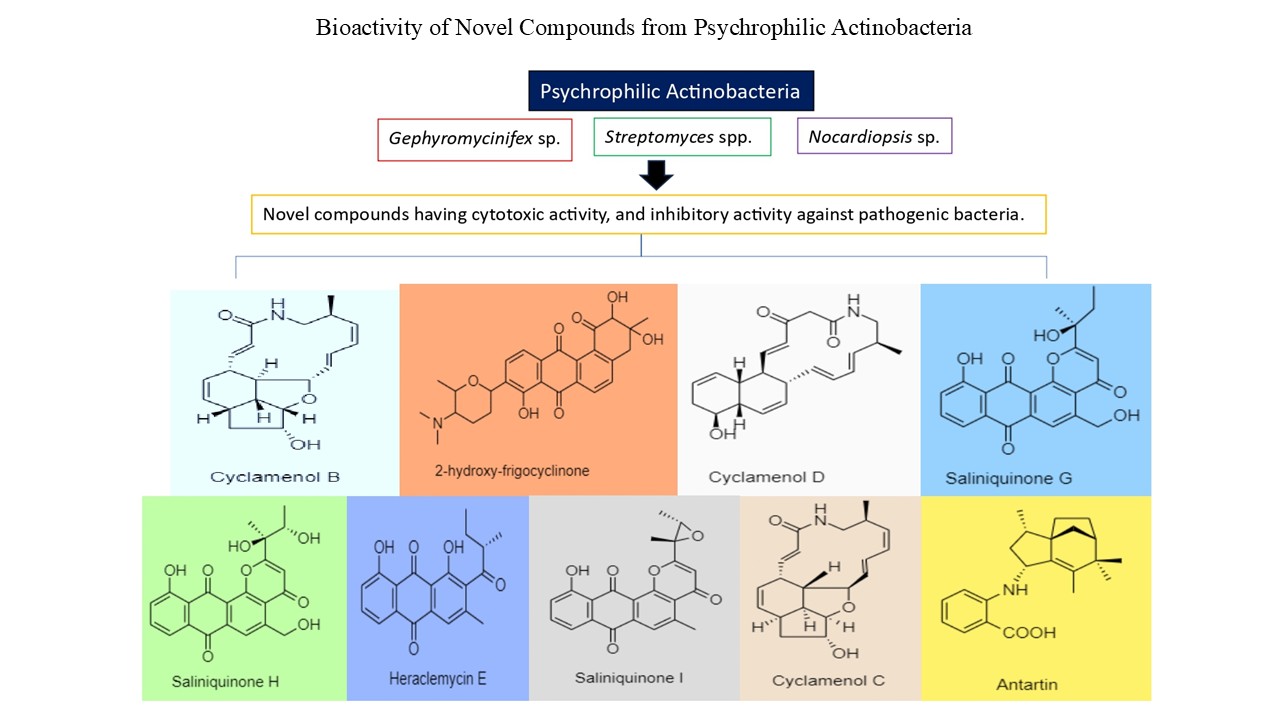
The cold environments serve as life-entrapping reservoirs of diverse life forms, ranging from eukaryotes to diverse microbial inoculi. Actinobacteria are omnipresent in cold environments, and their existence is notably linked to a remarkable potential for producing and harboring unique metabolites. Their ability to survive in such extreme conditions is supported by a range of adaptations tailored to their specific niche, including cold-resistant traits. In this review, we summarize recent advances (2017–2025) regarding psychrophilic actinobacteria, focusing on newly identified species and novel compounds reported in the literature. Notably, we highlight the discovery of 44 new species as well as nine new compounds across various actinobacteria genera. The inventory of abiotic hurdles associated with cold environments positions this field as a potential hotspot and emerging frontier for sourcing pharmaceutical-like compounds of exceptional ingenuity and complexity. By providing an overview of the recent discoveries in psychrophilic actinobacteria and their intriguing metabolites, this review aims to offer valuable insights to facilitate bioprospecting efforts in cold ecosystems.
- Foxlee N, Townell N, McIver L, Lau CL. Antibiotic resistance in Pacific Island countries and territories: A systematic scoping review. Antibiotics (Basel). 2019;8(1):29. doi: 10.3390/antibiotics8010029
- Aslam B, Wang W, Arshad MI, et al. Antibiotic resistance: A rundown of a global crisis. Infect Drug Resist. 2018;11:1645-1658. doi: 10.2147/IDR.S173867
- Giordano D. Bioactive molecules from extreme environments. Mar Drugs. 2020;18:640. doi: 10.3390/md18120640
- Soldatou S, Baker BJ. Cold-water marine natural products, 2006 to 2016. Nat Prod Rep. 2017;34(6):585-626. doi: 10.1039/c6np00127k
- Siro G, Donald L, Pipite A. The diversity of deep-sea actinobacteria and their natural products: An epitome of curiosity and drug discovery. Diversity. 2023;15(1):30. doi: 10.3390/d15010030
- Parrilli E, Tedesco P, Fondi M, et al. The art of adapting to extreme environments: The model system Pseudoalteromonas. Phys Life Rev. 2021;36:137-161. doi: 10.1016/j.plrev.2019.04.003
- Singh M, Jayant K, Singh D, Suyal DC, Mitra A, Bhutani S. Microbial adaptations at higher altitude for sustainable development: A review. J Appl Pharm Sci. 2022;12(10):11-19. doi: 10.7324/JAPS.19-1646044973
- Bölter M. Ecophysiology of psychrophilic and psychrotolerant microorganisms. Cell Mol Biol. 2004;50(5):563-573.
- Helmke E, Weyland H. Psychrophilic versus psychrotolerant bacteria-occurrence and significance in polar and temperate marine habitats. Cell Mol Biol (Noisy-le-grand). 2004;50(5):553-561.
- Kumar S, Sravani B, Korra T, et al. Psychrophilic microbes: biodiversity, beneficial role and improvement of cold stress in crop plants. In: Singh H, Vaishnav A, editors. New and Future Developments in Microbial Biotechnology and Bioengineering. Amsterdam: Elsevier; 2022. p. 177-198. doi: 10.1016/B978-0-323-85163-3.00002-8
- Sepe F, Costanzo E, Ionata E, Marcolongo L. Biotechnological potential of extremophiles: Environmental solutions, challenges, and advancements. Biology (Basel). 2025;14(7):847. doi: 10.3390/biology14070847
- Hussain MH, Mohsin MZ, Zaman WQ, et al. Multiscale engineering of microbial cell factories: A step forward towards sustainable natural products industry. Synth Syst Biotechnol. 2022;7(1):586-601. doi: 10.1016/j.synbio.2021.12.012
- Takahashi Y, Nakashima T. Actinomycetes, an inexhaustible source of naturally occurring antibiotics. Antibiotics (Basel). 2018;7(2):45. doi: 10.3390/antibiotics7020045
- Ma R, Karthik L. Pharmacology of FDA-approved medicines from actinobacteria. In: Karthik L, editor. Actinobacteria: Microbiology to Synthetic Biology. Singapore: Springer Nature; 2022. p. 265-276. doi: 10.1007/978-981-16-5835-8_14
- Hui MLY, Tan LTH, Letchumanan V, et al. The extremophilic actinobacteria: From microbes to medicine. Antibiotics (Basel). 2021;10(6):682. doi: 10.3390/antibiotics10060682
- Law JWF, Letchumanan V, Tan LTH, Ser HL, Goh BH, Lee LH. The rising of “modern actinobacteria” era. Prog Microbes Mol Biol. 2020;3(1):a0000064. doi: 10.3687/pmmb.a0000064
- Siro G, Pipite A, Christi K, Srinivasan S, Subramani R. Marine actinomycetes associated with stony corals: A potential hotspot for specialized metabolites. Microorganisms. 2022;10(7):1349. doi: 10.3390/microorganisms10071349
- Zhu C, Miller M, Lusskin N, et al. Snow microbiome functional analyses reveal novel aspects of microbial metabolism of complex organic compounds. Microbiologyopen. 2020;9(9):e1100. doi: 10.1002/mbo3.1100
- De Maayer P, Anderson D, Cary C, Cowan DA. Some like it cold: Understanding the survival strategies of psychrophiles. EMBO Rep. 2014;15(5):508-517. doi: 10.1002/embr.201338170
- Rodrigues DF, Tiedje JM. Coping with our cold planet. Appl Environ Microbiol. 2008;74(6):1677-1686. doi: 10.1128/AEM.02000-07
- D’Amico S, Collins T, Marx J, Feller G, Gerday C, Gerday C. Psychrophilic microorganisms: Challenges for life. EMBO Rep. 2006;7(4):385-389. doi: 10.1038/sj.embor.7400662
- Tendulkar S, Hattiholi A, Chavadar M, Dodamani S. Psychrophiles: A journey of hope. J Biosci. 2021;46(3):64. doi: 10.1007/s12038-021-00180-4
- Tian Y, Li YL, Zhao FC. Secondary metabolites from polar organisms. Mar Drugs. 2017;15(3):28. doi: 10.3390/md15030028
- Rizzo C, Lo Giudice A. Life from a snowflake: Diversity and adaptation of cold-loving bacteria among ice crystals. Crystals. 2022;12(3):312. doi: 10.3390/cryst12030312
- Hamdan A. Psychrophiles: Ecological significance and potential industrial application. S Afr J Sci. 2018;114(5):1-6. doi: 10.17159/sajs.2018/20170254
- Anesio AM, Laybourn-Parry J. Glaciers and ice sheets as a biome. Trends Ecol Evol. 2012;27(4):219-225. doi: 10.1016/j.tree.2011.09.012
- Belov AA, Cheptsov VS, Manucharova NA, Ezhelev ZS. Bacterial communities of novaya zemlya archipelago ice and permafrost. Geosciences. 2020;10(2):67. doi: 10.3390/geosciences10020067
- Margesin R, Collins T. Microbial ecology of the cryosphere (glacial and permafrost habitats): Current knowledge. Appl Microbiol Biotechnol. 2019;103(6):2537-2549. doi: 10.1007/s00253-019-09631-3
- Moyer CL, Morita RY. Psychrophiles and psychrotrophs. In: Encyclopedia of Life Sciences. Chichester: John Wiley & Sons Ltd.; 2007. p. 1-5. doi: 10.1016/B978-0-12-809633-8.02282-2
- Bowman JP. Genomics of psychrophilic bacteria and archaea. In: Margesin R, editor. Psychrophiles: From Biodiversity to Biotechnology. Cham: Springer International Publishing; 2017. p. 345-387. doi: 10.1007/978-3-319-57057-0_15
- Dhakar K, Pandey A. Microbial ecology from the himalayan cryosphere perspective. Microorganisms. 2020;8(2):257. doi: 10.3390/microorganisms8020257
- Collins T, Margesin R. Psychrophilic lifestyles: Mechanisms of adaptation and biotechnological tools. Appl Microbiol Biotechnol. 2019;103(7):2857-2871. doi: 10.1007/s00253-019-09659-5
- Siddiqui KS, Williams TJ, Wilkins D, et al. Psychrophiles. Annu Rev Earth Planet Sci. 2013;41:87-115. doi: 10.1146/annurev-earth-040610-133514
- Alblooshi AS, Nasar MI, Rehman SSU, Alam MT. Genomic and metabolic network properties in thermophiles and psychrophiles compared to mesophiles. Sci Rep. 2025;15(1):19757. doi: 10.1038/s41598-025-05030-z
- Banerjee R, Halder A, Natta A. Psychrophilic microorganisms: habitats and exploitation potentials. Eur J Biotechnol Biosci. 2016;4(3):16-24.
- Parvizpour S, Hussin N, Shamsir MS, Razmara J. Psychrophilic enzymes: Structural adaptation, pharmaceutical and industrial applications. Appl Microbiol Biotechnol. 2021;105(3):899-907. doi: 10.1007/s00253-020-11074-0
- Sharma S, Chaturvedi U, Sharma K, Vaishnav A, Singh HB. An overview of survival strategies of psychrophiles and their applications. In: Goel R, Soni R, Suyal DC, Khan M, editors. Survival Strategies in Cold-Adapted Microorganisms. Singapore: Springer; 2022. p. 133-151. doi: 10.1007/978-981-16-2625-8_6
- Gallo G, Aulitto M. Advances in extremophile research: Biotechnological applications through isolation and identification techniques. Life (Basel). 2024;14(9):1205. doi: 10.3390/life14091205
- Garcia-Lopez E, Alcazar P, Cid C. Identification of biomolecules involved in the adaptation to the environment of cold-Loving microorganisms and metabolic pathways for their production. Biomolecules. 2021;11(8):1155. doi: 10.3390/biom11081155
- Borchert E, Jackson SA, O’Gara F, Dobson ADW. Psychrophiles as a source of novel antimicrobials. In: Margesin R, editor. Psychrophiles: From Biodiversity to Biotechnology. Cham: Springer International Publishing; 2017. p. 527-540. doi: 10.1007/978-3-319-57057-0_22
- Núñez-Montero K, Quezada-Solís D, Khalil ZG, Capon RJ, Andreote FD, Barrientos L. Genomic and metabolomic analysis of antarctic bacteria revealed culture and elicitation conditions for the production of antimicrobial compounds. Biomolecules. 2020;10(5):673. doi: 10.3390/biom10050673
- Salam N, Jiao JY, Zhang XT, Li WJ. Update on the classification of higher ranks in the phylum Actinobacteria. Int J Syst Evol Microbiol. 2020;70(2):1331-1355. doi: 10.1099/ijsem.0.003920
- Rui S, Fengrui G, Yining Z, et al. Biological activity of secondary metabolites of actinomycetes and their potential sources as antineoplastic drugs: A review. Front Microbiol. 2025;16:1550516. doi: 10.3389/fmicb.2025.1550516
- Jose PA, Maharshi A, Jha B. Actinobacteria in natural products research: Progress and prospects. Microbiol Res. 2021;246:126708. doi: 10.1016/j.micres.2021.126708
- Rizzo C, Lo Giudice A. The Variety and inscrutability of polar environments as a resource of biotechnologically relevant molecules. Microorganisms. 2020;8(9):1422. doi: 10.3390/microorganisms8091422
- Santos A, Núñez-Montero K, Lamilla C, Pavez M, Quezada- Solís D, Barrientos L. Antifungal activity screening of antarctic actinobacteria against phytopathogenic fungi. Acta Biol Colomb. 2020;25(2):353-358. doi: 10.15446/abc.v25n2.76405
- Lamilla C, Braga D, Castro R, et al. Streptomyces luridus So3. 2 from antarctic soil as a novel producer of compounds with bioemulsification potential. PLoS One. 2018;13(4):e0196054. doi: 10.1371/journal.pone.0196054
- Rammali S, Hilali L, Dari K, et al. Antimicrobial and antioxidant activities of Streptomyces species from soils of three different cold sites in the Fez-Meknes region Morocco. Sci Rep. 2022;12(1):17233. doi: 10.1038/s41598-022-21644-z
- Dhaneesha M, Benjamin Naman C, Krishnan KP, et al. Streptomyces artemisiae MCCB 248 isolated from arctic fjord sediments has unique PKS and NRPS biosynthetic genes and produces potential new anticancer natural products. 3 Biotech. 2017;7(1):32. doi: 10.1007/s13205-017-0610-3
- Núñez-Montero K, Lamilla C, Abanto M, et al. Antarctic Streptomyces fildesensis So13.3 strain as a promising source for antimicrobials discovery. Sci Rep. 2019;9(1):7488. doi: 10.1038/s41598-019-43960-7
- Ziemert N, Alanjary M, Weber T. The evolution of genome mining in microbes-a review. Nat Prod Rep. 2016;33(8):988-1005. doi: 10.1039/C6NP00025H
- Duan Z, Liao L, Chen B. Complete genome analysis reveals secondary metabolite biosynthetic capabilities of Streptomyces sp. R527F isolated from the Arctic Ocean. Mar Genomics. 2022;63:100949. doi: 10.1016/j.margen.2022.100949
- Liao L, Su S, Zhao B, et al. Biosynthetic potential of a novel antarctic actinobacterium Marisediminicola antarctica ZS314T revealed by genomic data mining and pigment characterization. Mar Drugs. 2019;17(7):388. doi: 10.3390/md17070388
- Waschulin V, Borsetto C, James R, et al. Biosynthetic potential of uncultured antarctic soil bacteria revealed through long-read metagenomic sequencing. ISME J. 2022;16(1):101-111. doi: 10.1038/s41396-021-01052-3
- Jiang Y, Li Q, Chen X, Jiang C. Isolation and cultivation methods of actinobacteria. In: Dhanasekaran D, Jiang Y, editors. Actinobacteria-Basics and Biotechnological Applications. London: InTechOpen; 2016. p. 39-50. doi: 10.5772/61457
- Lamilla C, Pavez M, Santos A, Hermosilla A, Llanquinao V, Barrientos L. Bioprospecting for extracellular enzymes from culturable actinobacteria from the South Shetland Islands, Antarctica. Polar Biol. 2017;40(3):719-726. doi: 10.1007/s00300-016-1977-z
- Margesin R, Moertelmaier C, Mair J. Low-temperature biodegradation of petroleum hydrocarbons (n-alkanes, phenol, anthracene, pyrene) by four actinobacterial strains. Int Biodeterior Biodegradation. 2013;84:185-191. doi: 10.1016/j.ibiod.2012.05.004
- Raja A, Prabakaran P, Gajalakshmi P. Isolation and screening of antibiotic producing psychrophilic actinomycetes and its nature from rothang hill soil against viridans Streptococcus sp. Res J Microbiol. 2010;5(1):44-49.
- Gromyko O, Tistechok S, Roman I, et al. Isolation and characterization of culturable actinobacteria associated with Polytrichum strictum (galindez island, the maritime antarctic). Ukr Antarct J. 2021;1:82-97. doi: 10.33275/1727-7485.1.2021.668
- Benaud N, Chelliah DS, Wong SY, Ferrari BC. Soil substrate culturing approaches recover diverse members of actinomycetota from desert soils of herring Island, East Antarctica. Extremophiles. 2022;26(2):24. doi: 10.1007/s00792-022-01271-2
- Williams ST, Shameemullah M, Watson ET, Mayfield CI. Studies on the ecology of actinomycetes in soil. The influence of moisture tension on growth and survival. Soil Biol Biochem. 1972;4(2):215-225. doi: 10.1016/0038-0717(72)90014-4
- Kamjam M, Xie Q, Deng Z, Hong K. Isolation and diversity of actinomycetes from sediments of different depths between 34 m and 3,235 m in south china sea. Chiang Mai J Sci. 2018;45(4):1595-1609.
- Marutescu LG. Current and future flow cytometry applications contributing to antimicrobial resistance control. Microorganisms. 2023;11(5):1300. doi: 10.3390/microorganisms11051300
- Bertelsen CV. Screening of Bacteria Using Impedance Flow Cytometry. Denmark: DTU Bioengineering; 2021.
- Parratt K, Newton D, Dunkers J, et al. Measurement quality metrics to improve absolute microbial cell counting. Front Microbiol. 2025;16:1631377. doi: 10.3389/fmicb.2025.1631377
- Silva LJ, Crevelin EJ, Souza DT, et al. Actinobacteria from antarctica as a source for anticancer discovery. Sci Rep. 2020;10(1):13870. doi: 10.1038/s41598-020-69786-2
- Lee LH, Cheah YK, Mohd Sidik S, et al. Molecular characterization of antarctic actinobacteria and screening for antimicrobial metabolite production. World J Microbiol Biotechnol. 2012;28(5):2125-2137. doi: 10.1007/s11274-012-1018-1
- Madigan MT, Kempher ML, Bender KS, et al. Characterization of a cold-active bacterium isolated from the south pole “ice tunnel.” Extremophiles. 2017;21(5):891-901. doi: 10.1007/s00792-017-0950-2
- Davies J. How to discover new antibiotics: Harvesting the parvome. Curr Opin Chem Biol. 2011;15(1):5-10. doi: 10.1016/j.cbpa.2010.11.001
- Yook G, Nam J, Jo Y, Yoon H, Yang D. Metabolic engineering approaches for the biosynthesis of antibiotics. Microb Cell Fact. 2025;24(1):35. doi: 10.1186/s12934-024-02628-2
- Alwali AY, Parkinson EI. Small molecule inducers of actinobacteria natural product biosynthesis. J Ind Microbiol Biotechnol. 2023;50(1):019. doi: 10.1093/jimb/kuad019
- Green CA, Kamble NS, Court EK, et al. Engineering the flagellar type III secretion system: Improving capacity for secretion of recombinant protein. Microb Cell Fact. 2019;18(1):10. doi: 10.1186/s12934-019-1058-4
- Kamble NS, Thomas S, Madaan T, et al. Engineered bacteria as an orally administered anti-viral treatment and immunization system. Gut Microbes. 2025;17(1):2500056. doi: 10.1080/19490976.2025.2500056
- Thirumurugan D, Cholarajan A, Raja SS, Vijayakumar R. An introductory chapter: secondary metabolites. In: Vijayakumar R, Suresh R, editors. Secondary Metabolites-Sources and Application. London: IntechOpen; 2018. p. 3-22. doi: 10.5772/intechopen.79766
- Medema MH. Computational genomics of specialized metabolism: From natural product discovery to microbiome ecology. Msystems. 2018;3(2):e00182-17. doi: 10.1128/mSystems.00182-17
- Zahroh EW, Ningsih F, Sjamsuridzal W. Detection of antimicrobial compounds from thermophilic actinomycetesusing one strain many compounds (OSMAC) approach. J Biol Lingkung. 2022;9(1):76-94. doi: 10.31289/biolink.v9i1.6438
- Xiao X, Fu Y, Zhang D, Gao S. Enhancement of FK520 production in streptomyces hygroscopicus var. ascomyceticus ATCC 14891 by overexpressing the regulatory gene fkbR2. Bioprocess Biosyst Eng. 2025;48(3):493-507. doi: 10.1007/s00449-024-03124-y
- Zhu S, Duan Y, Huang Y. The application of ribosome engineering to natural product discovery and yield improvement in Streptomyces. Antibiotics (Basel). 2019;8(3):133. doi: 10.3390/antibiotics8030133
- Asamizu S, Ijichi S, Hoshino S, et al. Stable isotope-guided metabolomics reveals polar-functionalized fatty-acylated RiPPs from streptomyces. ACS Chem Biol. 2022;17(10):2936-2944. doi: 10.1021/acschembio.2c00601
- Kang HS, Kim ES. Recent advances in heterologous expression of natural product biosynthetic gene clusters in Streptomyces hosts. Curr Opin Biotechnol. 2021;69:118-127. doi: 10.1016/j.copbio.2020.12.016
- Augustijn HE, Roseboom AM, Medema MH, van Wezel GP. Harnessing regulatory networks in Actinobacteria for natural product discovery. J Ind Microbiol Biotechnol. 2024;51:kuae011. doi: 10.1093/jimb/kuae011
- Wang Q, Zhao J, Liu Z, Ding S, Huang Z, Chen J. Genomic insights and synthetic biology applications of marine actinomycete Streptomyces griseoincarnatus HNS054. Int J Mol Sci. 2024;25(6):3127. doi: 10.3390/ijms25063127
- Gobena S, Admassu B, Kinde MZ, Gessese AT. Proteomics and its current application in biomedical area: Concise review. ScientificWorldJournal. 2024;2024(1):4454744. doi: 10.1155/2024/4454744
- Talreja S, Tiwari S. From one to millions: The revolution of combinatorial chemistry. J Anal Tech Res. 2024;6(2):37-42. doi: 10.26502/jatr.43
- Ji CH, Je HW, Kim H, Kang HS. Promoter engineering of natural product biosynthetic gene clusters in actinomycetes: Concepts and applications. Nat Prod Rep. 2024;41(4):672-699. doi: 10.1039/D3NP00049D
- Bind S, Bind S, Sharma AK, Chaturvedi P. Epigenetic modification: A key tool for secondary metabolite production in microorganisms. Front Microbiol. 2022;13:784109. doi: 10.3389/fmicb.2022.784109
- Tanaka Y, Hosaka T, Ochi K. Rare earth elements activate the secondary metabolite-biosynthetic gene clusters in Streptomyces coelicolor A3 (2). J Antibiot (Tokyo). 2010;63(8):477-481. doi: 10.1038/ja.2010.53
- Lee SR, Gallant É, Seyedsayamdost MR. Discovery of cryptic natural products using high-throughput elicitor screening on agar media. Biochemistry. 2024;64(1):20-25. doi: 10.1021/acs.biochem.4c00659
- Asamizu S. Co-cultivation strategies for natural product discovery from actinomycetes: Unlocking silent secondary metabolism with mycolic acid-containing bacteria. World J Microbiol Biotechnol. 2025;41(7):217. doi: 10.1007/s11274-025-04406-7
- Begani J, Lakhani J, Harwani D. Current strategies to induce secondary metabolites from microbial biosynthetic cryptic gene clusters. Ann Microbiol. 2018;68(7):419-432. doi: 10.1007/s13213-018-1351-1
- Wang S, Zeng X, Jiang Y, et al. Unleashing the potential: Type I CRISPR-Cas systems in actinomycetes for genome editing. Nat Prod Rep. 2024;41(9):1441-1455. doi: 10.1039/D4NP00010B
- Aslam Z, Yasir M, Khaliq A, Matsui K, Ryun Y. Mini review too much bacteria still unculturable. Crop Environ. 2010;1(1):59-60.
- Wade W. Unculturable bacteria-the uncharacterized organisms that cause oral infections. J R Soc Med. 2002;95(2):81-83. doi: 10.1177/014107680209500207
- Bodor A, Bounedjoum N, Vincze GE, et al. Challenges of unculturable bacteria: Environmental perspectives. Rev Environ Sci Bio/Technology. 2020;19(1):1-22. doi: 10.1007/s11157-020-09522-4
- Farha MA, Tu MM, Brown ED. Important challenges to finding new leads for new antibiotics. Curr Opin Microbiol. 2025;83:102562. doi: 10.1016/j.mib.2024.102562
- Gottlieb D. The production and role of antibiotics in soil. J Antibiot (Tokyo). 1976;29(10):987-1000. doi: 10.7164/antibiotics.29.987
- Zhang QW, Lin LG, Ye WC. Techniques for extraction and isolation of natural products: A comprehensive review. Chin Med. 2018;13(1):20. doi: 10.1186/s13020-018-0177-x
- Balagurunathan R, Radhakrishnan M, Shanmugasundaram T, Gopikrishnan V, Jerrine J. Bioassay-guided isolation and characterization of metabolites from actinobacteria. In: Protocols in Actinobacterial Research. Berlin: Springer; 2020. p. 147-163. doi: 10.1007/978-1-0716-0728-2_8
- Waithaka PN, Mwaura FB, Wagacha JM, Gathuru EM, Githaiga BM. Purification and cytotoxic assays of four antimicrobial metabolites extracted from actinomycetes of the soils of menengai crater, kenya. Nov Res Microbiol J. 2019;3(3):351-365. doi: 10.21608/nrmj.2019.37208
- Jiang L, Pu H, Qin X, et al. Syn-2, 3-diols and anti-inflammatory indole derivatives from Streptomyces sp. CB09001. Nat Prod Res. 2019;35(1):144-151. doi: 10.1080/14786419.2019.1611812
- Jiang L, Xiang J, Zhu S, et al. Undescribed benzophenone and xanthones from cave-derived Streptomyces sp. CB09001. Nat Prod Res. 2020;36(7):1725-1733. doi: 10.1080/14786419.2020.1813134
- Balagurunathan R, Radhakrishnan M, Shanmugasundaram T, Gopikrishnan V, Jerrine J. Production of bioproducts from actinobacteria. In: Protocols in Actinobacterial Research. Berlin: Springer; 2020. p. 113-128. doi: 10.1007/978-1-0716-0728-2_5
- Stankovic N, Radulovic V, Petkovic M, et al. Streptomyces sp. JS520 produces exceptionally high quantities of undecylprodigiosin with antibacterial, antioxidative, and UV-protective properties. Appl Microbiol Biotechnol. 2012;96(5):1217-1231. doi: 10.1007/s00253-012-4237-3
- Soldatou S, Eldjárn GH, Ramsay A, et al. Comparative metabologenomics analysis of polar actinomycetes. Mar Drugs. 2021;19(2):103. doi: 10.3390/md19020103
- Kamjam M, Sivalingam P, Deng Z, Hong K. Deep sea actinomycetes and their secondary metabolites. Front Microbiol. 2017;8:760. doi: 10.3389/fmicb.2017.00760
- Gu Z, Liu Y, Xu B, et al. Description of Conyzicola nivalis sp. nov., isolated from glacial snow, and emended description of the genus Conyzicola and Conyzicola lurida. Int J Syst Evol Microbiol. 2017;67(8):2818-2822. doi: 10.1099/ijsem.0.002027
- Liu Q, Xin YH, Chen XL, Liu HC, Zhou YG, Chen WX. Cryobacterium aureum sp. nov., a Psychrophilic bacterium isolated from glacier ice collected from the ice tongue surface. Int J Syst Evol Microbiol. 2018;68(4):1173-1176. doi: 10.1099/ijsem.0.002647
- Wang J, Leiva S, Huang J, Huang Y. Amycolatopsis antarctica sp. nov., isolated from the surface of an Antarctic brown macroalga. Int J Syst Evol Microbiol. 2018;68(7):2348-2356. doi: 10.1099/ijsem.0.002844
- Villalobos AS, Wiese J, Aguilar P, Dorador C, Imhoff JF. Subtercola vilae sp. nov., a novel actinobacterium from an extremely high-altitude cold volcano lake in Chile. Antonie Van Leeuwenhoek. 2018;111(6):955-963. doi: 10.1007/s10482-017-0994-4
- Liu Q, Liu HC, Zhou YG, Xin YH. Genetic diversity of glacier-inhabiting Cryobacterium bacteria in china and description of Cryobacterium zongtaii sp. nov. and Arthrobacter glacialis sp. nov. Syst Appl Microbiol. 2019;42(2):168-177. doi: 10.1016/j.syapm.2018.10.005
- Kamjam M, Nopnakorn P, Zhang L, Peng F, Deng Z, Hong K. Streptomyces polaris sp. nov. and Streptomyces septentrionalis sp. nov., isolated from frozen soil. Antonie Van Leeuwenhoek. 2019;112(3):375-387. doi: 10.1007/s10482-018-1166-x
- Liu Q, Tian JH, Liu HC, Zhou YG, Xin YH. Cryobacterium melibiosiphilum sp. nov., a Psychrophilic bacterium isolated from glacier ice. Int J Syst Evol Microbiol. 2019;69(10):3276-3280. doi: 10.1099/ijsem.0.003620
- Wang F, Liu Y, Wang N, et al. Haloactinobacterium glacieicola sp. nov., isolated from an ice core. Int J Syst Evol Microbiol. 2019;69(11):3519-3523. doi: 10.1099/ijsem.0.003653
- Filippova SN, Surgucheva NA, Detkova EN, et al. Serinibacter arcticus sp. nov., isolated from a thawing ancient ice wedge. Int J Syst Evol Microbiol. 2020;70(2):929-934. doi: 10.1099/ijsem.0.003848
- Shin Y, Lee BH, Lee KE, Park W. Pseudarthrobacter psychrotolerans sp. nov., a cold-adapted bacterium isolated from Antarctic soil. Int J Syst Evol Microbiol. 2020;70(12):6106-6114. doi: 10.1099/ijsem.0.004505
- Maiti PK, Mandal S. Lentzea indica sp. nov., a novel actinobacteria isolated from Indian Himalayan-soil. Antonie Van Leeuwenhoek. 2020;113(10):1411-1423. doi: 10.1007/s10482-020-01449-8
- Liu Q, Tian JH, Liu HC, Zhou YG, Xin YH. Cryobacterium ruanii sp. nov. and Cryobacterium breve sp. nov., isolated from glaciers. Int J Syst Evol Microbiol. 2020;70(3):1918-1923. doi: 10.1099/ijsem.0.003994
- Kim MC, Ju YH, Hwang UA, Liu P, Pak SH, Peng F. Pengzhenrongella sicca gen. nov., sp. nov., a new member of suborder Micrococcineae isolated from High Arctic tundra soil. Int J Syst Evol Microbiol. 2021;71(9):4988. doi: 10.1099/ijsem.0.004988
- Zhu WZ, Ge YM, Gao HM, Dai J, Zhang XL, Yang Q. Gephyromycinifex aptenodytis gen. nov., sp. nov., isolated from gut of antarctic emperor penguin Aptenodytes forsteri. Antonie Van Leeuwenhoek. 2021;114(12):2003-2017. doi: 10.1007/s10482-021-01657-w
- Jani K, Kajale S, Shetye M, Palkar S, Sharma A. Marisediminicola senii sp. nov. isolated from queen maud land, antarctica. Int J Syst Evol Microbiol. 2021;71(2):4641. doi: 10.1099/ijsem.0.004641
- Sakdapetsiri C, Kuntaveesuk A, Ngaemthao W, et al. Paeniglutamicibacter terrestris sp. nov., isolated from phenanthrene-degrading consortium enriched from Antarctic soil. Int J Syst Evol Microbiol. 2021;71(3):4689. doi: 10.1099/ijsem.0.004689
- Liang Y, Jiang P, Yao B, Jiao Y, Li J. Lacisediminihabitans changchengi sp. nov., an actinobacterium isolated from Antarctic swamplands mud. Arch Microbiol. 2021;203(9):5519-5524. doi: 10.1007/s00203-021-02531-z
- Jiang P, Ren X, Wang W, Niu G, Li J. Arthrobacter terrae sp. nov., a psychrophilic actinobacterium with multi copies of capA gene isolated from Antarctic soil. Antonie Van Leeuwenhoek. 2022;115(5):635-644. doi: 10.1007/s10482-022-01727-7
- Chen Y, Zhang H, Ping W, Zhu L, Xin Y, Zhang J. Pseudarthrobacter albicanus sp. nov., isolated from antarctic soil. Int J Syst Evol Microbiol. 2022;72(1):5182. doi: 10.1099/ijsem.0.005182
- Jiang L, Peng Y, Seo J, et al. Subtercola endophyticus sp. nov., a cold-adapted bacterium isolated from Abies koreana. Sci Rep. 2022;12(1):1-13. doi: 10.21203/rs.3.rs-1458414/v1
- Valenzuela-Ibaceta F, Carrasco V, Lagos-Moraga S, Dietz- Vargas C, Navarro CA, Pérez-Donoso JM. Arthrobacter vasquezii sp. nov., isolated from a soil sample from union glacier, antarctica. Int J Syst Evol Microbiol. 2023;73(10):6095. doi: 10.1099/ijsem.0.006095
- Liu Q, Yang LL, Xin YH. Diversity of the genus Cryobacterium and proposal of 19 novel species isolated from glaciers. Front Microbiol. 2023;14:1115168. doi: 10.3389/fmicb.2023.1115168
- Berestovskaya YY, Tourova TP, Grouzdev DS, et al. Cryobacterium inferilacus sp. nov., a pshychrophilic ureolitic bacterium from lake untersee in antarctica. Microorganisms. 2025;13(5):990. doi: 10.3390/microorganisms13050990
- Kim D, Lee EJ, Lee J, et al. Antartin, a cytotoxic zizaane-type sesquiterpenoid from a Streptomyces sp. isolated from an antarctic marine sediment. Mar Drugs. 2018;16(4):130. doi: 10.3390/md16040130
- Shen J, Fan Y, Zhu G, Chen H, Zhu W, Fu P. Polycyclic macrolactams generated via intramolecular diels-alder reactions from an antarctic Streptomyces species. Org Lett. 2019;21(12):4816-4820. doi: 10.1021/acs.orglett.9b01710
- Zhou L, Chen X, Sun C, et al. Saliniquinone derivatives, saliniquinones G-I and heraclemycin E, from the marine animal-derived Nocardiopsis aegyptia HDN19-252. Mar Drugs. 2021;19(10):575. doi: 10.3390/md19100575
- Zhu WZ, Wang SH, Gao HM, et al. Characterization of bioactivities and biosynthesis of angucycline/angucyclinone derivatives derived from Gephyromycinifex aptenodytis gen. nov., sp. nov. Mar Drugs. 2022;20(1):34. doi: 10.3390/md20010034
- Quinn GA, Dyson PJ. Going to extremes: Progress in exploring new environments for novel antibiotics. NPJ Antimicrob Resist. 2024;2(1):8. doi: 10.1038/s44259-024-00025-8
- Medeiros W, Kralova S, Oliveira V, Ziemert N, Sehnal L. Antarctic bacterial natural products: from genomic insights to drug discovery. Nat Prod Rep. 2025;42(5):774-787. doi: 10.1039/D4NP00045E
- Hwengwere K, January GG, Howell KL, Peck LS, Upton M, Clark MS. Psychrotrophic antarctic marine bacteria as potential reservoirs for novel antimicrobial genes. FEMS Microbes. 2025;6:xtaf004. doi: 10.1093/femsmc/xtaf004