
Bidirectional Interactions Between Psychiatric Disorders and Gastrointestinal Diseases: From Pathophysiology to Clinical Management



Department of Psychology and Sleep Medicine, the Second Affiliated Hospital of Anhui Medical University, Anhui Medical University, Hefei, ChinaChild and adolescent psychiatry; Psychosomatic Medicine
Dear Colleagues,
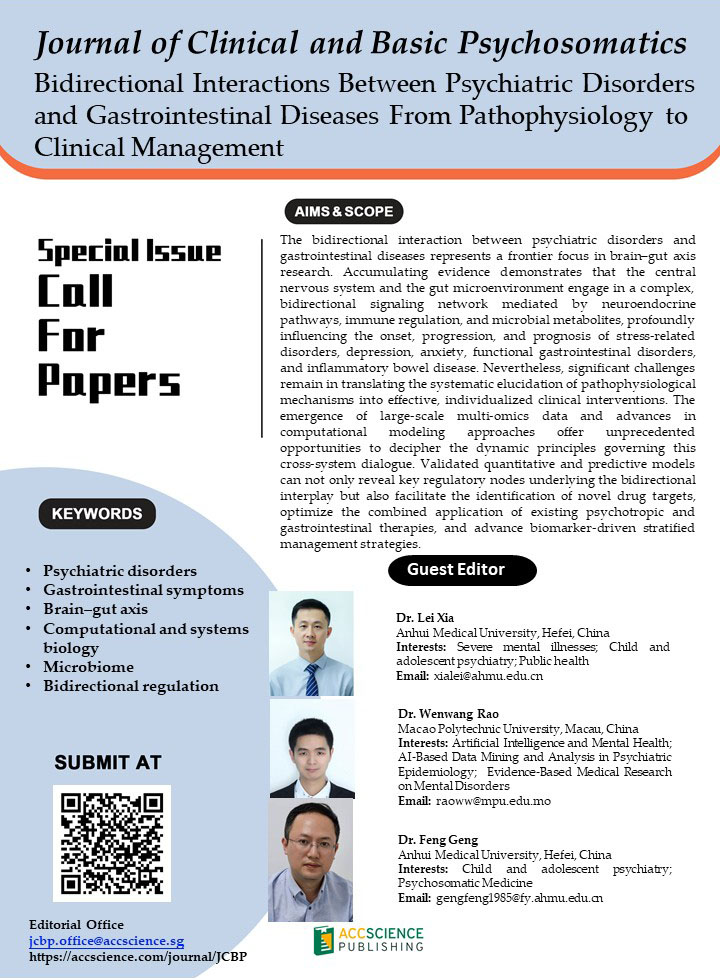
The bidirectional interaction between psychiatric disorders and gastrointestinal diseases represents a frontier focus in brain–gut axis research. Accumulating evidence demonstrates that the central nervous system and the gut microenvironment engage in a complex, bidirectional signaling network mediated by neuroendocrine pathways, immune regulation, and microbial metabolites, profoundly influencing the onset, progression, and prognosis of stress-related disorders, depression, anxiety, functional gastrointestinal disorders, and inflammatory bowel disease. Nevertheless, significant challenges remain in translating the systematic elucidation of pathophysiological mechanisms into effective, individualized clinical interventions. The emergence of large-scale multi-omics data and advances in computational modeling approaches offer unprecedented opportunities to decipher the dynamic principles governing this cross-system dialogue. Validated quantitative and predictive models can not only reveal key regulatory nodes underlying the bidirectional interplay but also facilitate the identification of novel drug targets, optimize the combined application of existing psychotropic and gastrointestinal therapies, and advance biomarker-driven stratified management strategies.
This special issue on "Bidirectional Interactions Between Psychiatric Disorders and Gastrointestinal Diseases: From Pathophysiology to Clinical Management" aims to curate novel, breakthrough advances in this interdisciplinary field. Topics include, but are not limited to:
- Development of multi-scale mechanistic models elucidating brain–gut bidirectional interactions (spanning molecular signaling pathways to neural circuits);
- Investigation of closed-loop control strategies integrating neuromodulation, microbiome-based interventions, and behavioral therapies; and
- Development of patient-specific stratification models and individualized dynamic management protocols to guide clinical translation.