

3D-bioprinted tumor organoids enable programmable tumor microenvironment reconstruction for precision oncology

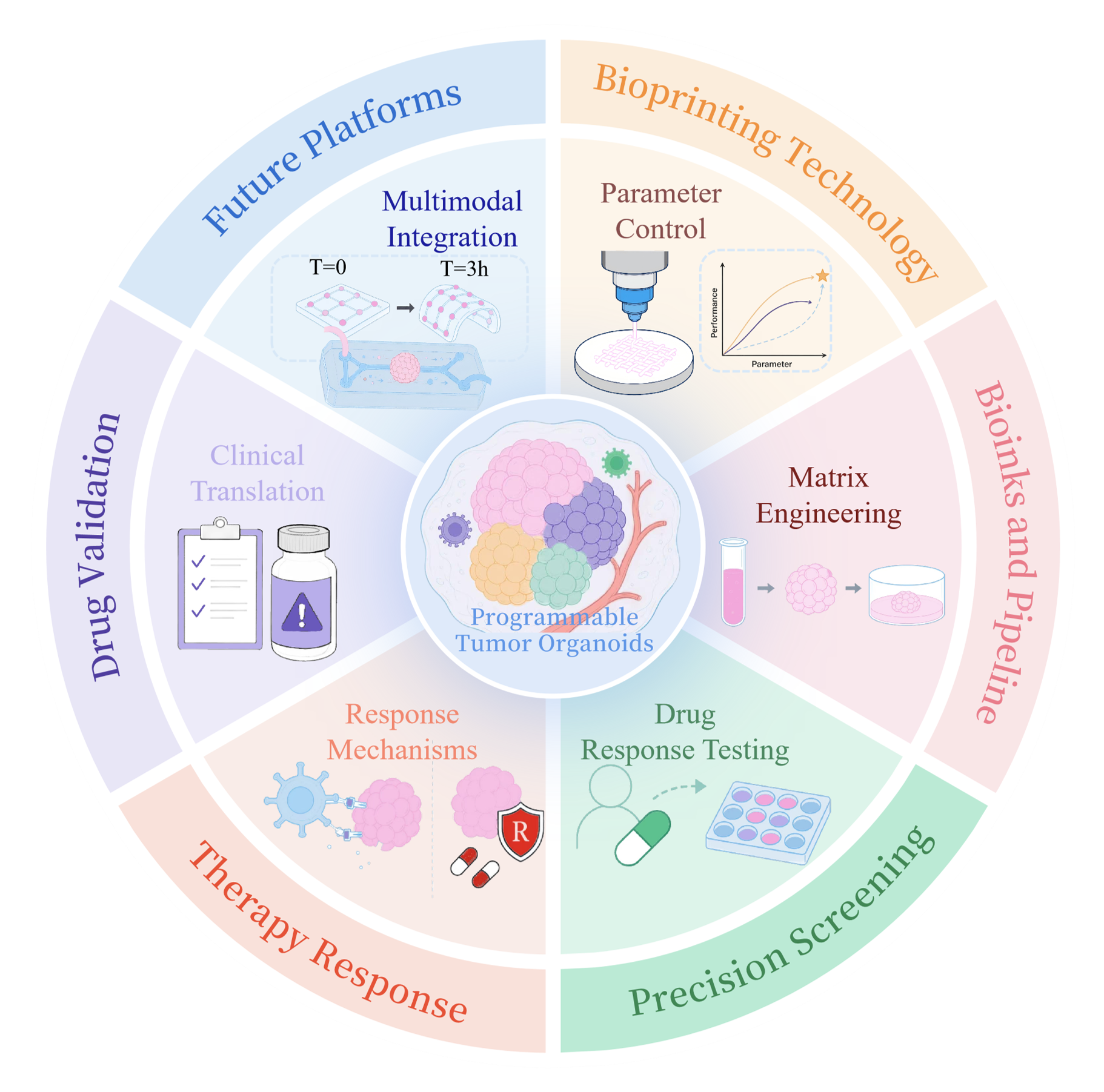
The high heterogeneity and complex cellular interactions within the tumor microenvironment (TME) pose a fundamental challenge to both cancer research and drug development. Conventional in vitro models fail to faithfully recapitulate the pathological features of tumors, thereby limiting the translation of basic research findings into clinical practice. Although patient-derived tumor organoids preserve the genetic and structural hallmarks of primary tumors, they are inherently constrained by limited control over spatial cellular organization, insufficient recapitulation of the biomimetic microenvironment, and a lack of model standardization. Three-dimensional (3D) bioprinting, characterized by precise spatial manipulation and multi-material deposition, offers a transformative strategy to address these limitations by converting key TME variables into programmable design parameters. Through the rational design of bioinks and optimization of printing parameters, bioprinting enables the programmable patterning of cells, extracellular matrix components, and bioactive factors, substantially enhancing the structural reproducibility, physiological relevance, and functional integrity of tumor organoids. This review systematically summarizes recent advances in bioprinted tumor organoids, with a focus on mainstream bioprinting technologies, the regulation of key process parameters, bioink design strategies for TME reconstruction, and the complete pipeline of organoid fabrication. We further delineate the translational impact of these models across personalized medicine, high-throughput drug discovery, immunotherapy evaluation, and the mechanistic dissection of drug resistance. We also discuss the current challenges in technical reproducibility, scalable manufacturing, ethical governance, and regulatory compliance. Finally, we outline future directions, including multimodal technological integration, four-dimensional (4D) bioprinting, tumor-on-a-chip platforms, and interdisciplinary innovation. Collectively, the convergence of bioprinting and tumor organoid technologies offers a robust platform for constructing highly biomimetic tumor models, dissecting tumor biology, and advancing precision oncology. This programmable reconstruction paradigm may help bridge the gap between basic cancer research, preclinical drug testing, and clinically actionable decision-making.
- Guerrero-López P, Martín-Pardillos A, Bonet-Aleta J, et al. 2D versus 3D tumor-on-chip models to study the impact of tumor organization on metabolic patterns in vitro. Sci Rep. 2025;15(1):19506. doi: 10.1038/s41598-025-03504-8
- Costard LS, Hosn RR, Ramanayake H, O’Brien FJ, Curtin CM. Influences of the 3D microenvironment on cancer cell behaviour and treatment responsiveness: A recent update on lung, breast and prostate cancer models. Acta Biomater. 2021;132:360-378. doi: 10.1016/j.actbio.2021.01.023
- Yang Q, Li M, Yang X, et al. Flourishing tumor organoids: History, emerging technology, and application. Bioeng Transl Med. 2023;8(5):e10559. doi: 10.1002/btm2.10559
- Kim JS, Park CH, Kim E, et al. Establishing 3D organoid models from patient-derived conditionally reprogrammed cells to bridge preclinical and clinical insights in pancreatic cancer. Mol Cancer. 2025;24(1):162. doi: 10.1186/s12943-025-02374-y
- Antonelli F. 3D Cell Models in Radiobiology: Improving the Predictive Value of In Vitro Research. Int J Mol Sci. 2023;24(13):10620. doi: 10.3390/ijms241310620
- Wu Y, Zhang F, Du F, Huang J, Wei S. Combination of tumor organoids with advanced technologies: A powerful platform for tumor evolution and treatment response (Review). Mol Med Rep. 2025;31(6):140. doi: 10.3892/mmr.2025.13505
- Gremke N, Rodepeter FR, Teply-Szymanski J, et al. NGS-Guided Precision Oncology in Breast Cancer and Gynecological Tumors-A Retrospective Molecular Tumor Board Analysis. Cancers (Basel). 2024;16(8):1561. doi: 10.3390/cancers16081561
- Han J, Jeong HJ, Choi J, et al. Bioprinted Patient-Derived Organoid Arrays Capture Intrinsic and Extrinsic Tumor Features for Advanced Personalized Medicine. Adv Sci (Weinh). 2025;12(20):e2407871. doi: 10.1002/advs.202407871
- Park SE, Georgescu A, Huh D. Organoids-on-a-chip. Science. 2019;364(6444):960-965. doi: 10.1126/science.aaw7894
- Xu L, Ding H, Wu S, et al. Artificial Meshed Vessel- Induced Dimensional Breaking Growth of Human Brain Organoids and Multiregional Assembloids. ACS Nano. 2024;18(38):26201-26214. doi: 10.1021/acsnano.4c07844
- Kang R, Wu J, Cheng R, et al. 3D bioprinting technology and equipment based on microvalve control. Biotechnol Bioeng. 2024;121(12):3768-3781. doi: 10.1002/bit.28850
- Wang X, Luo Y, Ma Y, Wang P, Yao R. Converging bioprinting and organoids to better recapitulate the tumor microenvironment. Trends Biotechnol. 2024;42(5):648-663. doi: 10.1016/j.tibtech.2023.11.006
- Lv J, Du X, Wang M, Su J, Wei Y, Xu C. Construction of tumor organoids and their application to cancer research and therapy. Theranostics. 2024;14(3):1101-1125. doi: 10.7150/thno.91362
- Tebon PJ, Wang B, Markowitz AL, et al. Drug screening at single-organoid resolution via bioprinting and interferometry. Nat Commun. 2023;14(1):3168. doi: 10.1038/s41467-023-38832-8
- Mao S, Xie R, Shou J, Pang Y, Sun W. Bioprinting of patient-derived heterogeneous renal cell carcinoma organoids for personalized therapy. Biofabrication. 2025;17(4):045008. doi: 10.1088/1758-5090/adecc5
- Koçak E, Yıldız A, Acartürk F. Three dimensional bioprinting technology: Applications in pharmaceutical and biomedical area. Colloids Surf B Biointerfaces. 2021;197:111396. doi: 10.1016/j.colsurfb.2020.111396
- Mohammadrezaei D, Podina L, Silva J, Kohandel M. Cell viability prediction and optimization in extrusion-based bioprinting via neural network-based Bayesian optimization models. Biofabrication. 2024;16(2):025016. doi: 10.1088/1758-5090/ad17cf
- Yumoto M, Hemmi N, Sato N, et al. Evaluation of the effects of cell-dispensing using an inkjet-based bioprinter on cell integrity by RNA-seq analysis. Sci Rep. 2020;10(1):7158. doi: 10.1038/s41598-020-64193-z
- Cui X, Boland T. Human microvasculature fabrication using thermal inkjet printing technology. Biomaterials. 2009;30(31):6221-6227. doi: 10.1016/j.biomaterials.2009.07.056
- Xu H-Q, Liu J-C, Zhang Z-Y, Xu C-X. A review on cell damage, viability, and functionality during 3D bioprinting. Mil Med Res. 2022;9(1):70. doi: 10.1186/s40779-022-00429-5
- Zhang X, Zhang X, Li Y, Zhang Y. Applications of Light- Based 3D Bioprinting and Photoactive Biomaterials for Tissue Engineering. Materials (Basel). 2023;16(23):7461 doi: 10.3390/ma16237461
- Garciamendez-Mijares CE, Aguilar FJ, Hernandez P, et al. Design considerations for digital light processing bioprinters. Appl Phys Rev. 2024;11(3):031314. doi: 10.1063/5.0187558
- Grigoryan B, Sazer DW, Avila A, et al. Development, characterization, and applications of multi-material stereolithography bioprinting. Sci Rep. 2021;11(1):3171. doi: 10.1038/s41598-021-82102-w
- Luo Z, Zhang H, Chen R, et al. Digital light processing 3D printing for microfluidic chips with enhanced resolution via dosing- and zoning-controlled vat photopolymerization. Microsyst Nanoeng. 2023;9:103. doi: 10.1038/s41378-023-00542-y
- Hinton TJ, Jallerat Q, Palchesko RN, et al. Three-dimensional printing of complex biological structures by freeform reversible embedding of suspended hydrogels. Sci. Adv. 2015;1(9):11. doi: 10.1126/sciadv.1500758
- Lee A, Hudson AR, Shiwarski DJ, et al. 3D bioprinting of collagen to rebuild components of the human heart. Science. 2019;365(6452):482-487. doi: 10.1126/science.aav9051
- Samandari M, Mostafavi A, Quint J, Memić A, Tamayol A. In situ bioprinting: intraoperative implementation of regenerative medicine. Trends Biotechnol. 2022;40(10):1229- 1247. doi: 10.1016/j.tibtech.2022.03.009
- Davoodi E, Li J, Ma X, et al. Imaging-guided deep tissue in vivo sound printing. Science. 2025;388(6747):616-623. doi: 10.1126/science.adt0293
- Chen H, Wu Z, Gong Z, et al. Acoustic Bioprinting of Patient-Derived Organoids for Predicting Cancer Therapy Responses. Adv Healthc Mater. 2022;11(13):e2102784. doi: 10.1002/adhm.202102784
- Jentsch S, Nasehi R, Kuckelkorn C, Gundert B, Aveic S, Fischer H. Multiscale 3D Bioprinting by Nozzle-Free Acoustic Droplet Ejection. Small Methods. 2021;5(6):e2000971. doi: 10.1002/smtd.202000971
- Chen K, Jiang E, Wei X, et al. The acoustic droplet printing of functional tumor microenvironments. Lab Chip. 2021;21(8):1604-1612. doi: 10.1039/d1lc00003a
- Chang J, Sun X. Laser-induced forward transfer based laser bioprinting in biomedical applications. Front. Bioeng. Biotechnol. 2023;11:1255782. doi: 10.3389/fbioe.2023.1255782
- Richard C, Neild A, Cadarso VJ. The emerging role of microfluidics in multi-material 3D bioprinting. Lab Chip. 2020;20(12):2044-2056. doi: 10.1039/c9lc01184f
- Budharaju H, Sundaramurthi D, Sethuraman S. Embedded 3D bioprinting - An emerging strategy to fabricate biomimetic & large vascularized tissue constructs. Bioact Mater. 2024;32:356-384. doi: 10.1016/j.bioactmat.2023.10.012
- Bernal PN, Delrot P, Loterie D, et al. Volumetric Bioprinting of Complex Living-Tissue Constructs within Seconds. Adv Mater. 2019;31(42):e1904209. doi: 10.1002/adma.201904209
- Bernal PN, Bouwmeester M, Madrid-Wolff J, et al. Volumetric Bioprinting of Organoids and Optically Tuned Hydrogels to Build Liver-Like Metabolic Biofactories. Adv Mater. 2022;34(15):e2110054. doi: 10.1002/adma.202110054
- Murphy SV, Atala A. 3D bioprinting of tissues and organs. Nat Biotechnol. 2014;32(8):773-785. doi: 10.1038/nbt.2958
- Schwab A, Levato R, D’Este M, Piluso S, Eglin D, Malda J. Printability and Shape Fidelity of Bioinks in 3D Bioprinting. Chem Rev. 2020;120(19):11028-11055. doi: 10.1021/acs.chemrev.0c00084
- Grigoryan B, Paulsen SJ, Corbett DC, et al. Multivascular networks and functional intravascular topologies within biocompatible hydrogels. Science. 2019;364(6439):458-464. doi: 10.1126/science.aav9750
- Zhang Y, O’Mahony A, He Y, Barber T. Hydrodynamic shear stress’ impact on mammalian cell properties and its applications in 3D bioprinting. Biofabrication. 2024;16(2):22003. doi: 10.1088/1758-5090/ad22ee
- Gao T, Liu Z, Yin J, et al. Novel Low‐Cytotoxic and Highly Efficient Type I Photoinitiators for Visible LED‐/Sunlight‐ Induced Photopolymerization and High‐Precision 3D Printing. Angewandte Chemie. 2025;137(18):e202425598. doi: 10.1002/ange.202425598
- Duymaz D, Karaoğlu İC, Kizilel S. Effect of Photoinitiation Process on Photo‐Crosslinking of Gelatin Methacryloyl Hydrogel Networks. Macromol Rapid Commun. 2025;46(20):e00376. doi: 10.1002/marc.202500376
- Zhu M, Zhang H, Zhou Q, et al. Dynamic GelMA/DNA Dual‐Network Hydrogels Promote Woven Bone Organoid Formation and Enhance Bone Regeneration. Adv. Mater. 2025;37(24):e2501254. doi: 10.1002/adma.202501254
- Skylar-Scott MA, Uzel SGM, Nam LL, et al. Biomanufacturing of organ-specific tissues with high cellular density and embedded vascular channels. Sci. Adv. 2019;5(9):eaaw2459. doi: 10.1126/sciadv.aaw2459
- Pasqualini C, Kozaki T, Bruschi M, et al. Modeling the Interaction between the Microenvironment and Tumor Cells in Brain Tumors. Neuron. 2020;108(6):1025-1044. doi: 10.1016/j.neuron.2020.09.018
- Datta P, Dey M, Ataie Z, Unutmaz D, Ozbolat IT. 3D bioprinting for reconstituting the cancer microenvironment. NPJ Precis Oncol. 2020;4:18. doi: 10.1038/s41698-020-0121-2
- Blandino G, Satchi-Fainaro R, Tinhofer I, et al. Cancer Organoids as reliable disease models to drive clinical development of novel therapies. J Exp Clin Cancer Res. 2024;43(1):334. doi: 10.1186/s13046-024-03258-7
- de Visser KE, Joyce JA. The evolving tumor microenvironment: From cancer initiation to metastatic outgrowth. Cancer Cell. 2023;41(3):374-403. doi: 10.1016/j.ccell.2023.02.016
- Elhanani O, Ben-Uri R, Keren L. Spatial profiling technologies illuminate the tumor microenvironment. Cancer Cell. 2023;41(3):404-420. doi: 10.1016/j.ccell.2023.01.010
- Strating E, Verhagen MP, Wensink E, et al. Co-cultures of colon cancer cells and cancer-associated fibroblasts recapitulate the aggressive features of mesenchymal-like colon cancer. Front Immunol. 2023;14:1053920. doi: 10.3389/fimmu.2023.1053920
- Ao Z, Wu Z, Cai H, et al. Rapid Profiling of Tumor-Immune Interaction Using Acoustically Assembled Patient-Derived Cell Clusters. Adv Sci (Weinh). 2022;9(22):e2201478. doi: 10.1002/advs.202201478
- Boucherit N, Gorvel L, Olive D. 3D Tumor Models and Their Use for the Testing of Immunotherapies. Front Immunol. 2020;11:603640. doi: 10.3389/fimmu.2020.603640
- Shaashua L, Ben-Shmuel A, Pevsner-Fischer M, et al. BRCA mutational status shapes the stromal microenvironment of pancreatic cancer linking clusterin expression in cancer associated fibroblasts with HSF1 signaling. Nat Commun. 2022;13(1):6513. doi: 10.1038/s41467-022-34081-3
- Sherman MH, Beatty GL. Tumor Microenvironment in Pancreatic Cancer Pathogenesis and Therapeutic Resistance. Annu Rev Pathol. 2023;18:123-148. doi: 10.1146/annurev-pathmechdis-031621-024600
- Rossi GR, Trindade ES, Souza-Fonseca-Guimaraes F. Tumor Microenvironment-Associated Extracellular Matrix Components Regulate NK Cell Function. Front Immunol. 2020;11:73. doi: 10.3389/fimmu.2020.00073
- Dai R, Chen W, Chen Y, et al. 3D bioprinting platform development for high-throughput cancer organoid models construction and drug evaluation. Biofabrication. 2024;16(3):035026. doi: 10.1088/1758-5090/ad51a6
- Naranjo JD, Saldin LT, Sobieski E, et al. Esophageal extracellular matrix hydrogel mitigates metaplastic change in a dog model of Barrett’s esophagus. Sci Adv. 2020;6(27):eaba4526. doi: 10.1126/sciadv.aba4526
- Aki S, Nakahara R, Maeda K, Osawa T. Cancer metabolism within tumor microenvironments. Biochim Biophys Acta Gen Subj. 2023;1867(5):130330. doi: 10.1016/j.bbagen.2023.130330
- Nakahara R, Maeda K, Aki S, Osawa T. Metabolic adaptations of cancer in extreme tumor microenvironments. Cancer Sci. 2023;114(4):1200-1207. doi: 10.1111/cas.15722
- Yuan Y, Li H, Pu W, et al. Cancer metabolism and tumor microenvironment: fostering each other? Sci China Life Sci. 2022;65(2):236-279. doi: 10.1007/s11427-021-1999-2
- Chen X, Cubillos-Ruiz JR. Endoplasmic reticulum stress signals in the tumour and its microenvironment. Nat Rev Cancer. 2021;21(2):71-88. doi: 10.1038/s41568-020-00312-2
- Pathania AS. Immune Microenvironment in Childhood Cancers: Characteristics and Therapeutic Challenges. Cancers (Basel). 2024;16(12):2201. doi: 10.3390/cancers16122201
- Kawaguchi K, Maeshima Y, Toi M. Tumor immune microenvironment and systemic response in breast cancer. Med Oncol. 2022;39(12):208. doi: 10.1007/s12032-022-01782-0
- Henke E, Nandigama R, Ergün S. Extracellular Matrix in the Tumor Microenvironment and Its Impact on Cancer Therapy. Front Mol Biosci. 2019;6:160. doi: 10.3389/fmolb.2019.00160
- Li Y, Jin G, Liu N, Guo H, Xu F. The post-chemotherapy changes of tumor physical microenvironment: Targeting extracellular matrix to address chemoresistance. Cancer Lett. 2024;582:216583. doi: 10.1016/j.canlet.2023.216583
- Clay R, Li K, Jin L. Metabolic Signaling in the Tumor Microenvironment. Cancers (Basel). 2025;17(1):155. doi: 10.3390/cancers17010155
- Cortellino S, Longo VD. Metabolites and Immune Response in Tumor Microenvironments. Cancers (Basel). 2023;15(15):3898. doi: 10.3390/cancers15153898
- Huang K, Luo W, Fang J, et al. Notch3 signaling promotes colorectal tumor growth by enhancing immunosuppressive cells infiltration in the microenvironment. BMC Cancer. 2023;23(1):55. doi: 10.1186/s12885-023-10526-w
- Ngo-Huang A, Fricke BC, Schadler KL, Parker NH. Preliminary evidence on the effects of exercise on tumor biology: a potential guide for prescribing exercise. Curr Phys Med Rehabil Rep. 2021;9(3):136-141. doi: 10.1007/s40141-021-00316-5
- Liu X, Cheng J, Zhao Y. Tumor Microenvironment Based on Extracellular Matrix Hydrogels for On-Chip Drug Screening. Biosensors (Basel). 2024;14(9):429. doi: 10.3390/bios14090429
- Habib MA, Khoda B. Rheological Analysis of Bio-ink for 3D Bio-printing Processes. J Manuf Process. 2022;76:708-718. doi: 10.1016/j.jmapro.2022.02.048
- Zandi N, Sani ES, Mostafavi E, et al. Nanoengineered shear-thinning and bioprintable hydrogel as a versatile platform for biomedical applications. Biomaterials. 2021;267:120476. doi: 10.1016/j.biomaterials.2020.120476
- Talluri DJS, Nguyen HT, Avazmohammadi R, Miri AK. Ink Rheology Regulates Stability of Bioprinted Strands. J Biomech Eng. 2022;144(7):074503. doi: 10.1115/1.4053404
- Tuladhar S, Clark S, Habib A. Tuning Shear Thinning Factors of 3D Bio-Printable Hydrogels Using Short Fiber. Materials (Basel). 2023;16(2):572. doi: 10.3390/ma16020572
- Pérez-Recalde M, Pacheco E, Aráoz B, Hermida É B. Effects of Polyhydroxybutyrate-co-hydroxyvalerate Microparticle Loading on Rheology, Microstructure, and Processability of Hydrogel-Based Inks for Bioprinted and Moulded Scaffolds. Gels. 2025;11(3):200. doi: 10.3390/gels11030200
- Merli M, Sardelli L, Baranzini N, et al. Pectin-based bioinks for 3D models of neural tissue produced by a pH-controlled kinetics. Front. Bioeng. Biotechnol. 2022;10:1032542. doi: 10.3389/fbioe.2022.1032542
- Asim S, Tabish TA, Liaqat U, Ozbolat IT, Rizwan M. Advances in Gelatin Bioinks to Optimize Bioprinted Cell Functions. Adv Healthc Mater. 2023;12(17):e2203148. doi: 10.1002/adhm.202203148
- García-Villén F, Ruiz-Alonso S, Lafuente-Merchan M, et al. Clay Minerals as Bioink Ingredients for 3D Printing and 3D Bioprinting: Application in Tissue Engineering and Regenerative Medicine. Pharmaceutics. 2021;13(11):1806. doi: 10.3390/pharmaceutics13111806
- Włodarczyk-Biegun MK, Paez JI, Villiou M, Feng J, Del Campo A. Printability study of metal ion crosslinked PEG-catechol based inks. Biofabrication. 2020;12(3):035009. doi: 10.1088/1758-5090/ab673a
- Barreiro Carpio M, Gonzalez Martinez E, Dabaghi M, et al. High-Fidelity Extrusion Bioprinting of Low-Printability Polymers Using Carbopol as a Rheology Modifier. ACS Appl Mater Interfaces. 2023;15(47):54234-54248. doi: 10.1021/acsami.3c10092
- Wisdom EC, Lamont A, Martinez H, et al. An Exosome- Laden Hydrogel Wound Dressing That Can Be Point-of-Need Manufactured in Austere and Operational Environments. Bioengineering (Basel). 2024;11(8):804. doi: 10.3390/bioengineering11080804
- Lameirinhas NS, Teixeira MC, Carvalho JPF, et al. Biofabrication of HepG2 Cells-Laden 3D Structures Using Nanocellulose-Reinforced Gelatin-Based Hydrogel Bioinks: Materials Characterization, Cell Viability Assessment, and Metabolomic Analysis. ACS Biomater Sci Eng. 2025;11(5):3043-3057. doi: 10.1021/acsbiomaterials.4c02148
- Li J, Liu X, Crook JM, Wallace GG. Development of 3D printable graphene oxide based bio-ink for cell support and tissue engineering. Front. Bioeng. Biotechnol. 2022;10:994776. doi: 10.3389/fbioe.2022.994776
- Șelaru A, Mocanu-Dobranici AE, Olăreț E, et al. Gelatin Meshes Enriched with Graphene Oxide and Magnetic Nanoparticles Support and Enhance the Proliferation and Neuronal Differentiation of Human Adipose-Derived Stem Cells. Int J Mol Sci. 2022;24(1):555. doi: 10.3390/ijms24010555
- Kotani T, Mubarok W, Hananouchi T, Sakai S. Horseradish Peroxidase-Mediated Bioprinting via Bioink Gelation by Alternately Extruded Support Material. ACS Biomater Sci Eng. 2023;9(10):5804-5812. doi: 10.1021/acsbiomaterials.3c00996
- Rutz AL, Gargus ES, Hyland KE, et al. Employing PEG crosslinkers to optimize cell viability in gel phase bioinks and tailor post printing mechanical properties. Acta Biomater. 2019;99:121-132. doi: 10.1016/j.actbio.2019.09.007
- Kotani T, Hananouchi T, Sakai S. Enhancing visible light-induced 3D bioprinting: alternating extruded support materials for bioink gelation. Biomed Mater. 2025;20(3):035005. doi: 10.1088/1748-605X/adc0d6
- Rashad A, Gomez A, Gangrade A, et al. Effect of viscosity of gelatin methacryloyl-based bioinks on bone cells. Biofabrication. 2024;16(4):045036. doi: 10.1088/1758-5090/ad6d91
- Kim J, Choi YJ, Gal CW, Sung A, Park H, Yun HS. 142Development of an alginate-gelatin bioink enhancing osteogenic differentiation by gelatin release. Int J Bioprint. 2023;9(2):660. doi: 10.18063/ijb.v9i2.660
- Zhu Y, Stark CJ, Madira S, et al. Three-Dimensional Bioprinting with Alginate by Freeform Reversible Embedding of Suspended Hydrogels with Tunable Physical Properties and Cell Proliferation. Bioengineering (Basel). 2022;9(12):807. doi: 10.3390/bioengineering9120807
- Daly AC, Davidson MD, Burdick JA. 3D bioprinting of high cell-density heterogeneous tissue models through spheroid fusion within self-healing hydrogels. Nat Commun. 2021;12(1):753. doi: 10.1038/s41467-021-21029-2
- Becker M, Gurian M, Schot M, Leijten J. Aqueous Two- Phase Enabled Low Viscosity 3D (LoV3D) Bioprinting of Living Matter. Adv Sci (Weinh). 2023;10(8):e2204609. doi: 10.1002/advs.202204609
- Hidaka M, Kojima M, Sakai S. Micromixer driven by bubble-induced acoustic microstreaming for multi-ink 3D bioprinting. Lab Chip. 2024;24(19):4571-4580. doi: 10.1039/d4lc00552j
- Lee M, Bae K, Levinson C, Zenobi-Wong M. Nanocomposite bioink exploits dynamic covalent bonds between nanoparticles and polysaccharides for precision bioprinting. Biofabrication. 2020;12(2):025025. doi: 10.1088/1758-5090/ab782d
- Ma D, Liu J, Lu WW, Liu W, Ruan C. Dynamic bioinks for tissue/organ bioprinting: Principle, challenge, and perspective. Prog Mater Sci. 2026;155:101527. doi: 10.1016/j.pmatsci.2025.101527
- Gjorevski N, Sachs N, Manfrin A, et al. Designer matrices for intestinal stem cell and organoid culture. Nature. 2016;539(7630):560-564. doi: 10.1038/nature20168
- Yi H-G, Jeong YH, Kim Y, et al. A bioprinted human-glioblastoma-on-a-chip for the identification of patient-specific responses to chemoradiotherapy. Nat Biomed Eng. 2019;3(7):509-519. doi: 10.1038/s41551-019-0363-x
- Chountoulesi M, Naziris N, Pippa N, Pispas S, Demetzos C. Stimuli-responsive nanocarriers for drug delivery. Nanomater. Clin. Appl. 2020:99-121. doi: 10.1016/b978-0-12-816705-2.00004-7
- Neufeld L, Yeini E, Reisman N, et al. Microengineered perfusable 3D-bioprinted glioblastoma model for in vivo mimicry of tumor microenvironment. Sci. Adv. 2021;7(34):eabi9119. doi: 10.1126/sciadv.abi9119
- Karamanos NK, Theocharis AD, Piperigkou Z, et al. A guide to the composition and functions of the extracellular matrix. Febs j. 2021;288(24):6850-6912. doi: 10.1111/febs.15776
- van Tienderen GS, Conboy J, Muntz I, et al. Tumor decellularization reveals proteomic and mechanical characteristics of the extracellular matrix of primary liver cancer. Biomater Adv. 2023;146:213289. doi: 10.1016/j.bioadv.2023.213289
- Wang D, Brady T, Santhanam L, Gerecht S. The extracellular matrix mechanics in the vasculature. Nat Cardiovasc Res. 2023;2(8):718-732. doi: 10.1038/s44161-023-00311-0
- Choi YM, Lee H, Ann M, Song M, Rheey J, Jang J. 3D bioprinted vascularized lung cancer organoid models with underlying disease capable of more precise drug evaluation. Biofabrication. 2023;15(3):034104. doi: 10.1088/1758-5090/acd95f
- Cruz-Acuña R, Kariuki SW, Sugiura K, et al. Engineered hydrogel reveals contribution of matrix mechanics to esophageal adenocarcinoma and identifies matrix-activated therapeutic targets. J Clin Invest. 2023;133(23):e168146. doi: 10.1172/jci168146
- Sharma R, Restan Perez M, da Silva VA, et al. 3D bioprinting complex models of cancer. Biomater Sci. 2023;11(10):3414- 3430. doi: 10.1039/d2bm02060b
- Germain N, Dhayer M, Dekiouk S, Marchetti P. Current Advances in 3D Bioprinting for Cancer Modeling and Personalized Medicine. Int J Mol Sci. 2022;23(7):3432. doi: 10.3390/ijms23073432
- Dogan E, Galifi CA, Cecen B, Shukla R, Wood TL, Miri AK. Extracellular matrix regulation of cell spheroid invasion in a 3D bioprinted solid tumor-on-a-chip. Acta Biomater. 2024;186:156-166. doi: 10.1016/j.actbio.2024.07.040
- Pamplona R, González-Lana S, Ochoa I, Martín-Rapún R, Sánchez-Somolinos C. Evaluation of gelatin-based hydrogels for colon and pancreas studies using 3D in vitro cell culture. J Mater Chem B. 2024;12(12):3144-3160. doi: 10.1039/d3tb02640j
- Zhang H, Chen J, Hu X, Bai J, Yin T. Adjustable extracellular matrix rigidity tumor model for studying stiffness dependent pancreatic ductal adenocarcinomas progression and tumor immunosuppression. Bioeng Transl Med. 2023;8(3):e10518. doi: 10.1002/btm2.10518
- Wei J, Yao J, Yang C, et al. Heterogeneous matrix stiffness regulates the cancer stem-like cell phenotype in hepatocellular carcinoma. J Transl Med. 2022;20(1):555. doi: 10.1186/s12967-022-03778-w
- Pietilä EA, Gonzalez-Molina J, Moyano-Galceran L, et al. Co-evolution of matrisome and adaptive adhesion dynamics drives ovarian cancer chemoresistance. Nat Commun. 2021;12(1):3904. doi: 10.1038/s41467-021-24009-8
- Heydari S, Tajik F, Safaei S, et al. The association between tumor-stromal collagen features and the clinical outcomes of patients with breast cancer: a systematic review. Breast Cancer Res. 2025;27(1):69. doi: 10.1186/s13058-025-02017-6
- Patrawalla NY, Raj R, Nazar V, Kishore V. Magnetic Alignment of Collagen: Principles, Methods, Applications, and Fiber Alignment Analyses. Tissue Eng Part B Rev. 2024;30(4):405-422. doi: 10.1089/ten.teb.2023.0222
- Boedtkjer E, Pedersen SF. The Acidic Tumor Microenvironment as a Driver of Cancer. Annu Rev Physiol. 2020;82:103-126. doi: 10.1146/annurev-physiol-021119-034627
- Hull SM, Lou J, Lindsay CD, et al. 3D bioprinting of dynamic hydrogel bioinks enabled by small molecule modulators. Sci. Adv. 2023;9(13):eade7880. doi: 10.1126/sciadv.ade7880
- Solanki R, Bhatia D. Stimulus-Responsive Hydrogels for Targeted Cancer Therapy. Gels. 2024;10(7):440. doi: 10.3390/gels10070440
- Carvalho EM, Ding EA, Saha A, et al. Viscoelastic High- Molecular-Weight Hyaluronic Acid Hydrogels Support Rapid Glioblastoma Cell Invasion with Leader-Follower Dynamics. Adv Mater. 2024;36(50):e2404885. doi: 10.1002/adma.202404885
- Sinha S, Ayushman M, Tong X, Yang F. Dynamically Crosslinked Poly(ethylene-glycol) Hydrogels Reveal a Critical Role of Viscoelasticity in Modulating Glioblastoma Fates and Drug Responses in 3D. Adv Healthc Mater. 2023;12(1):e2202147. doi: 10.1002/adhm.202202147
- Soltani M, Souri M, Moradi Kashkooli F. Effects of hypoxia and nanocarrier size on pH-responsive nano-delivery system to solid tumors. Sci Rep. 2021;11(1):19350. doi: 10.1038/s41598-021-98638-w
- Kessenbrock K, Plaks V, Werb Z. Matrix metalloproteinases: regulators of the tumor microenvironment. Cell. 2010;141(1):52-67. doi: 10.1016/j.cell.2010.03.015
- Winkler J, Abisoye-Ogunniyan A, Metcalf KJ, Werb Z. Concepts of extracellular matrix remodelling in tumour progression and metastasis. Nat Commun. 2020;11(1):5120. doi: 10.1038/s41467-020-18794-x
- Rasti Boroojeni F, Naeimipour S, Lifwergren P, et al. Proteolytic remodeling of 3D bioprinted tumor microenvironments. Biofabrication. 2024;16(2):025002. doi: 10.1088/1758-5090/ad17d1
- Jung M, Skhinas JN, Du EY, et al. A high-throughput 3D bioprinted cancer cell migration and invasion model with versatile and broad biological applicability. Biomater Sci. 2022;10(20):5876-5887. doi: 10.1039/d2bm00651k
- Wei X, Chen Y, Jiang X, et al. Mechanisms of vasculogenic mimicry in hypoxic tumor microenvironments. Mol Cancer. 2021;20(1):7. doi: 10.1186/s12943-020-01288-1
- Datta P, Ayan B, Ozbolat IT. Bioprinting for vascular and vascularized tissue biofabrication. Acta Biomater. 2017;51:1- 20. doi: 10.1016/j.actbio.2017.01.035
- Xiang D, He A, Zhou R, et al. Building consensus on the application of organoid-based drug sensitivity testing in cancer precision medicine and drug development. Theranostics. 2024;14(8):3300-3316. doi: 10.7150/thno.96027
- Leong MF, Toh JK, Du C, et al. Patterned prevascularised tissue constructs by assembly of polyelectrolyte hydrogel fibres. Nat Commun. 2013;4:2353. doi: 10.1038/ncomms3353
- Gold KA, Saha B, Rajeeva Pandian NK, et al. 3D Bioprinted Multicellular Vascular Models. Adv Healthc Mater. 2021;10(21):e2101141. doi: 10.1002/adhm.202101141
- Dey M, Kim MH, Dogan M, et al. Chemotherapeutics and CAR‐T Cell‐Based Immunotherapeutics Screening on a 3D Bioprinted Vascularized Breast Tumor Model. Adv Funct Materials. 2022;32(52):2203966. doi: 10.1002/adfm.202203966
- Mai Z, Lin Y, Lin P, Zhao X, Cui L. Modulating extracellular matrix stiffness: a strategic approach to boost cancer immunotherapy. Cell Death Dis. 2024;15(5):307. doi: 10.1038/s41419-024-06697-4
- Bigos KJ, Quiles CG, Lunj S, et al. Tumour response to hypoxia: understanding the hypoxic tumour microenvironment to improve treatment outcome in solid tumours. Front Oncol. 2024;14:1331355. doi: 10.3389/fonc.2024.1331355
- Monteiro MV, Rocha M, Carvalho MT, et al. Embedded Bioprinting of Tumor-Scale Pancreatic Cancer-Stroma 3D Models for Preclinical Drug Screening. ACS Appl Mater Interfaces. 2024;16(42):56718-56729. doi: 10.1021/acsami.4c11188
- LeSavage BL, Zhang D, Huerta-López C, et al. Engineered matrices reveal stiffness-mediated chemoresistance in patient-derived pancreatic cancer organoids. Nat Mater. 2024;23(8):1138-1149. doi: 10.1038/s41563-024-01908-x
- Tang M, Jiang S, Huang X, et al. Integration of 3D bioprinting and multi-algorithm machine learning identified glioma susceptibilities and microenvironment characteristics. Cell Discov. 2024;10(1):39. doi: 10.1038/s41421-024-00650-7
- Kondapaneni RV, Gurung SK, Nakod PS, et al. Glioblastoma mechanobiology at multiple length scales. Biomater Adv. 2024;160:213860. doi: 10.1016/j.bioadv.2024.213860
- Cui S, Guan F, Li X, Long X, Wu M. Astrocytes in glioblastoma tumor microenvironment. Biochim Biophys Acta Rev Cancer. 2026;1881(1):189518. doi: 10.1016/j.bbcan.2025.189518
- Tripathy DK, Panda LP, Biswal S, Barhwal K. Insights into the glioblastoma tumor microenvironment: current and emerging therapeutic approaches. Front Pharmacol. 2024;15:1355242. doi: 10.3389/fphar.2024.1355242
- Barcena-Varela M, Monga SP, Lujambio A. Precision models in hepatocellular carcinoma. Nat Rev Gastroenterol Hepatol. 2025;22(3):191-205. doi: 10.1038/s41575-024-01024-w
- Liu T, Zhou C, Ji J, et al. Spheroid on-demand printing and drug screening of endothelialized hepatocellular carcinoma model at different stages. Biofabrication. 2023;15(4):044102. doi: 10.1088/1758-5090/ace3f9
- Wu Z, Liu J, Lin J, et al. Novel Digital Light Processing Printing Strategy Using a Collagen-Based Bioink with Prospective Cross-Linker Procyanidins. Biomacromolecules. 2022;23(1):240-252. doi: 10.1021/acs.biomac.1c01244
- Cui X, Jiao J, Yang L, et al. Advanced tumor organoid bioprinting strategy for oncology research. Materials Today Bio. 2024;28:101198. doi: 10.1016/j.mtbio.2024.101198
- Shi W, Mirza S, Kuss M, et al. Embedded Bioprinting of Breast Tumor Cells and Organoids Using Low‐ Concentration Collagen‐Based Bioinks. Adv Healthc Mater. 2023;12(26):e2300905. doi: 10.1002/adhm.202300905
- Clark CC, Yoo KM, Sivakumar H, et al. Immersion bioprinting of hyaluronan and collagen bioink-supported 3D patient-derived brain tumor organoids. Biomed Mater. 2022;18(1):015014. doi: 10.1088/1748-605X/aca05d
- West-Livingston LN, Park J, Lee SJ, Atala A, Yoo JJ. The Role of the Microenvironment in Controlling the Fate of Bioprinted Stem Cells. Chem Rev. 2020;120(19):11056- 11092. doi: 10.1021/acs.chemrev.0c00126
- Zhao Z, Chen X, Dowbaj AM, et al. Organoids. Nat Rev Methods Primers. 2022;2:94. doi: 10.1038/s43586-022-00174-y
- Qu S, Xu R, Yi G, et al. Patient-derived organoids in human cancer: a platform for fundamental research and precision medicine. Mol Biomed. 2024;5(1):6. doi: 10.1186/s43556-023-00165-9
- Tong L, Cui W, Zhang B, et al. Patient-derived organoids in precision cancer medicine. Med. 2024;5(11):1351-1377. doi: 10.1016/j.medj.2024.08.010
- Bose S, Barroso M, Chheda MG, et al. A path to translation: How 3D patient tumor avatars enable next generation precision oncology. Cancer Cell. 2022;40(12):1448-1453. doi: 10.1016/j.ccell.2022.09.017
- Kang H, Liu X, Ge D, Zeng Y. Revolutionizing bladder cancer research: Harnessing 3D organoid technology to decode tumor heterogeneity and propel personalized therapeutics. Biochim Biophys Acta Rev Cancer. 2025;1880(6):189454. doi: 10.1016/j.bbcan.2025.189454
- Napoli GC, Figg WD, Chau CH. Functional Drug Screening in the Era of Precision Medicine. Front Med (Lausanne). 2022;9:912641. doi: 10.3389/fmed.2022.912641
- Cavarzerani E, Caligiuri I, Bartoletti M, et al. Longitudinal prediction of drug response in high-grade serous ovarian cancer organoid cultures aligning with clinical responses. J Adv Res. 2025;(83):379-390. doi: 10.1016/j.jare.2025.08.009
- Cho YW, Min DW, Kim HP, et al. Patient-derived organoids as a preclinical platform for precision medicine in colorectal cancer. Mol Oncol. 2022;16(12):2396-2412. doi: 10.1002/1878-0261.13144
- Grossman JE, Muthuswamy L, Huang L, et al. Organoid Sensitivity Correlates with Therapeutic Response in Patients with Pancreatic Cancer. Clin Cancer Res. 2022;28(4):708- 718. doi: 10.1158/1078-0432.Ccr-20-4116
- Liu C, Shi C, Wang S, et al. Bridging the gap: how patient-derived lung cancer organoids are transforming personalized medicine. Front Cell Dev Biol. 2025;13:1554268. doi: 10.3389/fcell.2025.1554268
- Wu T, Li B, Lei H, Zhao F, Liu Z. Evolution and hotspots in breast cancer organoid research: insights from a bibliometric and visual knowledge mapping study (2005-2024). Front Oncol. 2025;15:1604362. doi: 10.3389/fonc.2025.1604362
- Zhao Y, Li S, Zhu L, et al. Personalized drug screening using patient-derived organoid and its clinical relevance in gastric cancer. Cell Rep Med. 2024;5(7):101627. doi: 10.1016/j.xcrm.2024.101627
- Kim J, Kim J, Gao G, et al. Bioprinted Organoids Platform with Tumor Vasculature for Implementing Precision Personalized Medicine Targeted Towards Gastric Cancer. Adv Funct Materials. 2023;34(11):2306676. doi: 10.1002/adfm.202306676
- Yoo‐mi C, Deukchae N, Goeun Y, et al. Prediction of Patient Drug Response via 3D Bioprinted Gastric Cancer Model Utilized Patient‐Derived Tissue Laden Tissue‐Specific Bioink. Adv Sci (Weinh). 2025;12(10):e2411769. doi: 10.1002/advs.202411769
- Nie X, Liang Z, Li K, et al. Novel organoid model in drug screening: Past, present, and future. Liver Res. 2021;5(2):72- 78. doi: 10.1016/j.livres.2021.05.003
- Joshi P, Nascimento HSD, Kang SY, et al. Dynamic Culture of Bioprinted Liver Tumor Spheroids in a Pillar/Perfusion Plate for Predictive Screening of Anticancer Drugs. Biotechnol Bioeng. 2025;122(4):995-1009. doi: 10.1002/bit.28924
- Kronemberger GS, Miranda G, Tavares RSN, Montenegro B, Kopke Ú A, Baptista LS. Recapitulating Tumorigenesis in vitro: Opportunities and Challenges of 3D Bioprinting. Front Bioeng Biotechnol. 2021;9:682498. doi: 10.3389/fbioe.2021.682498
- Wang P, Sun L, Li C, et al. Study on drug screening multicellular model for colorectal cancer constructed by three-dimensional bioprinting technology. Int J Bioprint. 2023;9(3):694. doi: 10.18063/ijb.694
- Chimene D, Kaunas R, Gaharwar AK. Hydrogel Bioink Reinforcement for Additive Manufacturing: A Focused Review of Emerging Strategies. Adv Mater. 2020;32(1):e1902026. doi: 10.1002/adma.201902026
- Ju M, Jin Z, Yu X, et al. Gastric Cancer Models Developed via GelMA 3D Bioprinting Accurately Mimic Cancer Hallmarks, Tumor Microenvironment Features, and Drug Responses. Small. 2025;21(8):e2409321. doi: 10.1002/smll.202409321
- Lin D, Luo Y, Chen J, et al. Single-Cell-Derived Tumor Organoid (STO) arrays on a microfluidic chip for personalized drug screening to address heterogeneity-induced drug resistance in colorectal cancer. Microsyst Nanoeng. 2025;11(1):253. doi: 10.1038/s41378-025-01068-1
- Wang XH, Wang WY, Sun ZJ. Immune organoid for cancer immunotherapy. Acta Pharm Sin B. 2025;15(7):3419-3435. doi: 10.1016/j.apsb.2025.04.031
- Grunewald L, Lam T, Andersch L, et al. A Reproducible Bioprinted 3D Tumor Model Serves as a Preselection Tool for CAR T Cell Therapy Optimization. Front Immunol. 2021;12:689697. doi: 10.3389/fimmu.2021.689697
- Maulana TI, Teufel C, Cipriano M, et al. Breast cancer-on-chip for patient-specific efficacy and safety testing of CAR-T cells. Cell Stem Cell. 2024;31(7):989-1002.e1009. doi: 10.1016/j.stem.2024.04.018
- Bains RS, Raju TG, Semaan LC, et al. Vascularized tumor-on-a-chip to investigate immunosuppression of CAR-T cells. Lab Chip. 2025;25(10):2390-2400. doi: 10.1039/d4lc01089b
- Li K, Liu C, Sui X, et al. An organoid co-culture model for probing systemic anti-tumor immunity in lung cancer. Cell Stem Cell. 2025;32(8):1218-1234.e1217. doi: 10.1016/j.stem.2025.05.011
- Veith I, Nurmik M, Mencattini A, et al. Assessing personalized responses to anti-PD-1 treatment using patient-derived lung tumor-on-chip. Cell Rep Med. 2024;5(5):101549. doi: 10.1016/j.xcrm.2024.101549
- Morimura R, Nada I, Mizue Y, et al. Engineering a Multilayered 3D Stromal Barrier Model for Quantitative Analysis of T Cell Infiltration and Cytotoxicity. Acta Biomater. 2025;206:173-185. doi: 10.1016/j.actbio.2025.09.012
- Song J, Choi H, Koh SK, et al. High-Throughput 3D In Vitro Tumor Vasculature Model for Real-Time Monitoring of Immune Cell Infiltration and Cytotoxicity. Front Immunol. 2021;12:733317. doi: 10.3389/fimmu.2021.733317
- Mollica H, Teo YJ, Tan ASM, et al. A 3D pancreatic tumor model to study T cell infiltration. Biomater Sci. 2021;9(22):7420-7431. doi: 10.1039/d1bm00210d
- Morón-Conejo B, Berrendero S, Salido MP, Zarauz C, Pradíes G. Accuracy of surgical guides manufactured with four different 3D printers. A comparative in vitro study. J Dent. 2024;148:105226. doi: 10.1016/j.jdent.2024.105226
- Qavi I, Halder S, Tan G. Optimization of printability of bioinks with multi-response optimization (MRO) and artificial neural networks (ANN). Prog Addit Manuf. 2025;10(5):3573-3598. doi: 10.1007/s40964-024-00828-1
- Armstrong AA, Pfeil A, Alleyne AG, Wagoner Johnson AJ. Process monitoring and control strategies in extrusion-based bioprinting to fabricate spatially graded structures. Bioprinting. 2021;21:e00126. doi: 10.1016/j.bprint.2020.e00126
- Bonatti AF, Vozzi G, Chua CK, Maria CD. A Deep Learning Quality Control Loop of the Extrusion-based Bioprinting Process. Int J Bioprint. 2022;8(4):620. doi: 10.18063/ijb.v8i4.620
- Fonseca JHLd, Corzo IJM, Azoubel RA, et al. Real-time force and rheological measurement for hydrogels 3D bioprinting using a piston-driven extrusion system. Bioprinting. 2025;52:e00446. doi: 10.1016/j.bprint.2025.e00446
- Zanderigo G, Afghah F, Colosimo BM, Raman R. Modular and AI-driven in situ monitoring platform for real-time process analysis in embedded bioprinting. Device. 2025;3(11):100927. doi: 10.1016/j.device.2025.100927
- Ng WL, An J, Chua CK. Process, Material, and Regulatory Considerations for 3D Printed Medical Devices and Tissue Constructs. Engineering. 2024;36:146-166. doi: 10.1016/j.eng.2024.01.028
- Klemm F, Maas RR, Bowman RL, et al. Interrogation of the Microenvironmental Landscape in Brain Tumors Reveals Disease-Specific Alterations of Immune Cells. Cell. 2020;181(7):1643-1660.e1617. doi: 10.1016/j.cell.2020.05.007
- Drost J, van Jaarsveld RH, Ponsioen B, et al. Sequential cancer mutations in cultured human intestinal stem cells. Nature. 2015;521(7550):43-47. doi: 10.1038/nature14415
- de Kanter AJ, Jongsma KR, Verhaar MC, Bredenoord AL. The Ethical Implications of Tissue Engineering for Regenerative Purposes: A Systematic Review. Tissue Eng Part B Rev. 2023;29(2):167-187. doi: 10.1089/ten.TEB.2022.0033
- Moss MF. Constructing appropriate bioprinting regulations: the ethical importance of recognising a liminal technology. J Med Ethics. 2024;50(6):392-397. doi: 10.1136/jme-2023-108925
- Mihaylova A, Yaneva A, Shopova D, et al. Pharmacists’ Perceptions of 3D Printing and Bioprinting as Part of Personalized Pharmacy: A Cross-Sectional Pilot Study in Bulgaria. Pharmacy (Basel). 2025;13(3):88. doi: 10.3390/pharmacy13030088
- Christou CD, Tsoulfas G. Role of three-dimensional printing and artificial intelligence in the management of hepatocellular carcinoma: Challenges and opportunities. World J Gastrointest Oncol. 2022;14(4):765-793. doi: 10.4251/wjgo.v14.i4.765
- Das S, Sahoo S, Pattanaik S, et al. Advancing breast cancer research: a comprehensive review of in vitro and in vivo experimental models. Med Oncol. 2025;42(8):316. doi: 10.1007/s12032-025-02865-4
- Sekar MP, Budharaju H, Zennifer A, et al. Current standards and ethical landscape of engineered tissues-3D bioprinting perspective. J Tissue Eng. 2021;12:20417314211027677. doi: 10.1177/20417314211027677
- Nowak-Jary J, Machnicka B. Toxicity of Magnetic Nanoparticles in Medicine: Contributing Factors and Modern Assessment Methods. Int J Mol Sci. 2025;26(17) doi: 10.3390/ijms26178586
- Hoang VT, Nguyen QT, Phan TTK, et al. Tissue Engineering and Regenerative Medicine: Perspectives and Challenges. MedComm (2020). 2025;6(5):e70192. doi: 10.1002/mco2.70192
- Rizzo ML, Turco S, Spina F, et al. 3D printing and 3D bioprinting technology in medicine: ethical and legal issues. Clin Ter. 2023;174(1):80-84. doi: 10.7417/ct.2023.2501
- Gaebler D, Hachey SJ, Hughes CCW. Improving tumor microenvironment assessment in chip systems through next-generation technology integration. Front Bioeng Biotechnol. 2024;12:1462293. doi: 10.3389/fbioe.2024.1462293
- Ruiz-Garcia H, Alvarado-Estrada K, Schiapparelli P, Quinones-Hinojosa A, Trifiletti DM. Engineering Three- Dimensional Tumor Models to Study Glioma Cancer Stem Cells and Tumor Microenvironment. Front Cell Neurosci. 2020;14:558381. doi: 10.3389/fncel.2020.558381
- Yang H, Wang Y, Wang P, Zhang N, Wang P. Tumor organoids for cancer research and personalized medicine. Cancer Biol Med. 2021;19(3):319-332. doi: 10.20892/j.issn.2095-3941.2021.0335
- Zou C, Liu X, Wang W, et al. Targeting GDF15 to enhance immunotherapy efficacy in glioblastoma through tumor microenvironment-responsive CRISPR-Cas9 nanoparticles. J Nanobiotechnology. 2025;23(1):126. doi: 10.1186/s12951-025-03182-8
- Liu C, Li K, Sui X, et al. Patient-Derived Tumor Organoids Combined with Function-Associated ScRNA-Seq for Dissecting the Local Immune Response of Lung Cancer. Adv Sci (Weinh). 2024;11(31):e2400185. doi: 10.1002/advs.202400185
- Sun R, Wu Y, Zhou H, et al. Eomes Impedes Durable Response to Tumor Immunotherapy by Inhibiting Stemness, Tissue Residency, and Promoting the Dysfunctional State of Intratumoral CD8(+) T Cells. Front Cell Dev Biol. 2021;9:640224. doi: 10.3389/fcell.2021.640224
- Shinozawa T, Kimura M, Cai Y, et al. High-Fidelity Drug- Induced Liver Injury Screen Using Human Pluripotent Stem Cell-Derived Organoids. Gastroenterology. 2021;160(3):831- 846.e810. doi: 10.1053/j.gastro.2020.10.002
- Walsh AJ, Castellanos JA, Nagathihalli NS, Merchant NB, Skala MC. Optical Imaging of Drug-Induced Metabolism Changes in Murine and Human Pancreatic Cancer Organoids Reveals Heterogeneous Drug Response. Pancreas. 2016;45(6):863-869. doi: 10.1097/mpa.0000000000000543
- Wang B, Ganjee R, Khandaker I, et al. Deep learning based characterization of human organoids using optical coherence tomography. Biomed Opt Express. 2024;15(5):3112-3127. doi: 10.1364/boe.515781
- Espedal H, Fasmer KE, Berg HF, et al. MRI radiomics captures early treatment response in patient-derived organoid endometrial cancer mouse models. Front Oncol. 2024;14:1334541. doi: 10.3389/fonc.2024.1334541
- Behre A, Tashman JW, Dikyol C, et al. 3D Bioprinted Patient-Specific Extracellular Matrix Scaffolds for Soft Tissue Defects. Adv Healthc Mater. 2022;11(24):e2200866. doi: 10.1002/adhm.202200866
- Bao D, Wang L, Zhou X, Yang S, He K, Xu M. Automated detection and growth tracking of 3D bio-printed organoid clusters using optical coherence tomography with deep convolutional neural networks. Front Bioeng Biotechnol. 2023;11:1133090. doi: 10.3389/fbioe.2023.1133090
- Margarita A, Gugliandolo SG, Santoni S, Moscatelli D, Colosimo BM. A novel solution for real-timein-situcell distribution monitoring in 3D bioprinting via fluorescence imaging. Biofabrication. 2025;17(2):021001. doi: 10.1088/1758-5090/adb891
- Deben C, De La Hoz EC, Compte ML, et al. OrBITS: label-free and time-lapse monitoring of patient derived organoids for advanced drug screening. Cell Oncol (Dordr). 2023;46(2):299-314. doi: 10.1007/s13402-022-00750-0
- Ma H, Chen J, Deng Z, et al. Multiscale Analysis of Cellular Composition and Morphology in Intact Cerebral Organoids. Biology (Basel). 2022;11(9):1270. doi: 10.3390/biology11091270
- Sergis V, Kelly D, Pramanick A, Britchfield G, Mason K, Daly AC. In-situquality monitoring during embedded bioprinting using integrated microscopy and classical computer vision. Biofabrication. 2025;17(2):025004. doi: 10.1088/1758-5090/adaa22
- Huang X, Ng WL, Yeong WY. Predicting the number of printed cells during inkjet-based bioprinting process based on droplet velocity profile using machine learning approaches. J Intell Manuf. 2024;35(5):2349-2364. doi: 10.1007/s10845-023-02167-4
- Zhou Y, Dai Q, Xu Y, Wu S, Cheng M, Zhao B. PharmaFormer predicts clinical drug responses through transfer learning guided by patient derived organoid. npj Precision Oncology. 2025;9(1):282. doi: 10.1038/s41698-025-01082-6
- Peng T, Ma X, Hua W, et al. Individualized patient tumor organoids faithfully preserve human brain tumor ecosystems and predict patient response to therapy. Cell Stem Cell. 2025;32(4):652-669.e611. doi: 10.1016/j.stem.2025.01.002
- Wagoner ZW, Yates TB, Hernandez-Davies JE, et al. Systems immunology analysis of human immune organoids identifies host-specific correlates of protection to different influenza vaccines. Cell Stem Cell. 2025;32(4):529-546.e526. doi: 10.1016/j.stem.2025.01.014
- Kirillova A, Maxson R, Stoychev G, Gomillion CT, Ionov L. 4D Biofabrication Using Shape-Morphing Hydrogels. Adv. Mater. 2017;29(46):1703443. doi: 10.1002/adma.201703443
- Pramanick A, Hayes T, Sergis V, McEvoy E, Pandit A, Daly AC. 4D bioprinting shape‐morphing tissues in granular support hydrogels: Sculpting structure and guiding maturation. Adv Funct Materials. 2024;35(5). doi: 10.1002/adfm.202414559
- Chakraborty J, Fernández-Pérez J, Takhsha Ghahfarokhi M, et al. Development of 4D-bioprinted shape-morphing magnetic constructs for cartilage regeneration using a silk fibroin-gelatin bioink. Cell Rep Phys Sci. 2024;5(3):101819. doi: 10.1016/j.xcrp.2024.101819
- Di Caprio N, Hughes AJ, Burdick JA. Programmed shape transformations in cell-laden granular composites. Sci. Adv. 2025;11(3):eadq5011. doi: 10.1126/sciadv.adq5011
- Lai J, Xiong T, Chen S, et al. Facile Single-Nanocomposite 4D Bioprinting of Dynamic Hydrogel Constructs with Thickness-Controlled Gradient. Adv Sci (Weinh). 2025;12(39):e09449. doi: 10.1002/advs.202509449
- Schuster B, Junkin M, Kashaf SS, et al. Automated microfluidic platform for dynamic and combinatorial drug screening of tumor organoids. Nat Commun. 2020;11(1):5271. doi: 10.1038/s41467-020-19058-4
- Petreus T, Cadogan E, Hughes G, et al. Tumour-on-chip microfluidic platform for assessment of drug pharmacokinetics and treatment response. Commun Biol. 2021;4(1):1001. doi: 10.1038/s42003-021-02526-y
- Steinberg E, Friedman R, Goldstein Y, et al. A fully 3D-printed versatile tumor-on-a-chip allows multi-drug screening and correlation with clinical outcomes for personalized medicine. Commun Biol. 2023;6(1):1157. doi: 10.1038/s42003-023-05531-5
- Wu Y, Li K, Li Y, et al. Grouped-seq for integrated phenotypic and transcriptomic screening of patient-derived tumor organoids. Nucleic Acids Res. 2021;50(5):e28. doi: 10.1093/nar/gkab1201
- Izadifar Z, Charrez B, Almeida M, et al. Organ chips with integrated multifunctional sensors enable continuous metabolic monitoring at controlled oxygen levels. Biosens Bioelectron. 2024;265:116683. doi: 10.1016/j.bios.2024.116683
- Zhang K, Xi J, Zhao H, et al. A dual-functional microfluidic chip for guiding personalized lung cancer medicine: combining EGFR mutation detection and organoid-based drug response test. Lab on a Chip. 2024;24(6):1762-1774. doi: 10.1039/d3lc00974b
- Wang M, Li W, Hao J, et al. Molecularly cleavable bioinks facilitate high-performance digital light processing-based bioprinting of functional volumetric soft tissues. Nat Commun. 2022;13(1):3317. doi: 10.1038/s41467-022-31002-2
- Xie M, Shi Y, Zhang C, et al. In situ 3D bioprinting with bioconcrete bioink. Nat Commun. 2022;13(1):3597. doi: 10.1038/s41467-022-30997-y
- Singh YP, Bandyopadhyay A, Dey S, Bhardwaj N, Mandal BB. Trends and advances in silk based 3D printing/bioprinting towards cartilage tissue engineering and regeneration. Prog Biomed Eng (Bristol). 2024;6(2):022002. doi: 10.1088/2516-1091/ad2d59
- Sun W, Gregory DA, Tomeh MA, Zhao X. Silk Fibroin as a Functional Biomaterial for Tissue Engineering. Int J Mol Sci. 2021;22(3):1499. doi: 10.3390/ijms22031499
- Teixeira MC, Lameirinhas NS, Carvalho JPF, et al. Alginate-Lysozyme Nanofibers Hydrogels with Improved Rheological Behavior, Printability and Biological Properties for 3D Bioprinting Applications. Nanomaterials (Basel). 2022;12(13):2190. doi: 10.3390/nano12132190
- Träger A, Naeimipour S, Jury M, Selegård R, Aili D. Nanocellulose Reinforced Hyaluronan-Based Bioinks. Biomacromolecules. 2023;24(7):3086-3093. doi: 10.1021/acs.biomac.3c00168
- Liu S, Kilian D, Ahlfeld T, Hu Q, Gelinsky M. Egg white improves the biological properties of an alginate-methylcellulose bioink for 3D bioprinting of volumetric bone constructs. Biofabrication. 2023;15(2):025013. doi: 10.1088/1758-5090/acb8dc
- Hu C, Ahmad T, Haider MS, et al. A thermogelling organic-inorganic hybrid hydrogel with excellent printability, shape fidelity and cytocompatibility for 3D bioprinting. Biofabrication. 2022;14(2):025005. doi: 10.1088/1758-5090/ac40ee
- Bonany M, Del-Mazo-Barbara L, Espanol M, Ginebra MP. Microsphere incorporation as a strategy to tune the biological performance of bioinks. J Tissue Eng. 2022;13:20417314221119895. doi: 10.1177/20417314221119895
- Xie C, Liang R, Ye J, et al. High-efficient engineering of osteo-callus organoids for rapid bone regeneration within one month. Biomaterials. 2022;288:121741. doi: 10.1016/j.biomaterials.2022.121741
- Tournier P, Saint-Pé G, Lagneau N, et al. Clickable Dynamic Bioinks Enable Post-Printing Modifications of Construct Composition and Mechanical Properties Controlled over Time and Space. Adv Sci (Weinh). 2023;10(30):e2300055. doi: 10.1002/advs.202300055
- Brunel LG, Hull SM, Heilshorn SC. Engineered assistive materials for 3D bioprinting: support baths and sacrificial inks. Biofabrication. 2022;14(3):032001. doi: 10.1088/1758-5090/ac6bbe
- Navara AM, Kim YS, Xu Y, et al. A dual-gelling poly(N-isopropylacrylamide)-based ink and thermoreversible poloxamer support bath for high-resolution bioprinting. Bioact Mater. 2022;14:302-312. doi: 10.1016/j.bioactmat.2021.11.016
- Le TTV, Phan NTH, Tran HLB. Alginate-gelatin hydrogel supplemented with platelet concentrates can be used as bioinks for scaffold printing. Asian Biomed. 2023;17(5):222- 229. doi: 10.2478/abm-2023-0063
- Huang Q, Wu T, Guo Y, et al. Platelet-rich plasma-loaded bioactive chitosan@sodium alginate@gelatin shell-core fibrous hydrogels with enhanced sustained release of growth factors for diabetic foot ulcer healing. Int J Biol Macromol. 2023;234:123722. doi: 10.1016/j.ijbiomac.2023.123722
- Xu Y, Sarah R, Habib A, Liu Y, Khoda B. Constraint based Bayesian optimization of bioink precursor: a machine learning framework. Biofabrication. 2024;16(4):045031. doi: 10.1088/1758-5090/ad716e
- Banerjee A, Datta S, Das A, Roy Chowdhury A, Datta P. A Micro-Scale Non-Linear Finite Element Model to Optimize the Mechanical Behavior of Bioprinted Constructs. 3D Print Addit Manuf. 2022;9(6):490-502. doi: 10.1089/3dp.2021.0238
- Li N, Zhu Q, Tian Y, et al. Mapping and modeling human colorectal carcinoma interactions with the tumor microenvironment. Nat Commun. 2023;14(1):7915. doi: 10.1038/s41467-023-43746-6
- Kakni P, Jutten B, Teixeira Oliveira Carvalho D, et al. Hypoxia-tolerant apical-out intestinal organoids to model host-microbiome interactions. J Tissue Eng. 2023;14:1-17. doi: 10.1177/20417314221149208
- Cooper RM, Wright JA, Ng JQ, et al. Engineered bacteria detect tumor DNA. Science. 2023;381(6658):682-686. doi: 10.1126/science.adf3974
- Nguyen DH, You SH, Ngo HT, et al. Reprogramming the tumor immune microenvironment using engineered dual-drug loaded Salmonella. Nat Commun. 2024;15(1):6680. doi: 10.1038/s41467-024-50950-5
- Kim MB, Hwangbo S, Jang S, Jo YK. Bioengineered Co-culture of organoids to recapitulate host-microbe interactions. Mater Today Bio. 2022;16:100345. doi: 10.1016/j.mtbio.2022.100345
- Gao T, Niu L, Wu X, et al. Sonogenetics-controlled synthetic designer cells for cancer therapy in tumor mouse models. Cell Rep Med. 2024;5(5):101513. doi: 10.1016/j.xcrm.2024.101513
- Ma S, Wang W, Zhou J, et al. Lamination-based organoid spatially resolved transcriptomics technique for primary lung and liver organoid characterization. Proc Natl Acad Sci U S A. 2024;121(46):e2408939121. doi: 10.1073/pnas.2408939121
- Gandin V, Kim J, Yang LZ, et al. Deep-tissue transcriptomics and subcellular imaging at high spatial resolution. Science. 2025;388(6744):eadq2084. doi: 10.1126/science.adq2084
- Roh TT, Alex A, Chandramouleeswaran PM, et al. Predicting DNA damage response in non-small cell lung cancer organoids via simultaneous label-free autofluorescence multiharmonic microscopy. Redox Biol. 2024;75:103280. doi: 10.1016/j.redox.2024.103280
- Gillette A, Udgata S, Schmitz AE, et al. Wide-Field Optical Redox Imaging with Leading-Edge Detection Enables Assessment of Treatment Response and Heterogeneity in Patient-Derived Cancer Organoids. Cancer Res. 2025;85(22):4329-4340. doi: 10.1158/0008-5472.Can-24-4958
- Favreau PF, He J, Gil DA, Deming DA, Huisken J, Skala MC. Label-free redox imaging of patient-derived organoids using selective plane illumination microscopy. Biomed Opt Express. 2020;11(5):2591-2606. doi: 10.1364/boe.389164
- Abdullah H, Zickuhr GM, Um IH, et al. Kidney tumoroid characterisation by spatial mass spectrometry with same-section multiplex immunofluorescence uncovers tumour microenvironment lipid signatures associated with aggressive tumour phenotypes. Npj Imaging. 2025;3(1):43. doi: 10.1038/s44303-025-00106-x