
Threshold dynamics and optimal vaccination in a fractional stochastic SEIR model with delay

This paper presents a Caputo fractional-order SEIR epidemic model of order 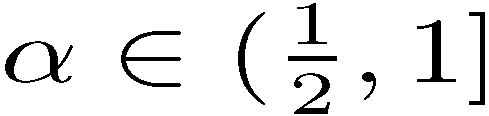 in which the latent period enters as a discrete delay in the incidence, environmental variability acts as multiplicative white noise on the infectious class, and a time-dependent vaccination effort is applied to the susceptible class. The model is written in its stochastic Volterra form, and the restriction
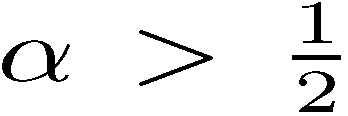 , under which the stochastic convolution against the singular kernel has finite variance, is shown to govern both the well-posedness of the model and the mean-square convergence of its discretisation. Local existence and uniqueness are obtained by a contraction argument; the solution is then continued globally by the method of steps, which exploits the fact that the delayed incidence is linear on each delay window, and the moments of the total population are controlled through a Mittag-Leffler resolvent representation, so that the demographic balance law holds in expectation. Positivity of the noisy compartment is proved for the deterministic model and for the classical order, and is adopted as an explicit hypothesis, supported by numerical evidence, for the fractional stochastic case. The basic reproduction number R₀ is derived from the next-generation matrix. When R₀ < 1, the disease-free equilibrium of the deterministic skeleton is globally asymptotically stable and the infected classes of the stochastic model vanish in the mean, for every delay and every noise intensity. When R₀ > 1, a unique endemic equilibrium exists, is globally asymptotically stable in the absence of delay and, by a modulus estimate on the characteristic quasi-polynomial, remains locally asymptotically stable for every delay, so that latency alone cannot destabilise the endemic state through a Hopf bifurcation. For the classical order, an explicit noise threshold depending on the delay is derived, beyond which the infection dies out almost surely at an exponential rate. An optimal vaccination problem is formulated, the existence of an optimal control is proved, and the optimal policy is characterised through a maximum principle whose adjoint system is a backward Volterra equation carrying a time-advanced term. A fractional predictor-corrector scheme with a fractional Euler-Maruyama step is described, its convergence orders are verified through error tables, and simulations quantify the influence of the fractional order, the delay, the noise intensity, the transmission rate and the vaccination policy on the course of the epidemic.
- Podlubny I. Fractional Differential Equations. San Diego: Academic Press; 1999.
- Kilbas AA, Srivastava HM, Trujillo JJ. Theory and Applications of Fractional Differential Equations. Amsterdam: Elsevier; 2006.
- Diethelm K. The Analysis of Fractional Differential Equations. Lecture Notes in Mathematics, Vol 2004. Berlin: Springer; 2010. https://doi.org/10.1007/978-3-642-14574-2
- Diethelm K. A fractional calculus based model for the simulation of an outbreak of dengue fever. Nonlinear Dyn. 2013;71(4):613-619. https://doi.org/10.1007/s11071-012-0475-2
- Almeida R. Analysis of a fractional SEIR model with treatment. Appl Math Lett. 2018;84:56-62. https://doi.org/10.1016/j.aml.2018.04.015
- Rihan FA, Al-Mdallal QM, AlSakaji HJ, Hashish A. A fractional-order epidemic model with time-delay and nonlinear incidence rate. Chaos Solitons Fractals. 2019;126:97-105. https://doi.org/10.1016/j.chaos.2019.05.039
- Naik PA, Zu J, Owolabi KM. Global dynamics of a fractional order model for the transmission of HIV epidemic with optimal control. Chaos Solitons Fractals. 2020;138:109826. https://doi.org/10.1016/j.chaos.2020.109826
- Gacem I, Kouche M, Ainseba B. Stability analysis of a fractional-order SEIR epidemic model with general incidence rate and time delay. Math Methods Appl Sci. 2023;46(9):10947-10969. https://doi.org/10.1002/mma.9161
- Xu S, Hu Y. Dynamic analysis of a Caputo fractional-order SEIR model with a general incidence rate. Sci Rep. 2025;15:17561. https://doi.org/10.1038/s41598-025-01400-9
- Suganya S, Parthiban V, Shangerganesh L, Hariharan S. Transmission dynamics of fractional order SVEIR model for African swine fever virus with optimal control analysis. Sci Rep. 2024;14:27185. https://doi.org/10.1038/s41598-024-78140-9
- Zhang J, Xue Y, Hu G. Analysis of fractional order SVEIR infectious disease model with fear effect and secondary vaccination. Nonlinear Dyn. 2025;113(24):34047-34065. https://doi.org/10.1007/s11071-025-11752-6
- El Bechir AJ, Elemine Vall MS, Mohamed Y. Optimal control and stability investigation of a fractional SEIJR approach with a generalized nonlinear transmission rate. J Appl Math Comput. 2026;72(1):19. https://doi.org/10.1007/s12190-025-02669-9
- Yazhini M, Samidurai R, Shang Y. Event-triggered synchronization of fractional-order complex-valued BAM neural networks with application to image encryption. Chaos Solitons Fractals. 2026;203:117666. https://doi.org/10.1016/j.chaos.2025.117666
- Allen LJS. An introduction to stochastic epidemic models. In: Brauer F, van den Driessche P, Wu J, eds. Mathematical Epidemiology. Lecture Notes in Mathematics, Vol 1945. Berlin: Springer; 2008:81-130. https://doi.org/10.1007/978-3-540-78911-6_3
- Mao X. Stochastic Differential Equations and Applications. 2nd ed. Chichester: Horwood Publishing; 2007.
- Gray A, Greenhalgh D, Hu L, Mao X, Pan J. A stochastic differential equation SIS epidemic model. SIAM J Appl Math. 2011;71(3):876-902. https://doi.org/10.1137/10081856X
- Liu Q, Jiang D, Shi N, Hayat T, Ahmad B. Stationary distribution and extinction of a stochastic SEIR epidemic model with standard incidence. Physica A. 2017;476:58-69. https://doi.org/10.1016/j.physa.2017.02.028
- Sakthivel R, Revathi P, Ren Y. Existence of solutions for nonlinear fractional stochastic differential equations. Nonlinear Anal. 2013;81:70-86. https://doi.org/10.1016/j.na.2012.10.009
- Anh PT, Doan TS, Huong PT. A variation of constant formula for Caputo fractional stochastic differential equations. Stat Probab Lett. 2019;145:351-358. https://doi.org/10.1016/j.spl.2018.10.010
- Son DT, Huong PT, Kloeden PE, Tuan HT. Asymptotic separation between solutions of Caputo fractional stochastic differential equations. Stoch Anal Appl. 2018;36(4):654-664. https://doi.org/10.1080/07362994.2018.1440243
- Doan TS, Huong PT, Kloeden PE, Vu AM. Euler-Maruyama scheme for Caputo stochastic fractional differential equations. J Comput Appl Math. 2020;380:112989. https://doi.org/10.1016/j.cam.2020.112989
- Huong PT, The NT. Well-posedness and regularity for solutions of Caputo stochastic fractional delay differential equations. Stat Probab Lett. 2023;195:109768. https://doi.org/10.1016/j.spl.2022.109768
- Huong PT. Euler-Maruyama schemes for Caputo stochastic fractional delay differential equations. Random Oper Stoch Equ. 2025;33(2):223-234. https://doi.org/10.1515/rose-2025-2013
- Sabbar Y, Din A, Kiouach D. Influence of fractal-fractional differentiation and independent quadratic Lévy jumps on the dynamics of a general epidemic model with vaccination strategy. Chaos Solitons Fractals. 2023;171:113434. https://doi.org/10.1016/j.chaos.2023.113434
- Ren G, Yu Y, Xu W, Li F, Wu J. A fractional stochastic SPEIQR epidemic model in switching network for COVID-19. Chin J Phys. 2024;89:290-301. https://doi.org/10.1016/j.cjph.2024.03.001
- Tamimi H, Saadati R, Ghaemi MB. Application of nonlinear stochastic fractional systems in the generalized SEIR model. Chaos. 2025;35(8):083109. https://doi.org/10.1063/5.0279918
- Kuang Y. Delay Differential Equations with Applications in Population Dynamics. Boston: Academic Press; 1993.
- Ruan S. Delay differential equations in single species dynamics. In: Arino O, Hbid ML, Ait Dads E, eds. Delay Differential Equations and Applications. NATO Science Series II, Vol 205. Dordrecht: Springer; 2006:477-517. https://doi.org/10.1007/1-4020-3647-7_11
- Rihan FA. Delay Differential Equations and Applications to Biology. Singapore: Springer; 2021. https://doi.org/10.1007/978-981-16-0626-7
- Matignon D. Stability results for fractional differential equations with applications to control processing. In: Computational Engineering in Systems Applications. Vol 2. Lille: IMACS/IEEE-SMC; 1996:963-968.
- Deng W, Li C, Lü J. Stability analysis of linear fractional differential system with multiple time delays. Nonlinear Dyn. 2007;48(4):409-416. https://doi.org/10.1007/s11071-006-9094-0
- Cooke KL, van den Driessche P. Analysis of an SEIRS epidemic model with two delays. J Math Biol. 1996;35(2):240-260. https://doi.org/10.1007/s002850050051
- Huang C, Cao J, Xiao M, Alsaedi A, Hayat T. Bifurcations in a delayed fractional complex-valued neural network. Appl Math Comput. 2017;292:210-227. https://doi.org/10.1016/j.amc.2016.07.029
- Majee S, Jana S, Kar TK, Bhunia B. Complex dynamics of a fractional-order delayed epidemic model incorporating waning immunity and optimal control. Eur Phys J Spec Top. 2025;234(8):1823-1850. https://doi.org/10.1140/epjs/s11734-024-01221-3
- Madhusudanan V, Naik PA, Murthy BSN, Guerrini L, Srinivas MN, Chada L. Modeling tuberculosis transmission with kernel functions: effects of vaccination and time delay. Eur Phys J Plus. 2026;141(1):76. https://doi.org/10.1140/epjp/s13360-026-07309-0
- Kheiri H, Jafari M. Optimal control of a fractional-order model for the HIV/AIDS epidemic. Int J Biomath. 2018;11(7):1850086. https://doi.org/10.1142/S1793524518500869
- Sweilam NH, AL-Mekhlafi SM, Baleanu D. Optimal control for a fractional tuberculosis infection model including the impact of diabetes and resistant strains. J Adv Res. 2019;17:125-137. https://doi.org/10.1016/j.jare.2019.01.007
- Agrawal OP. A general formulation and solution scheme for fractional optimal control problems. Nonlinear Dyn. 2004;38(1-4):323-337. https://doi.org/10.1007/s11071-004-3764-6
- Jarad F, Abdeljawad T, Baleanu D. Fractional variational optimal control problems with delayed arguments. Nonlinear Dyn. 2010;62(3):609-614. https://doi.org/10.1007/s11071-010-9748-9
- Peng S. A general stochastic maximum principle for optimal control problems. SIAM J Control Optim. 1990;28(4):966-979. https://doi.org/10.1137/0328054
- Yong J, Zhou XY. Stochastic Controls: Hamiltonian Systems and HJB Equations. New York: Springer; 1999. https://doi.org/10.1007/978-1-4612-1466-3
- Chen L, Wu Z. Maximum principle for the stochastic optimal control problem with delay and application. Automatica. 2010;46(6):1074-1080. https://doi.org/10.1016/j.automatica.2010.03.005
- Øksendal B, Sulem A, Zhang T. Optimal control of stochastic delay equations and time-advanced backward stochastic differential equations. Adv Appl Probab. 2011;43(2):572-596. https://doi.org/10.1239/aap/1308662493
- Yong J. Backward stochastic Volterra integral equations and some related problems. Stoch Process Appl. 2006;116(5):779-795. https://doi.org/10.1016/j.spa.2006.01.005
- Yong J. Well-posedness and regularity of backward stochastic Volterra integral equations. Probab Theory Relat Fields. 2008;142(1-2):21-77. https://doi.org/10.1007/s00440-007-0098-6
- Agram N, Øksendal B. Malliavin calculus and optimal control of stochastic Volterra equations. J Optim Theory Appl. 2015;167(3):1070-1094. https://doi.org/10.1007/s10957-015-0753-5
- Wang T. Linear quadratic control problems of stochastic Volterra integral equations. ESAIM Control Optim Calc Var. 2018;24(4):1849-1879. https://doi.org/10.1051/cocv/2017002
- Hamaguchi Y. On the maximum principle for optimal control problems of stochastic Volterra integral equations with delay. Appl Math Optim. 2023;87(3):42. https://doi.org/10.1007/s00245-022-09958-w
- Hamaguchi Y. Global maximum principle for optimal control of stochastic Volterra equations with singular kernels: an infinite dimensional approach. J Differ Equ. 2025;446:113618. https://doi.org/10.1016/j.jde.2025.113618
- Diethelm K, Ford NJ, Freed AD. A predictor-corrector approach for the numerical solution of fractional differential equations. Nonlinear Dyn. 2002;29(1):3-22. https://doi.org/10.1023/A:1016592219341
- Diethelm K, Ford NJ, Freed AD. Detailed error analysis for a fractional Adams method. Numer Algorithms. 2004;36(1):31-52. https://doi.org/10.1023/B:NUMA.0000027736.85078.be
- Bhalekar S, Daftardar-Gejji V. A predictor-corrector scheme for solving nonlinear delay differential equations of fractional order. J Fract Calc Appl. 2011;1(5):1-9.
- Li C, Zeng F. Numerical Methods for Fractional Calculus. Boca Raton: CRC Press; 2015. https://doi.org/10.1201/b18503
- Shang Y. A Lie algebra approach to susceptible-infected-susceptible epidemics. Electron J Differ Equ. 2012;2012(233):1-7.
- Shang Y. Lie algebra method for solving biological population model. J Theor Appl Phys. 2013;7(1):67. https://doi.org/10.1186/2251-7235-7-67
- Shang Y. Analytical solution for an in-host viral infection model with time-inhomogeneous rates. Acta Phys Pol B. 2015;46(8):1567-1577. https://doi.org/10.5506/APhysPolB.46.1567
- Shang Y. Lie algebraic discussion for affinity based information diffusion in social networks. Open Phys. 2017;15(1):705-711. https://doi.org/10.1515/phys-2017-0083
- Odibat ZM, Shawagfeh NT. Generalized Taylor's formula. Appl Math Comput. 2007;186(1):286-293. https://doi.org/10.1016/j.amc.2006.07.102
- Kaczorek T. Selected Problems of Fractional Systems Theory. Lecture Notes in Control and Information Sciences, Vol 411. Berlin: Springer; 2011. https://doi.org/10.1007/978-3-642-20502-6
- Abi Jaber E, Larsson M, Pulido S. Affine Volterra processes. Ann Appl Probab. 2019;29(5):3155-3200. https://doi.org/10.1214/19-AAP1477
- van den Driessche P, Watmough J. Reproduction numbers and sub-threshold endemic equilibria for compartmental models of disease transmission. Math Biosci. 2002;180(1-2):29-48. https://doi.org/10.1016/S0025-5564(02)00108-6
- Vargas-De-León C. Volterra-type Lyapunov functions for fractional-order epidemic systems. Commun Nonlinear Sci Numer Simul. 2015;24(1-3):75-85. https://doi.org/10.1016/j.cnsns.2014.12.013
- Aguila-Camacho N, Duarte-Mermoud MA, Gallegos JA. Lyapunov functions for fractional order systems. Commun Nonlinear Sci Numer Simul. 2014;19(9):2951-2957. https://doi.org/10.1016/j.cnsns.2014.01.022
- Huo J, Zhao H, Zhu L. The effect of vaccines on backward bifurcation in a fractional order HIV model. Nonlinear Anal Real World Appl. 2015;26:289-305. https://doi.org/10.1016/j.nonrwa.2015.05.014
- Gallegos JA, Duarte-Mermoud MA. On the Lyapunov theory for fractional order systems. Appl Math Comput. 2016;287-288:161-170. https://doi.org/10.1016/j.amc.2016.04.039
- Beretta E, Kuang Y. Geometric stability switch criteria in delay differential systems with delay dependent parameters. SIAM J Math Anal. 2002;33(5):1144-1165. https://doi.org/10.1137/S0036141000376086