

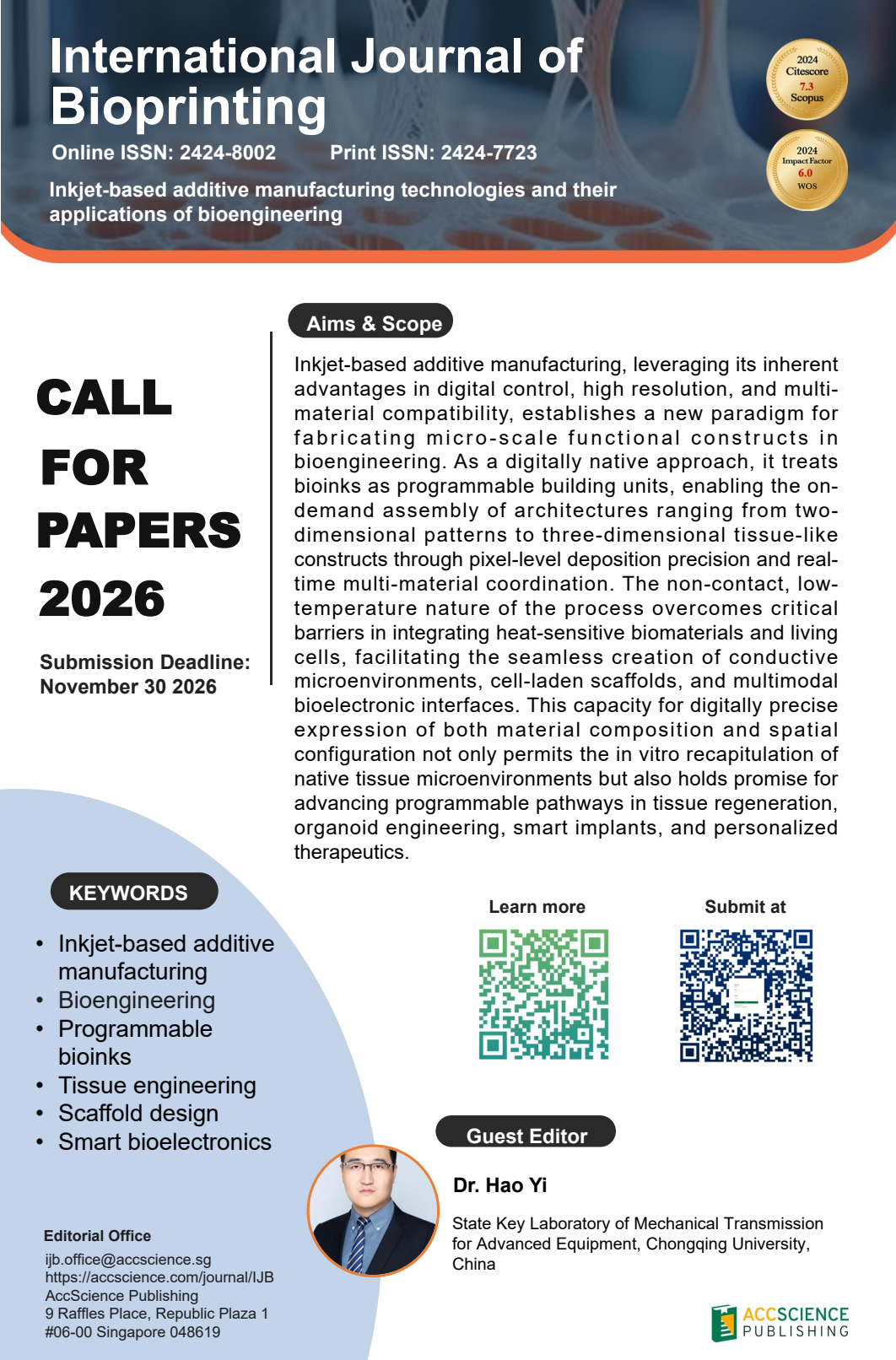
Inkjet-based additive manufacturing, leveraging its inherent advantages in digital control, high resolution, and multi-material compatibility, establishes a new paradigm for fabricating micro-scale functional constructs in bioengineering. As a digitally native approach, it treats bioinks as programmable building units, enabling the on-demand assembly of architectures ranging from two-dimensional patterns to three-dimensional tissue-like constructs through pixel-level deposition precision and real-time multi-material coordination. The non-contact, low-temperature nature of the process overcomes critical barriers in integrating heat-sensitive biomaterials and living cells, facilitating the seamless creation of conductive microenvironments, cell-laden scaffolds, and multimodal bioelectronic interfaces. This capacity for digitally precise expression of both material composition and spatial configuration not only permits the in vitro recapitulation of native tissue microenvironments but also holds promise for advancing programmable pathways in tissue regeneration, organoid engineering, smart implants, and personalized therapeutics.