
Essential oils for pain management in palliative care: Molecular mechanisms, clinical evidence, and therapeutic potential

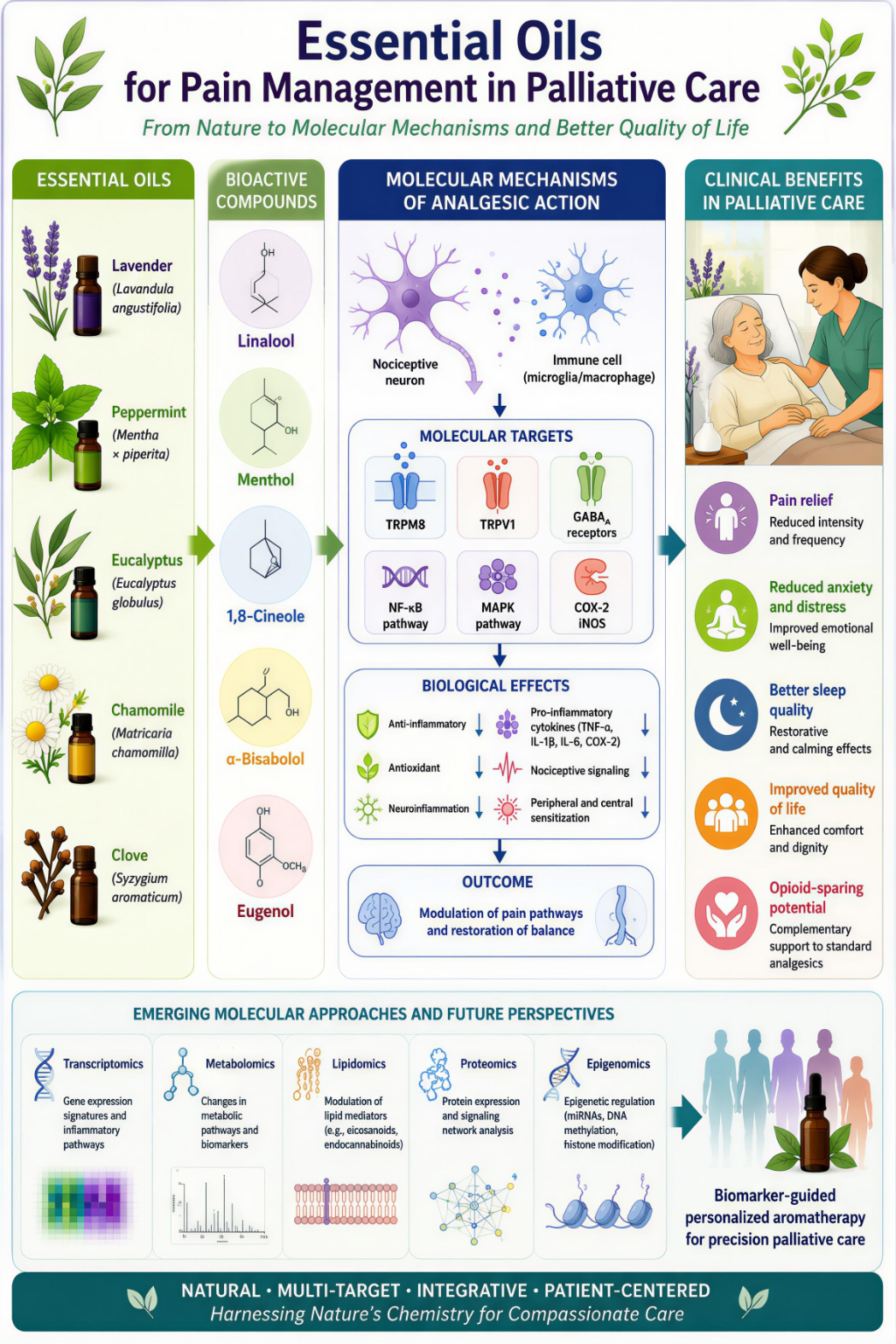
Pain is one of the most distressing symptoms experienced by patients in palliative care, often requiring integrative approaches to ensure effective and compassionate management. Essential oils, used in aromatherapy and topical applications, have emerged as complementary options for alleviating pain and enhancing quality of life. This narrative review explores the potential of essential oils in pain management from an aromatherapy perspective, focusing on their mechanisms of action, clinical effectiveness, and application in real-world palliative care settings. A comprehensive literature search was conducted using PubMed, Web of Science, Scopus, and b-on, without date or language restrictions. Included studies ranged from randomized controlled trials and observational studies to case reports and systematic reviews. Essential oils such as lavender, peppermint, eucalyptus, chamomile, and clove demonstrate analgesic, anti-inflammatory, and anxiolytic properties, with evidence supporting their use in managing cancer pain, neuropathic pain, postoperative discomfort, and musculoskeletal conditions. Real-world insights from hospice and palliative care environments highlight their benefits for physical symptom relief, relaxation, emotional well-being, and improved sleep. While existing data are promising, further high-quality research is needed to standardize protocols and confirm long-term safety and efficacy. Essential oils represent a gentle yet effective adjunct in holistic palliative pain care.
- Henson LA, Maddocks M, Evans C, Davidson M, Hicks S, Higginson IJ. Palliative Care and the Management of Common Distressing Symptoms in Advanced Cancer: Pain, Breathlessness, Nausea and Vomiting, and Fatigue. J Clin Oncol. 2020;38(9):905-914. doi: 10.1200/JCO.19.00470
- Meier DE, Brawley OW. Palliative Care and the Quality of Life. J Clin Oncol. 2011;29(20):2750-2752. doi: 10.1200/JCO.2011.35.9729
- Vora LK, Gholap AD, Hatvate NT, et al. Essential oils for clinical aromatherapy: A comprehensive review. J Ethnopharmacol. 2024;330:118180. doi: 10.1016/j.jep.2024.118180
- Melo H. MANEJO DA DOR NOS CUIDADOS PALIATIVOS [Pain Management in Palliative Care]. Revista ft. 2024;28(139). [In Spanish] doi: 10.69849/revistaft/ra10202410262033
- Gonçalves DI de O, Marinho AVB, Faria AF, Norbim EF. SÍNDROME DA DOR TOTAL: UMA REVISÃO DE LITERATURA [Total Pain Syndrome: A Literature Review]. REVISTA FOCO. 2024;17(7 Edição Especial):e5559. [In Portuguese] doi: 10.54751/revistafoco.ed.esp-032
- Maldonado JV de O, Carlucci HJO, Gonçalves JFG, et al. Gestão da dor em cuidados paliativos [Pain management in palliative care]. Contribuciones A Las Ciencias Sociales. 2024;17(8):e9744. [In Portuguese] doi: 10.55905/revconv.17n.8-396
- Saunders C, Baines M, Dunlop R. Living With Dying: A Guide for Palliative Care. 3rd ed. Oxford, United Kindom: Oxford University Press; 1995. doi: 10.1093/acprof:oso/9780192625144.001.0001
- Nauck F, Benze G. Symptomlinderung bei fortgeschrittener Krebserkrankung [Symptom relief in advanced cancer]. Innere Medizin. 2023;64(1):25-33. [In German] doi: 10.1007/s00108-023-01478-1
- Ramm M, Chung ML, Schnabel K, et al. Pain in Palliative Cancer Patients – Analysis of the German National Palliative Care Registry. J Pain Symptom Manage. 2025;69(2):165-174. doi: 10.1016/j.jpainsymman.2024.10.030
- DeSantana JM, Perissinotti DMN, Oliveira Junior JO de, Correia LMF, Oliveira CM de, Fonseca PRB da. Definition of pain revised after four decades. Braz J Pain. 2020;3(3). doi: 10.5935/2595-0118.20200191
- Dubin AE, Patapoutian A. Nociceptors: the sensors of the pain pathway. J Clin Invest. 2010;120(11):3760-3772. doi: 10.1172/JCI42843
- Ottestad E, Angst MS. Nociceptive Physiology. In: Pharmacology and Physiology for Anesthesia. Amsterdam, Netherlands: Elsevier; 2013:235-252. doi: 10.1016/b978-1-4377-1679-5.00014-4
- Garland EL. Pain Processing in the Human Nervous System: A Selective Review of Nociceptive and Biobehavioral Pathways. Prim Care. 2012;39(3):561-571. doi: 10.1016/j.pop.2012.06.013
- Melzack R, Wall PD. Pain mechanisms: a new theory. Science. 1965;150(3699):971-979. doi: 10.1126/science.150.3699.971
- Latremoliere A, Woolf CJ. Central Sensitization: A Generator of Pain Hypersensitivity by Central Neural Plasticity. J Pain. 2009;10(9):895-926. doi: 10.1016/j.jpain.2009.06.012
- Chen X, Tang SJ. Neural Circuitry Polarization in the Spinal Dorsal Horn (SDH): A Novel Form of Dysregulated Circuitry Plasticity during Pain Pathogenesis. Cells. 2024;13(5):398. doi: 10.3390/cells13050398
- Cardoso P de T, Portela M da S, Prazeres JS, Cardozo JB, Freitas EG de, Lins RJF. Mecanismos neurobiológicos da dor crônica [Neurobiological mechanisms of chronic pain]. Anais New Science Publishers | Editora Impacto. 2024. [In Portuguese] Available from: https://periodicos.newsciencepubl.com/ans/article/view/126
- Johnston KJA, Huckins LM. Chronic Pain and Psychiatric Conditions. Complex Psychiatry. 2023;9(1-4):24-43. doi: 10.1159/000527041
- Marazziti D, Mungai F, Vivarelli L, Presta S, Dell’Osso B. Pain and psychiatry: a critical analysis and pharmacological review. Clin Pract Epidemiol Ment Health. 2006;2(1):31. doi: 10.1186/1745-0179-2-31
- Nirvanie-Persaud L, Millis RM. Epigenetics and Pain: New Insights to an Old Problem. Cureus. 14(9):e29353. doi: 10.7759/cureus.29353
- Kuchinad A, Schweinhardt P, Seminowicz DA, Wood PB, Chizh BA, Bushnell MC. Accelerated Brain Gray Matter Loss in Fibromyalgia Patients: Premature Aging of the Brain? J Neurosci. 2007;27(15):4004-4007. doi: 10.1523/JNEUROSCI.0098-07.2007
- Tracey I, Bushnell MC. How Neuroimaging Studies Have Challenged Us to Rethink: Is Chronic Pain a Disease? J Pain. 2009;10(11):1113-1120. doi: 10.1016/j.jpain.2009.09.001
- Tisserand R, Young R. Essential Oil Safety - A Guide for Health Care Professionals. 2nd ed. Amsterdam, Netherlands: Elsevier; 2014. doi: 10.1016/C2009-0-52351-3
- Wolffenbüttel AN. Base Da Química Dos Óleos Essenciais e Aromaterapia - Abordagem Técnica e Científica [The Basics of Essential Oil Chemistry and Aromatherapy - A Technical and Scientific Approach]. 3rd Edition. Editora Lazlo. 2019. [In Portuguese] Available from: https://www.touchelivros.com.br/base-da-quimica-dos-oleos-essenciais-e-aromaterapia-abordagem-tecnica-e-cientifica/
- Diogo Gonçalves S, Garcia Diogo R, Miranda N, Caramelo A, Esteves V. Non-pharmacological approaches for neuroprotection and symptom management in neurodegenerative disorders: the role of integrative therapies. Explor Neuroprot Ther. 2026;6:1004149. doi: 10.37349/ent.2026.1004149
- Sarmento-Neto JF, do Nascimento LG, Felipe CFB, de Sousa DP. Analgesic Potential of Essential Oils. Molecules. 2015;21(1):20. doi: 10.3390/molecules21010020
- Soares GAB e, Bhattacharya T, Chakrabarti T, Tagde P, Cavalu S. Exploring Pharmacological Mechanisms of Essential Oils on the Central Nervous System. Plants. 2021;11(1):21. doi: 10.3390/plants11010021
- Stojanović NM, Ranđelović PJ, Simonović M, et al. Essential Oil Constituents as Anti-Inflammatory and Neuroprotective Agents: An Insight through Microglia Modulation. Int J Mol Sci. 2024;25(10):5168. doi: 10.3390/ijms25105168
- Vay L, Gu C, McNaughton PA. The thermo-TRP ion channel family: properties and therapeutic implications. Br J Pharmacol. 2012;165(4):787-801. doi: 10.1111/j.1476-5381.2011.01601.x
- Stucky CL, Dubin AE, Jeske NA, Malin SA, McKemy DD, Story GM. Roles of transient receptor potential channels in pain. Brain Res Rev. 2009;60(1):2-23. doi: 10.1016/j.brainresrev.2008.12.018
- Batiha GES, Teibo JO, Wasef L, et al. A review of the bioactive components and pharmacological properties of Lavandula species. Naunyn Schmiedebergs Arch Pharmacol. 2023;396(5):877-900. doi: 10.1007/s00210-023-02392-x
- Pandur E, Balatinácz A, Micalizzi G, et al. Anti-inflammatory effect of lavender (Lavandula angustifolia Mill.) essential oil prepared during different plant phenophases on THP-1 macrophages. BMC Complement Med Ther. 2021;21(1):287. doi: 10.1186/s12906-021-03461-5
- Bank RPD. RCSB PDB: Chemical Sketch Tool. Accessed February 5, 2025. https://www.rcsb.org/chemical-sketch
- Yoo O, Park SA. Anxiety-Reducing Effects of Lavender Essential Oil Inhalation: A Systematic Review. Healthcare. 2023;11(22):2978. doi: 10.3390/healthcare11222978
- Bavarsad NH, Bagheri S, Kourosh-Arami M, Komaki A. Aromatherapy for the brain: Lavender’s healing effect on epilepsy, depression, anxiety, migraine, and Alzheimer’s disease: A review article. Heliyon. 2023;9(8):e18492. doi: 10.1016/j.heliyon.2023.e18492
- Olapour A, Behaeen K, Akhondzadeh R, Soltani F, al Sadat Razavi F, Bekhradi R. The Effect of Inhalation of Aromatherapy Blend containing Lavender Essential Oil on Cesarean Postoperative Pain. Anesth Pain Med. 2013;3(1):203-207. doi: 10.5812/aapm.9570
- Soden K, Vincent K, Craske S, Lucas C, Ashley S. A randomized controlled trial of aromatherapy massage in a hospice setting. Palliat Med. 2004;18(2):87-92. doi: 10.1191/0269216304pm874oa
- Rivaz M, Rahpeima M, Khademian Z, Dabbaghmanesh MH. The effects of aromatherapy massage with lavender essential oil on neuropathic pain and quality of life in diabetic patients: A randomized clinical trial. Complement Ther Clin Pract. 2021;44:101430. doi: 10.1016/j.ctcp.2021.101430
- Corasaniti MT, Bagetta G, Morrone LA, et al. Efficacy of Essential Oils in Relieving Cancer Pain: A Systematic Review and Meta-Analysis. Int J Mol Sci. 2023;24(8):7085. doi: 10.3390/ijms24087085
- Mardani A, Maleki M, Hanifi N, Borghei Y, Vaismoradi M. A systematic review of the effect of lavender on cancer complications. Complement Ther Med. 2022;67. doi: 10.1016/j.ctim.2022.102836
- Barboza JN, da Silva Maia Bezerra Filho C, Silva RO, Medeiros JVR, de Sousa DP. An Overview on the Anti-inflammatory Potential and Antioxidant Profile of Eugenol. Oxid Med Cell Longev. 2018;2018(1):3957262. doi: 10.1155/2018/3957262
- Liu B, Fan L, Balakrishna S, Sui A, Morris JB, Jordt SE. TRPM8 is the Principal Mediator of Menthol-induced Analgesia of Acute and Inflammatory Pain. Pain. 2013;154(10):2169-2177. doi: 10.1016/j.pain.2013.06.043
- Heghes SC, Vostinaru O, Rus LM, Mogosan C, Iuga CA, Filip L. Antispasmodic Effect of Essential Oils and Their Constituents: A Review. Molecules. 2019;24(9):1675. doi: 10.3390/molecules24091675
- Kehili S, Boukhatem MN, Belkadi A, Ferhat MA, Setzer WN. Peppermint (Mentha piperita L.) essential oil as a potent anti-inflammatory, wound healing and anti-nociceptive drug. Eur J Biol Res. 2020;10(2):132-149. doi: 10.5281/ZENODO.3831042
- Göbel H, Fresenius J, Heinze A, Dworschak M, Soyka D. Effektivität von Oleum menthae piperitae und von Paracetamol in der Therapie des Kopfschmerzes vom Spannungstyp [Effectiveness of Oleum menthae piperitae and paracetamol in therapy of headache of the tension type]. Nervenarzt. 1996;67(8):672-681. [In German] doi: 10.1007/s001150050040
- Ridouh I, Hackshaw KV. Essential Oils and Neuropathic Pain. Plants. 2022;11(14):1797. doi: 10.3390/plants11141797
- Chumpitazi BP, Kearns G, Shulman RJ. Review article: The physiologic effects and safety of Peppermint Oil and its efficacy in irritable bowel syndrome and other functional disorders. Aliment Pharmacol Ther. 2018;47(6):738-752. doi: 10.1111/apt.14519
- Liu JH, Chen GH, Yeh HZ, Huang CK, Poon SK. Enteric-coated peppermint-oil capsules in the treatment of irritable bowel syndrome: a prospective, randomized trial. J Gastroenterol. 1997;32(6):765-768. doi: 10.1007/BF02936952
- Scuteri D, Hamamura K, Sakurada T, et al. Efficacy of Essential Oils in Pain: A Systematic Review and Meta-Analysis of Preclinical Evidence. Front Pharmacol. 2021;12:640128. doi: 10.3389/fphar.2021.640128
- Čmiková N, Galovičová L, Schwarzová M, et al. Chemical Composition and Biological Activities of Eucalyptus globulus Essential Oil. Plants. 2023;12(5):1076. doi: 10.3390/plants12051076
- Hoch CC, Petry J, Griesbaum L, et al. 1,8-cineole (eucalyptol): A versatile phytochemical with therapeutic applications across multiple diseases. Biomed Pharmacother 2023;167:115467. doi: 10.1016/j.biopha.2023.115467
- Horváth A, Pandur E, Sipos K, et al. Anti-inflammatory effects of lavender and eucalyptus essential oils on the in vitro cell culture model of bladder pain syndrome using T24 cells. BMC Complement Med Ther. 2022;22(1):119. doi: 10.1186/s12906-022-03604-2
- Ho CL, Li LH, Weng YC, Hua KF, Ju TC. Eucalyptus essential oils inhibit the lipopolysaccharide-induced inflammatory response in RAW264.7 macrophages through reducing MAPK and NF-κB pathways. BMC Complement Med Ther. 2020;20(1):200. doi: 10.1186/s12906-020-02999-0
- Shao J, Yin Z, Wang Y, et al. Effects of Different Doses of Eucalyptus Oil From Eucalyptus globulus Labill on Respiratory Tract Immunity and Immune Function in Healthy Rats. Front Pharmacol. 2020;11:1287. doi: 10.3389/fphar.2020.01287
- Varkaneh ZK, Karampourian A, Oshvandi K, Basiri Z, Mohammadi Y. The effect of eucalyptus inhalation on pain and the quality of life in rheumatoid arthritis. Cont Clin Trial Comm. 2022;29:100976. doi: 10.1016/j.conctc.2022.100976
- Jun YS, Kang P, Min SS, Lee JM, Kim HK, Seol GH. Effect of Eucalyptus Oil Inhalation on Pain and Inflammatory Responses after Total Knee Replacement: A Randomized Clinical Trial. Evid Based Complement Alternat Med. 2013;2013:1-7. doi: 10.1155/2013/502727
- Bakó E, Fehérvári P, Garami A, et al. Efficacy of Topical Essential Oils in Musculoskeletal Disorders: Systematic Review and Meta-Analysis of Randomized Controlled Trials. Pharmaceuticals. 2023;16(2):144. doi: 10.3390/ph16020144
- Araujo DSM de, Nassini R, Geppetti P, Logu FD. TRPA1 as a therapeutic target for nociceptive pain. Expert Opin Ther Tar. 2020;24(10):997-1008. doi: 10.1080/14728222.2020.1815191
- Salvatori ES, Morgan LV, Ferrarini S, et al. Anti-Inflammatory and Antimicrobial Effects of Eucalyptus spp. Essential Oils: A Potential Valuable Use for an Industry Byproduct. Evid Based Complement Alternat Med. 2023;2023(1):2582698. doi: 10.1155/2023/2582698
- Horváth G, Ács K. Essential oils in the treatment of respiratory tract diseases highlighting their role in bacterial infections and their anti‐inflammatory action: a review. Flavour Fragr J. 2015;30(5):331-341. doi: 10.1002/ffj.3252
- Shiekh RAE, Atwa AM, Elgindy AM, et al. Therapeutic applications of eucalyptus essential oils. Inflammopharmacol. 2025;33(1):163-182. doi: 10.1007/s10787-024-01588-8
- Hedigan F, Sheridan H, Sasse A. Benefit of inhalation aromatherapy as a complementary treatment for stress and anxiety in a clinical setting – A systematic review. Complement Ther Clin Pract. 2023;52:101750. doi: 10.1016/j.ctcp.2023.101750
- Lakhan SE, Sheafer H, Tepper D. The Effectiveness of Aromatherapy in Reducing Pain: A Systematic Review and Meta-Analysis. Pain Res Treat. 2016;2016:1-13. doi: 10.1155/2016/8158693
- Gonçalves S, Marques P, Matos RS. Exploring Aromatherapy as a Complementary Approach in Palliative Care: A Systematic Review. J Palliat Med. 2024;27(9):1247-1266. doi: 10.1089/jpm.2024.0019
- Gonçalves S, Fernandes L, Caramelo A, Martins M, Rodrigues T, Matos RS. Soothing the Itch: The Role of Medicinal Plants in Alleviating Pruritus in Palliative Care. Plants. 2024;13(24):3515. doi: 10.3390/plants13243515
- De Cicco P, Ercolano G, Sirignano C, et al. Chamomile essential oils exert anti-inflammatory effects involving human and murine macrophages: Evidence to support a therapeutic action. J Ethnopharmacol. 2023;311:116391. doi: 10.1016/j.jep.2023.116391
- Saadatmand S, Zohroudi F, Tangestani H. The Effect of Oral Chamomile on Anxiety: A Systematic Review of Clinical Trials. Clin Nutr Res. 2024;13(2):139-147. doi: 10.7762/cnr.2024.13.2.139
- Shoara R, Hashempur MH, Ashraf A, Salehi A, Dehshahri S, Habibagahi Z. Efficacy and safety of topical Matricaria chamomilla L. (chamomile) oil for knee osteoarthritis: A randomized controlled clinical trial. Complement Ther Clin Pract. 2015;21(3):181-187. doi: 10.1016/j.ctcp.2015.06.003
- Hashempur MH, Lari ZN, Ghoreishi PS, et al. A pilot randomized double-blind placebo-controlled trial on topical chamomile (Matricaria chamomilla L.) oil for severe carpal tunnel syndrome. Complement Ther Clin Pract. 2015;21(4):223-228. doi: 10.1016/j.ctcp.2015.08.001
- Liu T, Cheng H, Tian L, Zhang Y, Wang S, Lin L. Aromatherapy with inhalation can effectively improve the anxiety and depression of cancer patients: A meta-analysis. Gen Hosp Psychiatry. 2022;77:118-127. doi: 10.1016/j.genhosppsych.2022.05.004
- Boitor M, Gélinas C, Richard-Lalonde M, Thombs B. The Effect of Massage on Acute Postoperative Pain in Critically and Acutely Ill Adults Post-thoracic Surgery: Systematic Review and Meta-analysis of Randomized Controlled Trials. Heart Lung: J Acute Crit Care. 2017;46(5):339-346. doi: 10.1016/j.hrtlng.2017.05.005
- Sheykhian M, Mirnejad R, Zarei SM, et al. Investigation of the antimicrobial synergistic effects of clove and marjoram extracts combination against some oral pathogens. Biomed Biopharm Res. 2025;22(1).24-40 doi: 10.19277/bbr.22.1.354
- Nirmala MJ, Durai L, Gopakumar V, Nagarajan R. Anticancer and antibacterial effects of a clove bud essential oil-based nanoscale emulsion system. Int J Nanomedicine. 2019;14:6439-6450. doi: 10.2147/IJN.S211047
- Motilal S, Maharaj R. Nutmeg Extracts for Painful Diabetic Neuropathy: A Randomized, Double-Blind, Controlled Study. J Altern Complement Med. 2013;19(4):347-52. doi: 10.1089/acm.2012.0016
- Kopustinskiene DM, Bernatonyte U, Maslii Y, Herbina N, Bernatoniene J. Natural Herbal Non-Opioid Topical Pain Relievers—Comparison with Traditional Therapy. Pharmaceutics. 2022;14(12):2648. doi: 10.3390/pharmaceutics14122648
- Leo M, D’Angeli F, Genovese C, et al. Oral Health and Nutraceutical Agents. Int J Mol Sci. 2024;25(17):9733. doi: 10.3390/ijms25179733
- Kong M, Hwang DS, Yoon SW, Kim J. The effect of clove-based herbal mouthwash on radiation-induced oral mucositis in patients with head and neck cancer: a single-blind randomized preliminary study. Onco Targets Ther. 2016;9:4533-4538. doi: 10.2147/OTT.S108769
- Zewail MB, El-Gizawy SA, Asaad GF, Shabana ME, El-Dakroury WA. Chitosan coated clove oil-based nanoemulsion: An attractive option for oral delivery of leflunomide in rheumatoid arthritis. Int J Pharmaceut. 2023;643:123224. doi: 10.1016/j.ijpharm.2023.123224
- Shakeel F, Alam P, Ali A, et al. Investigating Antiarthritic Potential of Nanostructured Clove Oil (Syzygium aromaticum) in FCA-Induced Arthritic Rats: Pharmaceutical Action and Delivery Strategies. Molecules. 2021;26(23):7327. doi: 10.3390/molecules26237327
- Guo X, Wang P. Aroma Characteristics of Lavender Extract and Essential Oil from Lavandula angustifolia Mill. Molecules. 2020;25(23):5541. doi: 10.3390/molecules25235541
- Zhang J, Li M, Zhang H, Pang X. Comparative investigation on aroma profiles of five different mint (Mentha) species using a combined sensory, spectroscopic and chemometric study. Food Chem. 2022;371:131104. doi: 10.1016/j.foodchem.2021.131104
- Sharmeen JB, Mahomoodally FM, Zengin G, Maggi F. Essential Oils as Natural Sources of Fragrance Compounds for Cosmetics and Cosmeceuticals. Molecules. 2021;26(3):666. doi: 10.3390/molecules26030666
- Rhind JP. Essential Oils: A Handbook for Aromatherapy Practice. Jessica Kingsley Publishers. Available from: https://www.scribd.com/document/343495031/Essential-Oils-a-Handbook-for-Aromatherapy-Practice
- Liñán-Atero R, Aghababaei F, García SR, et al. Clove Essential Oil: Chemical Profile, Biological Activities, Encapsulation Strategies, and Food Applications. Antioxidants. 2024;13(4):488. doi: 10.3390/antiox13040488
- Cardillo M, Katam K, Suravajhala P. Advancements in multi-omics research to address challenges in Alzheimer’s disease: a systems biology approach utilizing molecular biomarkers and innovative strategies. Front Aging Neurosci. 2025;17:1591796. doi: 10.3389/fnagi.2025.1591796
- de Sousa DP, Damasceno ROS, Amorati R, et al. Essential Oils: Chemistry and Pharmacological Activities. Biomolecules. 2023;13(7):1144. doi: 10.3390/biom13071144
- Gong Z, Zou J, Fang Y, et al. The role of gut microbiota in neuropathic pain: insights into immune mechanisms. J Headache Pain. 2025;27(1):28. doi: 10.1186/s10194-025-02260-4
- Popa AE, Popa E, Dramba T, et al. Dysregulated Resolution of Inflammation After Respiratory Viral Infections: Molecular Pathways Linking Neuroinflammation to Post-Viral Neuropathic Pain—A Narrative Review. Int J Mol Sci. 2025;26(23):11383. doi: 10.3390/ijms262311383
- de Sousa DP. Analgesic-like Activity of Essential Oils Constituents. Molecules. 2011;16(3):2233-2252. doi: 10.3390/molecules16032233
- Goswami AK, Sarma A, Ahmed S, Das BK. Linalool in chronic diseases: A comprehensive review of its pharmacological potential and delivery aspects. Fitoterapia. 2025;185:106754. doi: 10.1016/j.fitote.2025.106754
- Li Y, Lv O, Zhou F, Li Q, Wu Z, Zheng Y. Linalool Inhibits LPS-Induced Inflammation in BV2 Microglia Cells by Activating Nrf2. Neurochem Res. 2015;40(7):1520-1525. doi: 10.1007/s11064-015-1629-7
- Interdonato L, Ferrario G, Cordaro M, et al. Targeting Nrf2 and NF-κB Signaling Pathways in Inflammatory Pain: The Role of Polyphenols from Thinned Apples. Molecules. 2023;28(14):5376. doi: 10.3390/molecules28145376
- Ghasemi M, Babaeian Jelodar N, Modarresi M, Bagheri N, Jamali A. Increase of Chamazulene and α-Bisabolol Contents of the Essential Oil of German Chamomile (Matricaria chamomila L.) Using Salicylic Acid Treatments under Normal and Heat Stress Conditions. Foods. 2016;5(3):56. doi: 10.3390/foods5030056
- He Y, Wang Y, He Y, et al. Unraveling the antibacterial mechanism of eucalyptol against Escherichia coli O157:H7 through transcriptomics and its application in beef broth. Int J Food Microbiol. 2026;448:111580. doi: 10.1016/j.ijfoodmicro.2025.111580
- Damasceno ROS, Pinheiro JLS, Rodrigues LHM, et al. Anti-Inflammatory and Antioxidant Activities of Eugenol: An Update. Pharmaceuticals. 2024;17(11):1505. doi: 10.3390/ph17111505
- Chung G, Im ST, Kim YH, Jung SJ, Rhyu MR, Oh SB. Activation of transient receptor potential ankyrin 1 by eugenol. Neuroscience. 2014;261:153-160. doi: 10.1016/j.neuroscience.2013.12.047
- Teckchandani S, Gowda GAN, Raftery D, Curatolo M. Metabolomics in Chronic Pain Research. Eur J Pain. 2021;25(2):313-326. doi: 10.1002/ejp.1677
- Nisar MF, Khadim M, Rafiq M, Chen J, Yang Y, Wan CC. Pharmacological Properties and Health Benefits of Eugenol: A Comprehensive Review. Oxid Med Cell Longev. 2021;2021:2497354. doi: 10.1155/2021/2497354
- Juricic H, Cuccioloni M, Bonfili L, et al. Biochemical, Biological, and Clinical Properties of γ-Oryzanol. Antioxidants. 2025;14(9):1099. doi: 10.3390/antiox14091099
- Sanders OD, Rajagopal JA, Rajagopal L. Menthol to Induce Non-shivering Thermogenesis via TRPM8/PKA Signaling for Treatment of Obesity. J Obes Metab Syndr. 2021;30(1):4-11. doi: 10.7570/jomes20038
- Rozza AL, Beserra FP, Vieira AJ, et al. The Use of Menthol in Skin Wound Healing—Anti-Inflammatory Potential, Antioxidant Defense System Stimulation and Increased Epithelialization. Pharmaceutics. 2021;13(11):1902. doi: 10.3390/pharmaceutics13111902
- Baldasso GM, Paes RS, Moreira AG, et al. The role of cannabinoid ligands in neurodegenerative diseases: Emerging anti-inflammatory, immunomodulation and disease-modifying perspectives. Pharmacol Res. 2026;227:108185. doi: 10.1016/j.phrs.2026.108185
- Diogo Gonçalves S, Garcia Diogo R. Epigenetic modulation by essential oils: Potential applications and challenges in palliative care. J Integr Med. 2026. doi: 10.1016/j.joim.2026.06.003
- Li Z, Li X, Liu J, et al. Molecular Mechanisms of Chronic Pain and Therapeutic Interventions. MedComm. 2025;6(8):e70325. doi: 10.1002/mco2.70325
- Jin Z, Song Y, Abdelmoaty AAA, Lin F, Li J, Chen X. Anti‐Neuroinflammation Activity of Essential Oils and Fatty Acids. Food Sci Nutr. 2026;14(1):e71422. doi: 10.1002/fsn3.71422
- Pires Costa E, Maciel dos Santos M, de Paula RA, et al. Antioxidant and Anti-inflammatory Activity of Eugenol, Bis-eugenol, and Clove Essential Oil: An In Vitro Study. ACS Omega. 2025;10(28):31033-31045. doi: 10.1021/acsomega.5c04146
- Ngum JA, Tatang FJ, Toumeni MH, et al. An overview of natural products that modulate the expression of non-coding RNAs involved in oxidative stress and inflammation-associated disorders. Front Pharmacol. 2023;14:1144836. doi: 10.3389/fphar.2023.1144836
- Ahammed S, Chowdhury R, Al Hasan MS, et al. Anti-arthritic potential of linalool: in vitro, in vivo, and in silico mechanistic insights for safer therapeutic applications. Naunyn Schmiedebergs Arch Pharmacol. 2025;398(8):10921-10937. doi: 10.1007/s00210-025-03984-5
- Pandur E, Major B, Rák T, Sipos K, Csutak A, Horváth G. Linalool and Geraniol Defend Neurons from Oxidative Stress, Inflammation, and Iron Accumulation in In Vitro Parkinson’s Models. Antioxidants. 2024;13(8):917. doi: 10.3390/antiox13080917
- Wang Y, Zhu J, Zhang X, Tong F, Xu Q. Anti-inflammatory effects of 1,8-cineol via NF-κB/COX-2 pathway in BEAS-2B cells and alleviates bronchoconstriction and airway hyperreactivity in ovalbumin sensitized mice. Front Immunol. 2026;17. doi: 10.3389/fimmu.2026.1714915
- Sah A, Naseef PP, Kuruniyan MS, Jain GK, Zakir F, Aggarwal G. A Comprehensive Study of Therapeutic Applications of Chamomile. Pharmaceuticals. 2022;15(10):1284. doi: 10.3390/ph15101284
- Eddin LB, Jha NK, Goyal SN, et al. Health Benefits, Pharmacological Effects, Molecular Mechanisms, and Therapeutic Potential of α-Bisabolol. Nutrients. 2022;14(7):1370. doi: 10.3390/nu14071370
- Pramod K, Ansari SH, Ali J. Eugenol: a natural compound with versatile pharmacological actions. Nat Prod Commun. 2010;5(12):1999-2006. doi: 10.1177/1934578X1000501236
- Sattayakhom A, Wichit S, Koomhin P. The Effects of Essential Oils on the Nervous System: A Scoping Review. Molecules. 2023;28(9):3771. doi: 10.3390/molecules28093771
- Farrar AJ, Farrar FC. Clinical Aromatherapy. Nurs Clin N Am. 2020;55(4):489-504. doi: 10.1016/j.cnur.2020.06.015 Nurs Clin N Am
- Candy B, Armstrong M, Flemming K, et al. The effectiveness of aromatherapy, massage and reflexology in people with palliative care needs: A systematic review. Palliat Med. 2020;34(2):179-194. doi: 10.1177/0269216319884198
- Kyle G. Evaluating the effectiveness of aromatherapy in reducing levels of anxiety in palliative care patients: Results of a pilot study. Complement Ther Clin Pract. 2006;12(2):148-155. doi: 10.1016/j.ctcp.2005.11.003
- How to Use Essential Oils with Compresses: A Simple Guide. Amrita Court Essential Oils. Accessed April 10, 2025. https://www.amritacourtglobal.com/blogs/ac-essential-lab/how-to-use-essential-oils-with-compresses-a-simple-guide
- Baatiema L, de-Graft Aikins A, Koram KK, et al. Frontline health workers’ experiences of providing care for people living with non-communicable diseases during the COVID-19 pandemic in Ghana: a qualitative study. BMJ Open. 2024;14(5):e078957. doi: 10.1136/bmjopen-2023-078957
- Kreye G, Wasl M, Dietz A, et al. Aromatherapy in Palliative Care: A Single-Institute Retrospective Analysis Evaluating the Effect of Lemon Oil Pads against Nausea and Vomiting in Advanced Cancer Patients. Cancers. 2022;14(9):2131. doi: 10.3390/cancers14092131
- Diogo Gonçalves S. Pruritus in Palliative Care: A Narrative Review of Essential Oil-Based Strategies to Alleviate Cutaneous Discomfort. Diseases. 2025;13(8):232. doi: 10.3390/diseases13080232
- Wanwimolruk S, Prachayasittikul V. Cytochrome P450 enzyme mediated herbal drug interactions (Part 1). EXCLI J. 2014;13:347-391.
- Koulivand PH, Khaleghi Ghadiri M, Gorji A. Lavender and the Nervous System. Evid Based Complement Alternat Med. 2013;2013:1-10. doi: 10.1155/2013/681304
- McNicol E, Horowicz-Mehler N, Fisk RA, et al. Management of opioid side effects in cancer-related and chronic noncancer pain: a systematic review. J Pain. 2003;4(5):231-256. doi: 10.1016/S1526-5900(03)00556-X
- National Academies of Sciences, Engineering, and Medicine; Health and Medicine Division; Board on Health Sciences Policy. In: Phillips JK, Ford MA, Bonnie RJ, et al., eds. Pain Management and the Opioid Epidemic: Balancing Societal and Individual Benefits and Risks of Prescription Opioid Use. Washington, DC: National Academies Press; 2017.
- Jeyaraman N, Jeyaraman M, Dhanpal P, et al. Integrative review of the gut microbiome’s role in pain management for orthopaedic conditions. World J Exp Med. 2025;15(2):102969. doi: 10.5493/wjem.v15.i2.102969
- Carabotti M, Scirocco A, Maselli MA, Severi C. The gut-brain axis: interactions between enteric microbiota, central and enteric nervous systems. Ann Gastroenterol. 2015;28(2):203-209.
- Banfi D, Moro E, Bosi A, et al. Impact of Microbial Metabolites on Microbiota–Gut–Brain Axis in Inflammatory Bowel Disease. Int J Mol Sci. 2021;22(4):1623. doi: 10.3390/ijms22041623
- Lazar V, Holban AM, Curutiu C, Ditu LM. Modulation of Gut Microbiota by Essential Oils and Inorganic Nanoparticles: Impact in Nutrition and Health. Front Nutr. 2022;9. doi: 10.3389/fnut.2022.920413
- Valmy J, Greenfield S, Shindo S, Kawai T, Cervantes J, Hong BY. Anti-inflammatory effect of chamomile from randomized clinical trials: a systematic review and meta-analyses. Pharm Biol. 63(1):490-502. doi: 10.1080/13880209.2025.2530995
- Elbestawy MKM, El-Sherbiny GM, Moghannem SA. Antibacterial, Antibiofilm and Anti-Inflammatory Activities of Eugenol Clove Essential Oil against Resistant Helicobacter pylori. Molecules. 2023;28(6):2448. doi: 10.3390/molecules28062448
- Malcolm BJ, Tallian K. Essential oil of lavender in anxiety disorders: Ready for prime time? Ment Health Clin. 2018;7(4):147-155. doi: 10.9740/mhc.2017.07.147
- Thapa S, Luna RA, Chumpitazi BP, et al. Peppermint oil effects on the gut microbiome in children with functional abdominal pain. Clin Transl Sci. 2022;15(4):1036-1049. doi: 10.1111/cts.13224