

Advances in tissue engineering for tissue and organ regeneration: Bridging preclinical models and clinical applications

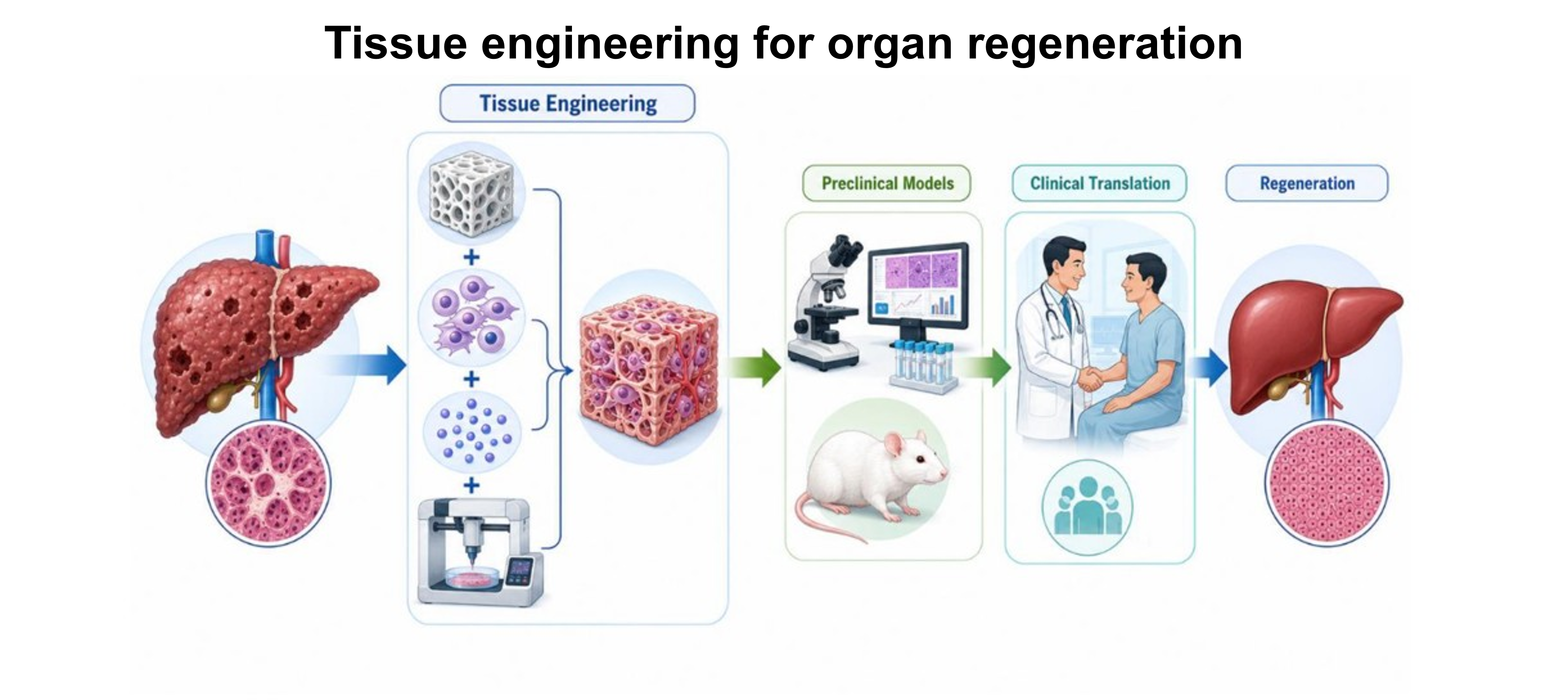
Background: Tissue and organ injuries caused by trauma, degenerative disorders, and chronic diseases represent significant clinical challenges due to the limited regenerative capacity of many human tissues and the shortage of available donor organs. Tissue engineering has emerged as an interdisciplinary field that combines biomaterials, cellular therapies, and biological approaches to develop regenerative solutions and facilitate the restoration of damaged tissues. Aim: This review aims to provide an overview of recent advances in tissue engineering for tissue and organ regeneration, with particular emphasis on the translational pathway from preclinical research models to clinical applications. Methods: Relevant studies indexed in scientific databases were reviewed to evaluate major tissue engineering approaches, including biomaterial-based scaffolds, cell-based therapies, and biofabrication technologies. Evidence from ex vivo, in vitro, in vivo, and clinical studies was analyzed to identify current achievements, translational barriers, and future opportunities in regenerative medicine. Results: Recent advances in tissue engineering have demonstrated promising potential for the regeneration of various tissues, including skin, bone, cartilage, cardiovascular, and neural tissues. Preclinical studies have contributed to understanding cellular behavior, biomaterial performance, tissue integration, and functional recovery. Although several tissue-engineered products and approaches have reached clinical evaluation, challenges related to vascularization, immune compatibility, large-scale manufacturing, regulatory requirements, and long-term safety continue to limit widespread clinical adoption. Conclusion: Tissue engineering provides a promising framework for developing regenerative therapies and bridging the gap between laboratory discoveries and clinical practice. Continued integration of biological, engineering, and clinical research is essential to achieve effective and safe regenerative treatments. Relevance for patients: Advances in tissue engineering may offer future therapeutic alternatives for patients suffering from tissue damage, degenerative diseases, and organ dysfunction by improving regenerative treatment options and reducing limitations associated with conventional transplantation.
- Keane TJ, Badylak SF. Biomaterials for tissue engineering applications. Semin Pediatr Surg. 2014;23(3):112-118. doi: 10.1053/j.sempedsurg.2014.06.010
- Atala A, Kasper FK, Mikos AG. Engineering complex tissues. Sci Transl Med. 2012;4(160):160rv12. doi: 10.1126/scitranslmed.3004890
- Mao AS, Mooney DJ. Regenerative medicine: current therapies and future directions. Proc Natl Acad Sci USA. 2015;112(47):14452-14459. doi: 10.1073/pnas.1508520112
- Murphy SV, Atala A. 3D bioprinting of tissues and organs. Nat Biotechnol. 2014;32(8):773-785. doi: 10.1038/nbt.2958
- O’Brien FJ. Biomaterials & scaffolds for tissue engineering. Mater Today. 2011;14(3):88-95. doi: 10.1016/S1369-7021(11)70058-X
- Hussey GS, Dziki JL, Badylak SF. Extracellular matrix-based materials for regenerative medicine. Nat Rev Mater. 2018;3(7):159-173. doi: 10.1038/s41578-018-0023-x
- Mandrycky C, Wang Z, Kim K, Kim DH. 3D bioprinting for engineering complex tissues. Biotechnol Adv. 2016;34(4):422-434. doi: 10.1016/j.biotechadv.2015.12.011
- Rouwkema J, Khademhosseini A. Vascularization and angiogenesis in tissue engineering: beyond creating static networks. Trends Biotechnol. 2016;34(9):733-745. doi: 10.1016/j.tibtech.2016.03.002
- Skoracka J, Bajewska K, Kulawik M, Suchorska W, Kulcenty K. Advances in cartilage tissue regeneration: a review of stem cell therapies, tissue engineering, biomaterials, and clinical trials. EXCLI J. 2024;23:1170. doi: 10.17179/excli2024-7088
- Moisan A, Kolesky D, Miller J, Homan K. Translation of tissue-engineering innovations requires a connected ecosystem. Nat Rev Bioeng. 2023;1(12):879-881. doi: 10.1038/s44222-023-00111-y
- apella-Monsonís H, Crum RJ, Hussey GS, Badylak SF. Advances, challenges, and future directions in the clinical translation of ECM biomaterials for regenerative medicine applications. Adv Drug Deliv Rev. 2024;211:115347. doi: 10.1016/j.addr.2024.115347
- Annabi N, Cosgriff-Hernandez E, Weiss AS. Perspectives on recent developments and directions in tissue engineering and regenerative medicine. Tissue Eng Part A. 2024;30(23-24):721-725. doi: 10.1089/ten.tea.2024.0313
- Sultana N. Scaffolds for tissue engineering. In: Biodegradable Polymer-Based Scaffolds for Bone Tissue Engineering. Springer; 2012:1-17. doi: 10.1007/978-3-642-34802-0_1
- Griffith LG, Naughton G. Tissue engineering—current challenges and expanding opportunities. Science. 2002;295(5557):1009-1014. doi: 10.1126/science.1069210
- Place ES, Evans ND, Stevens MM. Complexity in biomaterials for tissue engineering. Nat Mater. 2009;8(6):457-470. doi: 10.1038/nmat2441
- Hubbell JA. Materials as morphogenetic guides in tissue engineering. Curr Opin Biotechnol. 2003;14(5):551-558. doi: 10.1016/j.copbio.2003.09.004
- Mallick KK, Cox SC. Biomaterial scaffolds for tissue engineering. Front Biosci. 2013;5(3):341-360. doi: 10.2741/E620
- Vijayavenkataraman S, Yan WC, Lu WF, Wang CH, Fuh JYH. 3D bioprinting of tissues and organs for regenerative medicine. Adv Drug Deliv Rev. 2018;132:296-332. doi: 10.1016/j.addr.2018.07.004
- Han F, Wang J, Ding L, Hu Y. Tissue engineering and regenerative medicine: achievements, future, and sustainability in Asia. Front Bioeng Biotechnol. 2020;8:83. doi: 10.3389/fbioe.2020.00083
- Lutolf MP, Hubbell JA. Synthetic biomaterials as instructive extracellular microenvironments for morphogenesis in tissue engineering. Nat Biotechnol. 2005;23(1):47-55. doi: 10.1038/nbt1055
- Miklosic G, Ferguson SJ, D’Este M. Engineering complex tissue-like microenvironments with biomaterials and biofabrication. Trends Biotechnol. 2024;42(10):1241-1257. doi: 10.1016/j.tibtech.2024.03.008
- Zoghi S. Advancements in tissue engineering: a review of bioprinting techniques, scaffolds, and bioinks. Biomed Eng Comput Biol. 2024;15:11795972241288099. doi: 10.1177/11795972241288099
- Mousavi Z, Bagheri M, Rostaminasab G, Mikaeili A, Djalilian AR, Rezakhani L. Tissue engineering strategies for ocular regeneration; from bench to the bedside. Heliyon. 2024;10(20). doi: 10.1016/j.heliyon.2024.e39398
- Pien N, Krzyslak H, Kallaje SS, et al. Tissue engineering of skeletal muscle, tendons and nerves: a review of manufacturing strategies to meet structural and functional requirements. Appl Mater Today. 2023;31:101737. doi: 10.1016/j.apmt.2023.101737
- Groll J, Boland T, Blunk T, et al. Biofabrication: reappraising the definition of an evolving field. Biofabrication. 2016;8(1):013001. doi: 10.1088/1758-5090/8/1/013001
- Sampogna G, Guraya SY, Forgione A. Regenerative medicine: historical roots and potential strategies in modern medicine. J Microsc Ultrastruct. 2015;3(3):101-107. doi: 10.1016/j.jmau.2015.05.002
- Hubbell JA. Biomaterials in tissue engineering. Bio/Technology. 1995;13(6):565-576. doi: 10.1038/nbt0695-565
- Groen N, Guvendiren M, Rabitz H, Welsh WJ, Kohn J, de Boer J. Stepping into the omics era: opportunities and challenges for biomaterials science and engineering. Acta Biomater. 2016;34:133-142. doi: 10.1016/j.actbio.2016.02.015
- Garg T, Goyal AK. Biomaterial-based scaffolds—current status and future directions. Expert Opin Drug Deliv. 2014;11(5):767-789. doi: 10.1517/17425247.2014.891014
- Edgar L, Pu T, Porter B, et al. Regenerative medicine, organ bioengineering and transplantation. Br J Surg. 2020;107(7):793-800. doi: 10.1002/bjs.11686
- Rangel R, Swanson WB, Wu DT. The future of cell-instructive biomaterials for tissue regeneration—a perspective from early career clinician-scientists. Front Mater. 2024;10:1328904. doi: 10.3389/fmats.2023.1328904
- Trounson A, McDonald C. Stem cell therapies in clinical trials: progress and challenges. Cell Stem Cell. 2015;17(1):11-22. doi: 10.1016/j.stem.2015.06.007
- Zhang YS, Yue K, Aleman J, et al. 3D bioprinting for tissue and organ fabrication. Ann Biomed Eng. 2017;45(1):148-163. doi: 10.1007/s10439-016-1612-8
- Moroni L, Boland T, Burdick JA, et al. Biofabrication: a guide to technology and terminology. Trends Biotechnol. 2018;36(4):384-402. doi: 10.1016/j.tibtech.2017.10.015
- Griffith LG. Emerging design principles in biomaterials and scaffolds for tissue engineering. Ann N Y Acad Sci. 2002;961(1):83-95. doi: 10.1111/j.1749-6632.2002.tb03056.x
- Hollister SJ. Porous scaffold design for tissue engineering. Nat Mater. 2005;4(7):518-524. doi: 10.1038/nmat1421
- Karageorgiou V, Kaplan D. Porosity of 3D biomaterial scaffolds and osteogenesis. Biomaterials. 2005;26(27):5474-5491. doi: 10.1016/j.biomaterials.2005.02.002
- Hutmacher DW. Scaffolds in tissue engineering bone and cartilage. Biomaterials. 2000;21(24):2529-2543. doi: 10.1016/S0142-9612(00)00121-6
- Place ES, George JH, Williams CK, Stevens MM. Synthetic polymer scaffolds for tissue engineering. Chem Soc Rev. 2009;38(4):1139-1151. doi: 10.1039/b811392k
- Hu X, Wu Z, Zhang Z, Yao H, Wang DA. Type II collagen scaffolds for tissue engineering. Commun Mater. 2024;5(1):149. doi: 10.1038/s43246-024-00598-x
- Chen X, Wu T, Bu Y, Yan H, Lin Q. Fabrication and biomedical application of alginate composite hydrogels in bone tissue engineering: a review. Int J Mol Sci. 2024;25(14):7810. doi: 10.3390/ijms25147810
- Eldeeb AE, Salah S, Elkasabgy NA. Biomaterials for tissue engineering applications and current updates in the field: a comprehensive review. AAPS PharmSciTech. 2022;23(7):267. doi: 10.1208/s12249-022-02419-1
- Liu S, Yu JM, Gan YC, et al. Biomimetic natural biomaterials for tissue engineering and regenerative medicine: new biosynthesis methods, recent advances, and emerging applications. Mil Med Res. 2023;10(1):16. doi: 10.1186/s40779-023-00448-w
- Khan MUA, Aslam MA, Abdullah MFB, Hasan A, Shah SA, Stojanović GM. Recent perspective of polymeric biomaterial in tissue engineering—a review. Mater Today Chem. 2023;34:101818. doi: 10.1016/j.mtchem.2023.101818
- Javid-Naderi MJ, Behravan J, Karimi-Hajishohreh N, Toosi S. Synthetic polymers as bone engineering scaffold. Polym Adv Technol. 2023;34(7):2083-2096. doi: 10.1002/pat.6046
- Golebiowska AA, Intravaia JT, Sathe VM, Kumbar SG, Nukavarapu SP. Decellularized extracellular matrix biomaterials for regenerative therapies: advances, challenges and clinical prospects. Bioact Mater. 2024;32:98-123. doi: 10.1016/j.bioactmat.2023.09.017
- van Hengel EV, van der Laan LJW, de Jonge J, Verstegen MMA. Towards safety and regulation criteria for clinical applications of decellularized organ-derived matrices. Bioengineering. 2025;12(2):136. doi: 10.3390/bioengineering12020136
- Lee KY, Mooney DJ. Alginate: properties and biomedical applications. Prog Polym Sci. 2012;37(1):106-126. doi: 10.1016/j.progpolymsci.2011.06.003
- Chen G, Ushida T, Tateishi T. Scaffold design for tissue engineering. Macromol Biosci. 2002;2(2):67-77. doi: 10.1002/1616-5195(20020201)2:2<67::AID-MABI67>3.0.CO;2-F
- Gentile P, Chiono V, Carmagnola I, Hatton PV. An overview of poly(lactic-co-glycolic) acid (PLGA)-based biomaterials for bone tissue engineering. Int J Mol Sci. 2014;15(3):3640-3659. doi: 10.3390/ijms15033640
- Dash TK, Konkimalla VB. Poly-ε-caprolactone based formulations for drug delivery and tissue engineering: a review. J Control Release. 2012;158(1):15-33. doi: 10.1016/j.jconrel.2011.09.064
- Adhikari B, Stager MA, Krebs MD. Cell-instructive biomaterials in tissue engineering and regenerative medicine. J Biomed Mater Res A. 2023;111(5):660-681. doi: 10.1002/jbm.a.37510
- Malige A, Gates C, Cook JL. Mesenchymal stem cells in orthopaedics: a systematic review of applications to practice. J Orthop. 2024;58:1-9. doi: 10.1016/j.jor.2024.06.026
- Vacanti JP, Langer R. Tissue engineering: the design and fabrication of living replacement devices for surgical reconstruction and transplantation. Lancet. 1999;354(suppl). doi: 10.1016/S0140-6736(99)90247-7
- Watt FM, Hogan BL. Out of Eden: stem cells and their niches. Science. 2000;287(5457):1427-1430. doi: 10.1126/science.287.5457.1427
- Roland TJ, Song K. Advances in the generation of constructed cardiac tissue derived from induced pluripotent stem cells for disease modeling and therapeutic discovery. Cells. 2024;13(3):250. doi: 10.3390/cells13030250
- Owaidah AY. Induced pluripotent stem cells in cartilage tissue engineering: a literature review. Biosci Rep. 2024;44(5). doi: 10.1042/BSR20232102
- Cerneckis J, Cai H, Shi Y. Induced pluripotent stem cells (iPSCs): molecular mechanisms of induction and applications. Signal Transduct Target Ther. 2024;9(1):112. doi: 10.1038/s41392-024-01809-0
- Calcat-i-Cervera S, Rendra E, Scaccia E, et al. Harmonised culture procedures minimise but do not eliminate mesenchymal stromal cell donor and tissue variability in a decentralised multicentre manufacturing approach. Stem Cell Res Ther. 2023;14(1):120. doi: 10.1186/s13287-023-03352-1
- Trivedi A, Lin M, Miyazawa B, et al. Inter- and intra-donor variability in bone marrow-derived mesenchymal stromal cells: implications for clinical applications. Cytotherapy. 2024;26(9):1062-1075. doi: 10.1016/j.jcyt.2024.03.486
- Novoa JJ, Westra IM, Steeneveld E, et al. Good manufacturing practice-compliant human induced pluripotent stem cells: from bench to putative clinical products. Cytotherapy. 2024;26(6):556-566. doi: 10.1016/j.jcyt.2024.02.021
- Martins F, Ribeiro MH. Quality and regulatory requirements for the manufacture of master cell banks of clinical grade iPSCs: the EU and USA perspectives. Stem Cell Rev Rep. 2025;21(3):645-679. doi: 10.1007/s12015-024-10838-9
- Česnik AB, Švajger U. The issue of heterogeneity of MSC-based advanced therapy medicinal products—a review. Front Cell Dev Biol. 2024;12:1400347. doi: 10.3389/fcell.2024.1400347
- Christiansen JR, Kirkeby A. Clinical translation of pluripotent stem cell-based therapies: successes and challenges. Development. 2024;151(7). doi: 10.1242/dev.202067
- Bianco P, Robey PG, Simmons PJ. Mesenchymal stem cells: revisiting history, concepts, and assays. Cell Stem Cell. 2008;2(4):313-319. doi: 10.1016/j.stem.2008.03.002
- Pittenger MF, Mackay AM, Beck SC, et al. Multilineage potential of adult human mesenchymal stem cells. Science. 1999;284(5411):143-147. doi: 10.1126/science.284.5411.143
- Caplan AI. Mesenchymal stem cells: time to change the name! Stem Cells Transl Med. 2017;6(6):1445-1451. doi: 10.1002/sctm.17-0051
- Takahashi K, Yamanaka S. Induction of pluripotent stem cells from mouse embryonic and adult fibroblast cultures by defined factors. Cell. 2006;126(4):663-676. doi: 10.1016/j.cell.2006.07.024
- Lu D, Cai K, Zeng Z, et al. VEGF loading heparinized hyaluronic acid macroporous hydrogels for enhanced 3D endothelial cell migration and vascularization. Biomater Adv. 2025;167:214094. doi: 10.1016/j.bioadv.2024.214094
- Qi J, Wu H, Liu G. Novel strategies for spatiotemporal and controlled BMP-2 delivery in bone tissue engineering. Cell Transplant. 2024;33:09636897241276733. doi: 10.1177/09636897241276733
- Nordberg RC, Bielajew BJ, Takahashi T, Hu JC, Athanasiou KA. Recent advancements in cartilage tissue engineering innovation and translation. Nat Rev Rheumatol. 2024;20(6):323-346. doi: 10.1038/s41584-024-01118-4
- Chen T, Jiang Y, Huang JP, Wang J, Wang ZK, Ding PH. Essential elements for spatiotemporal delivery of growth factors within bio-scaffolds: a comprehensive strategy for enhanced tissue regeneration. J Control Release. 2024;368:97-114. doi: 10.1016/j.jconrel.2024.02.006
- Poerio A, Mano JF, Cleymand F. Advanced 3D printing strategies for the controlled delivery of growth factors. ACS Biomater Sci Eng. 2023;9(12):6531-6547. doi: 10.1021/acsbiomaterials.3c00873
- Takahashi K, Tanabe K, Ohnuki M, et al. Induction of pluripotent stem cells from adult human fibroblasts by defined factors. Cell. 2007;131(5):861-872. doi: 10.1016/j.cell.2007.11.019
- Ni J, Sun Y, Liu Z. The potential of stem cells and stem cell-derived exosomes in treating cardiovascular diseases. J Cardiovasc Transl Res. 2019;12(1):51-61. doi: 10.1007/s12265-018-9799-8
- Loukelis K, Koutsomarkos N, Mikos AG, Chatzinikolaidou M. Advances in 3D bioprinting for regenerative medicine applications. Regen Biomater. 2024;11. doi: 10.1093/rb/rbae033
- Agarwal T, Onesto V, Banerjee D, et al. 3D bioprinting in tissue engineering: current state-of-the-art and challenges towards system standardization and clinical translation. Biofabrication. 2025;17(4):042003. doi: 10.1088/1758-5090/ade47a
- Gogoi D, Kumar M, Singh J. A comprehensive review on hydrogel-based bio-ink development for tissue engineering scaffolds using 3D printing. Ann 3D Print Med. 2024;15:100159. doi: 10.1016/j.stlm.2024.100159
- Taylor S, Mueller E, Jones LR, Makela AV, Ashammakhi N. Translational aspects of 3D and 4D printing and bioprinting. Adv Healthc Mater. 2024;13(27):2400463. doi: 10.1002/adhm.202400463
- Zhao X, Li N, Zhang Z, et al. Beyond hype: unveiling the real challenges in clinical translation of 3D printed bone scaffolds and the fresh prospects of bioprinted organoids. J Nanobiotechnol. 2024;22(1):500. doi: 10.1186/s12951-024-02759-z
- Aazmi A, Zhang D, Mazzaglia C, et al. Biofabrication methods for reconstructing extracellular matrix mimetics. Bioact Mater. 2024;31:475-496. doi: 10.1016/j.bioactmat.2023.08.018
- Przekora A. The summary of the most important cell-biomaterial interactions that need to be considered during in vitro biocompatibility testing of bone scaffolds for tissue engineering applications. Mater Sci Eng C Mater Biol Appl. 2019;97:1036-1051. doi: 10.1016/j.msec.2019.01.061
- Herberts CA, Kwa MSG, Hermsen HPH. Risk factors in the development of stem cell therapy. J Transl Med. 2011;9(1):29. doi: 10.1186/1479-5876-9-29
- Huebsch N, Mooney DJ. Inspiration and application in the evolution of biomaterials. Nature. 2009;462(7272):426-432. doi: 10.1038/nature08601
- Mendicino M, Bailey Alexander A, Wonnacott K, Puri Raj K, Bauer SR. MSC-based product characterization for clinical trials: an FDA perspective. Cell Stem Cell. 2014;14(2):141-145. doi: 10.1016/j.stem.2014.01.013
- Barrientos S, Stojadinovic O, Golinko MS, Brem H, Tomic-Canic M. Perspective article: growth factors and cytokines in wound healing. Wound Repair Regen. 2008;16(5):585-601. doi: 10.1111/j.1524-475X.2008.00410.x
- Chen FM, Zhang M, Wu ZF. Toward delivery of multiple growth factors in tissue engineering. Biomaterials. 2010;31(24):6279-6288. doi: 10.1016/j.biomaterials.2010.04.053
- Lee K, Silva EA, Mooney DJ. Growth factor delivery-based tissue engineering: general approaches and a review of recent developments. J R Soc Interface. 2011;8(55):153-170. doi: 10.1098/rsif.2010.0223
- Murphy WL, Peters MC, Kohn DH, Mooney DJ. Sustained release of vascular endothelial growth factor from mineralized poly(lactide-co-glycolide) scaffolds for tissue engineering. Biomaterials. 2000;21(24):2521-2527. doi: 10.1016/S0142-9612(00)00120-4
- Oliveira JM, Reis RL, Pina S, eds. Multiscale Cell-Biomaterials Interplay in Musculoskeletal Tissue Engineering and Regenerative Medicine. Elsevier; 2023.
- McDonnell EE, Wilson N, Barcellona MN, et al. Preclinical to clinical translation for intervertebral disc repair: effects of species-specific scale, metabolism, and matrix synthesis rates on cell-based regeneration. JOR Spine. 2023;6(3). doi: 10.1002/jsp2.1279
- Ribitsch I, Baptista PM, Lange-Consiglio A, et al. Large animal models in regenerative medicine and tissue engineering: to do or not to do. Front Bioeng Biotechnol. 2020;8:972. doi: 10.3389/fbioe.2020.00972
- Stein M, Elefteriou F, Busse B, et al. Why animal experiments are still indispensable in bone research: a statement by the European Calcified Tissue Society. J Bone Miner Res. 2023;38(8):1045-1061. doi: 10.1002/jbmr.4868
- Einhorn TA, Daluiski A, Lieberman JR. The role of growth factors in the repair of bone: biology and clinical applications. J Bone Joint Surg Am. 2002;84(6):1032-1044. doi: 10.2106/00004623-200206000-00022
- Hankenson FC, Prager EM, Berridge BR. Advocating for generalizability: accepting inherent variability in translation of animal research outcomes. Annu Rev Anim Biosci. 2024;12(1):391-410. doi: 10.1146/annurev-animal-021022-043531
- Mosaddad SA, Hussain A, Tebyaniyan H. Exploring the use of animal models in craniofacial regenerative medicine: a narrative review. Tissue Eng Part B Rev. 2024;30(1):29-59. doi: 10.1089/ten.teb.2023.0038
- Zhang Y, Cui X, Zhao S, et al. Evaluation of injectable strontium-containing borate bioactive glass cement with enhanced osteogenic capacity in a critical-sized rabbit femoral condyle defect model. ACS Appl Mater Interfaces. 2015;7(4):2393-2403. doi: 10.1021/am507008z
- Wu QX, De Isla N, Zhang L. Biomaterial-based nucleic acid delivery systems for in situ tissue engineering and regenerative medicine. Int J Mol Sci. 2025;26(15):7384. doi: 10.3390/ijms26157384
- Dearman BL, Boyce ST, Greenwood JE. Advances in skin tissue bioengineering and the challenges of clinical translation. Front Surg. 2021;8:640879. doi: 10.3389/fsurg.2021.640879
- Holmes JH IV, Molnar JA, Carter JE, et al. A comparative study of the ReCell device and autologous split-thickness meshed skin graft in the treatment of acute burn injuries. J Burn Care Res. 2018;39(5):694-702. doi: 10.1093/jbcr/iry029
- Simaey M, De Decker I, Vanlauwe F, et al. The added value of cultured cells in burn treatment: A systematic review. Burns, 2024;50(9):107247. doi: 10.1016/j.burns.2024.08.013
- Ng WL, Wang S, Yeong WY, Naing MW. Skin bioprinting: impending reality or fantasy? Trends Biotechnol. 2016;34(9):689-699. doi: 10.1016/j.tibtech.2016.04.006
- Kaigler D, Avila-Ortiz G, Travan S, et al. Bone engineering of maxillary sinus bone deficiencies using enriched CD90+ stem cell therapy: a randomized clinical trial. J Bone Miner Res. 2015;30(7):1206-1216. doi: 10.1002/jbmr.2464
- Chaverri D, Gallardo-Villares S, Pinto JA, et al. Treatment of non-hypertrophic pseudoarthrosis of long bones with a tissue engineered product loaded with autologous bone marrow-derived mesenchymal stromal cells: results from a phase IIa, prospective, randomized, parallel, pilot clinical trial comparing to iliac crest autograft. Injury. 2024;55(7):111596. doi: 10.1016/j.injury.2024.111596
- Saris D, Price A, Widuchowski W, et al. Matrix-applied characterized autologous cultured chondrocytes versus microfracture: two-year follow-up of a prospective randomized trial. Am J Sports Med. 2014;42(6):1384-1394. doi: 10.1177/0363546514528093
- Brittberg M, Recker D, Ilgenfritz J, Saris DB, SUMMIT Extension Study Group. Matrix-applied characterized autologous cultured chondrocytes versus microfracture: five-year follow-up of a prospective randomized trial. Am J Sports Med. 2018;46(6):1343-1351. doi: 10.1177/0363546518756976
- U.S. Food and Drug Administration. MACI (autologous cultured chondrocytes on porcine collagen membrane). Updated 2024. Accessed September 18, 2026. https://www.fda.gov/vaccines-blood-biologics/cellular-gene-therapy-products/maci-autologous-cultured-chondrocytes-porcine-collagen-membrane
- Theodosaki AM, Tzemi M, Galanis N, Bakopoulou A, Kotsiomiti E, Aggelidou E, et al. Bone regeneration with mesenchymal stem cells in scaffolds: systematic review of human clinical trials. Stem Cell Rev Rep. 2024;20(4):938-966. doi: 10.1007/s12015-024-10696-5
- Wright C, Zotter SF, Tung WS, Reikersdorfer K, Homer A, Kheir N, et al. Current concepts and clinical applications in cartilage tissue engineering. Tissue Eng Part A. 2025;31(3-4):87-99. doi: 10.1089/ten.tea.2024.0300
- West-Livingston L, Lim JW, Lee SJ. Translational tissue-engineered vascular grafts: from bench to bedside. Biomaterials. 2023;302:122322. doi: 10.1016/j.biomaterials.2023.122322
- Sugiura T, Matsumura G, Miyamoto S, Miyachi H, Breuer CK, Shinoka T. Tissue-engineered vascular grafts in children with congenital heart disease: intermediate term follow-up. Semin Thorac Cardiovasc Surg. 2018;30(2):175-179. doi: 10.1053/j.semtcvs.2018.02.002
- Bayes-Genis A, Gastelurrutia P, Monguió-Tortajada M, et al. Implantation of a double allogeneic human engineered tissue graft on damaged heart: insights from the PERISCOPE phase I clinical trial. eBioMedicine. 2024;102:105060. doi: 10.1016/j.ebiom.2024.105060
- Zimmermann WH, Ensminger S, Kutschka I, et al. Stem-cell-derived biologic ventricular assist tissue in heart failure. N Engl J Med. 2026;394(20):1991-2001. doi: 10.1056/NEJMoa2513525
- Kačarević ŽP, Rider PM, Alkildani S, Retnasingh S, Smeets R, Jung O, et al. An introduction to 3D bioprinting: possibilities, challenges and future aspects. Materials. 2018;11(11):2199. doi: 10.3390/ma11112199
- Hutmacher DW, Leong DT, Chen F. Polysaccharides in tissue engineering applications. In: Handbook of Carbohydrate Engineering. CRC Press; 2005:875-932. doi: 10.1201/9781420027631
- Saeki M, Tanaka K, Imatani J, et al. Efficacy and safety of novel collagen conduits filled with collagen filaments to treat patients with peripheral nerve injury: a multicenter, controlled, open-label clinical trial. Injury. 2018;49(4):766-774. doi: 10.1016/j.injury.2018.03.011
- Böcker A, Aman M, Kneser U, Harhaus L, Siemers F, Stang F. Closing the gap: bridging peripheral sensory nerve defects with a chitosan-based conduit: a randomized prospective clinical trial. J Pers Med. 2022;12(6):900. doi: 10.3390/jpm12060900
- Harrop JS, Kim KD, Okonkwo DO, Goldstein IM, Lee KS, Toselli RM. Acute implantation of a bioresorbable polymer scaffold in patients with complete thoracic spinal cord injury: a randomized controlled trial (INSPIRE 2.0). Neurosurgery. 2024;96(4):751. doi: 10.1227/neu.0000000000003180
- Edmondson R, Broglie JJ, Adcock AF, Yang L. Three-dimensional cell culture systems and their applications in drug discovery and cell-based biosensors. Assay Drug Dev Technol. 2014;12(4):207-218. doi: 10.1089/adt.2014.573
- Gravante G, Di Fede MC, et al. (2007). A randomized trial comparing ReCell® system of epidermal cells delivery versus classic skin grafts for the treatment of deep partial thickness burns. Burns. 2007;33(8):966-972.
- Johnson L. A Comparative Study of the Recell® Device and Autologous Split-Thickness Meshed Skin Graft in the Treatment of Acute Burn Injuries. In 50 Landmark Papers Every Acute Care Surgeon Should Know (pp. 188-189). CRC Press; 2019.
- Saris DB, Vanlauwe J, Victor J, et al. (2009). Characterized chondrocyte implantation results in better structural repair when treating symptomatic cartilage defects of the knee in a randomized controlled trial versus microfracture. Am J Sports Med. 2009;36(2):235-246. doi: 10.1177/0363546507311095
- Monguio-Tortajada M, Prat-Vidal C, Gastelurrutia P, et al. Immunomodulatory effect of first-in-human PeriCord cardiac bioimplant: preliminary data of the PERISCOPE clinical trial. Eur Heart J. 2022;43(Supplement_2):ehac544-1220. doi: 10.1093/eurheartj/ehac544.1220
- Goertz L, Hohenstatt S, Vollherbst DF, et al. Lower-ischemic-risk profile of coated flow redirection endoluminal device X compared with uncoated flow redirection endoluminal device flow diverter in the treatment of unruptured intracranial aneurysms. Neurosurgery. 2025;96(5):997-1007. doi: 10.1227/neu.0000000000003188
- Sillmann YM, Eber P, Orbeta E, Wilde F, Gross AJ, Guastaldi FP. Milestones in mandibular bone tissue engineering: a systematic review of large animal models and critical-sized defects. J Clin Med. 2025;14(8):2717. doi: 10.3390/jcm14082717
- Li H, Li D, Wang X, et al. Progress in biomaterials-enhanced vascularization by modulating physical properties. ACS Biomater Sci Eng. 2025;11(1):33-54. doi: 10.1021/acsbiomaterials.4c01106
- Rodrigues FA, Oliveira CS, Sá SC, Tavaria FK, Lee SJ, Oliveira AL, et al. Molecules in motion: unravelling the dynamics of vascularization control in tissue engineering. Macromol Biosci. 2024;24(12):2400139. doi: 10.1002/mabi.202400139
- Landau S, Okhovatian S, Zhao Y, et al. Bioengineering vascularization. Development. 2024;151(23). doi: 10.1242/dev.204455
- Ten Brink T, Damanik F, Rotmans JI, Moroni L. Unraveling and harnessing the immune response at the cell-biomaterial interface for tissue engineering purposes. Adv Healthc Mater. 2024;13(17):2301939. doi: 10.1002/adhm.202301939
- Lee SJ, Jeong W, Atala A. 3D bioprinting for engineered tissue constructs and patient-specific models: current progress and prospects in clinical applications. Adv Mater. 2024;36(49):2408032. doi: 10.1002/adma.202408032
- Zhong JX, Raghavan P, Desai TA. Harnessing biomaterials for immunomodulatory-driven tissue engineering. Regen Eng Transl Med. 2023;9(2):224-239. doi: 10.1007/s40883-022-00279-6
- Wang B, Chen RQ, Li J, Roy K. Interfacing data science with cell therapy manufacturing: where we are and where we need to be. Cytotherapy. 2024;26(9):967-979. doi: 10.1016/j.jcyt.2024.03.011
- Xu C, Ivanovski S. Clinical translation of personalized bioengineered implant scaffolds. Nat Rev Bioeng. 2025;3(5):390-407. doi: 10.1038/s44222-024-00269-z
- U.S. Food and Drug Administration. Considerations for the Use of Human- and Animal-Derived Materials in the Manufacture of Cell and Gene Therapy and Tissue-Engineered Medical Products. 2024. Accessed September 15, 2026. https://www.fda.gov/regulatory-information/search-fda-guidance-documents/considerations-use-human-and-animal-derived-materials-manufacture-cell-and-gene-therapy-and-tissue
- Capelli C, Cuofano C, Pavoni C, et al. Potency assays and biomarkers for cell-based advanced therapy medicinal products. Front Immunol. 2023;14:1186224. doi: 10.3389/fimmu.2023.1186224
- U.S. Food and Drug Administration. Development of Strategies to Improve Cell Therapy Product Characterization. 2022. Accessed September 15, 2026. https://www.fda.gov/vaccines-blood-biologics/biologics-research-projects/development-strategies-improve-cell-therapy-product-characterization
- Jurczak KM, van der Boon TA, Devia-Rodriguez R, et al. Recent regulatory developments in EU Medical Device Regulation and their impact on biomaterials translation. Bioeng Transl Med. 2025;10(2). doi: 10.1002/btm2.10721
- Baker BM, Chen CS. Deconstructing the third dimension—how 3D culture microenvironments alter cellular cues. J Cell Sci. 2012;125(13):3015-3024. doi: 10.1242/jcs.079509
- Zhou L, Huang J, Li C, et al. Organoids and organs-on-chips: recent advances, applications in drug development, and regulatory challenges. Med. 2025;6(4):100667. doi: 10.1016/j.medj.2025.100667
- U.S. Government Accountability Office. Human Organ-On-A-Chip: Technologies Offer Benefits Over Animal Testing but Challenges Limit Wider Adoption. GAO-25-107335. U.S. Government Accountability Office; 2025. Accessed September 15, 2026. https://www.gao.gov/products/gao-25-107335
- Manno M, Bongiovanni A, Margolis L, Bergese P, Arosio P. The physico-chemical landscape of extracellular vesicles. Nat Rev Bioeng. 2025;3(1):68-82. doi: 10.1038/s44222-024-00255-5