
Plant-derived alkaloids at the interface of cancer biology and translational pharmacology: Mechanisms, experimental evidence, and clinical challenges

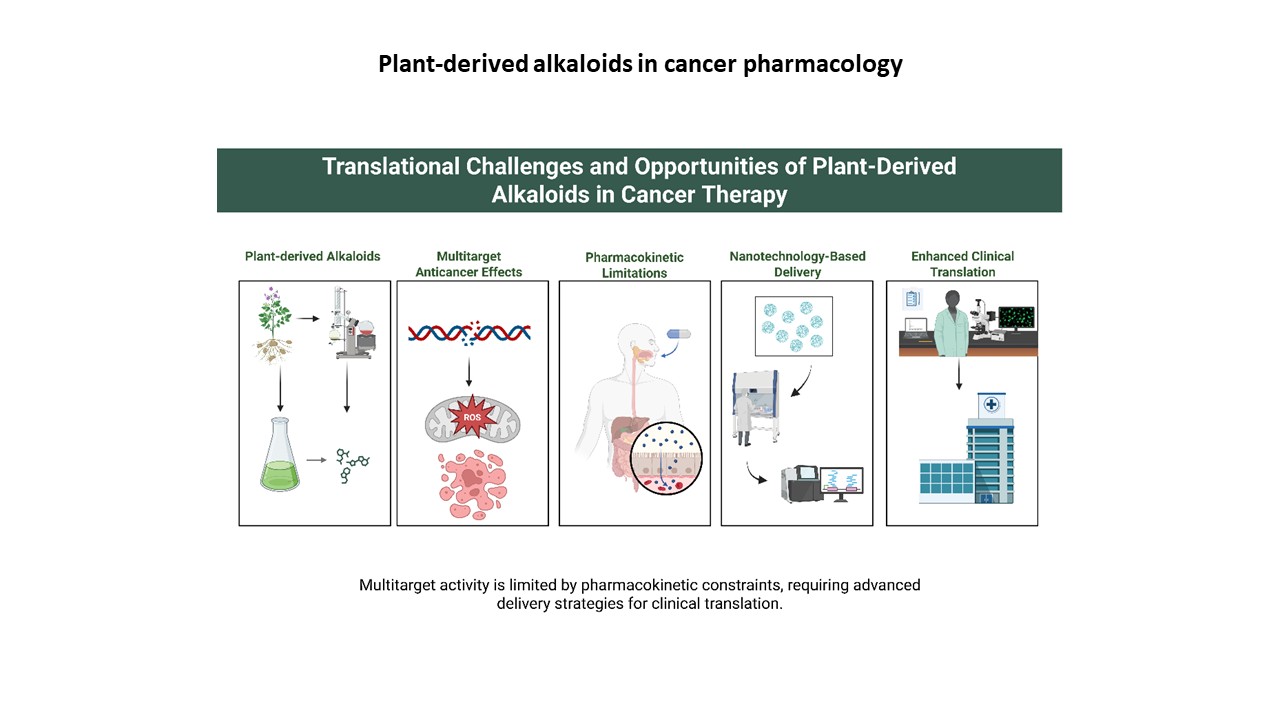
Cancer remains a major global health burden driven by complex molecular alterations that challenge current therapeutic strategies. Plant-derived alkaloids, characterized by remarkable structural diversity and multitarget biological activity, have emerged as promising candidates in anticancer drug discovery; however, despite substantial preclinical evidence, their clinical translation remains limited. This review synthesizes current knowledge on the molecular mechanisms underlying the anticancer effects of these compounds, including modulation of microtubule dynamics, induction of apoptosis, DNA damage, and regulation of oncogenic signaling pathways such as PI3K/Akt/mTOR and NF-κB. Evidence from in vitro and in vivo studies is critically examined, highlighting both potent cytotoxic activity and variability in pharmacological responses, while distinguishing mechanistic causality from associative observations in light of experimental design limitations, particularly the predominance of in vitro models and lack of standardized methodologies. Key translational barriers are further discussed, including toxicity, pharmacokinetic instability, and the limited predictive value of current preclinical models. In this context, we propose that integrating mechanistic pharmacology with innovative translational frameworks is essential to enhance the clinical applicability of alkaloid-based therapies. Collectively, these insights reinforce the potential of plant-derived alkaloids as multitarget anticancer agents and underscore the need for integrative strategies to bridge the gap between experimental efficacy and clinical application.
- Sung H, Ferlay J, Siegel RL, et al. Global cancer statistics 2020: GLOBOCAN estimates of incidence and mortality worldwide for 36 cancers in 185 countries. CA Cancer J Clin. 2021;71(3):209-249. doi: 10.3322/caac.21660
- Dagogo-Jack I, Shaw AT. Tumour heterogeneity and resistance to cancer therapies. Nat Rev Clin Oncol. 2018;15(2):81-94. doi: 10.1038/nrclinonc.2017.166
- Singh AK, Kushwaha PP, Singh A, Pandey AK. Overcoming cancer drug resistance: insights into apoptotic pathway modulation by plant-based nanoparticle and natural products. Front Oncol. 2025;15:1677380. doi: 10.3389/fonc.2025.1677380
- Newman DJ, Cragg GM. Natural products as sources of new drugs over nearly four decades from 01/1981 to 09/2019. J Nat Prod. 2020;83(3):770-803. doi: 10.1021/acs.jnatprod.9b01285
- Atanasov AG, Zotchev SB, Dirsch VM, Supuran CT. Natural products in drug discovery: advances and opportunities. Nat Rev Drug Discov. 2021;20(3):200-216. doi: 10.1038/s41573-020-00114-z
- Ożarowski M, Karpiński TM, Czerny B, Kamiński A, Seremak-Mrozikiewicz A. Plant alkaloids as promising anticancer compounds with blood-brain barrier penetration in the treatment of glioblastoma: In vitro and in vivo models. Molecules. 2025;30(7):1561. doi: 10.3390/molecules30071561
- Heinrich M, Jalil B, Rolnik A, et al. Best practice in the chemical characterisation of extracts used in pharmacological and toxicological research—the ConPhyMP-Guidelines. Front Pharmacol. 2022;13:953205.doi: 10.3389/fphar.2022.953205
- Liu BS, Liu K, Wang J, Shi YM. Anticancer potential of nature-derived isoquinoline alkaloids: a review. Russ J Gen Chem. 2023;93(5):1294-1310. doi: 10.1134/S1070363223050286
- Sun J, Zhan X, Wang W, et al. Natural aporphine alkaloids: phytochemistry, pharmacokinetics, anticancer activities, and clinical application. J Adv Res. 2024;63:231-253. doi: 10.1016/j.jare.2023.11.003
- Eswaran A, Sirasanagandla SR, Veeraraghavan VP, Jayaraman S. Therapeutic potential of alkaloids to combat breast cancer: a mechanistic overview. Curr Bioact Compd. 2025;21(10):e221120235649. doi: 10.2174/0115734072331654241211032635
- Yang Y, Chen Y, Wu JH, et al. Targeting regulated cell death with plant natural compounds for cancer therapy: A revisited review of apoptosis, autophagy-dependent cell death, and necroptosis. Phytother Res. 2023;37(4):1488-1525. doi: 10.1002/ptr.7738
- Majolo F, Delwing LKOB, Marmitt DJ, Bustamante-Filho IC, Goettert MI. Medicinal plants and bioactive natural compounds for cancer treatment: Important advances for drug discovery. Phytochem Lett. 2019;31:196-207. doi: 10.1016/j.phytol.2019.04.003
- Fürst R. Narciclasine – an amaryllidaceae alkaloid with potent antitumor and anti-inflammatory properties. Planta Med. 2016;82(16):1389-1394. doi: 10.1055/s-0042-115034
- Butler MS, Robertson AAB, Cooper MA. Natural product and natural product derived drugs in clinical trials. Nat Prod Rep. 2014;31(11):1612-1661. doi: 10.1039/C4NP00064A
- Cuong NM, Guo C, Hsieh MF. Chemotherapy of nano-sized camptothecin-derived drugs. In: Recent Advances in Cancer Research and Therapy. Sharjah, UAE: Bentham Science Publishers; 2013:1-17. doi: 10.2174/9781608051366113020017
- Henkin JM, Ren Y, Soejarto DD, Kinghorn AD. The search for anticancer agents from tropical plants. Prog Chem Org Nat Prod. 2018;106:1-94. doi: 10.1007/978-3-319-93506-5_1
- Verma V, Sharma S, Gaur K, Kumar N. Role of vinca alkaloids and their derivatives in cancer therapy. World J Adv Res Rev. 2022;16(3):663-672. doi: 10.30574/wjarr.2022.16.3.1378
- Kamal MA, Al-Zahrani MH, Khan S, et al. Tubulin proteins in cancer resistance: a review. Curr Drug Metab. 2020;21(3):178-191. doi: 10.2174/1389200221666200226123638
- Cardoso D, Kincses A, Nové M, et al. Alkylated monoterpene indole alkaloid derivatives as potent P-glycoprotein inhibitors in multidrug resistant cancer cells. Eur J Med Chem. 2020;207:112985. doi: 10.1016/j.ejmech.2020.112985
- Liang XX, Gao Y, Luan S. Two decades of advances in diterpenoid alkaloids with cytotoxic activities. RSC Adv. 2018;8(43):23937-23946. doi: 10.1039/C8RA03911A
- Liu Y, Qing L, Meng C, et al. 6-OH-phenanthroquinolizidine alkaloid and its derivatives: synthesis and potent anticancer activity. J Med Chem. 2017;60(7):2764-2779. doi: 10.1021/acs.jmedchem.6b01502
- Raj L, Ide T, Gurkar AU, et al. Selective killing of cancer cells by a small molecule targeting the stress response to ROS. Nature. 2011;475(7355):231-234. doi: 10.1038/nature10167
- Gigant B, Wang C, Ravelli RB, et al. Structural basis for the regulation of tubulin by vinblastine. Nature. 2005;435(7041):519-522. doi: 10.1038/nature03566
- Tiloke C, Phulukdaree A, Chuturgoon AA. The antiproliferative effect of Moringa oleifera crude aqueous leaf extract on cancerous human alveolar epithelial cells. BMC Complement Altern Med. 2013;13:226. doi: 10.1186/1472-6882-13-226
- Tillhon M, Guamán Ortiz LM, Lombardi P, Scovassi AI. Berberine: new perspectives for old remedies. Biochem Pharmacol. 2012;84(10):1260-1267. doi: 10.1016/j.bcp.2012.07.018
- Özenver N, Ali NT, Yücer R, et al. Profiling the complexity of resistance factors in cancer cells towards berberine and its derivatives. Pharmaceuticals. 2026;19(1):27. doi: 10.3390/ph19010027
- Raja VJ. Biological Characterisation of a Novel and Naturally Isolated Indole Alkaloid. PhD thesis. University of Nottingham; 2015.
- Xu D, Xu Z. Indole alkaloids with potential anticancer activity. Curr Top Med Chem. 2020;20(21):1938-1949. doi: 10.2174/1568026620666200622150325
- Newman DJ, Cragg GM. Natural products as sources of new drugs from 1981 to 2014. J Nat Prod. 2016;79(3):629-661. doi: 10.1021/acs.jnatprod.5b01055
- Gottesman MM, Lavi O, Hall MD, Gillet JP. Toward a better understanding of cancer drug resistance. Annu Rev Pharmacol Toxicol. 2016;56:85-102.doi: 10.1146/annurev-pharmtox-010715-103111
- Fulda S, Galluzzi L, Kroemer G. Targeting mitochondria for cancer therapy. Nat Rev Drug Discov. 2010;9(6):447-464. doi: 10.1038/nrd3137
- Havelek R, Seifrtova M, Kralovec K, et al. Anticancer potential of Amaryllidaceae alkaloids evaluated by screening with a panel of human cells, real-time cellular analysis and Ehrlich tumor-bearing mice. Chem Biol Interact. 2017;275:121-132. doi: 10.1016/j.cbi.2017.07.018
- Ingrassia L, Lefranc F, Dewelle J, et al. Structure-activity relationship analysis of novel derivatives of narciclasine (an Amaryllidaceae isocarbostyril derivative) as potential anticancer agents. J Med Chem. 2009;52(4):1100-1114. doi: 10.1021/jm8013585
- Otto T, Sicinski P. Cell cycle proteins as promising targets in cancer therapy. Nat Rev Cancer. 2017;17(2):93-115. doi: 10.1038/nrc.2016.138
- Elmore S. Apoptosis: a review of programmed cell death. Toxicol Pathol. 2007;35(4):495-516. doi: 10.1080/01926230701320337
- Cragg GM, Pezzuto JM. Natural products as a vital source for the discovery of cancer chemotherapeutic and chemopreventive agents. Med Princ Pract. 2016;25(suppl 2):41-59. doi: 10.1159/000443404
- Trachootham D, Alexandre J, Huang P. Targeting cancer cells by ROS-mediated mechanisms: a radical therapeutic approach? Nat Rev Drug Discov. 2009;8(7):579-591. doi: 10.1038/nrd2803
- Rahaman TA, Nandini, Tantra T, Chaudhary S. Natural-product-inspired potent anticancer congeners: chronological advancements, structure-activity relationship (SAR) studies and future perspectives. Bioorg Med Chem. 2025:118392. doi: 10.1016/j.bmc.2025.118392
- Moloudizargari M, Mikaili P, Aghajanshakeri S, Asghari MH, Shayegh J. Pharmacological and therapeutic effects of Peganum harmala and its main alkaloids. Pharmacogn Rev. 2013;7(14):199-212. doi: 10.4103/0973-7847.120524
- Wink M. Medicinal plants: a source of anti-parasitic secondary metabolites. Molecules. 2012;17(11):12771-12791. doi: 10.3390/molecules171112771
- Al-Hayali MZ, Nge C-E, Lim KH, Collins HM, Kam T-S, Bradshaw TD. Conofolidine: A Natural Plant Alkaloid That Causes Apoptosis and Senescence in Cancer Cells. Molecules. 2024;29(11):2654. doi: 10.3390/molecules29112654
- Wang RC, Chen X, Parissenti AM, et al. Sensitivity of docetaxel-resistant MCF-7 breast cancer cells to microtubule-destabilizing agents including vinca alkaloids and colchicine-site binding agents. PLoS One. 2017;12(8):e0182400. doi: 10.1371/journal.pone.0182400
- Wang X, Tanaka M, Krstin S, Peixoto HS, Wink M. The Interference of Selected Cytotoxic Alkaloids with the Cytoskeleton: An Insight into Their Modes of Action. Molecules. 2016;21(7):906. doi: 10.3390/molecules21070906
- Qazzaz ME, Raja VJ, Lim KH, et al. In vitro anticancer properties and biological evaluation of novel natural alkaloid jerantinine B. Cancer Lett. 2016;370(2):185-197. doi: 10.1016/j.canlet.2015.10.013
- Liu YC, Hsiao YY, Ku KL, Liao HF, Chao WC. Mahonia oiwakensis extract and its bioactive compounds exert anti-inflammatory activities and VEGF production through M2-macrophagic polarization and STAT6 activation. J Med Food. 2018;21(7):654-664. doi: 10.1089/jmf.2017.4084
- Velmurugan BK, Hsieh M-J, Lin C-C, Ho H-Y, Hsieh M-C. Dehydrocrenatidine Induces Liver Cancer Cell Apoptosis by Suppressing JNK-Mediated Signaling. Pharmaceuticals. 2022;15(4):402. doi: 10.3390/ph15040402
- Qiu M, Liu J, Su Y, Liu J, Wu C, Zhao B. Aloperine induces apoptosis by a reactive oxygen species activation mechanism in human ovarian cancer cells. Protein Pept Lett. 2020;27(9):860-869. doi: 10.2174/0929866527666200320094313
- Saraswati S, Kanaujia PK, Kumar S, Kalyani M, Agrawal SS. Tylophorine, a phenanthraindolizidine alkaloid isolated from Tylophora indica exerts antiangiogenic and antitumor activity by targeting vascular endothelial growth factor receptor 2–mediated angiogenesis. Mol Cancer. 2013;12:82. doi: 10.1186/1476-4598-12-82
- Venditto VJ, Simanek EE. Cancer therapies utilizing the camptothecins: a review of the in vivo literature. Mol Pharm. 2010;7(2):307-349. doi: 10.1021/mp900243b
- Voukeng I, Chen J, Lafontaine DLJ. The natural alkaloid nitidine chloride targets RNA polymerase I to inhibit ribosome biogenesis and repress cancer cell growth. Cell Death Discov. 2025;11(1):116. doi: 10.1038/s41420-025-02396-x
- Zhang Y, Goto M, Oda A, et al. Antiproliferative Aspidosperma-Type Monoterpenoid Indole Alkaloids from Bousigonia mekongensis Inhibit Tubulin Polymerization. Molecules. 2019;24(7):1256. doi: 10.3390/molecules24071256
- Sancha SAR, Dobiasová S, Nejedlý T, Strnad O, Viktorová J, Ferreira MJU. Lycorine and homolycorine derivatives for chemo-sensitizing resistant human ovarian adenocarcinoma cells. Phytomedicine. 2024;126:155460. doi: 10.1016/j.phymed.2024.155460
- Vanneste M, Venzke A, Guin S, et al. The anti-cancer efficacy of a novel phenothiazine derivative is independent of dopamine and serotonin receptor inhibition. Front Oncol. 2023;13:1295185. doi: 10.3389/fonc.2023.1295185
- Havelek R, Seifrtova M, Kralovec K, et al. The effect of Amaryllidaceae alkaloids haemanthamine and haemanthidine on cell cycle progression and apoptosis in p53-negative human leukemic Jurkat cells. Phytomedicine. 2014;21(4):479-490. doi: 10.1016/j.phymed.2013.09.005
- Shi K, Li X, Chen R, et al. Bousigonine D from Bousigonia mekongensis inhibits bladder cancer growth and overcomes cisplatin resistance. Sci Rep. 2025;15(1):16254. doi: 10.1038/s41598-025-96892-w
- Habtemariam S. Berberine pharmacology and the gut microbiota: a hidden therapeutic link. Pharmacol Res. 2020;155:104722. doi: 10.1016/j.phrs.2020.104722
- Ghanbari-Movahed M, Kaceli T, Mondal A, Farzaei MH, Bishayee A. Recent Advances in Improved Anticancer Efficacies of Camptothecin Nano-Formulations: A Systematic Review. Biomedicines. 2021;9(5):480. doi: 10.3390/biomedicines9050480
- Zhang YM, Li T, Xu CC, et al. Uncover the anticancer potential of lycorine. Chin Med. 2024;19(1):121. doi: 10.1186/s13020-024-00989-9
- Fürst R, Zündorf I. Plant-derived anti-inflammatory compounds: hopes and disappointments regarding the translation of preclinical knowledge into clinical progress. Mediators Inflamm. 2014;2014:146832. doi: 10.1155/2014/146832
- Tripathi SK, Biswal BK. Piperlongumine, a potent anticancer phytotherapeutic: perspectives on contemporary status and future possibilities as an anticancer agent. Pharmacol Res. 2020;156:104772. doi: 10.1016/j.phrs.2020.104772
- Zhuang X, Huang L, Liu R, Guan L, Fang X, Ma T. Artificial cell vesicle-mediated delivery of Catharanthus roseus (L.) G. Don-derived vinca alkaloids for enhanced antitumor efficacy. Front Bioeng Biotechnol. 2025;13:1703637. doi: 10.3389/fbioe.2025.1703637
- Demirgan R, Karagöz A, Pekmez M, et al. In vitro anticancer activity and cytotoxicity of some papaver alkaloids on cancer and normal cell lines. Afr J Tradit Complement Altern Med. 2016;13(3):22-26. doi: 10.4314/ajtcam.v13i3.3
- Jagetia GC. Anticancer potential of natural isoquinoline alkaloid berberine. J Explor Res Pharmacol. 2021;6(3):105-133. doi: 10.14218/JERP.2021.00005
- Marcinčáková D, Hudáková N, Miłek M, et al. Evaluation of the Antioxidant Properties and Biological Effects of a Novel Combined Barberry Root–Propolis Extract on HEK293T Cells. Pharmaceuticals. 2025;18(1):27. doi: 10.3390/ph18010027
- Raja VJ, Lim KH, Leong CO, Kam TS, Bradshaw TD. Novel antitumour indole alkaloid jerantinine A evokes potent G2/M cell cycle arrest targeting microtubules in non-small cell lung cancer. Invest New Drugs. 2014;32(5):838-850. doi: 10.1007/s10637-014-0126-1
- Takeuchi M, Saito Y, Goto M, et al. Antiproliferative Alkaloids from Alangium longiflorum, an Endangered Tropical Plant Species. J Nat Prod. 2018;81(8):1884-1891. doi: 10.1021/acs.jnatprod.8b00411
- Abdullah A, Sane S, Branick KA, et al. A plant alkaloid veratridine potentiates cancer chemosensitivity by UBXN2A-dependent inhibition of an oncoprotein mortalin-2. Oncotarget. 2015;6(27):23561-23581. doi: 10.18632/oncotarget.4452
- Trujillo L, Bedoya J, Cortés N, et al. Cytotoxic Activity of Amaryllidaceae Plants against Cancer Cells: Biotechnological, In Vitro, and In Silico Approaches. Molecules. 2023;28(6):2601. doi: 10.3390/molecules28062601
- Qin F, Wang CY, Wang CG, et al. Isoquinoline alkaloids from Zanthoxylum nitidum and their antiproliferative effects on human cancer cell lines. Phytochemistry. 2023;205:113476. doi: 10.1016/j.phytochem.2022.113476
- Varamini P, Javidnia K, Soltani M, Mehdipour A, Ghaderi A. Cytotoxic Activity and Cell Cycle Analysis of Quinoline Alkaloids Isolated from Haplophyllum canaliculatum Boiss. Planta Med. 2009;75(14):1509-1516. doi: 10.1055/s-0029-1185807
- Miranda CAN, Souza ATB, Soares AKMC, et al. Apoptosis and G2/M Phase Cell Cycle Arrest Induced by Alkaloid Erythraline Isolated from Erythrina velutina in SiHa Cervical Cancer Cell. Int J Mol Sci. 2025;26(10):4627. doi: 10.3390/ijms26104627
- Gao WY, Boonyarat C, Takomthong P, et al. Acridone Derivatives from Atalantia monophyla Inhibited Cancer Cell Proliferation through ERK Pathway. Molecules. 2022;27(12):3865. doi: 10.3390/molecules27123865
- Badmus JA, Ekpo OE, Sharma JR, et al. An insight into the mechanism of holamine- and funtumine-induced cell death in cancer cells. Molecules. 2020;25(23):5716. doi: 10.3390/molecules25235716
- Mostafa EM, Mohammed HA, Musa A, et al. In Vitro Anti-Proliferative, and Kinase Inhibitory Activity of Phenanthroindolizidine Alkaloids Isolated from Tylophora indica. Plants. 2022;11(10):1295. doi: 10.3390/plants11101295
- Muddather HF, Nasibova T, Szebeni GJ, et al. Potential anticancer effects of Peganum harmala in human papillomavirus-related cervical and head and neck cancer cells. Front Pharmacol. 2025;16:1668827. doi: 10.3389/fphar.2025.1668827
- Olofinsan K, Abrahamse H, George BP. Therapeutic role of alkaloids and alkaloid derivatives in cancer management. Molecules. 2023;28(14):5578. doi: 10.3390/molecules28145578
- Martins de Paiva MJ, Nascimento GNL, Damasceno IAM, et al. Antitumor evaluation of Amaryllidaceae alkaloids on cancer cell lines: a literature review. Electron J Gen Med. 2024;21(1):em562. doi: 10.29333/ejgm/14040
- Longley DB, Johnston PG. Molecular mechanisms of drug resistance. J Pathol. 2005;205(2):275-292. doi: 10.1002/path.1706
- Holohan C, Van Schaeybroeck S, Longley DB, Johnston PG. Cancer drug resistance: an evolving paradigm. Nat Rev Cancer. 2013;13(10):714-726. doi: 10.1038/nrc3599
- Robey RW, Pluchino KM, Hall MD, Fojo AT, Bates SE, Gottesman MM. Revisiting the role of ABC transporters in multidrug-resistant cancer. Nat Rev Cancer. 2018;18(7):452-464. doi: 10.1038/s41568-018-0005-8
- Wu CP, Hsieh CH, Wu YS. The emergence of drug transporter-mediated multidrug resistance to cancer chemotherapy. Mol Pharm. 2011;8(6):1996-2011. doi: 10.1021/mp200261n
- Porta C, Paglino C, Mosca A. Targeting PI3K/Akt/mTOR signaling in cancer. Front Oncol. 2014;4:64. doi: 10.3389/fonc.2014.00064
- Karin M, Greten FR. NF-kappaB: linking inflammation and immunity to cancer development and progression. Nat Rev Immunol. 2005;5(10):749-759. doi: 10.1038/nri1703
- Al-Lazikani B, Banerji U, Workman P. Combinatorial drug therapy for cancer in the post-genomic era. Nat Biotechnol. 2012;30(7):679-692. doi: 10.1038/nbt.2284
- Chou TC. Drug combination studies and their synergy quantification using the Chou-Talalay method. Cancer Res. 2010;70(2):440-446. doi: 10.1158/0008-5472.CAN-09-1947
- Vasan N, Baselga J, Hyman DM. A view on drug resistance in cancer. Nature. 2019;575(7782):299-309. doi: 10.1038/s41586-019-1730-1
- Bayat Mokhtari R, Homayouni TS, Baluch N, et al. Combination therapy in combating cancer. Oncotarget. 2017;8(23):38022-38043. doi: 10.18632/oncotarget.16723
- Moriyama B, Henning SA, Leung J, et al. Adverse interactions between antifungal azoles and vincristine: review and analysis of cases. Mycoses. 2012;55(4):290-297. doi: 10.1111/j.1439-0507.2011.02158.x
- Whitebread S, Dumotier B, Armstrong D, et al. Secondary pharmacology: screening and interpretation of off-target activities—focus on translation. Drug Discov Today. 2016;21(8):1232-1242. doi: 10.1016/j.drudis.2016.04.021
- Dancey JE, Chen HX. Strategies for optimizing combinations of molecularly targeted anticancer agents. Nat Rev Drug Discov. 2006;5(8):649-659. doi: 10.1038/nrd2089
- Peer D, Karp JM, Hong S, Farokhzad OC, Margalit R, Langer R. Nanocarriers as an emerging platform for cancer therapy. Nat Nanotechnol. 2007;2(12):751-760. doi: 10.1038/nnano.2007.387
- Shi J, Kantoff PW, Wooster R, Farokhzad OC. Cancer nanomedicine: progress, challenges and opportunities. Nat Rev Cancer. 2017;17(1):20-37. doi: 10.1038/nrc.2016.108
- Crunkhorn S. Restoring the balance. Nat Rev Drug Discov. 2011;10(8):576. doi: 10.1038/nrd3521
- Bobo D, Robinson KJ, Islam J, Thurecht KJ, Corrie SR. Nanoparticle-based medicines: a review of FDA-approved materials and clinical trials to date. Pharm Res. 2016;33(10):2373-2387. doi: 10.1007/s11095-016-1958-5
- Maeda H, Bharate GY, Daruwalla J. Polymeric drugs for efficient tumor-targeted drug delivery based on EPR-effect. Eur J Pharm Biopharm. 2009;71(3):409-419. doi: 10.1016/j.ejpb.2008.11.010
- Blanco E, Shen H, Ferrari M. Principles of nanoparticle design for overcoming biological barriers to drug delivery. Nat Biotechnol. 2015;33(9):941-951. doi: 10.1038/nbt.3330
- Allen TM, Cullis PR. Liposomal drug delivery systems: from concept to clinical applications. Adv Drug Deliv Rev. 2013;65(1):36-48. doi: 10.1016/j.addr.2012.09.037
- Fang J, Nakamura H, Maeda H. The EPR effect: unique features of tumor blood vessels for drug delivery, factors involved, and limitations and augmentation of the effect. Adv Drug Deliv Rev. 2011;63(3):136-151. doi: 10.1016/j.addr.2010.04.009
- Bertrand N, Wu J, Xu X, Kamaly N, Farokhzad OC. Cancer nanotechnology: the impact of passive and active targeting in the era of modern cancer biology. Adv Drug Deliv Rev. 2014;66:2-25. doi: 10.1016/j.addr.2013.11.009
- Danhier F, Feron O, Préat V. To exploit the tumor microenvironment: passive and active tumor targeting of nanocarriers for anti-cancer drug delivery. J Control Release. 2010;148(2):135-146. doi: 10.1016/j.jconrel.2010.08.027
- Attia MF, Anton N, Wallyn J, Omran Z, Vandamme TF. An overview of active and passive targeting strategies to improve the nanocarriers efficiency to tumour sites. J Pharm Pharmacol. 2019;71(8):1185-1198. doi: 10.1111/jphp.13098
- Riehemann K, Schneider SW, Luger TA, Godin B, Ferrari M, Fuchs H. Nanomedicine—challenge and perspectives. Angew Chem Int Ed Engl. 2009;48(5):872-897. doi: 10.1002/anie.200802585
- Mura S, Nicolas J, Couvreur P. Stimuli-responsive nanocarriers for drug delivery. Nat Mater. 2013;12(11):991-1003. doi: 10.1038/nmat3776
- Kamaly N, Xiao Z, Valencia PM, Radovic-Moreno AF, Farokhzad OC. Targeted polymeric therapeutic nanoparticles: design, development and clinical translation. Chem Soc Rev. 2012;41(7):2971-3010. doi: 10.1039/C2CS15344K
- Torchilin VP. Multifunctional, stimuli-sensitive nanoparticulate systems for drug delivery. Nat Rev Drug Discov. 2014;13(11):813-827. doi: 10.1038/nrd4333
- Ventola CL. Progress in nanomedicine: approved and investigational nanodrugs. P T. 2017;42(12):742-755.
- Rosenblum D, Joshi N, Tao W, Karp JM, Peer D. Progress and challenges towards targeted delivery of cancer therapeutics. Nat Commun. 2018;9(1):1410. doi: 10.1038/s41467-018-03705-y
- Shi J, Votruba AR, Farokhzad OC, Langer R. Nanotechnology in drug delivery and tissue engineering: from discovery to applications. Nano Lett. 2010;10(9):3223-3230. doi: 10.1021/nl102184c