

Neuroethics in pharmaceutical neuromarketing: Applications and limitations

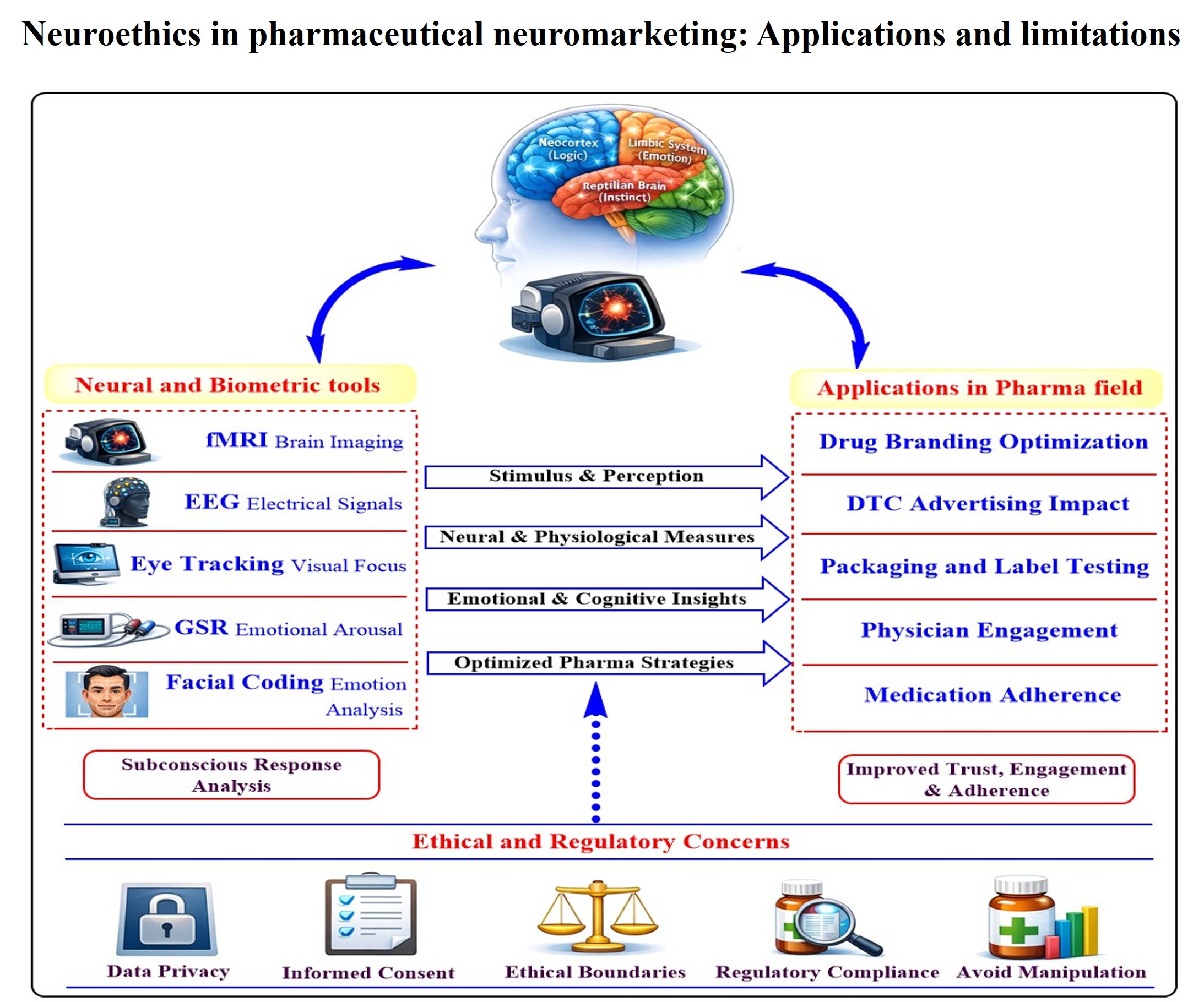
Neuromarketing integrates neuroscience, psychology, and marketing to investigate the neural and emotional mechanisms underlying consumer decision-making and behavior. In the pharmaceutical industry, decision-making among patients and healthcare professionals is complex and emotionally influenced. Herein, neuromarketing provides a data-driven approach to assess communication and perception toward a brand. In this context, a semi-systematic review of the literature was conducted by compiling selected studies published between January 2005 and January 2026 in major scientific databases (PubMed, Scopus, Web of Science, Google Scholar). This review highlights the scope, applications, and ethical implications of neuromarketing within the pharmaceutical domain. Findings indicate that neuromarketing helps clarify the cognitive and emotional drivers that influence preferences for pharmaceutical products and brand loyalty. Among the various neuromarketing tools, functional magnetic resonance imaging and electroencephalography provide neural insights into emotional responses and attention to marketing cues. Meanwhile, eye-tracking and galvanic skin response quantify visual focus and physiological arousal. These data facilitate evidence-based optimization of marketing strategies. However, various ethical challenges persist, including data privacy, small sample sizes, methodological variability, informed consent, and the risks of psychological manipulation. Thus, integrating neuroscientific data into marketing requires standardized methodologies and robust regulatory frameworks to ensure transparency and consumer protection.
- Bhardwaj S, Thapa SB, Gandhi A. Advances in neuromarketing and improved understanding of consumer behaviour: Analysing tool possibilities and research trends. Cogent Bus Manag. 2024;11(1):2376773. doi: 10.1080/23311975.2024.2376773
- Song G, Gazi MA, Waaje A, et al. The neuromarketing: Bridging neuroscience and marketing for enhanced consumer engagement. IEEE Access. 2025;13:40331-40353. doi: 10.1109/ACCESS.2025.3545742
- Fugate DL. Neuromarketing: a layman’s look at neuroscience and its potential application to marketing practice. J Consum Mark. 2007;24(7):385-394. doi: 10.1108/07363760710834807
- Mileti A, Guido G, Prete MI. Nanomarketing: a new frontier for neuromarketing. Psychol Mark. 2016;33(8):664-674. doi: 10.1002/mar.20907
- Chawla N, Anute N, Patil K, Ranadive A, Pathak G, Mangaonkar MU. Neuro Marketing Perspective on Online Purchase Decision Making for Decoding the Digital Consumer. Res Econ. 2026;80(1):101111. doi: 10.1016/j.rie.2026.101111
- Wang KS, Smith DV, Delgado MR. Using fMRI to study reward processing in humans: past, present, and future. J Neurophysiol. 2016;115(3):1664-1678. doi: 10.1152/jn.00333.2015
- Nejati V, Majdi R, Salehinejad MA, Nitsche MA. The role of dorsolateral and ventromedial prefrontal cortex in the processing of emotional dimensions. Sci Rep. 2021;11(1):1971. doi: 10.1038/s41598-021-81454-7
- Songsamoe S, Saengwong-ngam R, Koomhin P, Matan N. Understanding consumer physiological and emotional responses to food products using electroencephalography (EEG). Trends Food Sci Technol. 2019;93:167-173. doi: 10.1016/j.tifs.2019.09.018
- Allen JJ, Keune PM, Schönenberg M, Nusslock R. Frontal EEG alpha asymmetry and emotion: From neural underpinnings and methodological considerations to psychopathology and social cognition. Psychophysiology. 2018;55(1):e13028. doi: 10.1111/psyp.13028
- Guo R, Kim N, Lee J. Empirical insights into eye-tracking for design evaluation: applications in visual communication and new media design. Behav Sci. 2024;14(12):1231. doi: 10.3390/bs14121231
- Umair M, Chalabianloo N, Sas C, Ersoy C. HRV and stress: a mixed-methods approach for comparison of wearable heart rate sensors for biofeedback. IEEE Access. 2021;9:14005-14024. doi: 10.1109/ACCESS.2021.3052131
- Csoltova E, Mehinagic E. Where do we stand in the domestic dog (Canis familiaris) positive-emotion assessment: A state-of-the-art review and future directions. Front Psychol. 2020;11:525721. doi: 10.3389/fpsyg.2020.02131
- Ekman P, Friesen WV. Facial action coding system. Environ Psychol Nonverbal Behav. 1978. doi: 10.1037/t27734-000
- Lee N, Broderick AJ, Chamberlain L. What is ‘neuromarketing’? A discussion and agenda for future research. Int J Psychophysiol. 2007;63(2):199-204. doi: 10.1016/j.ijpsycho.2006.03.007
- Ariely D, Berns GS. Neuromarketing: the hope and hype of neuroimaging in business. Nat Rev Neurosci. 2010;11(4):284-292. doi: 10.1038/nrn2795
- Plassmann H, Ramsøy TZ, Milosavljevic M. Branding the brain: A critical review and outlook. J Consum Psychol. 2012;22(1):18-36. doi: 10.1016/j.jcps.2011.11.010
- Solnais C, Andreu-Perez J, Sánchez-Fernández J, Andréu-Abela J. The contribution of neuroscience to consumer research: A conceptual framework and empirical review. J Econ Psychol. 2013;36:68-81. doi: 10.1016/j.joep.2013.02.011
- Moya I, García-Madariaga J, Blasco MF. What can neuromarketing tell us about food packaging?. Foods. 2020;9(12):1856. doi: 10.3390/foods9121856
- Casado-Aranda LA, Sánchez-Fernández J, Ibáñez-Zapata JÁ. Evaluating communication effectiveness through eye tracking: Benefits, state of the art, and unresolved questions. Int J Bus Commun. 2023;60(1):24-61. doi: 10.1177/2329488419893746
- Jordão IL, Souza MT, Oliveira JH, Giraldi JD. Neuromarketing applied to consumer behaviour: an integrative literature review between 2010 and 2015. Int J Bus Forecast Mark Intell. 2017;3(3):270-288. doi: 10.1504/IJBFMI.2017.085371
- Kalaganis FP, Georgiadis K, Oikonomou VP, Laskaris NA, Nikolopoulos S, Kompatsiaris I. Unlocking the subconscious consumer bias: a survey on the past, present, and future of hybrid EEG schemes in neuromarketing. Front. Neuroergonomics. 2021;2:672982. doi: 10.3389/fnrgo.2021.672982
- Eremenko J, Kosonogov V, Aksiotis V, et al. Neurophysiological study of consumer emotional reactions in a simulated multisensory retail environment. Front Hum Neurosci. 2025;19:1635673. doi: 10.3389/fnhum.2025.1635673
- Rodríguez VJ, Antonovica A, Martín DL. Consumer neuroscience on branding and packaging: A review and future research agenda. Int J Consum Stud. 2023;47(6):2790-2815. doi: 10.1111/ijcs.12936
- Stanton SJ, Sinnott-Armstrong W, Huettel SA. Neuromarketing: Ethical implications of its use and potential misuse. J Bus Ethics. 2017;144(4):799-811. doi: 10.1007/s10551-016-3059-0
- Ramsøy TZ. Building a foundation for neuromarketing and consumer neuroscience research: How researchers can apply academic rigor to the neuroscientific study of advertising effects. J Advert Res. 2019;59(3):281-294. doi: 10.2501/JAR-2019-034
- Vences NA, Díaz-Campo J, Rosales DF. Neuromarketing as an emotional connection tool between organizations and audiences in social networks. A theoretical review. Front Psychol. 2020;11:1787. doi: 10.3389/fpsyg.2020.01787
- Karmarkar UR, Yoon C. Consumer neuroscience: Advances in understanding consumer psychology. Curr Opin Psychol. 2016;10:160-165. doi: 10.1016/j.copsyc.2016.01.010
- Smidts A, Hsu M, Sanfey AG, et al. Advancing consumer neuroscience. Mark Lett. 2014;25(3):257-267. doi: 10.1007/s11002-014-9306-1
- Gupta R, Kapoor AP, Verma HV. Neuro-insights: a systematic review of neuromarketing perspectives across consumer buying stages. Front Neuroergonomics. 2025;6:1542847. doi: 10.3389/fnrgo.2025.1542847
- Boksem MA, Smidts A. Brain responses to movie trailers predict individual preferences for movies and their population-wide commercial success. J Mark Res. 2015;52(4):482-492. doi: 10.1509/jmr.13.0572
- Murphy ER, Illes J, Reiner PB. Neuroethics of neuromarketing. J Consum Behav. 2008;7(4‐5):293-302. doi: 10.1002/cb.252
- Mackert M. Health literacy knowledge among direct-to-consumer pharmaceutical advertising professionals. Health Commun. 2011;26(6):525-533. doi: 10.1080/10410236.2011.556084
- Mor J, Kaur T, Menkes DB, Peter E, Grundy Q. Pharmaceutical industry promotional activities on social media: a scoping review. J Pharm Health Serv Res. 2024;15(4):rmae022. doi: 10.1093/jphsr/rmae022
- Sarkar S, Sharma N. Neuro-Marketing in the Digital Era: A Review of Neurological and Behavioral Insights in Consumer Decision-Making. J Soc Mark. 2026;3:140-154. doi: 10.61336/jmsr/26-01-19
- Singh K, Kumar A. Exploring the Evolving Landscape of Neuromarketing Ethics. Int J Mark Res. 2026;68(1):108-131. doi: 10.1177/14707853251383629
- Roebuck MC, Liberman JN, Gemmill-Toyama M, Brennan TA. Medication adherence leads to lower health care use and costs despite increased drug spending. Health Aff. 2011;30(1):91-99. doi: 10.1377/hlthaff.2009.1087
- Li J, Zhong Y, Ma Z, et al. Emotion reactivity-related brain network analysis in generalized anxiety disorder: a task fMRI study. BMC Psychiatry. 2020;20(1):429. doi: 10.1186/s12888-020-02831-6
- Kwilinski A, Lyulyov O, Pimonenko T. Emotion recognition of artificial intelligence for enhancing consumer trust in the galvanic skin response. In: Kot S, Khalid B, Haque AU, eds. The Global Conference on Entrepreneurship and the Economy in an Era of Uncertainty 2024. Springer Nature Singapore; 2025:1639-1654. doi: 10.1007/978-981-96-4116-1_107
- Shah N, Nambiar N, Gajera O, Panchal S. A systematic review on neuromarketing in pharmaceutical industries. Nirma Univ J Pharm Sci. 2024;11(2):57-78.
- Gkintoni E, Aroutzidis A, Antonopoulou H, Halkiopoulos C. From neural networks to emotional networks: A systematic review of EEG-based emotion recognition in cognitive neuroscience and real-world applications. Brain Sci. 2025;15(3):220. doi: 10.3390/brainsci15030220
- Bauer T, Hantel V. Built to attract: Evaluating trade show booth designs using attention analysis in a live communication context. J Conv Event Tour. 2022;23(3):240-268. doi: 10.1080/15470148.2021.1988022
- Setia S, Ryan NJ, Nair PS, Ching E, Subramaniam K. Evolving role of pharmaceutical physicians in medical evidence and education. Adv Med Educ Pract. 2018;9:777-790. doi: 10.2147/AMEP.S175683
- Ferrell ML, Beatty A, Dubljevic V. The ethics of neuromarketing: A rapid review. Neuroethics. 2025;18(1):19. doi: 10.1007/s12152-025-09591-8
- Dar TM, Tariq N. Comparison of Branding Strategies of Pharmaceuticals & Fast-Moving Consumer Goods: An Analysis of Modern World Need. Eur J Bus Manag Res. 2020;5(6). doi: 10.24018/ejbmr.2020.5.6.616
- Mohammed SM, Alhumaid MT. The impact of managerial innovation skills on neuromarketing implementation in the pharmaceutical sector. Int J Pharm Healthc Mark. 2026;20(1):215-237. doi: 10.1108/IJPHM-10-2024-0119
- Nasakina S. Visuals and text in pharmaceutical advertising: A multimodal analysis and ethical dilemmas. Cogn Commun Discurr. 2024;(29):55-73. doi: 10.26565/2218-2926-2024-29-04
- Khurana V, Gahalawat M, Kumar P, et al. A survey on neuromarketing using EEG signals. IEEE Trans Cogn Dev Syst. 2021;13(4):732-749. doi: 10.1109/TCDS.2021.3065200
- Kalkova N, Yarosh OB, Mitina EA, Velgosh NZ. Neuromarketing research on consumers’ visual perception of cryptomarking a product package. ABAC J. 2023;43(1):69. doi: 10.14456/abacj.2023.5
- Ishaque S, Khan N, Krishnan S. Physiological signal analysis and stress classification from VR simulations using decision tree methods. Bioengineering. 2023;10(7):766. doi: 10.3390/bioengineering10070766
- Soleymani M, Asghari-Esfeden S, Fu Y, Pantic M. Analysis of EEG signals and facial expressions for continuous emotion detection. IEEE Trans Affect Comput. 2016;7(1):17-28. doi: 10.1109/TAFFC.2015.2436926
- Kabir M, Rana MR, Debnath A. The role of quality assurance in accelerating pharmaceutical research and development: strategies for ensuring regulatory compliance and product integrity. J Angiother. 2024;8(12):1-11. doi: 10.25163/angiotherapy.81210102
- Fahim G, Toscani M, Barone JA, Wang C, Gandhi S. Evaluation of risk versus benefit information in direct-to-consumer (DTC) prescription drug television advertisements. Ther Innov Regul Sci. 2018;52(1):114-117. doi: 10.1177/2168479017716719
- Javor A, Koller M, Lee N, Chamberlain L, Ransmayr G. Neuromarketing and consumer neuroscience: contributions to neurology. BMC Neurol. 2013;13(1):13. doi: 10.1186/1471-2377-13-13
- Francer J, Izquierdo JZ, Music T, et al. Ethical pharmaceutical promotion and communications worldwide: codes and regulations. Philos Ethics Humanit Med. 2014;9(1):7. doi: 10.1186/1747-5341-9-7
- Dove ES. The EU General Data Protection Regulation: implications for international scientific research in the digital era. J Law Med Ethics. 2018;46(4):1013-1030. doi: 10.1177/1073110518822003
- Leung TC, Ho JC. Social responsibility and ethics in health care. In: Fong BYF, Law VTS, Lee A, eds. Primary Care Revisited: Interdisciplinary Perspectives for a New Era. Springer Singapore; 2020:225-240. doi: 10.1007/978-981-15-2521-6_14
- Goldstein MR, Peterson MJ, Sanguinetti JL, Tononi G, Ferrarelli F. Topographic deficits in alpha-range resting EEG activity and steady state visual evoked responses in schizophrenia. Schizophr Res. 2015;168(1-2):145-152. doi: 10.1016/j.schres.2015.06.012
- Bolognini N, Ro T. Transcranial magnetic stimulation: disrupting neural activity to alter and assess brain function. J Neurosci. 2010;30(29):9647-9650. doi: 10.1523/JNEUROSCI.1990-10.2010
- Kumar JS, Bhuvaneswari P. Analysis of electroencephalography (EEG) signals and its categorization–a study. Procedia Engineering. 2012;38:2525-2536. doi: 10.1016/j.proeng.2012.06.298
- Fred AL, Kumar SN, Kumar Haridhas A, et al. A brief introduction to magnetoencephalography (MEG) and its clinical applications. Brain Sci. 2022;12(6):788. doi: 10.3390/brainsci12060788
- Fatoorechi M, Parkinson J, Prance RJ, Prance H, Seth AK, Schwartzman DJ. A comparative study of electrical potential sensors and Ag/AgCl electrodes for characterising spontaneous and event related electroencephalagram signals. J Neurosci Methods. 2015;251:7-16. doi: 10.1016/j.jneumeth.2015.04.013
- Welch A, Mingarelli M, Riedel G, Platt B. Mapping changes in mouse brain metabolism with PET/CT. J Nucl Med. 2013;54(11):1946-1953. doi: 10.2967/jnumed.113.121509
- Aiello M, Salvatore E, Cachia A, et al. Relationship between simultaneously acquired resting-state regional cerebral glucose metabolism and functional MRI: a PET/MR hybrid scanner study. Neuroimage. 2015;113:111-121. doi: 10.1016/j.neuroimage.2015.03.017
- Heimann F, Weiss S, Müller HM. Anodal transcranial direct current stimulation (atDCS) and functional transcranial Doppler sonography (fTCD) in healthy elderly and patients with MCI: modulation of age-related changes in word fluency and language lateralization. Front Aging. 2024;4:1171133. doi: 10.3389/fragi.2023.1171133
- Lin W, Li C. Review of studies on emotion recognition and judgment based on physiological signals. Appl Sci. 2023;13(4):2573. doi: 10.3390/app13042573
- Schulte-Goecking H, Azqueta-Gavaldon M, Storz C, et al. Psychological, social and biological correlates of body perception disturbance in complex regional pain syndrome. Curr Psychol. 2022;41(3):1337-1347. doi: 10.1007/s12144-020-00635-1
- Peña-García N, Gil-Saura I, Rodríguez-Orejuela A, Siqueira-Junior JR. Purchase intention and purchase behavior online: A cross-cultural approach. Heliyon. 2020;6(6):e04284. doi: 10.1016/j.heliyon.2020.e04284
- Riaz MU, Guang LX, Zafar M, Shahzad F, Shahbaz M, Lateef M. Consumers’ purchase intention and decision-making process through social networking sites: a social commerce construct. Behav Inform Technol. 2021;40(1):99-115. doi: 10.1080/0144929X.2020.1846790
- Sun Z, Pan G, Yang R, Zang G, Zhou J. Consumer privacy decision-making in digital era: an integrative review and taxonomy. Aslib J Inf Manag. 2026;78(2):307-335. doi: 10.1108/AJIM-12-2023-0526
- Kesarwani J, Rai H, Kesarwani R. A neuromarketing framework for data-driven intelligent automation in marketing. In: Gill R, Hooda S, Srivastava D, et al, eds. Handbook of Intelligent Automation Systems Using Computer Vision and Artificial Intelligence. Wiley; 2025:449-469. doi: 10.1002/9781394302734.ch20
- Reimann M, Zaichkowsky J, Neuhaus C, Bender T, Weber B. Aesthetic package design: A behavioral, neural, and psychological investigation. J Consum Psychol. 2010;20(4):431-441. doi: 10.1016/j.jcps.2010.06.009
- Ravaja N, Somervuori O, Salminen M. Predicting purchase decision: the role of hemispheric asymmetry over the frontal cortex. J Neurosci Psychol Econ. 2013;6(1):1-13. doi: 10.1037/a0029949
- Kuhn M, Wendt J, Sjouwerman R, Büchel C, Hamm A, Lonsdorf TB. The neurofunctional basis of affective startle modulation in humans: evidence from combined facial electromyography and functional magnetic resonance imaging. Biol Psychiatry. 2020;87(6):548-558. doi: 10.1016/j.biopsych.2019.07.028
- Bebko C, Sciulli LM, Bhagat P. Using eye tracking to assess the impact of advertising appeals on donor behavior. J Nonprofit Public Sect Mark. 2014;26(4):354-371. doi: 10.1080/10495142.2014.965073
- Ohme R, Matukin M, Szczurko T. Neurophysiology uncovers secrets of TV commercials. Der Markt. 2010;49(3):133-142. doi: 10.1007/s12642-010-0034-7
- Clement J, Smith V, Zlatev J, Gidlöf K, Van de Weijer J. Assessing information on food packages. Eur J Mark. 2017;51(1):219-237. doi: 10.1108/EJM-09-2013-0509
- Lepping RJ, Papa VB, Martin LE. Cognitive neuroscience perspectives on food decision-making: A brief introduction. J Agric Food Ind Organ. 2015;13(1):5-14. doi: 10.1515/jafio-2015-0026
- Khushaba RN, Wise C, Kodagoda S, Louviere J, Kahn BE, Townsend C. Consumer neuroscience: Assessing the brain response to marketing stimuli using electroencephalogram (EEG) and eye tracking. Expert Syst Appl. 2013;40(9):3803-3812. doi: 10.1016/j.eswa.2012.12.095
- Al-Kwifi SO. The role of fMRI in detecting attitude toward brand switching: an exploratory study using high technology products. J Prod Brand Manag. 2016;25(2):208-218. doi: 10.1108/JPBM-12-2014-0774
- Reutskaja E, Nagel R, Camerer CF, Rangel A. Search dynamics in consumer choice under time pressure: An eye-tracking study. Am Econ Rev. 2011;101(2):900-926. doi: 10.1257/aer.101.2.900
- Adhikari K. Application of selected neuroscientific methods in consumer sensory analysis: A review. J Food Sci. 2023;88(S1):A53-64. doi: 10.1111/1750-3841.16526
- Khondakar MF, Sarowar MH, Chowdhury MH, et al. A systematic review on EEG-based neuromarketing: recent trends and analyzing techniques. Brain Inform. 2024;11(1):17. doi: 10.1186/s40708-024-00229-8
- Alsharif AH, Mohd Isa S. Revolutionizing consumer insights: the impact of fMRI in neuromarketing research. Future Bus J. 2024;10(1):79. doi: 10.1186/s43093-024-00371-z
- Gheorghe CM, Purcărea VL, Gheorghe IR. Using eye-tracking technology in Neuromarketing. Rom J Ophthalmol. 2023;67(1):2. doi: 10.22336/rjo.2023.2
- Zhao H, Qiao L, Fan D, et al. Modulation of brain activity with noninvasive transcranial direct current stimulation (tDCS): clinical applications and safety concerns. Front Psychol. 2017;8:685. doi: 10.3389/fpsyg.2017.00685
- Poels K, Dewitte S. How to capture the heart? Reviewing 20 years of emotion measurement in advertising. J Advert Res. 2006;46(1):18-37. doi: 10.2501/S0021849906060041
- Ballı A. Comparison of Studies Conducted in the Field of Neuromarketing and Artificial Intelligence Using Bibliometric Method. J Mehmet Akif Ersoy Univ Econ Adm Sci Fac. 2024;11(3):980-1010. doi: 10.30798/makuiibf.1416687
- Paladino CA, Milla AC, Andrade-Ruiz G. The role of neuromarketing in decoding brain stimuli and consumer behavior. Int J Management Trends Key Concepts Res. 2024;3(2):6-20. doi: 10.58898/ijmt.v3i2.06-20
- Karmarkar UR, Plassmann H. Consumer neuroscience: Past, present, and future. Organ Res Methods. 2019;22(1):174-195. doi: 10.1177/1094428117730598
- Terblanche NS. New pharmaceutical product development: Barriers to overcome and opportunities to exploit. J Commer Biotechnol. 2008;14(3):201-212. doi: 10.1057/jcb.2008.11
- Knutson B, Rick S, Wimmer GE, Prelec D, Loewenstein G. Neural predictors of purchases. Neuron. 2007;53(1):147-156. doi: 10.1016/j.neuron.2006.11.010
- Nakamura R, Miura H, Matsuda N, Taki H. Analysis of the cerebral blood flow affected by brand impressions of the products. Procedia Comput Sci. 2016;96:1748-1755. doi: 10.1016/j.procs.2016.08.223
- Constant I, Sabourdin N. The EEG signal: a window on the cortical brain activity. Paediatr Anaesth. 2012;22(6):539-552. doi: 10.1111/j.1460-9592.2012.03883.x
- Camfield DA, Scholey A, Pipingas A, et al. Steady state visually evoked potential (SSVEP) topography changes associated with cocoa flavanol consumption. Physiol Behav. 2012;105(4):948-957. doi: 10.1016/j.physbeh.2011.11.013
- Vecchiato G, Astolfi L, De Vico Fallani F, et al. On the use of EEG or MEG brain imaging tools in neuromarketing research. Comput Intell Neurosci. 2011;2011(1):643489. doi: 10.1155/2011/643489
- Matyevich M, Kingsley MI, Bice R, et al. Reliability and reactivity of heart rate variability and pupillometry in response to controlled autonomic perturbations in university students. Behav Res Methods. 2025;57(9):267. doi: 10.3758/s13428-025-02793-1
- Christopoulos GI, Uy MA, Yap WJ. The body and the brain: Measuring skin conductance responses to understand the emotional experience. Organ Res Methods. 2019;22(1):394-420. doi: 10.1177/1094428116681073
- Rawnaque FS, Rahman KM, Anwar SF, et al. Technological advancements and opportunities in Neuromarketing: a systematic review. Brain Inform. 2020;7(1):10. doi: 10.1186/s40708-020-00109-x
- Demir M. Neuromarketing in health services. Eur J Manag Mark Stud. 2022;7(4). doi: 10.46827/ejmms.v7i4.1383
- Cherubino P, Martinez-Levy AC, Caratù M, et al. Consumer behaviour through the eyes of neurophysiological measures: State‐of‐the‐Art and future trends. Comput Intell Neurosci. 2019;2019(1):1976847. doi: 10.1155/2019/1976847
- Labrecque LI, Milne GR. Exciting red and competent blue: the importance of color in marketing. J Acad Mark Sci. 2012;40(5):711-727. doi: 10.1007/s11747-010-0245-y
- Dasgupta I. Assessing current mechanisms for the regulation of direct-to-consumer neurotechnology. In: Bárd I, Hildt E, eds. Developments in Neuroethics and Bioethics. Vol 3. Academic Press; 2020:233-265. doi: 10.1016/bs.dnb.2020.03.009
- Agrawal V, Nikalje V, Sharma S, Haldar P. Role of neuromarketing in modern consumer behavior: systematic literature review. In: Nair AJ, Manohar S, Mittal A, et al, eds. Decoding Consumer Behavior Using the Insight Equation and AI Marketing. IGI Global; 2025:159-182. doi: 10.4018/979-8-3693-8588-3.ch008
- Hsu M. Neuromarketing: inside the mind of the consumer. Calif Manag Rev. 2017;59(4):5-22. doi: 10.1177/0008125617720208
- Yoon C, Gonzalez R, Bechara A, et al. Decision neuroscience and consumer decision making. Mark Lett. 2012;23(2):473-485. doi: 10.1007/s11002-012-9188-z
- Lim WM. Transformative marketing in the new normal: A novel practice-scholarly integrative review of business-to-business marketing mix challenges, opportunities, and solutions. J Bus Res. 2023;160:113638. doi: 10.1016/j.jbusres.2022.113638
- Hakim A, Levy DJ. A gateway to consumers’ minds: Achievements, caveats, and prospects of electroencephalography‐based prediction in neuromarketing. Wiley Interdiscip Rev Cogn Sci. 2019;10(2):e1485. doi: 10.1002/wcs.1485
- Genevsky A, Knutson B. Neural affective mechanisms predict market-level microlending. Psychol Sci. 2015;26(9):1411-1422. doi: 10.1177/0956797615588467
- Mittelstadt B. Principles alone cannot guarantee ethical AI. Nat Mach Intell. 2019;1(11):501-507. doi: 10.1038/s42256-019-0114-4
- Price WN, Cohen IG. Privacy in the age of medical big data. Nat Med. 2019;25(1):37-43. doi: 10.1038/s41591-018-0272-7
- Plassmann H, Venkatraman V, Huettel S, Yoon C. Consumer neuroscience: applications, challenges, and possible solutions. J Mark Res. 2015;52(4):427-435. doi: 10.1509/jmr.14.0048
- Poldrack RA. Can cognitive processes be inferred from neuroimaging data? Trends Cogn Sci. 2006;10(2):59-63. doi: 10.1016/j.tics.2005.12.004
- Jiang F, Jiang Y, Zhi H, et al. Artificial intelligence in healthcare: past, present and future. Stroke Vasc Neurol. 2017;2(4):230-243. doi: 10.1136/svn-2017-000101
- Topol EJ. High-performance medicine: the convergence of human and artificial intelligence. Nat Med. 2019;25(1):44-56. doi: 10.1038/s41591-018-0300-7
- Daugherty T, Hoffman E, Kennedy K, Nolan M. Measuring consumer neural activation to differentiate cognitive processing of advertising: Revisiting Krugman. Eur J Mark. 2018;52(1-2):182-198. doi: 10.1108/EJM-10-2017-0657
- Alsharif AH, Md Salleh NZ, Baharun R, Rami Hashem E A. Neuromarketing research in the last five years: A bibliometric analysis. Cogent Bus Manag. 2021;8(1):1978620. doi: 10.1080/23311975.2021.1978620
- Hsu M, Yoon C. The neuroscience of consumer choice. Curr Opin Behav Sci. 2015;5:116-121. doi: 10.1016/j.cobeha.2015.09.005
- Bell L, Vogt J, Willemse C, Routledge T, Butler LT, Sakaki M. Beyond self-report: A review of physiological and neuroscientific methods to investigate consumer behavior. Front Psychol. 2018;9:1655. doi: 10.3389/fpsyg.2018.01655
- Venkatraman V, Dimoka A, Pavlou PA, et al. Predicting advertising success beyond traditional measures: New insights from neurophysiological methods and market response modeling. J Mark Res. 2015;52(4):436-452. doi: 10.1509/jmr.13.0593
- Genevsky A, Yoon C, Knutson B. When brain beats behavior: Neuroforecasting crowdfunding outcomes. J Neurosci. 2017;37(36):8625-8634. doi: 10.1523/JNEUROSCI.1633-16.2017
- Telpaz A, Webb R, Levy DJ. Using EEG to predict consumers’ future choices. J Mark Res. 2015;52(4):511-529. doi: 10.1509/jmr.13.0564
- Lee N, Chamberlain L. Neuroimaging and psychophysiological measurement in organizational research: an agenda for research in organizational cognitive neuroscience. Ann N Y Acad Sci. 2007;1118(1):18-42. doi: 10.1196/annals.1412.003
- Button KS, Ioannidis JP, Mokrysz C, et al. Power failure: why small sample size undermines the reliability of neuroscience. Nat Rev Neurosci. 2013;14(5):365-376. doi: 10.1038/nrn3475
- Ioannidis JP. Why most published research findings are false. PLoS Med. 2005;2(8):e124. doi: 10.1371/journal.pmed.0020124
- Berkman ET, Falk EB, Lieberman MD. In the trenches of real-world self-control: neural correlates of breaking the link between craving and smoking. Psychol Sci. 2011;22(4):498-506. doi: 10.1177/0956797611400918