
Global landscape of organoid biobanks: Bibliometric insights, technological breakthroughs, and clinical translation

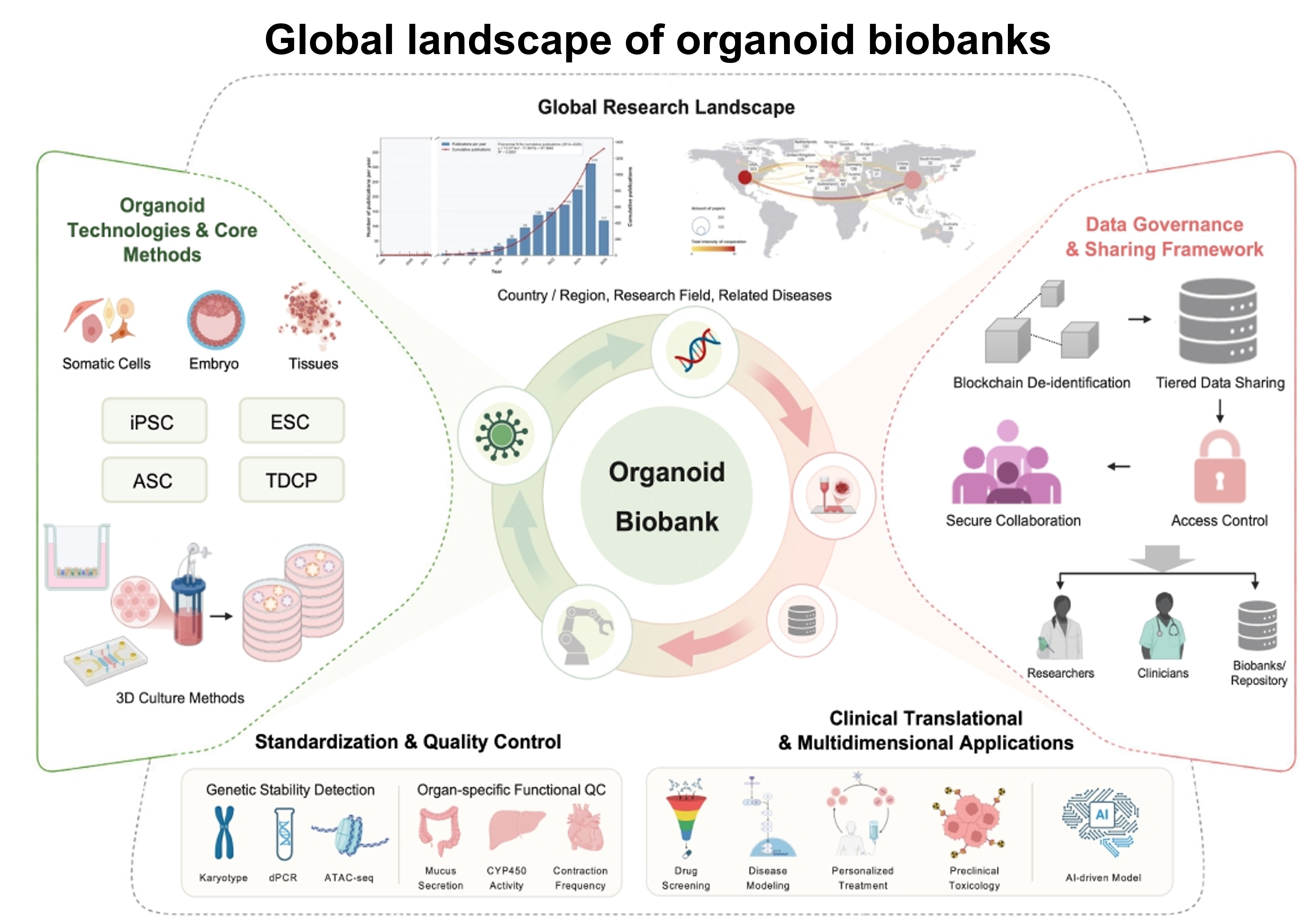
Organoid biobanks represent a pivotal innovation at the intersection of stem cell biology, bioengineering, and precision medicine. By establishing standardized repositories of patient-derived organoids spanning diverse tissues and disease contexts, organoid biobanks enhance experimental reproducibility, foster international scientific collaboration, and accelerate translational research. This study presents a comprehensive bibliometric analysis of 1,318 publications over the past three decades and identifies transformative shifts in the field. Research output has increased substantially since 2014, driven by international consortia involving institutions in China, the United States, and Europe. The analysis highlights predominant applications in cancer modeling (particularly gastrointestinal and central nervous system malignancies), high-throughput drug screening, and regenerative medicine, with emerging frontiers in multi-organ system integration and artificial intelligence-enabled predictive modeling. Technological advances are increasingly being evaluated for clinical relevance through reported concordance between organoid-based predictions and patient treatment responses. While challenges persist in the functional maturation of organoids and in ethical governance, organoid biobanks are increasingly positioned to reshape biomedical research paradigms by bridging experimental models with clinical decision-making. The strategic development of standardized protocols and interdisciplinary frameworks will be essential to realize their full potential in advancing therapeutic discovery and personalized healthcare.
- Rossi G, Manfrin A, Lutolf MP. Progress and potential in organoid research. Nat Rev Genet. 2018;19(11):671-687. doi: 10.1038/s41576-018-0051-9
- Fatehullah A, Tan SH, Barker N. Organoids as an in vitro model of human development and disease. Nat Cell Biol. 2016;18(3):246-254. doi: 10.1038/ncb3312
- Lancaster MA, Knoblich JA. Organogenesis in a dish: Modeling development and disease using organoid technologies. Science. 2014;345(6194):1247125. doi: 10.1126/science.1247125
- Ingber DE. Reverse Engineering Human Pathophysiology with Organs-on-Chips. Cell. 2016;164(6):1105-1109. doi: 10.1016/j.cell.2016.02.049
- Spence JR, Mayhew CN, Rankin SA, et al. Directed differentiation of human pluripotent stem cells into intestinal tissue in vitro. Nature. 2010;470(7332):105-109. doi: 10.1038/nature09691
- Lancaster MA, Renner M, Martin CA, et al. Cerebral organoids model human brain development and microcephaly. Nature. 2013;501(7467):373-379. doi: 10.1038/nature12517
- Vlachogiannis G, Hedayat S, Vatsiou A, et al. Patient-derived organoids model treatment response of metastatic gastrointestinal cancers. Science. 2018;359(6378):920-926. doi: 10.1126/science.aao2774
- Pauli C, Hopkins BD, Prandi D, et al. Personalized In Vitro and In Vivo Cancer Models to Guide Precision Medicine. Cancer Discov. 2017;7(5):462-477. doi: 10.1158/2159-8290.CD-16-1154
- Sato T, Vries RG, Snippert HJ, et al. Single Lgr5 stem cells build crypt-villus structures in vitro without a mesenchymal niche. Nature. 2009;459(7244):262-265. doi: 10.1038/nature07935
- Eiraku M, Takata N, Ishibashi H, et al. Self-organizing optic-cup morphogenesis in three-dimensional culture. Nature. 2011;472(7341):51-56. doi: 10.1038/nature09941
- Takebe T, Sekine K, Enomura M, et al. Vascularized and functional human liver from an iPSC-derived organ bud transplant. Nature. 2013;499(7459):481-484. doi: 10.1038/nature12271
- Sachs N, Papaspyropoulos A, Zomer‐van Ommen DD, et al. Long‐term expanding human airway organoids for disease modeling. EMBO J. 2019;38(4). doi: 10.15252/embj.2018100300
- Nguyen TA, Jo MH, Choi YG, et al. Functional Anatomy of the Human Microprocessor. Cell. 2015;161(6):1374-1387. doi: 10.1016/j.cell.2015.05.010
- Kim J, Koo BK, Knoblich JA. Human organoids: model systems for human biology and medicine. Nat Rev Mol Cell Biol. 2020;21(10):571-584. doi: 10.1038/s41580-020-0259-3
- Thran M, Mukherjee J, Pönisch M, et al. mRNA mediates passive vaccination against infectious agents, toxins, and tumors. EMBO Mol Med. 2017;9(10):1434-1447. doi: 10.15252/emmm.201707678
- Kelley MW. Generation of Human Hair Cells In Vitro: Is It All about How the Wnt Blows? Cell Stem Cell. 2017;21(1):11-12. doi: 10.1016/j.stem.2017.06.007
- van de Wetering M, Francies HE, Francis JM, et al. Prospective derivation of a Living Organoid Biobank of colorectal cancer patients. Cell. 2015;161(4):933-945. doi: 10.1016/j.cell.2015.03.053
- Corsini NS, Peer AM, Moeseneder P, et al. Coordinated Control of mRNA and rRNA Processing Controls Embryonic Stem Cell Pluripotency and Differentiation. Cell Stem Cell. 2018;22(4):543-558.e12. doi: 10.1016/j.stem.2018.03.002
- Broutier L, Mastrogiovanni G, Verstegen MMA, et al. Human Primary Liver Cancer -derived Organoid Cultures for disease modelling and drug screening. Nat Med. 2017;23(12):1424-1435. doi: 10.1038/nm.4438
- Xie X, Li X, Song W. Tumor organoid biobank-new platform for medical research. Sci Rep. 2023;13(1). doi: 10.1038/s41598-023-29065-2
- Bacci M, Lorito N, Ippolito L, et al. Reprogramming of Amino Acid Transporters to Support Aspartate and Glutamate Dependency Sustains Endocrine Resistance in Breast Cancer. Cell Rep. 2019;28(1):104-118.e8. doi: 10.1016/j.celrep.2019.06.010
- Di Paola FJ, Calafato G, Piccaluga PP, Tallini G, Rhoden KJ. Patient-Derived Organoid Biobanks for Translational Research and Precision Medicine: Challenges and Future Perspectives. J Pers Med. 2025;15(8):394. doi: 10.3390/jpm15080394
- Roerink SF, Sasaki N, Lee-Six H, et al. Intra-tumour diversification in colorectal cancer at the single-cell level. Nature. 2018;556(7702):457-462. doi: 10.1038/s41586-018-0024-3
- Ooft SN, Weeber F, Dijkstra KK, et al. Patient-derived organoids can predict response to chemotherapy in metastatic colorectal cancer patients. Sci Transl Med. 2019;11(513). doi: 10.1126/scitranslmed.aay2574
- Thomas SC, Miller G, Li X, Saxena D. Getting off tract: contributions of intra-organ microbiota to cancer in extra-intestinal organs. Gut. 2023;73(1):175-185. doi: 10.1136/gutjnl-2022-328834
- Frank S, Ahuja G, Bartsch D, et al. yylncT Defines a Class of Divergently Transcribed lncRNAs and Safeguards the T-mediated Mesodermal Commitment of Human PSCs. Cell Stem Cell. 2019;24(2):318-327.e8. doi: 10.1016/j.stem.2018.11.005
- Lee SH, Hou JC, Hamidzadeh A, et al. A molecular clock controls periodically driven cell migration in confined spaces. Cell Syst. 2022;13(7):514-529.e10. doi: 10.1016/j.cels.2022.05.005
- Aria M, Cuccurullo C. bibliometrix: An R-tool for comprehensive science mapping analysis. J Informetr. 2017;11(4):959-975. doi: 10.1016/j.joi.2017.08.007
- Docampo D. Erratum to: On using the Shanghai ranking to assess the research performance of university systems. Scientometrics. 2010;86(1):237-237. doi: 10.1007/s11192-010-0315-4
- Moed HF. Citation Analysis in Research Evaluation. Vol 9. Springer-Verlag; 2005. doi: 10.1007/1-4020-3714-7
- Bar-Ilan J. Which h-index? — A comparison of WoS, Scopus and Google Scholar. Scientometrics. 2007;74(2):257-271. doi: 10.1007/s11192-008-0216-y
- Chen C. CiteSpace II: Detecting and visualizing emerging trends and transient patterns in scientific literature. J Am Soc Inf Sci Technol. 2005;57(3):359-377. doi: 10.1002/asi.20317
- Small H. Co-citation in the scientific literature: A new measure of the relationship between two documents. J Am Soc Inf Sci. 1973;24(4):265-269. doi: 10.1002/asi.4630240406
- Nikolov D, Lalmas M, Flammini A, Menczer F. Quantifying Biases in Online Information Exposure. J Assoc Inf Sci Technol. 2018;70(3):218-229. doi: 10.1002/asi.24121
- Lubango LM, Pouris A. Industry work experience and inventive capacity of South African academic researchers. Technovation. 2007;27(12):788-796. doi: 10.1016/j.technovation.2007.05.013
- Gu Z, Gu L, Eils R, Schlesner M, Brors B. circlize implements and enhances circular visualization in R. Bioinformatics. 2014;30(19):2811-2812. doi: 10.1093/bioinformatics/btu393
- Gu Z, Eils R, Schlesner M. Complex heatmaps reveal patterns and correlations in multidimensional genomic data. Bioinformatics. 2016;32(18):2847-2849. doi: 10.1093/bioinformatics/btw313
- Rinne M. Technology roadmaps: Infrastructure for innovation. Technol Forecast Soc Change. 2004;71(1):67-80. doi: 10.1016/j.techfore.2003.10.002
- Di Paco G, Meoni G, Ghini V, et al. Recent trends in metabolomics by NMR spectroscopy. Angew Chem Int Ed. 2026;65(24). doi: 10.1002/anie.202525689
- Li H, Liu H, Chen K. Living biobank-based cancer organoids: prospects and challenges in cancer research. Cancer Biol Med. 2022;19(7):965-982. doi: 10.20892/j.issn.2095-3941.2021.0621
- Perrone F, Zilbauer M. Biobanking of human gut organoids for translational research. Exp Mol Med. 2021;53(10):1451-1458. doi: 10.1038/s12276-021-00606-x
- Ravi K, Manoharan TJM, Wang KC, Pockaj B, Nikkhah M. Engineered 3D ex vivo models to recapitulate the complex stromal and immune interactions within the tumor microenvironment. Biomaterials. 2024;305:122428. doi: 10.1016/j.biomaterials.2023.122428
- Izadifar Z, Sontheimer-Phelps A, Lubamba BA, et al. Modeling mucus physiology and pathophysiology in human organs-on-chips. Adv Drug Deliv Rev. 2022;191:114542. doi: 10.1016/j.addr.2022.114542
- Li B, Tang Y, Huang Z, Ma L, Song J, Xue L. Synergistic innovation in organ-on-a-chip and organoid technologies: Reshaping the future of disease modeling, drug development and precision medicine. Protein Cell. 2025;17(8): 686–703. doi: 10.1093/procel/pwaf058
- Yang R, Qi Y, Zhang X, Gao H, Yu Y. Living biobank: Standardization of organoid construction and challenges. Chin Med J. 2024;137(24):3050-3060. doi: 10.1097/CM9.0000000000003414
- Miloradovic D, Pavlovic D, Jankovic MG, et al. Human Embryos, Induced Pluripotent Stem Cells, and Organoids: Models to Assess the Effects of Environmental Plastic Pollution. Front Cell Dev Biol. 2021;9. doi: 10.3389/fcell.2021.709183
- Li H, Liu S, Zhang J, Zhang C. Research progress of organoids derived from normal tissues. Dig Med Res. 2019;2:39. doi: 10.21037/dmr.2019.12.04
- Wang L, Ye Z, Jang YY. Convergence of human pluripotent stem cell, organoid, and genome editing technologies. Exp Biol Med. 2021;246(7):861-875. doi: 10.1177/1535370220985808
- Heinzelmann E, Piraino F, Costa M, et al. iPSC-derived and Patient-Derived Organoids: Applications and challenges in scalability and reproducibility as pre-clinical models. Curr Res Toxicol. 2024;7:100197. doi: 10.1016/j.crtox.2024.100197
- Liang Y, Sun X, Duan C, Tang S, Chen J. Application of patient-derived induced pluripotent stem cells and organoids in inherited retinal diseases. Stem Cell Res Ther. 2023;14(1). doi: 10.1186/s13287-023-03564-5
- Yan HHN, Chan AS, Lai FPL, Leung SY. Organoid cultures for cancer modeling. Cell Stem Cell. 2023;30(7):917-937. doi: 10.1016/j.stem.2023.05.012
- Xu Z, Yang J, Xin X, et al. Merits and challenges of iPSC-derived organoids for clinical applications. Front Cell Dev Biol. 2023;11. doi: 10.3389/fcell.2023.1188905
- Zhou G, Li R, Sheng S, et al. Organoids and organoid extracellular vesicles-based disease treatment strategies. J Nanobiotechnol. 2024;22(1). doi: 10.1186/s12951-024-02917-3
- Lee H, Im JS, Choi DB, Woo DH. Trends in the global organoid technology and industry: from organogenesis in a dish to the commercialization of organoids. Organoid. 2021;1:e11. doi: 10.51335/organoid.2021.1.e11
- Mulaudzi PE, Abrahamse H, Crous A. Insights on Three Dimensional Organoid Studies for Stem Cell Therapy in Regenerative Medicine. Stem Cell Rev Rep. 2023;20(2):509-523. doi: 10.1007/s12015-023-10655-6
- Sean G, Banes AJ, Gangaraju R. Organoids and tissue/organ chips. Stem Cell Res Ther. 2024;15(1). doi: 10.1186/s13287-024-03859-1
- Goldrick C, Guri I, Herrera-Oropeza G, et al. 3D multicellular systems in disease modelling: From organoids to organ-on-chip. Front Cell Dev Biol. 2023;11. doi: 10.3389/fcell.2023.1083175
- Velasco V, Shariati SA, Esfandyarpour R. Microtechnology-based methods for organoid models. Microsyst Nanoeng. 2020;6(1). doi: 10.1038/s41378-020-00185-3
- Lai W, Geliang H, Bin X, Wang W. Effects of hydrogel stiffness and viscoelasticity on organoid culture: a comprehensive review. Mol Med. 2025;31(1). doi: 10.1186/s10020-025-01131-7
- Chen S, Schoen J. Air-liquid interface cell culture: From airway epithelium to the female reproductive tract. Reprod Domestic Animals. 2019;54(S3):38-45. doi: 10.1111/rda.13481
- Abo KM, Sainz de Aja J, Lindstrom-Vautrin J, et al. Air-liquid interface culture promotes maturation and allows environmental exposure of pluripotent stem cell-derived alveolar epithelium. JCI Insight. 2022;7(6). doi: 10.1172/jci.insight.155589
- Lamers MM, van der Vaart J, Knoops K, et al. An organoid‐derived bronchioalveolar model for SARS‐CoV‐2 infection of human alveolar type II‐like cells. EMBO J. 2021;40(5). doi: 10.15252/embj.2020105912
- Kim J, Eo EY, Kim B, et al. Transcriptomic Analysis of Air-Liquid Interface Culture in Human Lung Organoids Reveals Regulators of Epithelial Differentiation. Cells. 2024;13(23):1991. doi: 10.3390/cells13231991
- Rezaei Kolahchi A, Khadem Mohtaram N, Pezeshgi Modarres H, et al. Microfluidic-Based Multi-Organ Platforms for Drug Discovery. Micromachines. 2016;7(9):162. doi: 10.3390/mi7090162
- Mu P, Zhou S, Lv T, et al. Newly developed 3D in vitro models to study tumor-immune interaction. J Exp Clin Cancer Res. 2023;42(1). doi: 10.1186/s13046-023-02653-w
- Liu H, Gan Z, Qin X, Wang Y, Qin J. Advances in Microfluidic Technologies in Organoid Research. Adv Healthc Mater. 2023;13(21). doi: 10.1002/adhm.202302686
- Licata JP, Schwab KH, Har-el Y el, Gerstenhaber JA, Lelkes PI. Bioreactor Technologies for Enhanced Organoid Culture. Int J Mol Sci. 2023;24(14):11427. doi: 10.3390/ijms241411427
- Mousavi Shaegh SA, De Ferrari F, Zhang YS, et al. A microfluidic optical platform for real-time monitoring of pH and oxygen in microfluidic bioreactors and organ-on-chip devices. Biomicrofluidics. 2016;10(4). doi: 10.1063/1.4955155
- Chen VC, Couture LA. The suspension culture of undifferentiated human pluripotent stem cells using spinner flasks. In: Methods in Molecular Biology. Springer New York; 2014:13-21. doi:10.1007/7651_2014_118
- Wiedenmann S, Breunig M, Merkle J, et al. Single-cell-resolved differentiation of human induced pluripotent stem cells into pancreatic duct-like organoids on a microwell chip. Nat Biomed Eng. 2021;5(8):897-913. doi: 10.1038/s41551-021-00757-2
- Sockell A, Wong W, Longwell S, et al. A microwell platform for high-throughput longitudinal phenotyping and selective retrieval of organoids. Cell Syst. 2023;14(9):764-776.e6. doi: 10.1016/j.cels.2023.08.002
- Zhang J, Xue J, Luo N, Chen F, Chen B, Zhao Y. Microwell array chip-based single-cell analysis. Lab Chip. 2023;23(5):1066-1079. doi: 10.1039/D2LC00667G
- Li Z, Yue M, Liu Y, et al. Advances of Engineered Hydrogel Organoids within the Stem Cell Field: A Systematic Review. Gels. 2022;8(6):379. doi: 10.3390/gels8060379
- Kaur S, Kaur I, Rawal P, Tripathi DM, Vasudevan A. Non-matrigel scaffolds for organoid cultures. Cancer Letters. 2021;504:58-66. doi: 10.1016/j.canlet.2021.01.025
- Phelan MA, Lelkes PI, Swaroop A. Mini and customized low-cost bioreactors for optimized high-throughput generation of tissue organoids. Stem Cell Investig. 2018;5:33. doi: 10.21037/sci.2018.09.06
- Zheng F, Xiao Y, Liu H, Fan Y, Dao M. Patient-Specific Organoid and Organ-on-a-Chip: 3D Cell-Culture Meets 3D Printing and Numerical Simulation. Adv Biol. 2021;5(6). doi: 10.1002/adbi.202000024
- Price S, Bhosle S, Gonçalves E, et al. A suspension technique for efficient large-scale cancer organoid culturing and perturbation screens. Sci Rep. 2022;12(1). doi: 10.1038/s41598-022-09508-y
- Wang Y, Xue Y, Wang H, et al. Automated laser-assisted single-cell sorting for cell functional and RNA sequencing. ACS Sens. 2025;10(2):846-856. doi: 10.1021/acssensors.4c02417
- Papp D, Korcsmaros T, Hautefort I. Revolutionizing immune research with organoid-based co-culture and chip systems. Clin Exp Immunol. 2024;218(1):40-54. doi: 10.1093/cei/uxae004
- Zhao Z, Chen X, Dowbaj AM, et al. Organoids. Nat Rev Methods Primer. 2022;2(1). doi: 10.1038/s43586-022-00174-y
- Rabata A, Fedr R, Soucek K, Hampl A, Koledova Z. 3D Cell Culture Models Demonstrate a Role for FGF and WNT Signaling in Regulation of Lung Epithelial Cell Fate and Morphogenesis. Front Cell Dev Biol. 2020;8. doi: 10.3389/fcell.2020.00574
- Gu Z, Wu Q, Shang B, Zhang K, Zhang W. Organoid co-culture models of the tumor microenvironment promote precision medicine. Cancer Innov. 2024;3(1). doi: 10.1002/cai2.101
- Yang L, Wang X, Zhou X, et al. A tunable human intestinal organoid system achieves controlled balance between self-renewal and differentiation. Nat Commun. 2025;16(1). doi: 10.1038/s41467-024-55567-2
- Sun S, Xue X, Fu J. Modeling development using microfluidics: Bridging gaps to foster fundamental and translational research. Curr Opin Genet Dev. 2023;82:102097. doi: 10.1016/j.gde.2023.102097
- Yang H, Wang Y, Wang P, Zhang N, Wang P. Tumor organoids for cancer research and personalized medicine. Cancer Biol Med. 2021;18. doi: 10.20892/j.issn.2095-3941.2021.0335
- Sinha A, Maibam M, Jain R, et al. Organoid: Biomedical application, biobanking, and pathways to translation. Heliyon. 2025;11(10):e43028. doi: 10.1016/j.heliyon.2025.e43028
- Li Y, Tang P, Cai S, Peng J, Hua G. Organoid based personalized medicine: from bench to bedside. Cell Regen. 2020;9(1). doi: 10.1186/s13619-020-00059-z
- Huang Y, Huang Z, Tang Z, et al. Research Progress, Challenges, and Breakthroughs of Organoids as Disease Models. Front Cell Dev Biol. 2021;9. doi: 10.3389/fcell.2021.740574
- Hu Y, Sui X, Song F, et al. Lung cancer organoids analyzed on microwell arrays predict drug responses of patients within a week. Nat Commun. 2021;12(1). doi: 10.1038/s41467-021-22676-1
- Kretzschmar K. Cancer research using organoid technology. J Mol Med. 2020;99(4):501-515. doi: 10.1007/s00109-020-01990-z
- Heydari Z, Devasahayam Arokia Balaya R, Sarkar G, Boardman L. The Role of Organoids in Advancing Colorectal Cancer Research: Insights and Future Directions. Cancers. 2025;17(13):2129. doi: 10.3390/cancers17132129
- Maule G, Casini A, Montagna C, et al. Allele specific repair of splicing mutations in cystic fibrosis through AsCas12a genome editing. Nat Commun. 2019;10(1). doi: 10.1038/s41467-019-11454-9
- de Jongh D, Massey EK, Berishvili E, et al. Organoids: a systematic review of ethical issues. Stem Cell Res Ther. 2022;13(1). doi: 10.1186/s13287-022-02950-9
- Means JC, Martinez-Bengochea AL, Louiselle DA, et al. Rapid and scalable personalized ASO screening in patient-derived organoids. Nature. 2025;638(8049):237-243. doi: 10.1038/s41586-024-08462-1
- Ryu JO, Seong YJ, Lee E, Lee SY, Lee DW. Applications and research trends in organoid based infectious disease models. Sci Rep. 2025;15(1). doi: 10.1038/s41598-025-07816-7
- Peng L, Gao L, Wu X, et al. Lung organoids as model to study SARS-CoV-2 infection. Cells. 2022;11(17):2758. doi: 10.3390/cells11172758
- Sugimoto S, Kobayashi E, Fujii M, et al. An organoid-based organ-repurposing approach to treat short bowel syndrome. Nature. 2021;592(7852):99-104. doi: 10.1038/s41586-021-03247-2
- Zhang FL, Hu Z, Wang YF, et al. Organoids transplantation attenuates intestinal ischemia/reperfusion injury in mice through L-malic acid-mediated M2 macrophage polarization. Nat Commun. 2023;14(1). doi: 10.1038/s41467-023-42502-0
- Tan S, Ding Y, Wang W, et al. Development of an AI model for DILI-level prediction using liver organoid brightfield images. Commun Biol. 2025;8(1). doi: 10.1038/s42003-025-08205-6
- Forsythe SD, Devarasetty M, Shupe T, et al. Environmental Toxin Screening Using Human-Derived 3D Bioengineered Liver and Cardiac Organoids. Front Public Health. 2018;6. doi: 10.3389/fpubh.2018.00103
- Zhou C, Wu Y, Wang Z, et al. Standardization of organoid culture in cancer research. Cancer Med. 2023;12(13):14375-14386. doi: 10.1002/cam4.5943
- Moon HR, Mun SJ, Kim TH, et al. Guidelines for Manufacturing and Application of Organoids: Liver. Int J Stem Cells. 2024;17(2):120-129. doi: 10.15283/ijsc24044
- Ahn SJ, Lee S, Kwon D, et al. Essential Guidelines for Manufacturing and Application of Organoids. Int J Stem Cells. 2024;17(2):102-112. doi: 10.15283/ijsc24047
- Xiang D, He A, Zhou R, et al. Building consensus on the application of organoid-based drug sensitivity testing in cancer precision medicine and drug development. Theranostics. 2024;14(8):3300-3316. doi: 10.7150/thno.96027
- Foo MA, You M, Chan SL, et al. Clinical translation of patient-derived tumour organoids- bottlenecks and strategies. Biomark Res. 2022;10(1). doi: 10.1186/s40364-022-00356-6
- Rogulska O, Havelkova J, Petrenko Y. Cryopreservation of organoids. Cryo Letters. 2023;44(2):65-75. doi:10.54680/fr23210110112
- Han H, Zhan T, Guo N, Cui M, Xu Y. Cryopreservation of organoids: Strategies, innovation, and future prospects. Biotechnol J. 2024;19(2). doi: 10.1002/biot.202300543
- Aarattuthodi S, Kang D, Gupta SK, et al. Cryopreservation of biological materials: applications and economic perspectives. In Vitro CellDevBiol-Animal. 2025;62(3):268-291. doi: 10.1007/s11626-025-01027-0
- Suarez-Martinez E, Suazo-Sanchez I, Celis-Romero M, Carnero A. 3D and organoid culture in research: physiology, hereditary genetic diseases and cancer. Cell Biosci. 2022;12(1). doi: 10.1186/s13578-022-00775-w
- Tok OE, Demirel G, Saatci Y, et al. Culturing, Freezing, Processing, and Imaging of Entire Organoids and Spheroids While Still in a Hydrogel. J Vis Exp JoVE. 2022;(190). doi: 10.3791/64563
- Gao Q, Wu Y, Mao Y, Chen X, Geng Z, Su J. Organoids: A new frontier in precision medicine and engineering. Precis Med Eng. 2025;2(4):100049. doi: 10.1016/j.preme.2025.100049
- Haake J, Steenpass L. Chromosomal quality control in hPSCs: A practical guide to SNP array analysis with GenomeStudio. Front Cell Dev Biol. 2025;13. doi: 10.3389/fcell.2025.1599923
- Huang W, Xu Z, Li S, Zhou J, Zhao B. Living Biobanks of Organoids: Valuable Resource for Translational Research. Biopreservation Biobanking. 2024;22(6):543-549. doi: 10.1089/bio.2023.0142
- Dagher G, Becker KF, Bonin S, et al. Pre-analytical processes in medical diagnostics: New regulatory requirements and standards. New Biotechnol. 2019;52:121-125. doi: 10.1016/j.nbt.2019.05.002
- Park JW, Bae SJ, Yun JH, Kim S, Park M. Assessment of Genetic Stability in Human Induced Pluripotent Stem Cell-Derived Cardiomyocytes by Using Droplet Digital PCR. Int J Mol Sci. 2024;25(2):1101. doi: 10.3390/ijms25021101
- Mead BE, Ordovas-Montanes J, Braun AP, et al. Harnessing single-cell genomics to improve the physiological fidelity of organoid-derived cell types. BMC Biol. 2018;16(1). doi: 10.1186/s12915-018-0527-2
- Shi X, Li Y, Yuan Q, et al. Integrated profiling of human pancreatic cancer organoids reveals chromatin accessibility features associated with drug sensitivity. Nat Commun. 2022;13(1). doi: 10.1038/s41467-022-29857-6
- Tindle C, Fonseca AG, Taheri S, et al. A living organoid biobank of patients with Crohn’s disease reveals molecular subtypes for personalized therapeutics. Cell Rep Med. 2024;5(10):101748. doi: 10.1016/j.xcrm.2024.101748
- Dennison TW, Edgar RD, Payne F, et al. Patient-derived organoid biobank identifies epigenetic dysregulation of intestinal epithelial MHC-I as a novel mechanism in severe Crohn’s Disease. Gut. 2024;73(9):1464-1477. doi: 10.1136/gutjnl-2024-332043
- Jiao C, Karakaya OF, Dadgar N, et al. Mastering Organoid Growth: A Complete Guide to Overcoming Methodological Challenges. MedComm. 2026;7(1). doi: 10.1002/mco2.70571
- Hansen SL, Larsen HL, Pikkupeura LM, et al. An organoid-based CRISPR-Cas9 screen for regulators of intestinal epithelial maturation and cell fate. Sci Adv. 2023;9(28). doi: 10.1126/sciadv.adg4055
- Ahammed B, Kalangi SK. A Decade of Organoid Research: Progress and Challenges in the Field of Organoid Technology. ACS Omega. 2024;9(28):30087-30096. doi: 10.1021/acsomega.4c03683
- Zhou Z, Cong L, Cong X. Patient-Derived Organoids in Precision Medicine: Drug Screening, Organoid-on-a-Chip and Living Organoid Biobank. Front Oncol. 2021;11. doi: 10.3389/fonc.2021.762184
- Alkhatib R, Gaede KI. Data Management in Biobanking: Strategies, Challenges, and Future Directions. BioTech. 2024;13(3):34. doi: 10.3390/biotech13030034
- Dove ES. Biobanks, Data Sharing, and the Drive for a Global Privacy Governance Framework. J Law Med Ethics. 2015;43(4):675-689. doi: 10.1111/jlme.12311
- Gross M, Dewan A, Macis M, et al. Decentralized biobanking platform for organoid research networks. Front Blockchain. 2025;8. doi: 10.3389/fbloc.2025.1510429
- Antoniades A, Papaioannou M, Malatras A, et al. Integration of Biobanks in National eHealth Ecosystems Facilitating Long-Term Longitudinal Clinical-Omics Studies and Citizens’ Engagement in Research Through eHealthBioR. Front Digit Health. 2021;3. doi: 10.3389/fdgth.2021.628646
- Bai L, Zhou D, Li G, Liu J, Chen X, Su J. Engineering bone/cartilage organoids: strategy, progress, and application. Bone Res. 2024;12(1). doi: 10.1038/s41413-024-00376-y
- Grebenyuk S, Ranga A. Engineering Organoid Vascularization. Front Bioeng Biotechnol. 2019;7. doi: 10.3389/fbioe.2019.00039
- Zhou LF, Liao HY, Han Y, Zhao Y. The use of organoids in creating immune microenvironments and treating gynecological tumors. J Transl Med. 2024;22(1). doi: 10.1186/s12967-024-05649-y
- Lewis J, Holm S. Organoid biobanking, autonomy and the limits of consent. Bioethics. 2022;36(7):742-756. doi: 10.1111/bioe.13047
- Mollaki V. Ethical Challenges in Organoid Use. BioTech. 2021;10(3):12. doi: 10.3390/biotech10030012