

1-Hydroxypyrene glucuronide and 8-hydroxy-2’-deoxyguanosine as complementary biomarkers bridging polycyclic aromatic hydrocarbon exposure to carcinogenic risk: Mechanistic and epidemiological perspectives

Background: Polycyclic aromatic hydrocarbons (PAHs) are ubiquitous environmental carcinogens that contribute to cancer development through oxidative stress, DNA damage, and genomic instability. However, current biomonitoring approaches often assess exposure and biological effects independently, limiting risk assessment and mechanistic interpretation. Aim: This review evaluates the complementary roles of urinary 1-hydroxypyrene glucuronide (1-OHPG) and 8-hydroxy-2’-deoxyguanosine (8-OHdG) as integrated biomarkers linking PAH exposure with early carcinogenic events. Methods: A narrative review of published literature was conducted, focusing on PAH metabolism, the biological significance of 1-OHPG and 8-OHdG, epidemiological evidence assessing both biomarkers, sources of heterogeneity, methodological limitations, and future directions for precision environmental carcinogenesis. Results: Urinary 1-OHPG is a validated biomarker of internal PAH exposure, whereas urinary 8-OHdG reflects oxidative DNA damage induced by reactive oxygen species generated during PAH metabolism. Epidemiological studies generally demonstrate positive associations between elevated 1-OHPG and 8-OHdG in occupationally and environmentally exposed populations. Nevertheless, biological variability, mixed exposures, analytical differences, and predominantly cross-sectional study designs contribute to heterogeneity. Integrating these biomarkers provides a more comprehensive exposure–effect framework for interpreting PAH-induced carcinogenic processes. Conclusion: The combined assessment of urinary 1-OHPG and 8-OHdG strengthens biomonitoring by simultaneously evaluating internal PAH exposure and early molecular damage. This integrated framework has the potential to improve environmental cancer risk assessment and support precision environmental health. Relevance for patients: Integrated biomonitoring of urinary 1-OHPG and 8-OHdG may facilitate earlier identification of individuals at increased risk from chronic PAH exposure, enabling targeted prevention, improved surveillance, and informed public health interventions.
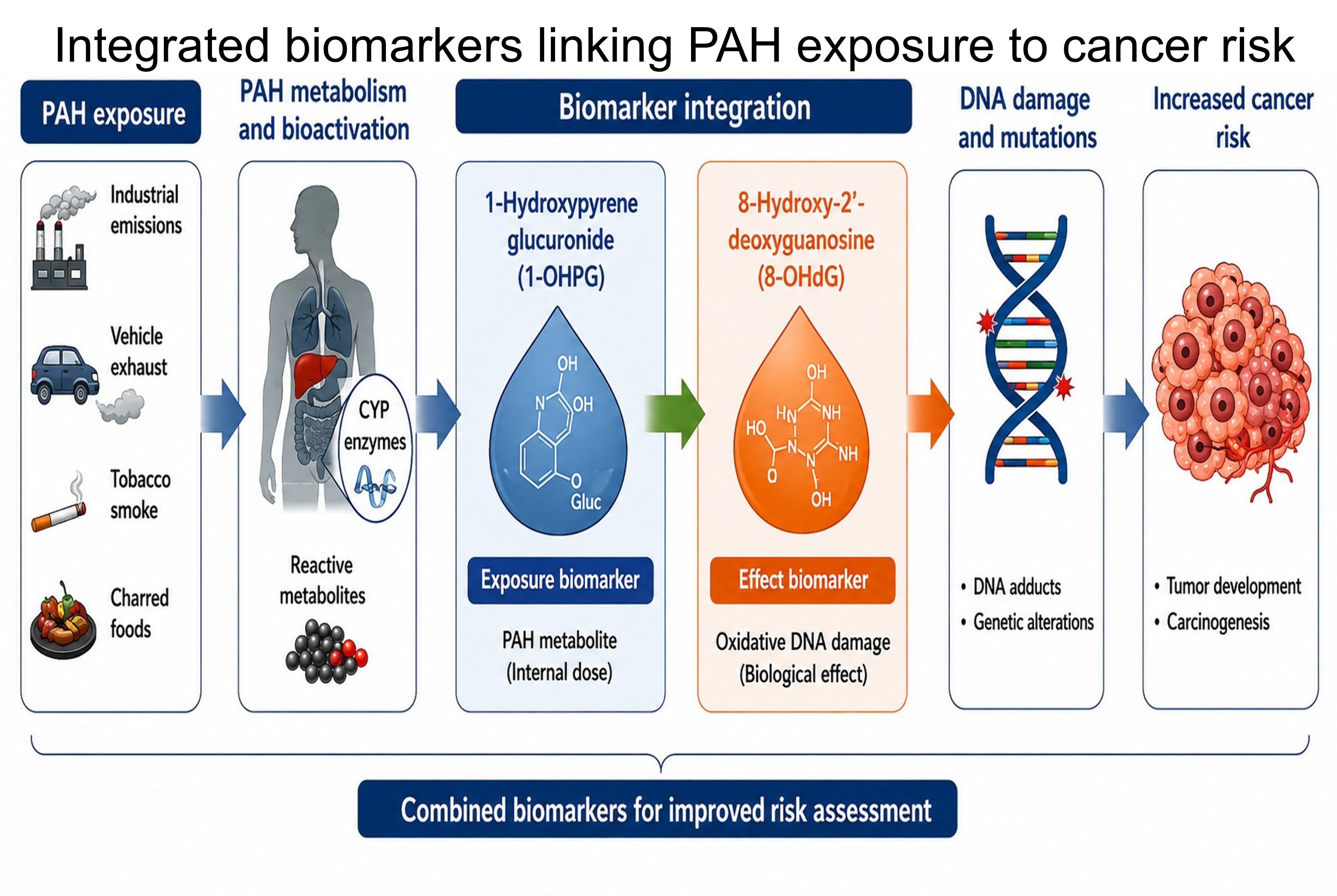
- Abravan A, Fornacon-Wood I, Kingston R, Topping D, Price G. Environmental determinants of cancer outcomes: a scoping review. Radiother Oncol. 2026;217:111408. doi: 10.1016/j.radonc.2026.111408
- World Health Organization (WHO). Cancer. 2026. Accessed July 15, 2026. https://www.who.int/news-room/fact-sheets/detail/cancer
- Hanahan D. Hallmarks of cancer: new dimensions. Cancer Discov. 2022;12(1):31-46. doi: 10.1158/2159-8290.CD-21-1059
- Loomis D, Grosse Y, Lauby-Secretan B, et al. The carcinogenicity of outdoor air pollution. Lancet Oncol. 2013;14(13):1262-1263. doi: 10.1016/S1470-2045(13)70487-X
- Awolesi AB, Koledoye TM, Adesina RM, Omoniyi KC, Praise SA. Evaluation of the nephroprotective potential of chrysin against pentadecafluorooctanoic acid-induced kidney dysfunction in male Wistar rats. Innov Med Omics. 2026. doi: 10.36922/IMO026250043
- The International Agency for Research on Cancer (IARC). IARC monographs on the evaluation of carcinogenic risks to humans. IARC Lyon. 2004;1:1-1452.
- IARC Working Group on the Evaluation of Carcinogenic Risks to Humans. Some Non-heterocyclic Polycyclic Aromatic Hydrocarbons and Some Related Exposures. Lyon (FR): International Agency for Research on Cancer; 2010. (IARC Monographs on the Evaluation of Carcinogenic Risks to Humans, No. 92.). Accessed April 11, 2026. https://www.ncbi.nlm.nih.gov/books/NBK321712/
- Wild CP. The exposome: from concept to utility. Int J Epidemiol. 2012;41(1):24-32. doi: 10.1093/ije/dyr236
- World Health Organization (WHO). Preventing cancer. 2026. Accessed July 15, 2026. https://www.who.int/activities/preventing-cancer
- Vrijheid M. The exposome: a new paradigm to study the impact of environment on health. Thorax. 2014;69(9):876-878. doi: 10.1136/thoraxjnl-2013-204949
- Boström C, Gerde P, Hanberg A, et al. Cancer risk assessment, indicators, and guidelines for polycyclic aromatic hydrocarbons in the ambient air. Environ Health Perspect. 2002;110(suppl 3):451-488. doi: 10.1289/ehp.110-1241197
- Sekar M, Praveenkumar TR. Critical review on the formations and exposure of polycyclic aromatic hydrocarbons (PAHs) in the conventional hydrocarbon-based fuels: Prevention and control strategies. Chemosphere. 2024;350:141005. doi: 10.1016/j.chemosphere.2023.141005
- Kim KH, Jahan SA, Kabir E, Brown RJC. A review of airborne polycyclic aromatic hydrocarbons (PAHs) and their human health effects. Environ Int. 2013;60:71-80. doi: 10.1016/j.envint.2013.07.019
- Venkatraman G, Giribabu N, Mohan PS, et al. Environmental impact and human health effects of polycyclic aromatic hydrocarbons and remedial strategies: A detailed review. Chemosphere. 2024;351:141227. doi: 10.1016/j.chemosphere.2024.141227
- Abdel-Shafy HI, Mansour MSM. A review on polycyclic aromatic hydrocarbons: Source, environmental impact, effect on human health and remediation. Egypt J Pet. 2016;25(1):107-123. doi: 10.1016/j.ejpe.2015.03.011
- Praise SA, Olusanya MM, Kolawole AT, et al. Computational profiling of flavonoids against key breast cancer targets: an in-silico exploration. Silico Pharmacol. 2025;13(3):192. doi: 10.1007/s40203-025-00489-0
- Lee KH, Shu XO, Gao YT, et al. Breast Cancer and Urinary Biomarkers of Polycyclic Aromatic Hydrocarbon and Oxidative Stress in the Shanghai Women’s Health Study. Cancer Epidemiol Biomark Prev. 2010;19(3):877-883. doi: 10.1158/1055-9965.EPI-09-1098
- Baird WM, Hooven LA, Mahadevan B. Carcinogenic polycyclic aromatic hydrocarbon-DNA adducts and mechanism of action. Environ Mol Mutagen. 2005;45(2-3):106-114. doi: 10.1002/em.20095
- Androutsopoulos VP, Tsatsakis AM, Spandidos DA. Cytochrome P450 CYP1A1: wider roles in cancer progression and prevention. BMC Cancer. 2009;9:187. doi: 10.1186/1471-2407-9-187
- Denison MS, Nagy SR. Activation of the Aryl Hydrocarbon Receptor by Structurally Diverse Exogenous and Endogenous Chemicals. Annu Rev Pharmacol Toxicol. 2003;43(1):309-334. doi: 10.1146/annurev.pharmtox.43.100901.135828
- Bahman F, Choudhry K, Al-Rashed F, Al-Mulla F, Sindhu S, Ahmad R. Aryl hydrocarbon receptor: current perspectives on key signaling partners and immunoregulatory role in inflammatory diseases. Front Immunol. 2024;15:1421346. doi: 10.3389/fimmu.2024.1421346
- Jomova K, Raptova R, Alomar SY, et al. Reactive oxygen species, toxicity, oxidative stress, and antioxidants: chronic diseases and aging. Arch Toxicol. 2023;97(10):2499-2574. doi: 10.1007/s00204-023-03562-9
- Vandenberg LN, Rayasam SDG, Axelrad DA, et al. Addressing systemic problems with exposure assessments to protect the public’s health. Environ Health. 2023;21(Suppl 1):121. doi: 10.1186/s12940-022-00917-0
- Muñoz B, Albores A. The Role of Molecular Biology in the Biomonitoring of Human Exposure to Chemicals. Int J Mol Sci. 2010;11(11):4511-4525. doi: 10.3390/ijms11114511
- Vineis P, Perera F. Molecular Epidemiology and Biomarkers in Etiologic Cancer Research: The New in Light of the Old. Cancer Epidemiol Biomark Prev. 2007;16(10):1954-1965. doi: 10.1158/1055-9965.EPI-07-0457
- Arnold SM, Angerer J, Boogaard PJ, et al. The use of biomonitoring data in exposure and human health risk assessment: benzene case study. Crit Rev Toxicol. 2013;43(2):119-153. doi: 10.3109/10408444.2012.756455
- Fagundes RB, Abnet CC, Strickland PT, et al. Higher urine 1-hydroxy pyrene glucuronide (1-OHPG) is associated with tobacco smoke exposure and drinking maté in healthy subjects from Rio Grande do Sul, Brazil. BMC Cancer. 2006;6:139. doi: 10.1186/1471-2407-6-139
- Jongeneelen FJ. Benchmark guideline for urinary 1-hydroxypyrene as biomarker of occupational exposure to polycyclic aromatic hydrocarbons. Ann Occup Hyg. 2001;45(1):3-13. doi: 10.1093/annhyg/45.1.3
- Ifegwu C, Osunjaye K, Fashogbon F, Oke K, Adeniyi A, Anyakora C. Urinary 1-Hydroxypyrene as a Biomarker to Carcinogenic Polycyclic Aromatic Hydrocarbon Exposure. Biomark Cancer. 2012;4:7-17. doi: 10.4137/BIC.S10065
- Choosong T, Phakthongsuk P, Tekasakul S, Tekasakul P. Urinary 1-hydroxypyrene levels in workers exposed to polycyclic aromatic hydrocarbon from rubber wood burning. Saf Health Work. 2014;5(2):86-90. doi: 10.1016/j.shaw.2014.03.004
- Huang S, Fang L, Yu S, Long C, Yu Y. Human internal exposure to polycyclic aromatic hydrocarbon: A global review of monohydroxylated metabolites and associated health risks. Hyg Environ Health Adv. 2026;17:100165. doi: 10.1016/j.heha.2025.100165
- Li Z, Sandau CD, Romanoff LC, et al. Concentration and profile of 22 urinary polycyclic aromatic hydrocarbon metabolites in the US population. Environ Res. 2008;107(3):320-331. doi: 10.1016/j.envres.2008.01.013
- Strickland P, Kang D. Urinary 1-hydroxypyrene and other PAH metabolites as biomarkers of exposure to environmental PAH in air particulate matter. Toxicol Lett. 1999;108(2-3):191-199. doi: 10.1016/s0378-4274(99)00089-2
- Halczuk KM, Boguszewska K, Urbaniak SK, Szewczuk M, Karwowski BT. 8-oxo-7,8-dihydro-2′-deoxyguanosine (8-oxodG) and 8-hydroxy-2′-deoxyguanosine (8-OHdG) as a Cause of Autoimmune Thyroid Diseases (AITD) During Pregnancy? Yale J Biol Med. 2020;93(4):501-515.
- Delaney S, Jarem DA, Volle CB, Yennie CJ. Chemical and Biological Consequences of Oxidatively Damaged Guanine in DNA. Free Radic Res. 2012;46(4):420-441. doi: 10.3109/10715762.2011.653968
- Ock CY, Kim EH, Choi DJ, Lee HJ, Hahm KB, Chung MH. 8-Hydroxydeoxyguanosine: Not mere biomarker for oxidative stress, but remedy for oxidative stress-implicated gastrointestinal diseases. World J Gastroenterol. 2012;18(4):302-308. doi: 10.3748/wjg.v18.i4.302
- Shekaftik S, Nasirzadeh N. 8-Hydroxy-2′-deoxyguanosine (8-OHdG) as a biomarker of oxidative DNA damage induced by occupational exposure to nanomaterials: a systematic review. Nanotoxicology. 2021;15(6):850-864. doi: 10.1080/17435390.2021.1936254
- VALAVANIDIS A, VLACHOGIANNI T, FIOTAKIS C. 8-hydroxy-2′ -deoxyguanosine (8-OHdG): A Critical Biomarker of Oxidative Stress and Carcinogenesis. J Environ Sci Health Part C. 2009;27(2):120-139. doi: 10.1080/10590500902885684
- Graille M, Wild P, Sauvain JJ, Hemmendinger M, Guseva Canu I, Hopf NB. Urinary 8-OHdG as a Biomarker for Oxidative Stress: A Systematic Literature Review and Meta-Analysis. Int J Mol Sci. 2020;21(11):3743. doi: 10.3390/ijms21113743
- Kasai H. Analysis of a form of oxidative DNA damage, 8-hydroxy-2′-deoxyguanosine, as a marker of cellular oxidative stress during carcinogenesis. Mutat Res. 1997;387(3):147-163. doi: 10.1016/S1383-5742(97)00035-5
- Sajous L, Botta A, Sari-Minodier I. Urinary 8-hydroxy-2′-deoxyguanosine: A biomarker of environmental oxidative stress? Ann de Biol Clin. 2008;66:19-29. doi: 10.1684/abc.2008.0188
- Huang HB, Chen GW, Wang CJ, et al. Exposure to Heavy Metals and Polycyclic Aromatic Hydrocarbons and DNA Damage in Taiwanese Traffic Conductors. Cancer Epidemiol Biomark Prev. 2013;22:102-108. doi: 10.1158/1055-9965.EPI-12-0706
- Vineis P, Chadeau-Hyam M, Gmuender H, et al. The exposome in practice: Design of the EXPOsOMICS project. Int J Hyg Environ Health. 2017;220(2):142-151. doi: 10.1016/j.ijheh.2016.08.001
- Wang IJ, Karmaus WJJ, Yang CC. Polycyclic aromatic hydrocarbons exposure, oxidative stress, and asthma in children. Int Arch Occup Environ Health. 2017;90(3):297-303. doi: 10.1007/s00420-017-1198-y
- Montano L, Baldini GM, Piscopo M, et al. Polycyclic Aromatic Hydrocarbons (PAHs) in the Environment: Occupational Exposure, Health Risks and Fertility Implications. Toxics. 2025;13(3):151. doi: 10.3390/toxics13030151
- Liang S, Yan X, An B, Yang Y, Liu M. Distribution and ecological risk assessment of polycyclic aromatic hydrocarbons in different compartments in Kenya: A review. Emerg Contam. 2022;8:351-359. doi: 10.1016/j.emcon.2022.08.001
- PubChem. Anthracene. Accessed April 21, 2026. https://pubchem.ncbi.nlm.nih.gov/compound/8418
- PubChem. Benzo[a]pyrene. Accessed April 21, 2026. https://pubchem.ncbi.nlm.nih.gov/compound/2336
- PubChem. BENZ(a)ANTHRACENE. Accessed April 21, 2026. https://pubchem.ncbi.nlm.nih.gov/compound/5954
- PubChem. Chrysene. Accessed April 21, 2026. https://pubchem.ncbi.nlm.nih.gov/compound/9171
- PubChem. Benzo(B)Fluoranthene. Accessed April 21, 2026. https://pubchem.ncbi.nlm.nih.gov/compound/9153
- PubChem. DIBENZ(a,h)ANTHRACENE. Accessed April 21, 2026. https://pubchem.ncbi.nlm.nih.gov/compound/5889
- PubChem. Fluorene. Accessed April 21, 2026. https://pubchem.ncbi.nlm.nih.gov/compound/6853
- PubChem. Naphthalene. Accessed April 21, 2026. https://pubchem.ncbi.nlm.nih.gov/compound/931
- PubChem. Pyrene. Accessed April 21, 2026. https://pubchem.ncbi.nlm.nih.gov/compound/31423
- Lee CK, Cho SH, Kang JW, et al. Comparison of three analytical methods for 1-hydroxypyrene glucuronide in urine after non-occupational exposure to polycyclic aromatic hydrocarbons. Toxicol Lett. 1999;108(2):209-215. doi: 10.1016/S0378-4274(99)00091-0
- Wu D, Wang Z, Chen J, et al. Polycyclic aromatic hydrocarbons (PAHs) in atmospheric PM2.5 and PM10 at a coal-based industrial city: Implication for PAH control at industrial agglomeration regions, China. Atmos Res. 2014;149:217-229. doi: 10.1016/j.atmosres.2014.06.012
- Adak P, Elumalai SP. Estimation of Onsite Factors on Polycyclic Aromatic Hydrocarbon Particulate Buildup in Urban Road Networks. Front Environ Sci. 2021;9. doi: 10.3389/fenvs.2021.768358
- Szramowiat-Sala K, Marczak-Grzesik M, Karczewski M, Kistler M, Giebl AK, Styszko K. Chemical investigation of polycyclic aromatic hydrocarbon sources in an urban area with complex air quality challenges. Sci Rep. 2025;15:6987. doi: 10.1038/s41598-025-91018-8
- Alves CA, Soares M, Figueiredo D, Oliveira H. Effects of particle-bound polycyclic aromatic hydrocarbons and plasticisers from different traffic sources on the human alveolar epithelial cell line A549. Atmos Environ. 2023;303:119736. doi: 10.1016/j.atmosenv.2023.119736
- Alshutairi AM, Alzahrani AH, Almontshry AM. The levels of polycyclic aromatic hydrocarbons in traditional cigarettes and E-cigarettes in Saudi Arabia markets: a comparative risk assessment study. BMC Public Health. 2024;24:2860. doi: 10.1186/s12889-024-18398-w
- Hecht S. Tobacco Smoke Carcinogens and Lung Cancer. J Natl Cancer Inst. 1999;91(14):1194-1210. doi: 10.1093/jnci/91.14.1194
- Rodgman A, Perfetti T. The Chemical Components of Tobacco and Tobacco Smoke. Second. CRC Press Taylor & Francis Group; 2013. Accessed April 12, 2026. https://www.researchgate.net/publication/294261056_The_Chemical_Components_of_Tobacco_and_Tobacco_Smoke_Second_Edition
- Lodovici M, Akpan V, Evangelisti C, Dolara P. Sidestream tobacco smoke as the main predictor of exposure to polycyclic aromatic hydrocarbons. J Appl Toxicol. 2004;24(4):277-281. doi: 10.1002/jat.992
- DUAN X, SHEN G, YANG H, et al. Dietary Intake Polycyclic Aromatic Hydrocarbons (PAHs) and Associated Cancer Risk in a Cohort of Chinese Urban Adults: Inter- and Intra-individual Variability. Chemosphere. 2016;144:2469-2475. doi: 10.1016/j.chemosphere.2015.11.019
- Sahin S, Ulusoy HI, Alemdar S, Erdogan S, Agaoglu S. The Presence of Polycyclic Aromatic Hydrocarbons (PAHs) in Grilled Beef, Chicken and Fish by Considering Dietary Exposure and Risk Assessment. Food Sci Anim Resour. 2020;40(5):675-688. doi: 10.5851/kosfa.2020.e43
- Ghosh S, Samanta A, Saha P, Sinha D. Impact of Ambient Particulate Matters on Lung Carcinogenesis. J Curr Oncol Trends. 2025;2(1):26. doi: 10.4103/JCOT.JCOT_8_24
- Moorthy B, Chu C, Carlin DJ. Polycyclic aromatic hydrocarbons: from metabolism to lung cancer. Toxicol Sci. 2015;145(1):5-15. doi: 10.1093/toxsci/kfv040
- Magalhães KM, Carreira RS, Rosa Filho JS, Rocha PP, Santana FM, Yogui GT. Polycyclic aromatic hydrocarbons (PAHs) in fishery resources affected by the 2019 oil spill in Brazil: Short-term environmental health and seafood safety. Mar Pollut Bull. 2022;175:113334. doi: 10.1016/j.marpolbul.2022.113334
- Amadou A, Praud D, Marques C, et al. Dietary intake of polycyclic aromatic hydrocarbons (PAHs) and breast cancer risk: Evidence from the French E3N-Generations prospective cohort. Environ Int. 2025;200:109505. doi: 10.1016/j.envint.2025.109505
- Du W, Jiang S, Lei Y, et al. Occurrence, formation mechanism, and health risk of polycyclic aromatic hydrocarbons in barbecued food. Ecotoxicol Environ Saf. 2025;293:118046. doi: 10.1016/j.ecoenv.2025.118046
- Moustafa GA, Xanthopoulou E, Riza E, Linos A. Skin disease after occupational dermal exposure to coal tar: a review of the scientific literature. Int J Dermatol. 2015;54(8):868-879. doi: 10.1111/ijd.12903
- Pickering RW. A Toxicological Review of Polycyclic Aromatic Hydrocarbons. J Toxicol Cutan Ocul Toxicol. 1999;18(2):101-135. doi: 10.3109/15569529909037562
- Baxter CS, Hoffman JD, Knipp MJ, Reponen T, Haynes EN. Exposure of Firefighters to Particulates and Polycyclic Aromatic Hydrocarbons. J Occup Environ Hyg. 2014;11(7):D85-D91. doi: 10.1080/15459624.2014.890286
- Teixeira J, Delerue-Matos C, Morais S, Oliveira M. Environmental contamination with polycyclic aromatic hydrocarbons and contribution from biomonitoring studies to the surveillance of global health. Environ Sci Pollut Res Int. 2024;31(42):54339-54362. doi: 10.1007/s11356-024-34727-3
- Howsam M, Jones KC. Sources of PAHs in the Environment. In: Neilson AH, ed. PAHs and Related Compounds. 3 / 3I. The Handbook of Environmental Chemistry. Berlin Heidelberg: Springer; 1998:137-174. doi: 10.1007/978-3-540-49697-7_4
- Patel AB, Shaikh S, Jain KR, Desai C, Madamwar D. Polycyclic Aromatic Hydrocarbons: Sources, Toxicity, and Remediation Approaches. Front Microbiol. 2020;11. doi: 10.3389/fmicb.2020.562813
- Xue W, Warshawsky D. Metabolic activation of polycyclic and heterocyclic aromatic hydrocarbons and DNA damage: A review. Toxicol Appl Pharmacol. 2005;206(1):73-93. doi: 10.1016/j.taap.2004.11.006
- Zhou G, Jiang W, Xia G, et al. Attenuation of Polycyclic Aromatic Hydrocarbon (PAH)-Mediated Pulmonary DNA Adducts and Cytochrome P450 (CYP)1B1 by Dietary Antioxidants, Omega-3 Fatty Acids, in Mice. Antioxidants. 2022;11(1). doi: 10.3390/antiox11010119
- Shimada T, Fujii‐Kuriyama Y. Metabolic activation of polycyclic aromatic hydrocarbons to carcinogens by cytochromes P450 1A1 and1B1. Cancer Sci. 2004;95(1):1-6. doi: 10.1111/j.1349-7006.2004.tb03162.x
- Bosetti C, Boffetta P, Vecchia CL. Occupational exposures to polycyclic aromatic hydrocarbons, and respiratory and urinary tract cancers: a quantitative review to 2005. Ann Oncol. 2007;18(3):431-446. doi: 10.1093/annonc/mdl172
- Evanoff BA, Gustavsson P, Hogstedt C. Mortality and incidence of cancer in a cohort of Swedish chimney sweeps: an extended follow up study. Br J Ind Med. 1993;50(5):450-459. doi: 10.1136/oem.50.5.450
- Field RW, Withers BL. Occupational and Environmental Causes of Lung Cancer. Clin Chest Med. 2012;33(4):10.1016/j.ccm.2012.07.001. doi: 10.1016/j.ccm.2012.07.001
- Miller BG, Doust E, Cherrie JW, Hurley JF. Lung cancer mortality and exposure to polycyclic aromatic hydrocarbons in British coke oven workers. BMC Public Health. 2013;13(1):962. doi: 10.1186/1471-2458-13-962
- Thériault G, Cordier S, Tremblay C, Gingras S. BLADDER CANCER IN THE ALUMINIUM INDUSTRY. Lancet. 1984;323(8383):947-950. doi: 10.1016/S0140-6736(84)92399-7
- Rekha GSS, Hridya H, Patidar U, Sankari M. Health implications of polycyclic aromatic hydrocarbon (PAH) exposure in humans and animals and remedial approaches. Toxicol Environ Health Sci. 2026;18(1):63-81. doi: 10.1007/s13530-025-00285-5
- Granados JC, Falah K, Koo I, et al. AHR is a master regulator of diverse pathways in endogenous metabolism. Sci Rep. 2022;12:16625. doi: 10.1038/s41598-022-20572-2
- Ewa B, Danuta MŠ. Polycyclic aromatic hydrocarbons and PAH-related DNA adducts. J Appl Genet. 2017;58(3):321-330. doi: 10.1007/s13353-016-0380-3
- Huang C, Xu X, Wang D, Ma M, Rao K, Wang Z. The aryl hydrocarbon receptor (AhR) activity and DNA-damaging effects of chlorinated polycyclic aromatic hydrocarbons (Cl-PAHs). Chemosphere. 2018;211. doi: 10.1016/j.chemosphere.2018.07.087
- Zhong H, Yu L, Lv X, Yu Y, Hu J. A novel approach to assess the health risk of aryl hydrocarbon receptor-bound contaminants via inhalation exposure using CYP1A1 expression as a biomarker. Ecotoxicol Environ Saf. 2024;279:116466. doi: 10.1016/j.ecoenv.2024.116466
- Phillips DH. Polycyclic aromatic hydrocarbons in the diet. Mutat Res/Genet Toxicol. Environ Mutagenesis. 1999;443(1):139-147. doi: 10.1016/S1383-5742(99)00016-2
- Bolt HM, Thier R. Relevance of the Deletion Polymorphisms of the Glutathione S-Transferases GSTT1 and GSTM1 in Pharmacology and Toxicology. Current Drug Metabolism. 2006;7(6):613-628. doi: 10.2174/138920006778017786
- Qian J, Runming HE, Ke F, et al. Progress in the metabolic and biotransformation of polycyclic aromatic hydrocarbons and their derivatives in humans. Chin J Chromatogr. 2025;43(6):571. doi: 10.3724/SP.J.1123.2024.11030
- Shimada T, Takenaka S, Murayama N, et al. Oxidation of pyrene, 1-hydroxypyrene, 1-nitropyrene and 1-acetylpyrene by human cytochrome P450 2A13. Xenobiotica. 2016;46(3):211-224. doi: 10.3109/00498254.2015.1069419
- Jeng HA, Pan CH. 1-Hydroxypyrene as a Biomarker for Environmental Health. In: General Methods in Biomarker Research and Their Applications. Dordrecht: Springer; 2014:1-15. doi: 10.1007/978-94-007-7740-8_49-1
- Mukherjee S, Rodrigues E, Weker R, Palmer LJ, Christiani DC. 1-Hydroxypyrene as a Biomarker of Occupational Exposure to Polycyclic Aromatic Hydrocarbons (PAH) in Boilermakers. J Occup Environ Med. 2002;44(12):1119.
- Petry T, Schmid P, Schlatter C. Airborne exposure to polycyclic aromatic hydrocarbons (PAHs) and urinary excretion of 1-hydroxypyrene of carbon anode plant workers. Ann Occup Hyg. 1996;40(3):345-357. doi: 10.1016/0003-4878(95)00075-5
- Li Z, Romanoff LC, Lewin MD, et al. Variability of Urinary Concentrations of Polycyclic Aromatic Hydrocarbon Metabolite in General Population and Comparison of Spot, First-Morning, and 24-Hour Void Sampling. J Expo Sci Environ Epidemiol. 2009;20(6):526. doi: 10.1038/jes.2009.41
- Styszko K, Pamuła J, Pac A, Sochacka-Tatara E. Biomarkers for polycyclic aromatic hydrocarbons in human excreta: recent advances in analytical techniques—a review. Environ Geochem Health. 2023;45(10):7099-7113. doi: 10.1007/s10653-023-01699-1
- Singh R, Tuček M, Maxa K, Jana T, Weyand EH. A rapid and simple method for the analysis of 1-hydroxypyrene glucuronide: a potential biomarker for poly cyclic aromatic hydrocarbon exposure. Carcinogenesis. 1995;16(12):2909-2915. doi: 10.1093/carcin/16.12.2909
- Vorkamp K, Castaño A, Antignac JP, et al. Biomarkers, matrices and analytical methods targeting human exposure to chemicals selected for a European human biomonitoring initiative. Environ Int. 2021;146:106082. doi: 10.1016/j.envint.2020.106082
- Santella RM, Nunes MG, Blaskovic R, et al. Quantitation of polycyclic aromatic hydrocarbons, 1-hydroxypyrene, and mutagenicity in urine of coal tar-treated psoriasis patients and untreated volunteers. Cancer Epidemiol Biomark Prev. 1994;3(2):137-140.
- Anyakora C, Chukelu A, Bolarinwa T, Afolami I, Coker H, Ojobor P. Determination of 1-hydroxypyrene in urine samples of occupationally exposed subjects by HPLC method. Res Rev Biosci. 2008;2(2-6):1-4.
- Cho S, Kang D, Kang J, et al. Use of Urinary PAH Metabolites to Assess PAH Exposure Intervention among Coke Oven Workers. J Occup Health. 2000;42(3):138-143. doi: 10.1539/joh.42.138
- Hofmann JN, Liao LM, Strickland PT, et al. Polycyclic aromatic hydrocarbons: determinants of urinary 1-hydroxypyrene glucuronide concentration and risk of colorectal cancer in the Shanghai Women’s Health Study. BMC Cancer. 2013;13(1):282.
- Hong YC, Leem JH, Park HS, et al. Variations in urinary 1-hydroxypyrene glucuronide in relation to smoking and the modification effects of GSTM1 and GSTT1. Toxicol Lett. 1999;108(2):217-223. doi: 10.1016/S0378-4274(99)00092-2
- Adetunde OT. Studies on the Assessment and Simulation of Dietary and Environmental Exposures to Polycyclic Aromatic Hydrocarbons in Complex Matrices. PhD Thesis. University of Lagos (Nigeria); 2015. Accessed April 20, 2026. https://search.proquest.com/openview/66c0ef9b94aeb30ec176b6aff751c438/1?pq-origsite=gscholar&cbl=2026366&diss=y
- Kakimoto K, Toriba A, Ohno T, et al. Direct measurement of the glucuronide conjugate of 1-hydroxypyrene in human urine by using liquid chromatography with tandem mass spectrometry. J Chromatogr B. 2008;867(2):259-263. doi: 10.1016/j.jchromb.2008.04.015
- Lai CH, Liou SH, Jaakkola JJK, Huang HB, Su TY, Strickland PT. Exposure to Polycyclic Aromatic Hydrocarbons Associated with Traffic Exhaust: The Increase of Lipid Peroxidation and Reduction of Antioxidant Capacity. Aerosol Air Qual Res. 2012;12(5):941-950. doi: 10.4209/aaqr.2012.01.0021
- Lee KH, Cho SH, Hong YC, et al. Urinary PAH Metabolites Influenced by Genetic Polymorphisms of GSTM1 in Male Hospital Incinerator Workers. J Occup Health. 2003;45(3):168-171. doi: 10.1539/joh.45.168
- Lee KH, Vermeulen R, Lenters V, Cho SH, Strickland PT, Kang D. Determinants of urinary 1-hydroxypyrene glucuronide in South Korean children. Int Arch Occup Environ Health. 2009;82(8):961-968. doi: 10.1007/s00420-008-0385-2
- Lintelmann J, Wu X, Kuhn E, Ritter S, Schmidt C, Zimmermann R. Detection of monohydroxylated polycyclic aromatic hydrocarbons in urine and particulate matter using LC separations coupled with integrated SPE and fluorescence detection or coupled with high-resolution time-of-flight mass spectrometry. Biomed Chromatogr. 2018;32(5):e4183. doi: 10.1002/bmc.4183
- Kim JH, Hong YC. Associations among urinary 1-hydroxypyrene level, oxidative stress, and high blood pressure: a panel study among elderly Koreans. Chemosphere. 2024;368:143693.
- Olujimi OO, Ogunseye OO, Oladiran KO, Ajakore SD. Preliminary Investigation into Urinary 1-Hydroxypyrene as a Biomarker for Polycyclic Aromatic Hydrocarbons exposure among Charcoal Workers in Ogun and Oyo States, Nigeria. Saf Health Work. 2018;9(4):416-420. doi: 10.1016/j.shaw.2017.12.004
- Peters KO, Williams DAL, Abubaker S, et al. Predictors of polycyclic aromatic hydrocarbon exposure and internal dose in inner city Baltimore children. J Expo Sci Environ Epidemiol. 2017;27(3):290-298. doi: 10.1038/jes.2016.57
- Raponi F, Bauleo L, Ancona C, et al. Quantification of 1-hydroxypyrene, 1- and 2-hydroxynaphthalene, 3-hydroxybenzo[a]pyrene and 6-hydroxynitropyrene by HPLC-MS/MS in human urine as exposure biomarkers for environmental and occupational surveys. Biomarkers. 2017;22(6):575-583. doi: 10.1080/1354750X.2016.1252959
- Sithisarankul P, Vineis P, Kang D, Rothman N, Caporaso N, Strickland P. Association of 1 hydroxypyrene glucuronide in human urine with cigarette smoking and broiled or roasted meat consumption. Biomarkers. 1997;2(4):217-221. doi: 10.1080/135475097231580
- Yoon HS, Lee KM, Lee KH, Kim S, Choi K, Kang D. Polycyclic aromatic hydrocarbon (1-OHPG and 2-naphthol) and oxidative stress (malondialdehyde) biomarkers in urine among Korean adults and children. Int J Hyg Environ Health. 2012;215(4):458-464. doi: 10.1016/j.ijheh.2012.02.007
- García-Sánchez A, Miranda-Díaz AG, Cardona-Muñoz EG. The Role of Oxidative Stress in Physiopathology and Pharmacological Treatment with Pro- and Antioxidant Properties in Chronic Diseases. Oxid Med Cell Longev. 2020;2020:2082145. doi: 10.1155/2020/2082145
- Liu S, Liu J, Wang Y, Deng F, Deng Z. Oxidative Stress: Signaling Pathways, Biological Functions, and Disease. MedComm. 2025;6(7):e70268. doi: 10.1002/mco2.70268
- Fan R, Wang D, Ramage R, She J. Fast and Simultaneous Determination of Urinary 8-Hydroxy-2′-deoxyguanosine and Ten Monohydroxylated Polycyclic Aromatic Hydrocarbons by Liquid Chromatography/Tandem Mass Spectrometry. Chem Res Toxicol. 2012;25(2):491-499. doi: 10.1021/tx200517h
- Collin F. Chemical Basis of Reactive Oxygen Species Reactivity and Involvement in Neurodegenerative Diseases. Int J Mol Sci. 2019;20(10):2407. doi: 10.3390/ijms20102407
- Libalova H, Milcova A, Cervena T, et al. Kinetics of ROS generation induced by polycyclic aromatic hydrocarbons and organic extracts from ambient air particulate matter in model human lung cell lines. Mutat Res/Genet Toxicol Environ Mutagenesis. 2018;827:50-58. doi: 10.1016/j.mrgentox.2018.01.006
- Cojocaru KA, Luchian I, Goriuc A, et al. Mitochondrial Dysfunction, Oxidative Stress, and Therapeutic Strategies in Diabetes, Obesity, and Cardiovascular Disease. Antioxidants. 2023;12(3):658. doi: 10.3390/antiox12030658
- Ryu JY, Hong DH. Association of mixed polycyclic aromatic hydrocarbons exposure with oxidative stress in Korean adults. Sci Rep. 2024;14(1):7511. doi: 10.1038/s41598-024-58263-9
- Ni Y, Wang W, Xu Y, Zhang W. A study on the impact of polycyclic aromatic hydrocarbons (PAHs) on the risk of liver disease in middle-aged and older adults people based on the CHARLS database. Ecotoxicol Environ Saf. 2025;300:118493. doi: 10.1016/j.ecoenv.2025.118493
- Vondráček J, Machala M. The Role of Metabolism in Toxicity of Polycyclic Aromatic Hydrocarbons and their Non-genotoxic Modes of Action. Current Drug Metabolism. 2021;22(8):584-595. doi: 10.2174/1389200221999201125205725
- Reuter S, Gupta SC, Chaturvedi MM, Aggarwal BB. Oxidative stress, inflammation, and cancer: How are they linked? Free Radic Biol Med. 2010;49(11):1603-1616. doi: 10.1016/j.freeradbiomed.2010.09.006
- Ngo V, Duennwald ML. Nrf2 and Oxidative Stress: A General Overview of Mechanisms and Implications in Human Disease. Antioxidants. 2022;11(12). doi: 10.3390/antiox11122345
- Chiorcea-Paquim AM. 8-oxoguanine and 8-oxodeoxyguanosine Biomarkers of Oxidative DNA Damage: A Review on HPLC–ECD Determination. Molecules. 2022;27(5). doi: 10.3390/molecules27051620
- Murphy MP, Bayir H, Belousov V, et al. Guidelines for measuring reactive oxygen species and oxidative damage in cells and in vivo. Nat Metab. 2022;4(6):651-662. doi: 10.1038/s42255-022-00591-z
- AbuArrah M, Setianto BY, Faisal A, Sadewa AH. 8-Hydroxy-2-Deoxyguanosine as Oxidative DNA Damage Biomarker of Medical Ionizing Radiation: A Scoping Review. J Biomed Phys Eng. 2021;11(3):389. doi: 10.31661/jbpe.v0i0.2101-1258
- Fleming AM, Burrows CJ. Chemistry of ROS-Mediated Oxidation of the Guanine Base in DNA and its Biological Consequences. Int J Radiat Biol. 2022;98(3):452-460. doi: 10.1080/09553002.2021.2003464
- Shafirovich V, Geacintov NE. Excision of Oxidatively Generated Guanine Lesions by Competitive DNA Repair Pathways. Int J Mol Sci. 2021;22(5). doi: 10.3390/ijms22052698
- Cao L, Zhou Y, Tan A, et al. Oxidative damage mediates the association between polycyclic aromatic hydrocarbon exposure and lung function. Environ Health. 2020;19(1):75. doi: 10.1186/s12940-020-00621-x
- Chien YC, Yeh CT. Excretion characteristics of urinary 8-hydroxydeoxyguanosine after dietary exposure to polycyclic aromatic hydrocarbons. Environ Mol Mutagenesis. 2010;51(3):243-250. doi: 10.1002/em.20536
- Marczynski B, Rihs HP, Rossbach B, et al. Analysis of 8-oxo-7, 8-dihydro-2′-deoxyguanosine and DNA strand breaks in white blood cells of occupationally exposed workers: comparison with ambient monitoring, urinary metabolites and enzyme polymorphisms. Carcinogenesis. 2002;23(2):273-281.
- Nguyen, TTU, Kawanami S, Kawai K, et al. Urinary 1‐hydroxypyrene and 8‐hydroxydeoxyguanosine Levels among Coke‐oven Workers for 2 Consecutive Days. J Occup Health.2014;56(3):178-185. doi: 10.1539/joh.13-0222-oa
- Ren C, Fang S, Wright RO, Suh H, Schwartz J. Urinary 8-hydroxy-2′-deoxyguanosine as a biomarker of oxidative DNA damage induced by ambient pollution in the Normative Aging Study. Occup Environ Med. 2010;68(8):562-569. doi: 10.1136/oem.2010.056358
- Souza MCO, Cruz JC, Rocha BA, et al. The influence of the co-exposure to polycyclic aromatic hydrocarbons and toxic metals on DNA damage in brazilian lactating women and their infants: A cross-sectional study using machine learning approaches. Chemosphere. 2023;334:138975. doi: 10.1016/j.chemosphere.2023.138975
- Sun H, Hou J, Zhou Y, et al. Dose-response relationship between urinary polycyclic aromatic hydrocarbons metabolites and urinary 8-hydroxy-2′-deoxyguanosine in a Chinese general population. Chemosphere. 2017;174:506-514. doi: 10.1016/j.chemosphere.2017.01.104
- Xiao Q, Lü Z, Zhu Z, et al. Exposure to polycyclic aromatic hydrocarbons and the associations with oxidative stress in waste incineration plant workers from South China. Chemosphere. 2022;303:135251. doi: 10.1016/j.chemosphere.2022.135251
- Zhang YJ, Huang C, Lv YS, Ma SX, Guo Y, Zeng EY. Polycyclic aromatic hydrocarbon exposure, oxidative potential in dust, and their relationships to oxidative stress in human body: A case study in the indoor environment of Guangzhou, South China. Environ Int. 2021;149:106405. doi: 10.1016/j.envint.2021.106405
- Rodríguez-Carrillo A, Mustieles V, Salamanca-Fernández E, et al. Implementation of effect biomarkers in human biomonitoring studies: A systematic approach synergizing toxicological and epidemiological knowledge. Int J Hyg Environ Health. 2023;249:114140. doi: 10.1016/j.ijheh.2023.114140
- Kamal A, Cincinelli A, Martellini T, Malik RN. Linking mobile source-PAHs and biological effects in traffic police officers and drivers in Rawalpindi (Pakistan). Ecotoxicol Environ Saf. 2016;127:135-143. doi: 10.1016/j.ecoenv.2016.01.006
- Li J, Fan R, Lu S, Zhang D, Zhou Y, Lv Y. Exposure to polycyclic aromatic hydrocarbons could cause their oxidative DNA damage: a case study for college students in Guangzhou, China. Environ Sci Pollut Res. 2015;22(3):1770-1777. doi: 10.1007/s11356-014-2769-z
- Wang Y, Xu J, Yang L, Zhang N, Zhang L, Han B. The Effect of Urinary Polycyclic Aromatic Hydrocarbon Metabolites on Lipid Profiles: Does Oxidative Stress Play a Crucial Mediation Role? Toxics. 2024;12(10):748. doi: 10.3390/toxics12100748
- Leem JH, Kim JH, Lee KH, et al. Asthma Attack Associated with Oxidative Stress by Exposure to ETS and PAH. J Asthma 2005;42(6):463-467. doi: 10.1080/02770900500200733
- Huang HB, Lai CH, Chen GW, et al. Traffic-Related Air Pollution and DNA Damage: A Longitudinal Study in Taiwanese Traffic Conductors. PLoS ONE. 2012;7(5):e37412. doi: 10.1371/journal.pone.0037412
- Lai CH, Liou SH, Lin HC, et al. Exposure to traffic exhausts and oxidative DNA damage. Occup Environ Med. 2005;62(4):216-222. doi: 10.1136/oem.2004.015107
- Huang Y dan, Hou J, Xu T, et al. Non-linear relationships between seasonal exposure to polycyclic aromatic hydrocarbons and urinary 8-hydroxy-2′-deoxyguanosine levels among Chinese young students. Chemosphere. 2020;251:126352. doi: 10.1016/j.chemosphere.2020.126352
- Silva RA, Lima AAV, Caixeta RS, et al. Association between oxidative DNA damage and PAH exposure in Brazilian wildland firefighters. Environ Pollut. 2026;390:127527. doi: 10.1016/j.envpol.2025.127527
- Nilsson R, Nordlinder R, Moen BE, et al. Increased urinary excretion of 8-hydroxydeoxyguanosine in engine room personnel exposed to polycyclic aromatic hydrocarbons. Occup Environ Med. 2004;61(8):692-696. doi: 10.1136/oem.2003.007435
- Yu Y, Peng M, Liu Y, et al. Co-exposure to polycyclic aromatic hydrocarbons and phthalates and their associations with oxidative stress damage in school children from South China. J Hazard Mater. 2021;401:123390. doi: 10.1016/j.jhazmat.2020.123390
- Zhang H, Liu R, Yang L, et al. Exposure to polycyclic aromatic hydrocarbons (PAHs) in outdoor air and respiratory health, inflammation and oxidative stress biomarkers: a panel study in healthy young adults. Sci Total Environ. 2023;899:165582. doi: 10.1016/j.scitotenv.2023.165582
- Wang Y, Geng S, Wang W, et al. Occupational polycyclic aromatic hydrocarbons (PAHs) exposure is associated with accelerated aging trajectories in Chinese coke oven workers. Sci Rep. 2026;16:6852. doi: 10.1038/s41598-026-36579-y
- Woodward AA, Urbanowicz RJ, Naj AC, Moore JH. Genetic heterogeneity: Challenges, impacts, and methods through an associative lens. Genet Epidemiol. 2022;46(8):555-571. doi: 10.1002/gepi.22497
- Lee I, Kim Y, Lee JP, et al. Influence of urinary creatinine concentration and specific gravity correction in exposure assessment: Comparison between chronic kidney disease patients and general population. Environ Res. 2025;286:122689. doi: 10.1016/j.envres.2025.122689
- Sallsten G, Barregard L. Variability of Urinary Creatinine in Healthy Individuals. Int J Environ Res Public Health. 2021;18(6):3166. doi: 10.3390/ijerph18063166
- Vollmar RAK, Rattray NJW, Cai Y, et al. Normalizing Untargeted Periconceptional Urinary Metabolomics Data: A Comparison of Approaches. Metabolites. 2019;9(10):198. doi: 10.3390/metabo9100198
- Burke KE. Skin Cancer Induced by Pollution-Mediated ROS. Singapore: Springer; 2021. doi: 10.1007/978-981-15-4501-6_2-1
- Lee KH, Yoo DH, Li ZM, et al. URINARY PAHS METABOLITES AND OXIDATIVE STRESS BIOMARKERS AS ENVIRONMENTAL AIR POLLUTION IN CHINESE AND KOREAN. Epidemiology. 2004;15(4):S74.
- Andrs M, Stoy H, Boleslavska B, et al. Excessive reactive oxygen species induce transcription-dependent replication stress. Nat Commun. 2023;14(1):1791. doi: 10.1038/s41467-023-37341-y
- Besaratinia A, Caliri AW, Tommasi S. The interplay of DNA damage and repair, gene expression, and mutagenesis in mammalian cells during oxidative stress. Carcinogenesis. 2024;45(11):868-879. doi: 10.1093/carcin/bgae046
- Fleming AM, Burrows CJ. Formation and Processing of DNA Damage Substrates for the hNEIL Enzymes. Free Radic Biol Med. 2017;107:35-52. doi: 10.1016/j.freeradbiomed.2016.11.030
- Owiti NA, Nagel ZD, Engelward BP. Fluorescence Sheds Light on DNA Damage, DNA Repair, and Mutations. Trends Cancer. 2021;7(3):240-248. doi: 10.1016/j.trecan.2020.10.006
- Ayna A, Caglayan C, Taysi S. Cellular and Molecular Mechanisms of Oxidative DNA Damage and Repair. Medicina. 2025;61(11):2013. doi: 10.3390/medicina61112013
- Oh SM, Chung KH. Identification of mammalian cell genotoxins in respirable diesel exhaust particles by bioassay-directed chemical analysis. Toxicol Lett. 2006;161(3):226-235. doi: 10.1016/j.toxlet.2005.09.008
- Dominici F, Peng RD, Barr CD, Bell ML. Protecting human health from air pollution: shifting from a single-pollutant to a multipollutant approach. Epidemiology. 2010;21(2):187-194. doi: 10.1097/EDE.0b013e3181cc86e8
- Sarigiannis D, Karakitsios S, Anesti O, et al. Advancing translational exposomics: bridging genome, exposome and personalized medicine. Hum Genomics. 2025;19(1):48. doi: 10.1186/s40246-025-00761-6
- Crouse WL, Keele GR, Gastonguay MS, Churchill GA, Valdar W. A Bayesian model selection approach to mediation analysis. PLoS Genet. 2022;18(5):e1010184. doi: 10.1371/journal.pgen.1010184
- Lin SC, Lin SH, Ge T, Chen CY, Lin YF. Causal Mediation Analysis: A Summary-Data Mendelian Randomization Approach. Stat Med. 2025;44(5):e10317. doi: 10.1002/sim.10317
- Wu C, Zhao W, Zhu X, Li Y, Chen Z, Yan X. Identification and genetic validation of potential therapeutic targets for pulmonary hypertension through multi-omics causal inference. Medicine. 2026;105(6):e47525.
- Yazdani A, Yazdani A, Mendez-Giraldez R, Samiei A, Kosorok MR, Schaid DJ. From classical mendelian randomization to causal networks for systematic integration of multi-omics. Front Genet. 2022;13:990486. doi: 10.3389/fgene.2022.990486
- You S, Sun Y, Li N, et al. Integrating multi-omics and reverse network toxicology to identify pollutant risks and potential intervention targets in pulmonary arterial hypertension. Front Cell Dev Biol. 2026;14:1840760. doi: 10.3389/fcell.2026.1840760
- Li MY, Zhang Q, Zengin G, Guo Q, Sun W. Spatial omics: Deciphering heterogeneity in the tumor immune microenvironment and resistance to immunotherapy. Curr Proteom. 2025;22(5):100055. doi: 10.1016/j.curpro.2025.100055
- Wu Y, Sun R, Ren S, Zengin G, Li M. Neuronal Reshaping of the Tumor Microenvironment in Tumorigenesis and Metastasis: Bench to Clinic. Med Adv. 2025;3(4):364-371. doi: 10.1002/med4.70044
- Jeng HA, Pan CH, Mu-Rong C. Urinary DNA Lesions as a Biomarker for Assessing Male Reproductive Health. AIMS Environ Sci. 2015;2(3). doi: 10.3934/environsci.2015.3.565