
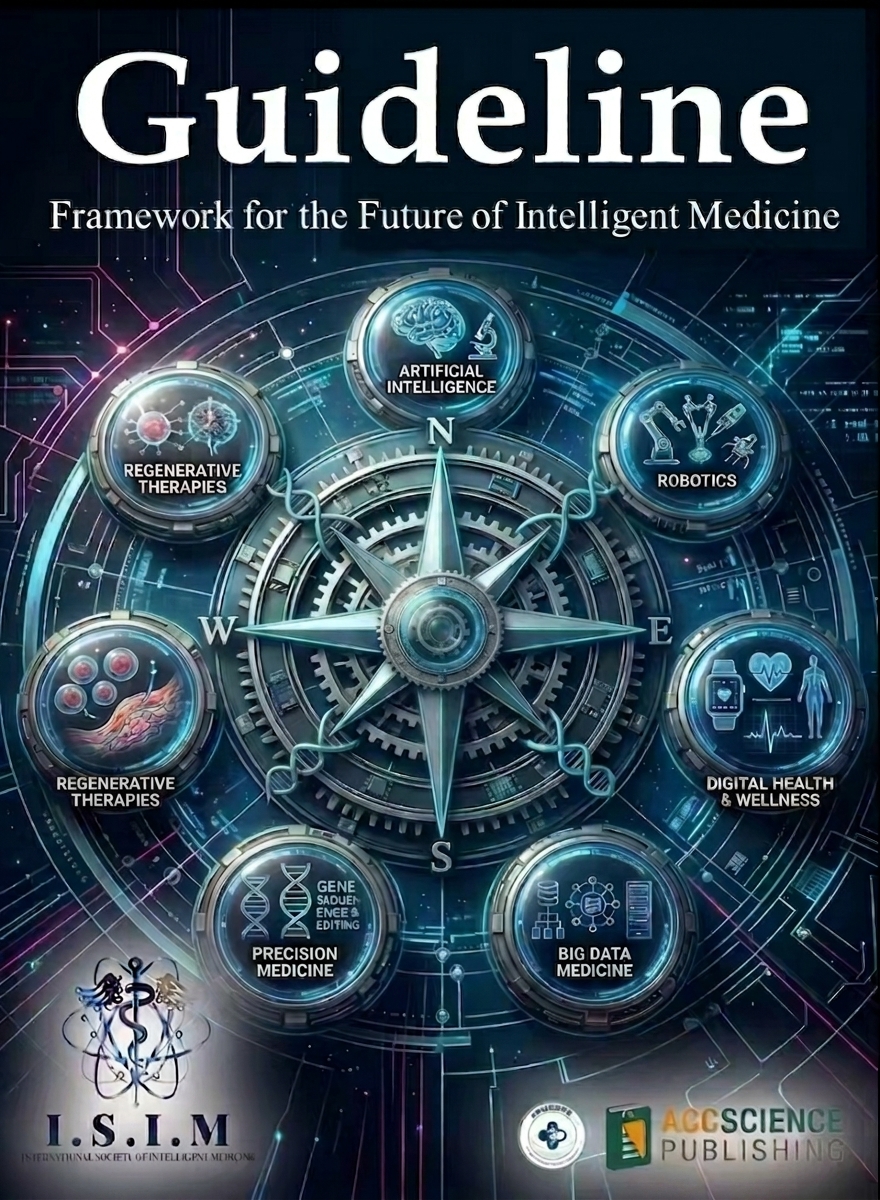
- Aims and Scope (Journal Positioning)
Guideline is an international peer-reviewed academic journal dedicated to publishing high-quality guidelines, consensus statements, and standardization research in clinical medicine and interdisciplinary fields integrating medicine and engineering. The journal aims to establish an authoritative academic platform that bridges clinical practice and technological innovation, promotes the advancement of evidence-based medicine, standardizes clinical decision-making pathways, and facilitates the safe and regulated clinical translation of emerging technologies in healthcare settings.
Positioned at the forefront of the integration between medicine and engineering, Guideline emphasizes a clinical demand-driven, technology-enabled, and evidence-based approach. The journal brings together multidisciplinary expertise to promote systematic translation from basic research and technological development to clinical implementation. By fostering the development and dissemination of high-quality guidelines and standardized systems, the journal seeks to establish reproducible, generalizable, and standardized paradigms for modern medical practice, ultimately serving the high-quality development of global healthcare systems.
- Scope (Core Areas)
Guideline publishes high-impact scholarly work in the following areas:
I. Clinical Practice Guidelines and Consensus
Covering all clinical specialties, including but not limited to:
- Guidelines for diagnosis, treatment, rehabilitation, and prevention of diseases
- Multidisciplinary team (MDT)–based clinical pathways and optimization strategies
- Regional or international consensus statements
- Systematic guidelines based on Evidence-Based Medicine (EBM)
- Standard operating procedures (SOPs) and quality control protocols
Submissions are encouraged from all clinical disciplines, including internal medicine, surgery, gynecology, pediatrics, critical care, oncology, neurology, psychiatry, medical imaging, laboratory medicine, rehabilitation, anesthesiology, nursing, and pharmacy.
II. Guidelines in Medical Engineering and Intelligent Medicine
Focusing on technology-driven medical standards and application guidelines in emerging interdisciplinary fields, including but not limited to:
- Artificial Intelligence in Healthcare (AI for Healthcare)
- Brain–Computer Interfaces (BCI)
- Virtual Reality (VR), Augmented Reality (AR), and Mixed Reality (MR) in medicine
- Surgical robotics and intelligent surgical systems
- Computer-assisted surgery and navigation systems
- 3D printing and personalized medicine
- Wearable medical devices and intelligent monitoring systems
- Medical cloud platforms and healthcare data processing technologies
- Medical databases, big data, and data-driven medicine
- Telemedicine and 5G-enabled healthcare systems
- Blockchain applications in healthcare
- Advanced biomaterials and regenerative medicine engineering
- Digital twins and the medical metaverse
- Intelligent traditional medicine and digital healthcare systems
- Internet of Medical Things (IoMT)
- Healthcare information security and cybersecurity systems
The journal particularly encourages submissions addressing standard system development, technical specifications, clinical translation pathways, and safety evaluation frameworks in these fields.
III. Guideline Methodology and Standardization Research
Including, but not limited to:
- Methodologies for clinical guideline development (e.g., GRADE framework)
- Guideline evaluation, updating, and implementation strategies
- Healthcare standardization systems
- Multi-center and multi-regional collaborative guideline development mechanisms
- Digital and intelligent frameworks for guideline development
IV. Reviews, Perspectives, and Original Research
In addition to guidelines and consensus statements, Guideline also considers:
- High-quality review articles
- Perspectives and commentaries on emerging topics
- Original research articles
- Translational and clinical validation studies
- Technology assessments and real-world evidence studies
- Original research in interdisciplinary medical-engineering fields
- Article Types
To comprehensively represent the ecosystem of guideline-related research, Guideline accepts the following manuscript types:
- Guidelines and Consensus Statements: Clinical guidelines, technical guidelines, methodological guidelines, expert consensus statements, and standardization documents
- Original Research Articles: Studies in clinical medicine and interdisciplinary fields that provide evidence supporting guideline development
- Review Articles: Systematic reviews, scoping reviews, and methodological reviews focusing on cutting-edge developments in medicine
- Perspectives and Commentaries: Critical interpretations of significant studies, reflections on guideline development systems, and strategic analyses of standardization in interdisciplinary fields
- Features and Advantages
- Interdisciplinary Peer Review System:
A dual-expert review mechanism involving both clinical and engineering specialists to ensure a balance between clinical applicability and technological advancement
- Guideline Quality Assessment Framework:
Authors are encouraged to provide detailed guideline development processes (e.g., GRADE methodology, AGREE II evaluation) to enhance credibility and usability
- Open and Interactive Publishing:
Support for enhanced content such as datasets, algorithmic code, visualization tools, and procedural videos to improve dissemination and real-world implementation