
Traditional Chinese medicine at the interface of gut inflammation and cancer: Mechanisms, applications, and global health perspectives

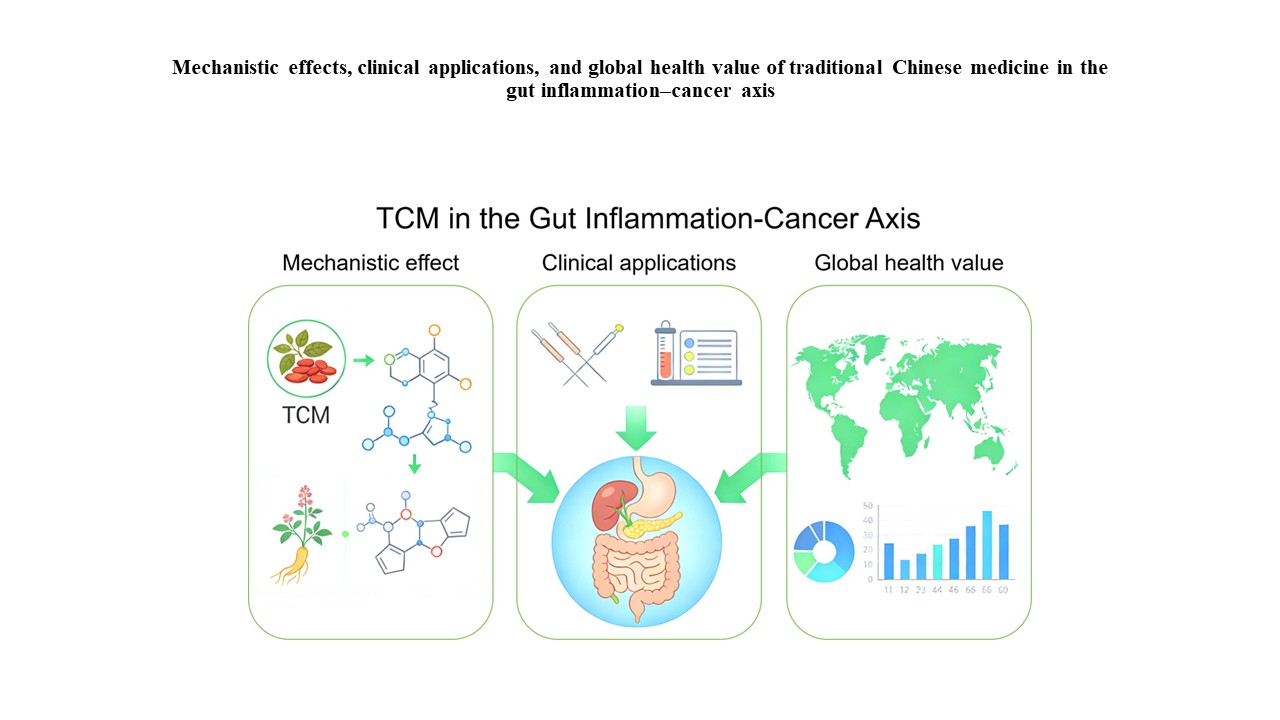
The progression from chronic gastrointestinal inflammation to malignancy represents a critical clinical and public health challenge worldwide. Traditional Chinese medicine (TCM), with its holistic philosophy and extensive pharmacopeia, offers multifaceted interventions that target the complex pathophysiology of the inflammation-cancer continuum. This review synthesizes contemporary evidence on the molecular mechanisms by which TCM formulations and their bioactive components modulate key pathways—including macrophage-related signaling (colony-stimulating factor 1/Src), inflammatory cascades (toll-like receptor 4/nuclear factor-κB/nucleotide-binding and oligomerization domain-, leucine-rich repeat-, and pyrin domain-containing peptide 3), tissue regeneration (Wnt/β-catenin, Yes-associated protein/transcriptional co-activator with PDZ-binding motif), and the gut microbiome—to exert anti-inflammatory, immunoregulatory, and anti-neoplastic effects. We further distinguish causal processes from associative correlations in these mechanistic regulations through experimental designs, such as germ-free mouse models, genetic knockout/overexpression systems, and temporal sequence assays. We examine translational applications, highlighting clinical studies and real world evidence that demonstrate the efficacy of TCM in managing conditions, such as ulcerative colitis and mitigating cancer therapy-related toxicities, and adopt the Grading of Recommendations Assessment, Development, and Evaluation system to evaluate the quality of clinical evidence to avoid overinterpretation of low-quality data. By exploring the integration of TCM with modern medical practices, this article underscores its potential role in global health strategies, particularly in enhancing therapeutic equity and providing cost-effective solutions within diverse healthcare systems. We argue that a convergence of rigorous science and traditional wisdom, supported by robust quality control and safety monitoring, is essential for developing novel, integrative approaches to prevent and treat inflammation-associated cancers.
- Neurath MF. Cytokines in inflammatory bowel disease. Nat Rev Immunol. 2014;14(5):329-342. doi: 10.1038/nri3661
- Grivennikov SI, Greten FR, Karin M. Immunity, inflammation, and cancer. Cell. 2010;140(6):883-899. doi: 10.1016/j.cell.2010.01.025
- Danese S, Vuitton L, Peyrin-Biroulet L. Biologic agents for IBD: practical insights. Nat Rev Gastroenterol Hepatol. 2015;12(9):537-545. doi: 10.1038/nrgastro.2015.135
- Sun YX, Wang X, Liao X, et al. An evidence mapping of systematic reviews and meta-analysis on traditional Chinese medicine for ulcerative colitis. BMC Complement Med Ther. 2021;21(1):228. doi: 10.1186/s12906-021-03387-y
- Ye Y, Xu L, Sheng Y. Effects of TCM external scalding therapy on spleen-stomach deficiency cold stomachache and inflammatory indexes. Am J Transl Res. 2024;16(5):1769- 1778. doi: 10.62347/MDQV6936
- Qi F, Zhao L, Zhou A, et al. The advantages of using traditional Chinese medicine as an adjunctive therapy in the whole course of cancer treatment instead of only terminal stage of cancer. Biosci Trends. 2015;9(1):16-34. doi: 10.5582/bst.2015.01019
- Wang S, Hu Y, Tan W, et al. Compatibility art of traditional Chinese medicine: from the perspective of herb pairs. J Ethnopharmacol. 2012;143(2):412-423. doi: 10.1016/j.jep.2012.07.033
- Tang JL, Liu BY, Ma KW. Traditional Chinese medicine. Lancet. 2008;372(9654):1938-1940. doi: 10.1016/S0140-6736(08)61354-9
- Su S, Liu T, Zheng JY, et al. Huang Lian Jie Du decoction attenuated colitis via suppressing the macrophage Csf1r/Src pathway and modulating gut microbiota. Front Immunol. 2024;15:1375781. doi: 10.3389/fimmu.2024.1375781
- Lu J, Wang JS, Kong LY. Anti-inflammatory effects of Huang- Lian-Jie-Du decoction, its two fractions and four typical compounds. J Ethnopharmacol. 2011;134(3):911-918. doi: 10.1016/j.jep.2011.01.049
- Cai Y, Wen J, Ma S, et al. Huang-Lian-Jie-Du Decoction Attenuates Atherosclerosis and Increases Plaque Stability in High-Fat Diet-Induced ApoE-/- Mice by Inhibiting M1 Macrophage Polarization and Promoting M2 Macrophage Polarization. Front Physiol. 2021;12:666449. doi: 10.3389/fphys.2021.666449
- Li C, Pan J, Xu C, Jin Z, Chen X. A Preliminary Inquiry Into the Potential Mechanism of Huang-Lian-Jie-Du Decoction in Treating Rheumatoid Arthritis via Network Pharmacology and Molecular Docking. Front Cell Dev Biol. 2022;9:740266. doi: 10.3389/fcell.2021.740266
- Yuan Z, Yang L, Zhang X, Ji P, Hua Y, Wei Y. Huang-Lian- Jie-Du Decoction Ameliorates Acute Ulcerative Colitis in Mice via Regulating NF-κB and Nrf2 Signaling Pathways and Enhancing Intestinal Barrier Function. Front Pharmacol. 2019;10:1354. doi: 10.3389/fphar.2019.01354
- Tan T, Chen Q, Chen P, et al. Zhili decoction ameliorates ulcerative colitis by modulating gut microbiota and related metabolite, and inhibiting the TLR4/NF-κB/NLRP3 pathway. Front Pharmacol. 2024;15:1481273. doi: 10.3389/fphar.2024.1481273
- Chen C, Yu Z, Li Y, et al. Effects of berberine in the gastrointestinal tract - a review of actions and therapeutic implications. Am J Chin Med. 2014;42(5):1053-1070. doi: 10.1142/S0192415X14500669
- Lee IA, Hyun YJ, Kim DH. Berberine ameliorates TNBS-induced colitis by inhibiting lipid peroxidation, enterobacterial growth and NF-κB activation. Eur J Pharmacol. 2010;648(1-3):162-170. doi: 10.1016/j.ejphar.2010.08.046
- Gupta SC, Patchva S, Aggarwal BB. Therapeutic roles of curcumin: lessons learned from clinical trials. AAPS J. 2013;15(1):195-218. doi: 10.1208/s12248-012-9432-8
- Dhillon N, Aggarwal BB, Newman RA, et al. Phase II trial of curcumin in patients with advanced pancreatic cancer. Clin Cancer Res. 2008;14(14):4491-4499. doi: 10.1158/1078-0432.CCR-08-0024
- Ide H, Tokiwa S, Sakamaki K, et al. Combined inhibitory effects of soy isoflavones and curcumin on the production of prostate-specific antigen. Prostate. 2010;70(10):1127-1133. doi: 10.1002/pros.21147
- Liu CS, Xia T, Luo ZY, et al. Network pharmacology and pharmacokinetics integrated strategy to investigate the pharmacological mechanism of Xianglian pill on ulcerative colitis. Phytomedicine. 2021;82:153458. doi: 10.1016/j.phymed.2020.153458
- Yang R, Han L, Zhang Y, et al. Shaoyao decoction promotes ISCs proliferation by activating Wnt/β-catenin and YAP1/ TAZ signaling to enhance epithelial regeneration in damp- heat colitis. J Ethnopharmacol. 2026;355(pt A):120641. doi: 10.1016/j.jep.2025.120641
- Wei YY, Fan YM, Ga Y, Zhang YN, Han JC, Hao ZH. Shaoyao decoction attenuates DSS-induced ulcerative colitis, macrophage and NLRP3 inflammasome activation through the MKP1/NF-κB pathway. Phytomedicine. 2021;92:153743. doi: 10.1016/j.phymed.2021.153743
- Chi H, Wang D, Chen M, et al. Shaoyao Decoction Inhibits Inflammation and Improves Intestinal Barrier Function in Mice With Dextran Sulfate Sodium-Induced Colitis. Front Pharmacol. 2021;12:524287. doi: 10.3389/fphar.2021.524287
- Jia N, Meng Y, Li J, et al. Pharmacodynamic and pharmacokinetic study of Shaoyao Gancao decoction for repairing intestinal barrier damage in ulcerative colitis. Mol Immunol. 2024;175:132-142. doi: 10.1016/j.molimm.2024.09.013
- Fan J, Liu S, Ai Z, et al. Fermented ginseng attenuates lipopolysaccharide-induced inflammatory responses by activating the TLR4/MAPK signaling pathway and remediating gut barrier. Food Funct. 2021;12(2):852-861. doi: 10.1039/d0fo02404j
- Mao A, Zhao W, Zhu Y, et al. Gut Bacterial Community Determines the Therapeutic Effect of Ginsenoside on Canine Inflammatory Bowel Disease by Modulating the Colonic Mucosal Barrier. Microorganisms. 2023;11(11):2616. doi: 10.3390/microorganisms11112616
- Qiao Y, Liu C, Guo Y, et al. Polysaccharides derived from Astragalus membranaceus and Glycyrrhiza uralensis improve growth performance of broilers by enhancing intestinal health and modulating gut microbiota. Poult Sci. 2022;101(7):101905. doi: 10.1016/j.psj.2022.101905
- Ran J, Ai Y, Ni J, et al. Astragaloside IV: A Promising Drug to Prevent the Transition from Colitis to Colorectal Cancer. Am J Chin Med. 2025;53(4):1065-1091. doi: 10.1142/S0192415X25500405
- Arthur JC, Perez-Chanona E, Mühlbauer M, et al. Intestinal inflammation targets cancer-inducing activity of the microbiota. Science. 2012;338(6103):120-123. doi: 10.1126/science.1224820
- Dehau T, Cherlet M, Croubels S, Van De Vliet M, Goossens E, Van Immerseel F. Berberine-microbiota interplay: orchestrating gut health through modulation of the gut microbiota and metabolic transformation into bioactive metabolites. Front Pharmacol. 2023;14:1281090. doi: 10.3389/fphar.2023.1281090
- Fang X, Wu H, Wang X, et al. Modulation of Gut Microbiota and Metabolites by Berberine in Treating Mice With Disturbances in Glucose and Lipid Metabolism. Front Pharmacol. 2022;13:870407. doi: 10.3389/fphar.2022.870407
- Chen F, Wen Q, Jiang J, et al. Could the gut microbiota reconcile the oral bioavailability conundrum of traditional herbs? J Ethnopharmacol. 2016;179:253-264. doi: 10.1016/j.jep.2015.12.031
- Tian B, Huang P, Pan Y, et al. Tea Polyphenols Reduced Obesity by Modulating Gut Microbiota-SCFAs-Barrier and Inflammation in High-Fat Diet-Induced Mice. Mol Nutr Food Res. 2024;68(24):e2400685. doi: 10.1002/mnfr.202400685
- Rooks MG, Garrett WS. Gut microbiota, metabolites and host immunity. Nat Rev Immunol. 2016;16(6):341-352. doi: 10.1038/nri.2016.42
- Huang M, Zhang Y, Ni M, et al. Shen-Bai-Jie-Du decoction suppresses the progression of colorectal adenoma to carcinoma through regulating gut microbiota and short- chain fatty acids. Chin Med. 2024;19(1):149. doi: 10.1186/s13020-024-01019-4
- Zheng L, Kelly CJ, Battista KD, et al. Microbial-Derived Butyrate Promotes Epithelial Barrier Function through IL-10 Receptor-Dependent Repression of Claudin-2. J Immunol. 2017;199(8):2976-2984. doi: 10.4049/jimmunol.1700105
- Zhang X, Zhao Y, Zhang M, et al. Structural changes of gut microbiota during berberine-mediated prevention of obesity and insulin resistance in high-fat diet-fed rats. PLoS One. 2012;7(8):e42529. doi: 10.1371/journal.pone.0042529
- Zhang X, Zhao Y, Xu J, et al. Modulation of gut microbiota by berberine and metformin during the treatment of high- fat diet-induced obesity in rats. Sci Rep. 2015;5:14405. doi: 10.1038/srep14405
- Li C, Zhou S, Chen S, et al. Gut microbiota-mediated immunomodulation underlies the anti-tumor effects of a novel ginseng polysaccharide. Carbohydr Polym. 2025;370:124458. doi: 10.1016/j.carbpol.2025.124458
- Dai T, Li L, Li J, et al. Ginsenoside Rh1 inhibits tumor growth in mice with colorectal cancer and depressive symptoms via modulation of the gut microbiota and tumor microenvironment. Mol Med Rep. 2025;32(6):1-17. doi: 10.3892/mmr.2025.13710
- Qiao L, Han M, Gao S, et al. Research progress on nanotechnology for delivery of active ingredients from traditional Chinese medicines. J Mater Chem B. 2020;8(30):6333-6351. doi: 10.1039/d0tb01260b
- Cheng W, Zhu Y, Luo M, et al. Multifunctional macrophage mimetic nanoplatform modulates vascular and epithelial double gut barriers to alleviate ulcerative colitis. Theranostics. 2026;16(1):58-76. doi: 10.7150/thno.118236
- Terzić J, Grivennikov S, Karin E, Karin M. Inflammation and colon cancer. Gastroenterology. 2010;138(6):2101-2114. e5. doi: 10.1053/j.gastro.2010.01.058
- Jin Y, Liu H, Wang Y, et al. Pathogenesis and treatment of colitis-associated colorectal cancer: Insights from Traditional Chinese J Ethnopharmacol. 2025;338(pt 2):119096. doi: 10.1016/j.jep.2024.119096
- Naganuma M, Sugimoto S, Mitsuyama K, et al. Efficacy of Indigo Naturalis in a Multicenter Randomized Controlled Trial of Patients With Ulcerative Colitis. Gastroenterology. 2018;154(4):935-947. doi: 10.1053/j.gastro.2017.11.024
- Hu Y, Chen LL, Ye Z, et al. Indigo naturalis as a potential drug in the treatment of ulcerative colitis: a comprehensive review of current evidence. Pharm Biol. 2024;62(1):818-832. doi: 10.1080/13880209.2024.2415652
- Sugimoto S, Naganuma M, Kiyohara H, et al. Clinical Efficacy and Safety of Oral Qing-Dai in Patients with Ulcerative Colitis: A Single-Center Open-Label Prospective Study. Digestion. 2016;93(3):193-201. doi: 10.1159/000444217
- Wu D, Huang Q, Xu Y, et al. Clinical efficacy and future application of indigo naturalis in the treatment of ulcerative colitis. J Ethnopharmacol. 2025;337(pt 1):118782. doi: 10.1016/j.jep.2024.118782
- Wei X, Leng X, Li G, Wang R, Chi L, Sun D. Advances in research on the effectiveness and mechanism of Traditional Chinese Medicine formulas for colitis-associated colorectal cancer. Front Pharmacol. 2023;14:1120672. doi: 10.3389/fphar.2023.1120672
- Bishayee A. Cancer prevention and treatment with resveratrol: from rodent studies to clinical trials. Cancer Prev Res. 2009;2(5):409-418. doi: 10.1158/1940-6207.CAPR-08-0160
- Keylor MH, Matsuura BS, Stephenson CR. Chemistry and Biology of Resveratrol-Derived Natural Products. Chem Rev. 2015;115(17):8976-9027. doi: 10.1021/cr500689b
- Lee IT, Lin HC, Huang TH, et al. Anti-Inflammatory Effect of Resveratrol Derivatives via the Downregulation of Oxidative-Stress-Dependent and c-Src Transactivation EGFR Pathways on Rat Mesangial Cells. Antioxidants. 2022;11(5):835. doi: 10.3390/antiox11050835
- Fried LE, Arbiser JL. Honokiol, a multifunctional antiangiogenic and antitumor agent. Antioxid Redox Signal. 2009;11(5):1139-1148. doi: 10.1089/ars.2009.2440
- Rauf A, Patel S, Imran M, et al. Honokiol: An anticancer lignan. Biomed Pharmacother. 2018;107:555-562. doi: 10.1016/j.biopha.2018.08.054
- Sengupta S, Nagalingam A, Muniraj N, et al. Activation of tumor suppressor LKB1 by honokiol abrogates cancer stem- like phenotype in breast cancer via inhibition of oncogenic Stat3. Oncogene. 2017;36(41):5709-5721. doi: 10.1038/onc.2017.164
- Liu J, Wang S, Zhang Y, Fan HT, Lin HS. Traditional Chinese medicine and cancer: History, present situation, and development. Thorac Cancer. 2015;6(5):561-569. doi: 10.1111/1759-7714.12270
- Li H, Ke J, Wang X, et al. Randomised controlled trial of Jiandu granule in preventing chemoradiotherapy-induced oral mucositis. Oral Dis. 2024;30(5):3117-3125. doi: 10.1111/odi.14745
- Gu Z, Zhang T, Chen X. Comparisons of the efficacy of different Chinese medicine injections on immune function in patients with nasopharyngeal carcinoma during combined therapy: a systematic review and network meta- analysis. Transl Cancer Res. 2025;14(8):5059-5076. doi: 10.21037/tcr-2025-1479
- Wang CZ, Yuan CS. Potential role of ginseng in the treatment of colorectal cancer. Am J Chin Med. 2008;36(6):1019-1028. doi: 10.1142/S0192415X08006545
- Mehendale S, Aung H, Wang A, et al. American ginseng berry extract and ginsenoside Re attenuate cisplatin- induced kaolin intake in rats. Cancer Chemother Pharmacol. 2005;56(1):63-69. doi: 10.1007/s00280-004-0956-1
- Xu L, Wang S, Zhuang L, et al. Jian Pi Li Qi Decoction Alleviated Postembolization Syndrome Following Transcatheter Arterial Chemoembolization for Hepatocellular Carcinoma: A Randomized, Double-Blind, Placebo-Controlled Trial. Integr Cancer Ther. 2016;15(3):349-357. doi: 10.1177/1534735415617020
- Efferth T, Li PC, Konkimalla VS, Kaina B. From traditional Chinese medicine to rational cancer therapy. Trends Mol Med. 2007;13(8):353-361. doi: 10.1016/j.molmed.2007.07.001
- Wei L, Meng J, Xiang D, et al. Network pharmacology and experimental validation to study the potential mechanism of Tongguanteng injection in regulating apoptosis in osteosarcoma. BMC Complement Med Ther. 2024;24(1):67. doi: 10.1186/s12906-024-04354-z
- Xue XC, Zhou YY, Xu LY, et al. Tongguanteng injection exerts anti-osteosarcoma effects through the ER stress- associated IRE1/CHOP pathway. BMC Complement Med Ther. 2024;24(1):400. doi: 10.1186/s12906-024-04689-7
- Kong QW, Yang J, Li D, et al. Tongguanteng injection reverses paclitaxel resistance via upregulation of TAB1 expression in ovarian cancer in vitro and in vivo. J Ethnopharmacol. 2023;300:115728. doi: 10.1016/j.jep.2022.115728
- Wang P, Yang J, Zhu Z, Zhang X. Marsdenia tenacissima: A Review of Traditional Uses, Phytochemistry and Pharmacology. Am J Chin Med. 2018;46(7):1449-1480. doi: 10.1142/S0192415X18500751
- Efferth T. From ancient herb to modern drug: Artemisia annua and artemisinin for cancer therapy. Semin Cancer Biol. 2017;46:65-83. doi: 10.1016/j.semcancer.2017.02.009
- Otto-Ślusarczyk D, Mielczarek-Puta M, Graboń W. The Real Cytotoxic Effect of Artemisinins on Colon Cancer Cells in a Physiological Cell Culture Setting. How Composition of the Culture Medium Biases Experimental Findings. Pharmaceuticals. 2021;14(10):976. doi: 10.3390/ph14100976
- Liu Q. Triptolide and its expanding multiple pharmacological functions. Int Immunopharmacol. 2011;11(3):377-383. doi: 10.1016/j.intimp.2011.01.012
- Wang GS. Medical uses of mylabris in ancient China and recent studies. J Ethnopharmacol. 1989;26(2):147-162. doi: 10.1016/0378-8741(89)90062-7
- Xu MD, Liu L, Wu MY, et al. The combination of cantharidin and antiangiogenic therapeutics presents additive antitumor effects against pancreatic cancer. Oncogenesis. 2018;7(11):94. doi: 10.1038/s41389-018-0102-2
- Wu J, Shao C, Dong Y, et al. Qu-yu-jie-du decoction maintenance therapy improves postoperative survival in metastatic colorectal cancer: a single-center randomized trial with 36-month follow-up. Phytomedicine. 2025;146:157143. doi: 10.1016/j.phymed.2025.157143
- Dai L, Liu Z, Zhou W, et al. Sijunzi decoction, a classical Chinese herbal formula, improves fatigue symptoms with changes in gut microbiota in chronic fatigue syndrome: A randomized, double-blind, placebo-controlled, multi-center clinical trial. Phytomedicine. 2024;129:155636. doi: 10.1016/j.phymed.2024.155636
- Yanai H, Salomon N, Lahat A, et al. Real-world experience with Curcumin-QingDai combination for patients with active ulcerative colitis: A retrospective multicentre cohort study. Aliment Pharmacol Ther. 2023;58(2):175-181. doi: 10.1111/apt.17538
- Xu S, Wang R, Liu X, et al. Yiqi Huayu Jiedu decoction enhances pathological response in neoadjuvant chemotherapy-treated gastric cancer patients: A prospective, randomized controlled trial. Phytomedicine. 2025;148:157410. doi: 10.1016/j.phymed.2025.157410
- Liu S, Zhang K, Hu X. Comparative efficacy and safety of Chinese medicine injections combined with capecitabine and oxaliplatin chemotherapies in treatment of colorectal cancer: A bayesian network meta-analysis. Front Pharmacol. 2022;13:1004259. doi: 10.3389/fphar.2022.1004259
- Jeong N, Jeong H, Ha NY, Ko SJ, Park JW, Kim J. Safety and efficacy of traditional herbal medicine Yukgunja-tang for atrophic gastritis: a systematic review and meta-analysis. J Ethnopharmacol. 2025;353(pt B):120414. doi: 10.1016/j.jep.2025.120414
- Li C, Wang J, Wang Y, et al. Recent progress in drug delivery. Acta Pharm Sin B. 2019;9(6):1145-1162. doi: 10.1016/j.apsb.2019.08.003
- Jiang Y, Xu H, Wu J, et al. A hierarchically assembled oral formulation with drug-convertible carriers for targeted ulcerative colitis therapy through a three-pronged strategy. Adv Compos Hybrid Mater. 2025;8(1):280. doi: 10.1007/s42114-025-01362-6
- Desreumaux P, Ghosh S. Review article: mode of action and delivery of 5-aminosalicylic acid - new evidence. Aliment Pharmacol Ther. 2006;24(suppl 1):2-9. doi: 10.1111/j.1365-2036.2006.03069.x
- Wang S, Wang H, Zhang Y, Yin G, Zhang X, Zhang F. Epimedium and its chemical constituents in cancer treatment: A comprehensive review of traditional applications, antitumor effects, pharmacokinetics, delivery systems, and toxicology. J Ethnopharmacol. 2025;347:119738. doi: 10.1016/j.jep.2025.119738
- Liao X, Gong G, Dai M, et al. Systemic Tumor Suppression via Macrophage-Driven Automated Homing of Metal- Phenolic-Gated Nanosponges for Metastatic Melanoma. Adv Sci. 2023;10(18):e2207488. doi: 10.1002/advs.202207488
- Liang J, Gao C, Zhu Y, et al. Natural Brain Penetration Enhancer-Modified Albumin Nanoparticles for Glioma Targeting Delivery. ACS Appl Mater Interfaces. 2018;10(36):30201-30213. doi: 10.1021/acsami.8b11782
- Shaw I, Aryee AA, Ali YS, et al. Harmonizing tradition and technology: Liposomal nanocarriers unlocking the power of natural herbs in Traditional Chinese Medicine. Chin J Nat Med. 2025;23(6):700-713. doi: 10.1016/S1875-5364(25)60889-2
- Wang X, Wang Q, Liu Z, Zheng X. Preparation, pharmacokinetics and tumour-suppressive activity of berberine liposomes. J Pharm Pharmacol. 2017;69(6):625- 632. doi: 10.1111/jphp.12692
- Feng SS. Nanoparticles of biodegradable polymers for new-concept chemotherapy. Expert Rev Med Devices. 2004;1(1):115-125. doi: 10.1586/17434440.1.1.115
- Feng SS, Mu L, Win KY, Huang G. Nanoparticles of biodegradable polymers for clinical administration of paclitaxel. Curr Med Chem. 2004;11(4):413-424. doi: 10.2174/0929867043455909
- Sung H, Ferlay J, Siegel RL, et al. Global Cancer Statistics 2020: GLOBOCAN Estimates of Incidence and Mortality Worldwide for 36 Cancers in 185 Countries. CA Cancer J Clin. 2021;71(3):209-249. doi: 10.3322/caac.21660
- Yuan H, Ma Q, Ye L, Piao G. The Traditional Medicine and Modern Medicine from Natural Products. Molecules. 2016;21(5):559. doi: 10.3390/molecules21050559
- Wong YMA, Ahn S, Bana A, et al. Policy implications of WHO’s Global traditional medicine strategy 2025-2034. Bull World Health Organ. 2025;103(11):715-721. doi: 10.2471/BLT.25.293414
- Cao Y, Huang T, Deng H, et al. The current situation and factors influencing the use of traditional Chinese medicine therapies among patients with chronic disease in china: a cross-sectional study. Sci Rep. 2025;15(1):30947. doi: 10.1038/s41598-025-16933-2
- The World Health Organization’s decision about traditional Chinese medicine could backfire. Nature. 2019;570(7759):5. doi: 10.1038/d41586-019-01726-1
- Cyranoski D. Why Chinese medicine is heading for clinics around the world. Nature. 2018;561(7724):448-450. doi: 10.1038/d41586-018-06782-7
- Yiming L, Ming X. Quantitative analysis of new drug registration policies for traditional Chinese medicine using the PMC index model. Front Public Health. 2025;13:1585350. doi: 10.3389/fpubh.2025.1585350
- Ernst E. Toxic heavy metals and undeclared drugs in Asian herbal medicines. Trends Pharmacol Sci. 2002;23(3):136- 139. doi: 10.1016/S0165-6147(00)01972-6
- Jiang M, Lu C, Zhang C, et al. Syndrome differentiation in modern research of traditional Chinese medicine. J Ethnopharmacol. 2012;140(3):634-642. doi: 10.1016/j.jep.2012.01.033
- Zhou X, Yang Q, Bi L, Wang S. Integrating traditional apprenticeship and modern educational approaches in traditional Chinese medicine education. Med Teach. 2024;46(6):792-807. doi: 10.1080/0142159X.2023.2284661
- Maimon Y, Traiber G. TCM Academy-Online Platform for Acupuncture and Traditional Chinese Medicine Education: Advancing Global Standards. Med Acupunct. 2025;37(2):96- 99. doi: 10.1089/acu.2024.0122
- Lam TP, Mak KY, Goldberg D, Lam KF, Sun KS. Western mental health training for traditional Chinese medicine practitioners. Acta Psychiatr Scand. 2012;126(6):440-447. doi: 10.1111/j.1600-0447.2012.01867.x
- Zheng Y, Xie S, Wang Y, Huang M. The current state of legislation and education of Traditional Chinese Medicine in Australia. Aust Health Rev. 2025;49(6):AH25228. doi: 10.1071/AH25228
- Kwan YH, Chooi S, Yoon S, et al. Professionalism in traditional Chinese medicine (TCM) practitioners: a qualitative study. BMC Complement Med Ther. 2020;20(1):335. doi: 10.1186/s12906-020-03127-8
- Dobos GJ, Kirschbaum B, Choi KE. The Western model of integrative oncology: the contribution of Chinese medicine. Chin J Integr Med. 2012;18(9):643-651. doi: 10.1007/s11655-012-1200-1
- Ng JY. The case for data sharing in traditional, complementary, and integrative medicine research. Integr Med Res. 2025;14(1):101101. doi: 10.1016/j.imr.2024.101101
- Xu J, Yang Y. Traditional Chinese medicine in the Chinese health care system. Health Policy. 2009;90(2-3):133-139. doi: 10.1016/j.healthpol.2008.09.003
- Li S, Zhang B. Traditional Chinese medicine network pharmacology: theory, methodology and application. Chin J Nat Med. 2013;11(2):110-120. doi: 10.1016/S1875-5364(13)60037-0
- Wang J, Wong YK, Liao F. What has traditional Chinese medicine delivered for modern medicine? Expert Rev Mol Med. 2018;20:e4. doi: 10.1017/erm.2018.3
- Song M, Teng C, Zheng X, Tan S, Guo Y. Global research trends on Chinese patent drugs inducing programmed cell death in cancer: a bibliometric analysis (1998-2024). Discov Oncol. 2025;16(1):1171. doi: 10.1007/s12672-025-02913-5
- Normile D. Asian medicine. The new face of traditional Chinese medicine. Science. 2003;299(5604):188-190. doi: 10.1126/science.299.5604.188
- Liu Y, Ren Y, Song P. Traditional Chinese medicine for intractable and rare diseases: Research progress and future strategies. Intractable Rare Dis Res. 2025;14(2):109-121. doi: 10.5582/irdr.2025.01028