
The transforming power of artificial intelligence in neurological diseases: Present applications and future directions

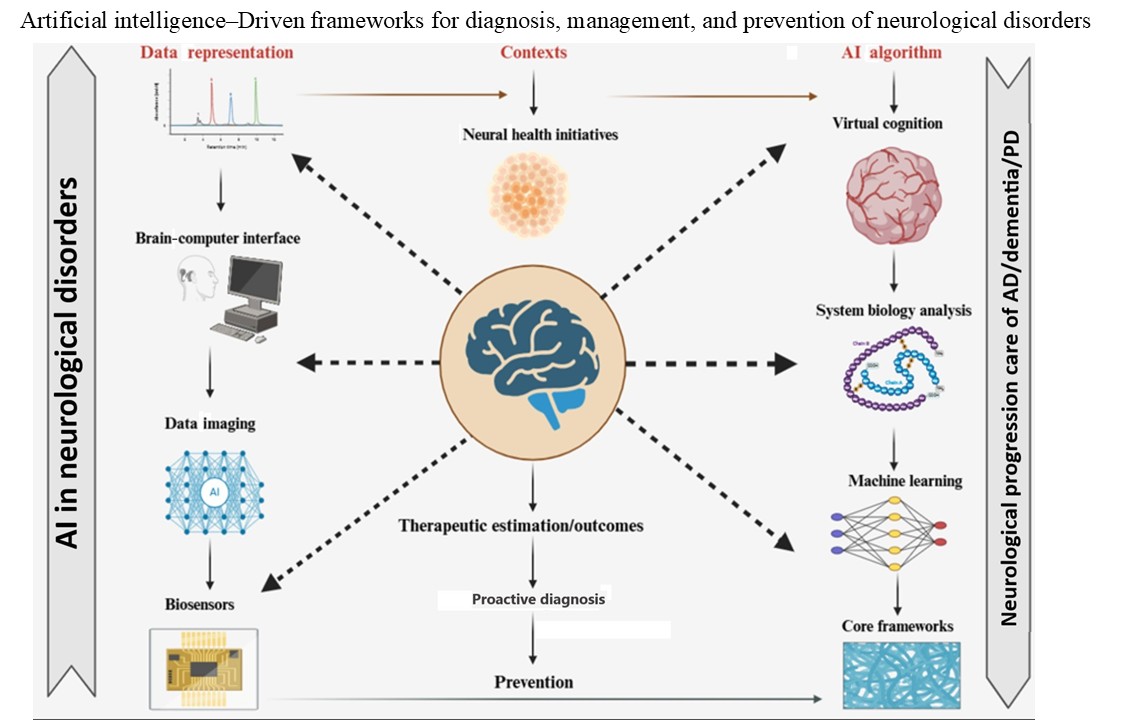
Recent advances in artificial intelligence (AI) for the diagnosis, treatment, and management of neurological disorders are revolutionizing the world of neurology. This review discusses the current state of AI in neurology in terms of enhanced diagnostic accuracy and disease monitoring, as well as new personalized strategies for diagnosis and treatment. AI-driven models analyze vast amounts of healthcare data, including genetic information and brain scans, to identify patterns and biomarkers that may be overlooked using traditional methods. Machine learning and deep learning algorithms have shown promise in predicting the onset and progression of conditions, such as epilepsy, multiple sclerosis, Parkinson’s disease, and Alzheimer’s disease. AI-based neuroimaging analysis also enables more precise characterization of brain structure, facilitating early detection and intervention. Furthermore, AI-powered tools improve patient care by enabling remote monitoring and supporting rehabilitation, thereby enhancing the quality of life of individuals with chronic neurological conditions. Despite these advancements, challenges remain, including concerns about algorithmic bias, data security, and the need for rigorous clinical validation. This paper provides a comprehensive overview of AI-driven innovations in neurology, addressing both their practical implications and ethical considerations while highlighting future research opportunities. The ultimate goal is to illustrate AI’s transformative impact on neurology, contributing to better patient outcomes and a deeper understanding of complex neurological disorders.
- Collins C, Dennehy D, Conboy K, Mikalef P. Artificial intelligence in information systems research: A systematic literature review and research agenda. Int J Inf Manage. 2021;60:102383. doi: 10.1016/j.ijinfomgt.2021.102383
- Goodfellow I, Bengio Y, Courville A. Deep Learning; 2016. p. 1-23. Available from: https://mitpress.mit. edu/9780262035613/deep-learning [Last accessed on 2024 Nov 25].
- Halkiopoulos C, Gkintoni E, Aroutzidis A, Antonopoulou H. Advances in neuroimaging and deep learning for emotion detection: A systematic review of cognitive neuroscience and algorithmic innovations. Diagnostics (Basel). 2025;15(4):456. doi: 10.3390/diagnostics15040456
- Bae H, Park SY, Kim CE. A practical guide to implementing artificial intelligence in traditional East Asian medicine research. Integr Med Res. 2024;13(3):101067. doi: 10.1016/j.imr.2024.101067
- Bin RA, Kausik MAK. AI revolutionizing industries worldwide: A comprehensive overview of its diverse applications. Hybrid Adv. 2024;7:100277. doi: 10.1016/j.hybadv.2024.100277
- Vickram AS, Infant SS, Priyanka, Chopra H. AI-powered techniques in anatomical imaging: Impacts on veterinary diagnostics and surgery. Ann Anat. 2024;258:152355. doi: 10.1016/j.aanat.2024.152355
- Rizzo M, Dawson JD. AI in neurology: Everything, everywhere, all at once part 1: Principles and practice. Ann Neurol. 2025;98(2):211-230. doi: 10.1002/ANA.27225
- Maleki Varnosfaderani S, Forouzanfar M. The role of AI in hospitals and clinics: Transforming healthcare in the 21st century. Bioengineering (Basel). 2024;11(4):337. doi: 10.3390/bioengineering11040337
- Whatham AR, Nguyen V, Zhu Y, Hennessy M, Kalloniatis M. The value of clinical electrophysiology in the assessment of the eye and visual system in the era of advanced imaging. Clin Exp Optom. 2014;97(2):99-115. doi: 10.1111/CXO.12085
- Krishnan G, Singh S, Pathania M, et al. Artificial intelligence in clinical medicine: Catalyzing a sustainable global healthcare paradigm. Front Artif Intell. 2023;6:1227091. doi: 10.3389/frai.2023.1227091
- Xin D, Li H, Zhou S, Zhong H, Pu W. Effects of anthraquinones on immune responses and inflammatory diseases. Molecules. 2022;27(12):3831. doi: 10.3390/molecules27123831
- Hampel H, Gao P, Cummings J, et al. The foundation and architecture of precision medicine in neurology and psychiatry. Trends Neurosci. 2023;46(3):176-198. doi: 10.1016/j.tins.2022.12.004
- Pinto-Coelho L. How artificial intelligence is shaping medical imaging technology: A survey of innovations and applications. Bioengineering (Basel). 2023;10(12):1435. doi: 10.3390/BIOENGINEERING10121435
- Santhosh K, Dev PP, Binu Jose A, Lynton Z, Das P, Ghaderpour E. A modified Gray Wolf Optimization algorithm for early detection of Parkinson’s Disease. Biomed Signal Process Control. 2025;109:108061. doi: 10.1016/j.bspc.2025.108061
- Choudhury N, Das D, Deka D, Ghosh R, Deb N, Ghaderpour E. NeuroFeat: An adaptive neurological EEG feature engineering approach for improved classification of major depressive disorder. Biomed Signal Process Control. 2026;113:109031. doi: 10.1016/j.bspc.2025.109031
- Rosca CM, Stancu A. A review of neuro-ML breakthroughs in addressing neurological disorders. Appl Sci. 2025;15(10):5442. doi: 10.3390/app15105442/S1
- Sadeghi Z, Alizadehsani R, Mehmet Akif CI, et al. A review of explainable artificial intelligence in healthcare. Comput Electr Eng. 2024;118:109370. doi: 10.1016/J.compeleceng.2024.109370
- Rasa AR. Artificial intelligence and its revolutionary role in physical and mental rehabilitation: A review of recent advancements. Biomed Res Int. 2024;2024:9554590. doi: 10.1155/BMRI/9554590
- Sadr H, Nazari M, Khodaverdian Z, et al. Unveiling the potential of artificial intelligence in revolutionizing disease diagnosis and prediction: A comprehensive review of machine learning and deep learning approaches. Eur J Med Res. 2025;30(1):418. doi: 10.1186/S40001-025-02680-7
- Feigin VL, Vos T, Nichols E, et al. The global burden of neurological disorders: Translating evidence into policy. Lancet Neurol. 2019;19(3):255. doi: 10.1016/S1474-4422(19)30411-9
- Kalani M, Anjankar A. Revolutionizing neurology: The role of artificial intelligence in advancing diagnosis and treatment. Cureus. 2024;16(6):e61706. doi: 10.7759/CUREUS.61706
- AbuAlrob MA, Mesraoua B. Harnessing artificial intelligence for the diagnosis and treatment of neurological emergencies: A comprehensive review of recent advances and future directions. Front Neurol. 2024;15:1485799. doi: 10.3389/FNEUR.2024.1485799
- Bajwa J, Munir U, Nori A, Williams B. Artificial intelligence in healthcare: Transforming the practice of medicine. Future Healthc J. 2021;8(2):e188-e194. doi: 10.7861/FHJ.2021-0095
- Tsiara AA, Plakias S, Kokkotis C, et al. Artificial intelligence in the diagnosis of neurological diseases using biomechanical and gait analysis data: A scopus-based bibliometric analysis. Neurol Int. 2025;17(3):45. doi: 10.3390/NEUROLINT17030045
- Emmady PD, Schoo C, Tadi P. Major neurocognitive disorder (dementia). In: StatPearls; 2022. Available from: https://www.ncbi.nlm.nih.gov/books/NBK557444 [Last accessed on 2024 Nov 25].
- Beheshti A, Benatallah B, Sheng QZ, et al. AI-enabled processes: The age of artificial intelligence and big data. In: Lecture Notes in Computer Science (Including Subseries Lecture Notes in Artificial Intelligence and Lecture Notes in Bioinformatics). Germany: Springer Science Business Media; 2022. p. 321-335. doi: 10.1007/978-3-031-14135-5_29
- Arora S, Chopra H, Chopra S, Emran TB. AI based advances in cardiac surgery-correspondence. Int J Surg Open. 2024;6:847-849. doi: 10.1097/IO9.0000000000000232
- So YY, Roh MS, Choi JS, et al. Voxel-based morphometry study of gray matter abnormalities in obsessive-compulsive disorder. J Korean Med Sci. 2008;23(1):24-30. doi: 10.3346/JKMS.2008.23.1.24
- Kalbkhani H, Shayesteh MG, Zali-Vargahan B. Robust algorithm for brain magnetic resonance image (MRI) classification based on GARCH variances series. Biomed Signal Process Control. 2013;8(6):909-919. doi: 10.1016/J.BSPC.2013.09.001
- Blake P, Johnson B, VanMeter JW. Positron emission tomography (PET) and single photon emission computed tomography (SPECT): Clinical applications. J Neuroophthalmol. 2003;23(1):34-41. doi: 10.1097/00041327-200303000-00009
- Sethi M, Rani S, Singh A, Mazón JLV. A CAD system for Alzheimer’s disease classification using neuroimaging MRI 2D slices. Comput Math Methods Med. 2022;2022:8680737. doi: 10.1155/2022/8680737
- Feigin VL, Vos T, Nair BS, et al. Global, regional, and national burden of epilepsy, 1990-2021: A systematic analysis for the global burden of disease study 2021. Lancet Public Health. 2025;10(3):e203-e227. doi: 10.1016/S2468-2667(24)00302-5
- Anwar H, Khan QU, Nadeem N, Pervaiz I, Ali M, Cheema FF. Epileptic seizures. Discoveries (Craiova). 2020;8(2):e110. doi: 10.15190/D.2020.7
- Liman MNP, Al Sawaf A. Epilepsy EEG. StatPearls; 2023. Available from: https://www.ncbi.nlm.nih.gov/books/ nbk558912 [Last accessed on 2024 Nov 25].
- Karayiannis NB, Xiong Y, Tao G, et al. Automated detection of videotaped neonatal seizures of epileptic origin. Epilepsia. 2006;47(6):966-980. doi: 10.1111/J.1528-1167.2006.00571.X
- Abbasi B, Goldenholz DM. Machine learning applications in epilepsy. Epilepsia. 2019;60(10):2037. doi: 10.1111/EPI.16333
- Aslan K, Bozdemir H, Sahin C, Noyan Ogulata S. Can neural network able to estimate the prognosis of epilepsy patients accorrding to risk factors? J Med Syst. 2009;34(4):541-550. doi: 10.1007/S10916-009-9267-8
- Cendes F, McDonald CR. Artificial intelligence applications in the imaging of epilepsy and its comorbidities: Present and future. Epilepsy Curr. 2022;22(2):91-96. doi: 10.1177/15357597211068600
- Chang RSK, Nguyen S, Chen Z, Foster E, Kwan P. Roleof machine learning in the management of epilepsy: A systematic review protocol. BMJ Open. 2024;14(1):e079785. doi: 10.1136/bmjopen-2023-079785
- Kale M, Wankhede N, Pawar R, et al. AI-driven innovations in Alzheimer’s disease: Integrating early diagnosis, personalized treatment, and prognostic modelling. Ageing Res Rev. 2024;101:102497. doi: 10.1016/J.ARR.2024.102497
- Shajari S, Kuruvinashetti K, Komeili A, Sundararaj U. The emergence of AI-based wearable sensors for digital health technology: A review. Sensors (Basel). 2023;23(23):9498. doi: 10.3390/S23239498
- Xu J, Yin R, Huang Y, et al. Identification of outcome-oriented progression subtypes from mild cognitive impairment to Alzheimer’s disease using electronic health records. AMIA Annu Symp Proc. 2024;2023:764-773.
- Mienye ID, Swart TG, Obaido G, Jordan M, Ilono P. Deep convolutional neural networks in medical image analysis: A review. Information. 2025;16(3):195. doi: 10.3390/INFO16030195
- Simonyan K, Zisserman A. Very Deep Convolutional Networks for Large-Scale Image Recognition. In: 3rd International Conference on Learning Representations, ICLR 2015 - Conference Track Proceedings; 2015.
- Sethi Y, Patel N, Kaka N, et al. Precision medicine and the future of cardiovascular diseases: A clinically oriented comprehensive review. J Clin Med. 2023;12(5):1799. doi: 10.3390/jcm12051799
- Reddy S, Giri D, Patel R. Artificial intelligence diagnosis of Parkinson’s disease from MRI scans. Cureus. 2024;16(4):e58841. doi: 10.7759/cureus.58841
- Kuang YR, Zou MX, Niu HQ, Zheng BY, Zhang TL, Zheng BW. ChatGPT encounters multiple opportunities and challenges in neurosurgery. Int J Surg. 2023;109(10):2886-2891. doi: 10.1097/JS9.0000000000000571
- Ganesh S, Chithambaram T, Krishnan NR, Vincent DR, Kaliappan J, Srinivasan K. Exploring Huntington’s disease diagnosis via artificial intelligence models: A comprehensive review. Diagnostics (Basel). 2023;13(23):3592. doi: 10.3390/DIAGNOSTICS13233592
- Chopra H, Munjal K, Emran TB. Artificial intelligence 2.0: Taking organoid intelligence a step ahead. Int J Surg Open. 2023;60:100693. doi: 10.1016/J.IJSO.2023.100693
- Olawade DB, Wada OZ, Odetayo A, David-Olawade AC, Asaolu F, Eberhardt J. Enhancing mental health with Artificial Intelligence: Current trends and future prospects. J Med Surg Public Health. 2024;3:100099. doi: 10.1016/j.glmedi.2024.100099
- Lenka A, Jankovic J. Tremor syndromes: An updated review. Front Neurol. 2021;12:684835. doi: 10.3389/fneur.2021.684835
- Gupta R, Kumari S, Senapati A, Ambasta RK, Kumar P. New era of artificial intelligence and machine learning-based detection, diagnosis, and therapeutics in Parkinson’s disease. Ageing Res Rev. 2023;90:102013. doi: 10.1016/j.arr.2023.102013
- Chandrabhatla AS, Pomeraniec IJ, Ksendzovsky A. Co-evolution of machine learning and digital technologies to improve monitoring of Parkinson’s disease motor symptoms. NPJ Digit Med. 2022;5(1):32. doi: 10.1038/S41746-022-00568-Y
- Vizcarra JA, Yarlagadda S, Xie K, Ellis CA, Spindler M, Hammer LH. Artificial intelligence in the diagnosis and quantitative phenotyping of hyperkinetic movement disorders: A systematic review. J Clin Med. 2024;13(23):7009. doi: 10.3390/jcm13237009/S1
- Chandrabhatla AS, Kuo EA, Sokolowski JD, Kellogg RT, Park M, Mastorakos P. Artificial intelligence and machine learning in the diagnosis and management of stroke: A narrative review of united states food and drug administration-approved technologies. J Clin Med. 2023;12(11):3755. doi: 10.3390/JCM12113755
- Senadheera I, Hettiarachchi P, Haslam B, et al. AI applications in adult stroke recovery and rehabilitation: A scoping review using AI. Sensors (Basel). 2024;24(20):6585. doi: 10.3390/S24206585/S1
- Perez-Pozuelo I, Zhai B, Palotti J, et al. The future of sleep health: A data-driven revolution in sleep science and medicine. NPJ Digit Med. 2020;3(1):42. doi: 10.1038/S41746-020-0244-4
- Dourish P, Bell G. The infrastructure of experience and the experience of infrastructure: Meaning and structure in everyday encounters with space. Environ Plann B. 2007;34(3):414-430. doi: 10.1068/B32035T
- Huang MH, Rust RT. Engaged to a robot? The role of AI in service. J Serv Res. 2020;24(1):30-41. doi: 10.1177/1094670520902266
- Macpherson T, Churchland A, Sejnowski T, et al. Natural and Artificial Intelligence: A brief introduction to the interplay between AI and neuroscience research. Neural Netw. 2021;144:603-613. doi: 10.1016/J.NEUNET.2021.09.018
- Jiang F, Jiang Y, Zhi H, et al. Artificial intelligence in healthcare: Past, present and future. Stroke Vasc Neurol. 2017;2(4):230-243. doi: 10.1136/SVN-2017-000101
- Markram K, Markram H. The intense world theory - a unifying theory of the neurobiology of autism. Front Hum Neurosci. 2010;4:2224. doi: 10.3389/fnhum.2010.00224/bibtex
- Taye MM. Understanding of machine learning with deep learning: Architectures, workflow, applications and future directions. Computers. 2023;12(5):91. doi: 10.3390/computers12050091
- Fan J, Zeng Y. Challenging deep learning models with image distortion based on the abutting grating illusion. Patterns (N Y). 2023;4(3):100695. doi: 10.1016/J.PATTER.2023.100695
- Ray PP, Majumder P. The potential of ChatGPT to transform healthcare and address ethical challenges in artificial intelligence-driven medicine. J Clin Neurol. 2023;19(5):509-511. doi: 10.3988/JCN.2023.0158
- Muntean GA, Marginean A, Groza A, et al. The predictive capabilities of artificial intelligence-based OCT analysis for age-related macular degeneration progression-a systematic review. Diagnostics (Basel). 2023;13(14):2464. doi: 10.3390/DIAGNOSTICS13142464
- Rainey S, Erden YJ. Correcting the brain? The convergence of neuroscience, neurotechnology, psychiatry, and artificial intelligence. Sci Eng Ethics. 2020;26(5):2439-2454. doi: 10.1007/s11948-020-00240-2/metrics
- Lebedev MA, Nicolelis MAL. Brain-machine interfaces: Past, present and future. Trends Neurosci. 2006;29(9):536-546. doi: 10.1016/j.tins.2006.07.004
- Lopes Da Silva F, Blanes W, Kalitzin SN, Parra J, Suffczynski P, Velis DN. Epilepsies as dynamical diseases of brain systems: basic models of the transition between normal and epileptic activity. Epilepsia. 2003;44(Suppl 12):72-83. doi: 10.1111/j.0013-9580.2003.12005.x
- Zainuddin Z, Huong LK, Pauline O. Reliable epileptic seizure detection using an improved wavelet neural network. Australas Med J. 2013;6(5):308. doi: 10.4066/amj.2013.1640
- Litjens G, Kooi T, Bejnordi BE, et al. A survey on deep learning in medical image analysis. Med Image Anal. 2017;42:60-88. doi: 10.1016/j.media.2017.07.005
- Cè M, Irmici G, Foschini C, et al. Artificial intelligence in brain tumor imaging: A step toward personalized medicine. Curr Oncol. 2023;30(3):2673. doi: 10.3390/curroncol30030203
- Abdusalomov AB, Mukhiddinov M, Whangbo TK. Brain tumor detection based on deep learning approaches and magnetic resonance imaging. Cancers (Basel). 2023;15(16):4172. doi: 10.3390/cancers15164172
- Dubois B, Hampel H, Feldman HH, et al. Preclinical Alzheimer’s disease: Definition, natural history, and diagnostic criteria. Alzheimers Dement. 2016;12(3):292. doi: 10.1016/j.jalz.2016.02.002
- Kim J, Jeong M, Stiles WR, Choi HS. Neuroimaging modalities in Alzheimer’s disease: Diagnosis and clinical features. Int J Mol Sci. 2022;23(11):6079. doi: 10.3390/ijms23116079
- Buscema M, Grossi E, Capriotti M, Babiloni C, Rossini P. The I.F.A.S.T. Model allows the prediction of conversion to Alzheimer disease in patients with mild cognitive impairment with high degree of accuracy. Curr Alzheimer Res. 2010;7(2):173-187. doi: 10.2174/156720510790691137
- DiCicco-Bloom E, Lord C, Zwaigenbaum L, et al. The developmental neurobiology of autism spectrum disorder. J Neurosci. 2006;26(26):6897-6906. doi: 10.1523/jneurosci.1712-06.2006
- Aase I, Langeveld JH, Johannessen JO, Joa I, Dalen I, Ten Velden Hegelstad W. Cognitive predictors of longitudinal positive symptom course in clinical high risk for psychosis. Schizophr Res Cogn. 2021;26:100210. doi: 10.1016/J.SCOG.2021.100210
- Dixon D, Sattar H, Moros N, et al. Unveiling the influence of AI predictive analytics on patient outcomes: A comprehensive narrative review. Cureus. 2024;16(5):e59954. doi: 10.7759/CUREUS.59954
- Singh NM, Harrod JB, Subramanian S, et al. How machine learning is powering neuroimaging to improve brain health. Neuroinformatics. 2022;20(4):943. doi: 10.1007/S12021-022-09572-9
- Chopra H, Baig AA, Arora S, Singh I, Kaur A, Emran TB. Artificial intelligence in surgery: Modern trends. Int J Surg. 2022;106:106883. doi: 10.1016/J.IJSU.2022.106883
- De Filippis R, Carbone EA, Gaetano R, et al. Machine learning techniques in a structural and functional MRI diagnostic approach in schizophrenia: A systematic review. Neuropsychiatr Dis Treat. 2019;15:1605. doi: 10.2147/ndt.s202418
- Arbabshirani MR, Plis S, Sui J, Calhoun VD. Single subject prediction of brain disorders in neuroimaging: Promises and pitfalls. Neuroimage. 2016;145(Pt B):137. doi: 10.1016/J.NEUROIMAGE.2016.02.079
- Vadalà R, Giugni E, Pichiecchio A, Balottin U, Bastianello S. Attention deficit hyperactivity disorder (ADHD): From a childhood neuropsychiatric disorder to an adult condition. Funct Neurol. 2011;26(3):117-119.
- Quaak M, van de Mortel L, Thomas RM, van Wingen G. Deep learning applications for the classification of psychiatric disorders using neuroimaging data: Systematic review and meta-analysis. Neuroimage Clin. 2021;30:102584. doi: 10.1016/j.nicl.2021.102584
- Seyam M, Weikert T, Sauter A, Brehm A, Psychogios MN, Blackham KA. Utilization of artificial intelligence–based intracranial hemorrhage detection on emergent noncontrast CT images in clinical workflow. Radiol Artif Intell. 2022;4(2):e210168. doi: 10.1148/ryai.210168
- Alballa N, Al-Turaiki I. Machine learning approaches in COVID-19 diagnosis, mortality, and severity risk prediction: A review. Inform Med Unlocked. 2021;24:100564. doi: 10.1016/j.imu.2021.100564
- Chen Z, Liang N, Zhang H, et al. Harnessing the power of clinical decision support systems: Challenges and opportunities. Open Heart. 2023;10(2):e002432. doi: 10.1136/OPENHRT-2023-002432
- Panayiotopoulos C. Clinical Aspects of the Diagnosis of Epileptic Seizures and Epileptic Syndromes; 2005. Available from: https://www.ncbi.nlm.nih.gov/books/NBK2609 [Last accessed on 2024 Nov 26].
- Cohen Y, Engel TA, Langdon C, et al. Recent advances at the interface of neuroscience and artificial neural networks. J Neurosci. 2022;42(45):8514. doi: 10.1523/jneurosci.1503-22.2022
- Johnston WJ, Fusi S. Abstract representations emerge naturally in neural networks trained to perform multiple tasks. Nat Commun. 2023;14(1):1-18. doi: 10.1038/s41467-023-36583-0
- DiCarlo JJ, Zoccolan D, Rust NC. How does the brain solve visual object recognition? Neuron. 2012;73(3):415. doi: 10.1016/J.NEURON.2012.01.010
- Kanwisher N, Khosla M, Dobs K. Using artificial neural networks to ask ‘why’ questions of minds and brains. Trends Neurosci. 2023;46(3):240-254. doi: 10.1016/J.TINS.2022.12.008
- Lindsay GW. Attention in psychology, neuroscience, and machine learning. Front Comput Neurosci. 2020;14:516985. doi: 10.3389/fncom.2020.00029/bibtex
- Farisco M, Evers K, Changeux JP. Is artificial consciousness achievable? Lessons from the human brain. Neural Netw. 2024;180:106714. doi: 10.1016/j.neunet.2024.106714
- Kristanto D, Burkhardt M, Thiel C, Debener S, Gießing C, Hildebrandt A. The multiverse of data preprocessing and analysis in graph-based fMRI: A systematic literature review of analytical choices fed into a decision support tool for informed analysis. Neurosci Biobehav Rev. 2024;165:105846. doi: 10.1016/j.neubiorev.2024.105846
- Ienca M, Ignatiadis K. Artificial intelligence in clinical neuroscience: Methodological and ethical challenges. AJOB Neurosci. 2020;11(2):77-87. doi: 10.1080/21507740.2020.1740352
- Gordon EC, Seth AK. Ethical considerations for the use of brain-computer interfaces for cognitive enhancement. PLoS Biol. 2024;22(10):e3002899. doi: 10.1371/journal.pbio.3002899
- Vilela M, Hochberg LR. Applications of brain-computer interfaces to the control of robotic and prosthetic arms. Handb Clin Neurol. 2020;168:87-99. doi: 10.1016/B978-0-444-63934-9.00008-1
- Haslacher D, Akmazoglu TB, Van Beinum A, Starke G, Buthut M, Soekadar SR. AI for brain-computer interfaces. Dev Neuroethics Bioethics. 2024;7:3-28. doi: 10.1016/bs.dnb.2024.02.003
- Ajrawi S, Rao R, Sarkar M. Cybersecurity in brain-computer interfaces: RFID-based design-theoretical framework. Inform Med Unlocked. 2021;22:100489. doi: 10.1016/J.IMU.2020.100489
- Haynes JD, Rees G. Predicting the orientation of invisible stimuli from activity in human primary visual cortex. Nat Neurosci. 2005;8(5):686-691. doi: 10.1038/nn1445
- Mathis MW, Perez Rotondo A, Chang EF, Tolias AS, Mathis A. Decoding the brain: From neural representations to mechanistic models. Cell. 2024;187(21):5814-5832. doi: 10.1016/J.CELL.2024.08.051
- Young MJ, Lin DJ, Hochberg LR. Brain-computer interfaces in neurorecovery and neurorehabilitation. Semin Neurol. 2021;41(2):206-216. doi: 10.1055/S-0041-1725137
- Aderinto N, AbdulBasit MO, Olatunji G, Adejumo T. Exploring the transformative influence of neuroplasticity on stroke rehabilitation: A narrative review of current evidence. Ann Med Surg (Lond). 2023;85(9):4425. doi: 10.1097/MS9.0000000000001137
- Ojeda A, Buscher N, Balasubramani P, Maric V, Ramanathan D, Mishra J. SimBSI: An open-source Simulink library for developing closed-loop brain signal interfaces in animals and humans. Biomed Phys Eng Express. 2020;6(3):035023. doi: 10.1088/2057-1976/AB6E20
- Siemens G, Marmolejo-Ramos F, Gabriel F, et al. Human and artificial cognition. Comput Educ Artif Intell. 2022;3:100107. doi: 10.1016/J.CAEAI.2022.100107
- Khosravi P, Schweitzer M. Artificial intelligence in neuroradiology: A scoping review of some ethical challenges. Front Radiol. 2023;3:1149461. doi: 10.3389/FRADI.2023.1149461
- Agarwal R, Bjarnadottir M, Rhue L, et al. Addressing algorithmic bias and the perpetuation of health inequities: An AI bias aware framework. Health Policy Technol. 2023;12(1):100702. doi: 10.1016/J.HLPT.2022.100702
- Ferrara E. Fairness and bias in artificial intelligence: A brief survey of sources, impacts, and mitigation strategies. Sci. 2023;6(1):3. doi: 10.3390/SCI6010003
- Chopra H, Annu, Shin DK, et al. Revolutionizing clinical trials: The role of AI in accelerating medical breakthroughs. Int J Surg. 2023;109(12):4211-4220. doi: 10.1097/JS9.0000000000000705
- Basheer IP. Bias in the algorithm: Issues raised due to use of facial recognition in India. J Dev Policy Pract. 2024;10(1):61-79. doi: 10.1177/24551333241283992
- Badrulhisham F, Pogatzki-Zahn E, Segelcke D, Spisak T, Vollert J. Machine learning and artificial intelligence in neuroscience: A primer for researchers. Brain Behav Immun. 2024;115:470-479. doi: 10.1016/J.BBI.2023.11.005
- Hugo J, Ganguli M. Dementia and cognitive impairment: Epidemiology, diagnosis, and treatment. Clin Geriatr Med. 2014;30(3):421. doi: 10.1016/J.CGER.2014.04.001
- Muhl E, Andorno R. Neurosurveillance in the workplace: Do employers have the right to monitor employees’ minds? Front Human Dyn. 2023;5:1245619. doi: 10.3389/FHUMD.2023.1245619/BIBTEX
- Chopra H, Baig AA, Cavalu S, Singh I, Emran TB. Robotics in surgery: Current trends. Ann Med Surg (Lond). 2022;81:104375. doi: 10.1016/J.AMSU.2022.104375
- Köchling A, Wehner MC. Discriminated by an algorithm: A systematic review of discrimination and fairness by algorithmic decision-making in the context of HR recruitment and HR development. Bus Res. 2020;13(3):795-848. doi: 10.1007/S40685-020-00134-W/FIGURES/2
- Ahsan MM, Luna SA, Siddique Z. Machine-learning-based disease diagnosis: A comprehensive review. Healthcare. 2022;10(3):541. doi: 10.3390/HEALTHCARE10030541
- Chakraborty S, Chandran D, Chopra H, Akash S, Dhama K. Advances in artificial intelligence based diagnosis and treatment of liver diseases - correspondence. Int J Surg. 2023;109(10):3234-3235. doi: 10.1097/JS9.0000000000000548
- Pedersen M, Verspoor K, Jenkinson M, Law M, Abbott DF, Jackson GD. Artificial intelligence for clinical decision support in neurology. Brain Commun. 2020;2(2):fcaa096. doi: 10.1093/BRAINCOMMS/FCAA096
- Stahl BC, Leach T. Assessing the ethical and social concerns of artificial intelligence in neuroinformatics research: An empirical test of the European Union assessment list for trustworthy AI (ALTAI). AI Ethics. 2022;3(3):745-767. doi: 10.1007/S43681-022-00201-4
- Bishop JM. Artificial intelligence is stupid and causal reasoning will not fix it. Front Psychol. 2021;11:513474. doi: 10.3389/FPSYG.2020.513474/BIBTEX
- Levenstein D, Alvarez VA, Amarasingham A, et al. On the role of theory and modeling in neuroscience. J Neurosci. 2023;43(7):1074-1088. doi: 10.1523/JNEUROSCI.1179-22.2022
- Jain V. How AI could lead to a better understanding of the brain. Nature. 2023;623(7986):247-250. doi: 10.1038/d41586-023-03426-3
- Busnatu Ștefan, Niculescu AG, Bolocan A, et al. Clinical applications of artificial intelligence-an updated overview. J Clin Med. 2022;11(8):2265. doi: 10.3390/JCM11082265
- Hassan E, Shams MY, Hikal NA, Elmougy S. The effect of choosing optimizer algorithms to improve computer vision tasks: A comparative study. Multimed Tools Appl. 2023;82(11):16591-16633. doi: 10.1007/S11042-022-13820-0/TABLES/18
- Salehin I, Islam MdS, Saha P, et al. AutoML: A systematic review on automated machine learning with neural architecture search. J Inform Intell. 2024;2(1):52-81. doi: 10.1016/J.JIIXD.2023.10.002
- Blohm G, Kording KP, Schrater PR. A how-to-model guide for neuroscience. eNeuro. 2020;7(1):ENEURO.0352-19.2019. doi: 10.1523/ENEURO.0352-19.2019
- Bradshaw TJ, Huemann Z, Hu J, Rahmim A. A guide to cross-validation for artificial intelligence in medical imaging. Radiol Artif Intell. 2023;5(4):e220232. doi: 10.1148/RYAI.220232
- Olawade DB, Marinze S, Qureshi N, Weerasinghe K, Teke J. The impact of artificial intelligence and machine learning in organ retrieval and transplantation: A comprehensive review. Curr Res Transl Med. 2025;73(2):103493. doi: 10.1016/J.RETRAM.2025.103493
- Gala D, Behl H, Shah M, Makaryus AN. The role of artificial intelligence in improving patient outcomes and future of healthcare delivery in cardiology: A narrative review of the literature. Healthcare. 2024;12(4):481. doi: 10.3390/HEALTHCARE12040481
- Čartolovni A, Malešević A, Poslon L. Critical analysis of the AI impact on the patient–physician relationship: A multi-stakeholder qualitative study. Digit Health. 2023;9:1-14. doi: 10.1177/20552076231220833
- Al Kuwaiti A, Nazer K, Al-Reedy A, et al. A review of the role of artificial intelligence in healthcare. J Pers Med. 2023;13(6):951. doi: 10.3390/JPM13060951
- Bulletti C, Franasiak JM, Busnelli A, et al. Artificial intelligence, clinical decision support algorithms, mathematical models, calculators applications in infertility: Systematic review and hands-on digital applications. Mayo Clin Proc Digit Health. 2024;2(4):518-532. doi: 10.1016/J.MCPDIG.2024.08.007
- Abgrall G, Holder AL, Chelly Dagdia Z, Zeitouni K, Monnet X. Should AI models be explainable to clinicians? Crit Care. 2024;28(1):1-8. doi: 10.1186/S13054-024-05005-Y/TABLES/1
- Araujo T, Helberger N, Kruikemeier S, de Vreese CH. In AI we trust? Perceptions about automated decision-making by artificial intelligence. AI Soc. 2020;35(3):611-623. doi: 10.1007/S00146-019-00931-W
- Chan KS, Zary N. Applications and challenges of implementing artificial intelligence in medical education: Integrative review. JMIR Med Educ. 2019;5(1):e13930. doi: 10.2196/13930
- Mennella C, Maniscalco U, De Pietro G, Esposito M. Ethical and regulatory challenges of AI technologies in healthcare: A narrative review. Heliyon. 2024;10(4):e26297. doi: 10.1016/J.HELIYON.2024.E26297
- Pozza A, Zanella L, Castaldi B, Di Salvo G. How will artificial intelligence shape the future of decision-making in congenital heart disease? J Clin Med. 2024;13(10):2996. doi: 10.3390/JCM13102996
- Ebad SA, Alhashmi A, Amara M, Miled AB, Saqib M. Artificial intelligence-based software as a medical device (AI-SaMD): A systematic review. Healthcare. 2025;13(7):817. doi: 10.3390/HEALTHCARE13070817
- Mohammed S, Malhotra N. Ethical and regulatory challenges in machine learning-based healthcare systems: A review of implementation barriers and future directions. BenchCouncil Trans Benchmarks Stand Eval. 2025;5:100215. doi: 10.1016/J.TBENCH.2025.100215
- Zhang X, Ma Z, Zheng H, et al. The combination of brain-computer interfaces and artificial intelligence: Applications and challenges. Ann Transl Med. 2020;8(11):712. doi: 10.21037/ATM.2019.11.109
- Kamalov F, Santandreu Calonge D, Gurrib I. New era of artificial intelligence in education: Towards a sustainable multifaceted revolution. Sustainability. 2023;15(16):12451. doi: 10.3390/SU151612451
- Kellmeyer P, Cochrane T, Müller O, et al. The effects of closed-loop medical devices on the autonomy and accountability of persons and systems. Camb Q Healthc Ethics. 2016;25(4):623-633. doi: 10.1017/S0963180116000359
- Habli I, Lawton T, Porter Z. Artificial intelligence in health care: Accountability and safety. Bull World Health Organ. 2020;98(4):251-256. doi: 10.2471/BLT.19.237487
- Belkacem AN, Jamil N, Khalid S, Alnajjar F. On closed-loop brain stimulation systems for improving the quality of life of patients with neurological disorders. Front Hum Neurosci. 2023;17:1085173. doi: 10.3389/FNHUM.2023.1085173
- Livanis E, Voultsos P, Vadikolias K, Pantazakos P, Tsaroucha A. Understanding the ethical issues of brain-computer interfaces (BCIs): A blessing or the beginning of a dystopian future? Cureus. 2024;16(4):e58243. doi: 10.7759/CUREUS.58243
- Javed AR, Saadia A, Mughal H, et al. Artificial intelligence for cognitive health assessment: State-of-the-art, open challenges and future directions. Cognit Comput. 2023;15(6):1767-1812. doi: 10.1007/s12559-023-10153-4/tables/9
- Pettit M Jr. FMRI and BF meet FRE: Brain imaging and the federal rules of evidence. Am J Law Med. 2007;33(2-3):319-340. doi: 10.1177/009885880703300208
- Mirkin S, Albensi BC. Should artificial intelligence be used in conjunction with Neuroimaging in the diagnosis of Alzheimer’s disease? Front Aging Neurosci. 2023;15:1094233. doi: 10.3389/fnagi.2023.1094233
- Paulsen JS, Nance M, Kim JI, et al. A review of quality of life after predictive testing for and earlier identification of neurodegenerative diseases. Prog Neurobiol. 2013;110:2-28. doi: 10.1016/j.pneurobio.2013.08.003
- Jwa AS, Poldrack RA. Addressing privacy risk in neuroscience data: From data protection to harm prevention. J Law Biosci. 2022;9(2):lsac025. doi: 10.1093/JLB/LSAC025
- Huang H, Zheng S, Yang Z, et al. Voxel-based morphometry and a deep learning model for the diagnosis of early Alzheimer’s disease based on cerebral gray matter changes. Cereb Cortex. 2023;33(3):754-763. doi: 10.1093/CERCOR/BHAC099
- Zuev VA, Salmagambetova EG, Djakov SN, Utkin LV. Automated video-EEG Analysis in Epilepsy Studies: Advances and Challenges; 2025. Available from: https://arxiv.org/ pdf/2503.19949v3 [Last accessed on 2025 Jun 03].
- Guo Y, Yang J, Liu Y, Chen X, Yang GZ. Detection and assessment of Parkinson’s disease based on gait analysis: A survey. Front Aging Neurosci. 2022;14:916971. doi: 10.3389/FNAGI.2022.916971
- Li R, Wang X, Lawler K, Garg S, Bai Q, Alty J. Applications of artificial intelligence to aid early detection of dementia: A scoping review on current capabilities and future directions. J Biomed Inform. 2022;127:104030. doi: 10.1016/J.JBI.2022.104030
- Zhao Z, Zhang Y, Su J, et al. A comprehensive review for artificial intelligence on neuroimaging in rehabilitation of ischemic stroke. Front Neurol. 2024;15:1367854. doi: 10.3389/fneur.2024.1367854
- Rasheed K, Qayyum A, Qadir J, et al. Machine learning for predicting epileptic seizures using EEG signals: A review. IEEE Rev Biomed Eng. 2021;14:139-155. doi: 10.1109/rbme.2020.3008792
- Vatansever S, Schlessinger A, Wacker D, et al. Artificial intelligence and machine learning‐aided drug discovery in central nervous system diseases: State‐of‐the‐arts and future directions. Med Res Rev. 2020;41(3):1427. doi: 10.1002/med.21764
- Xu Y, Liu X, Cao X, et al. Artificial intelligence: A powerful paradigm for scientific research. Innovation. 2021;2(4):100179. doi: 10.1016/j.xinn.2021.100179