

School of environment and ecology, Jiangnan University, Wuxi, China, 214122Environmental Risk Assessment; Biochar & Nanobiochar for Soil and Water Remediation; Whole-cell Bioreporter Technology; Biogeochemistry of Contaminants; Nutrient Management and Eutrophication Control

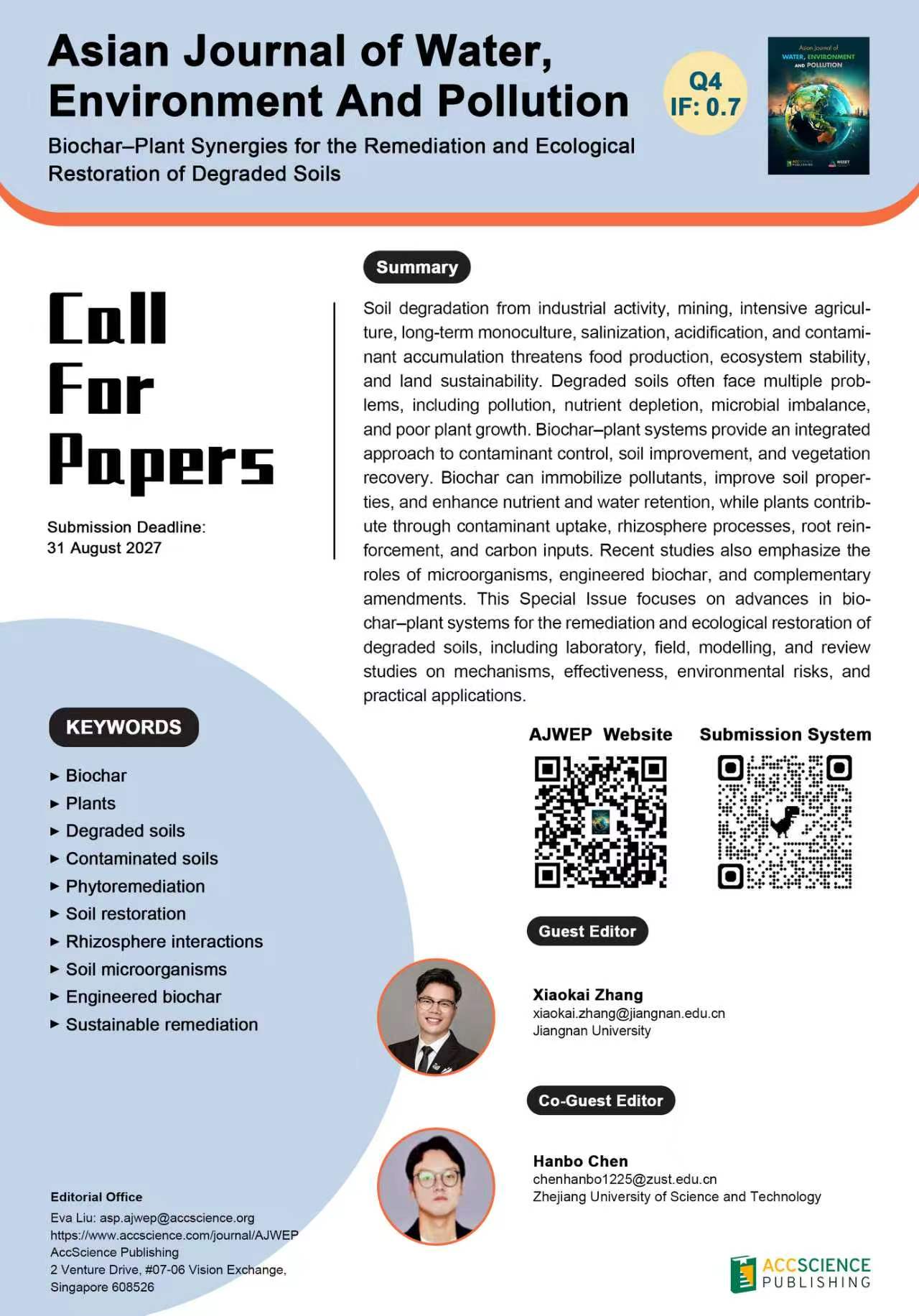
Soil degradation from industrial activity, mining, intensive agriculture, long-term monoculture, salinization, acidification, and contaminant accumulation threatens food production, ecosystem stability, and land sustainability. Degraded soils often face multiple problems, including pollution, nutrient depletion, microbial imbalance, and poor plant growth. Biochar–plant systems provide an integrated approach to contaminant control, soil improvement, and vegetation recovery. Biochar can immobilize pollutants, improve soil properties, and enhance nutrient and water retention, while plants contribute through contaminant uptake, rhizosphere processes, root reinforcement, and carbon inputs. Recent studies also emphasize the roles of microorganisms, engineered biochar, and complementary amendments. This Special Issue focuses on advances in biochar–plant systems for the remediation and ecological restoration of degraded soils, including laboratory, field, modelling, and review studies on mechanisms, effectiveness, environmental risks, and practical applications.