

Current concepts and new insights into early tumor initiation

Despite substantial research and clinical efforts, the mechanisms underlying tumor initiation and progression remain incompletely understood and, in some areas, controversial. In tumorigenesis, genetic mutations and abnormal gene expression can confer survival advantages on selected cells and contribute to reciprocal interactions with the tumor microenvironment (TME), thereby promoting malignant transformation. This process includes the progression from a precancerous lesion to primary cancer. To maintain their survival advantage, cancerous cells must progressively optimize and exploit the existing functions and regulatory systems of all tissue cells and maximize the body’s available resources. Exploiting existing physiological systems and resources supports the clonal expansion and high dominance of tumor cells after their formation, allowing tumor cells to proliferate and infiltrate adjacent tissue. Temporally, tumor cells exhibit the growth and change characteristics of ‘persistent dynamic biology’ and dynamically update themselves. The patient-specific TME is the basis of cancer recurrence and metastasis. In addition, we propose the “Dysregulated Adaptive Cascade Model” (DACM) to elucidate the early processes of tumorigenesis. Incorporating these different perspectives will enormously refresh our understanding of tumorigenesis. Conventional cancer-control strategies emphasize early detection, early diagnosis, and early treatment, but they do not fully address prevention at the precancerous stage. Therefore, we propose new cancer prevention principles: early detection of precancerous lesions, early determination of patient-specific TME, and early intervention to halt tumorigenesis. These new cancer prevention principles are of great significance to the prevention and control of the occurrence and development of tumors. In conclusion, the highlights of this article include: (i) proposing the novel “persistent dynamic biology” concept and the early tumorigenesis model DACM; (ii) establishing an integrated framework of the above concept and organoid culture for individualized cancer detection, diagnosis, and treatment; and (iii) proposing three innovative cancer prevention principles targeting precancerous lesions, patient-specific TME, and early intervention.
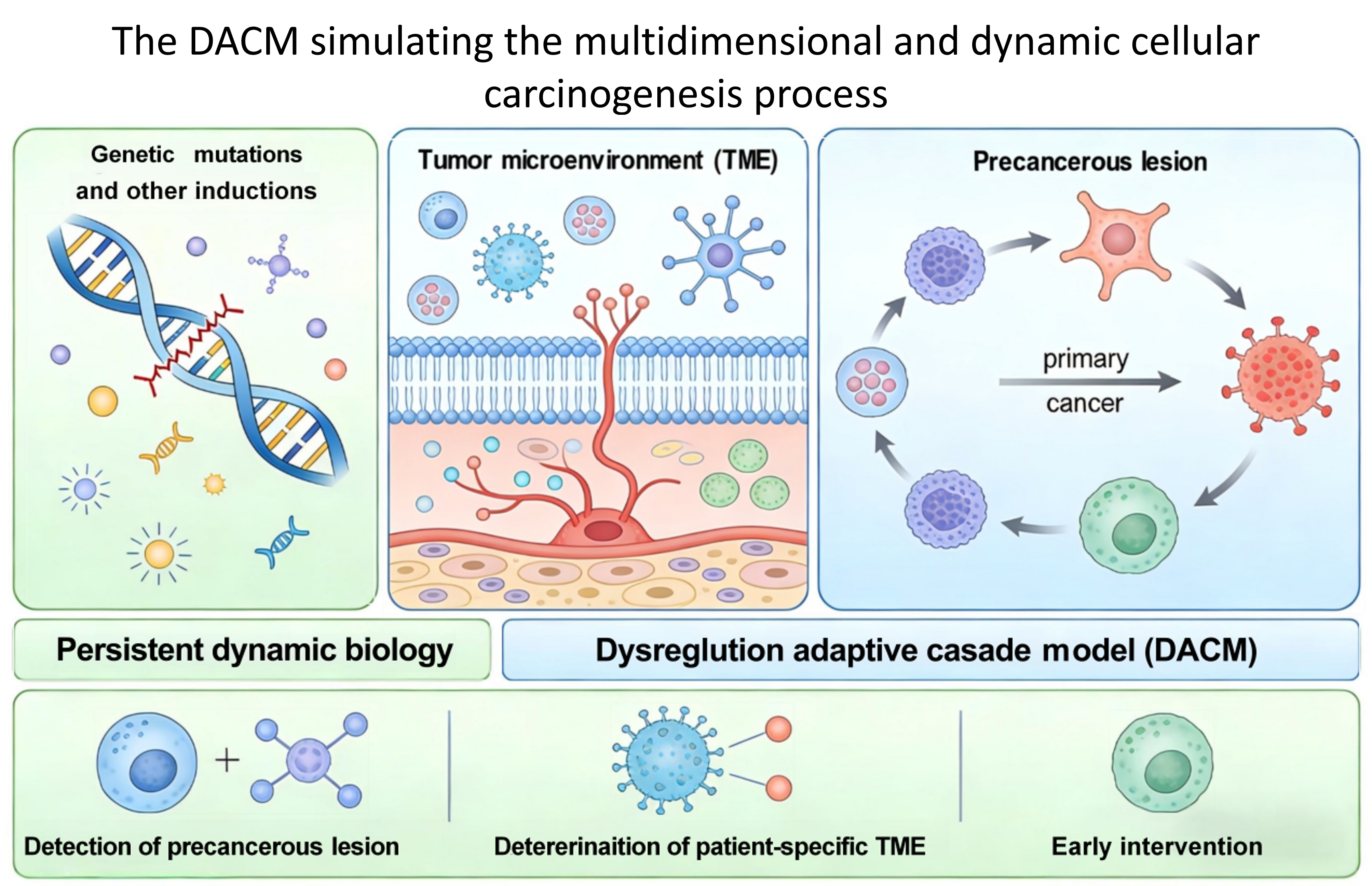
- Goodall GJ, Wickramasinghe VO. RNA in cancer. Nat Rev Cancer. 2021;21(1):22-36. doi: 10.1038/s41568-020-00306-0
- Ou HL, Hoffmann R, González-López C, Doherty GJ, Korkola JE, Muñoz-Espín D. Cellular senescence in cancer: from mechanisms to detection. Mol Oncol. 2021;15(10):2634-2671. doi: 10.1002/1878-0261.12807
- Hon MG, Tao S, Zhang L, et al. RNA sequencing: new technologies and applications in cancer research. J Hematol Oncol. 2020;13(1):166. doi: 10.1186/s13045-020-01005-x
- Cieślik M, Chinnaiyan MC. Cancer transcriptome profiling at the juncture of clinical translation. Nat Rev Genet. 2018;19(2):93-109. doi: 10.1038/nrg.2017.96
- Liu J, Peng YH, and Wei YW. Cell cycle on the crossroad of tumorigenesis and cancer therapy. Trends Cell Biol. 2022;32(1):30-44. doi: 10.1016/j.tcb.2021.07.001
- Park JH, Pyun YW, Park HW. Cancer Metabolism: Phenotype, Signaling and TherapeuticTargets. Cells. 2020;9(10):2308. doi: 10.3390/cells9102308
- Yin W, Wang JL, Jiang LL, Kang YJ. Cancer and stem cells. Exp Biol Med. 2021,246(16):1791-1801. doi: 10.1177/15353702211005390
- Vogelstein B, Papadopoulos N, Velculescu VE, Zhou SB, Diaz LA Jr, Kinzler KW. Cancer genome landscapes. Science. 2013;339(6127):1546-1558. doi: 10.1126/science.1235122
- Wang LH, Wu CF, Rajasekaran N, Shin YK. Loss of Tumor Suppressor Gene Function in Human Cancer: An Overview. Cell Physiol Biochem. 2018;51(6):2647-2693. doi: 10.1159/000495956
- García-Chico C, López-Ortiz S, Peñín-Grandes S, et al. Physical Exercise and the Hallmarks of Breast Cancer: A Narrative Review. Cancers. 2023;15(1):324. doi: 10.3390/cancers15010324
- Chen QW, Zhu XY, Li YY, Meng ZQ. Epigenetic regulation and cancer (review). Oncol Rep. 2014;31(2):523-532. doi: 10.3892/or.2013.2913
- Safa AR. Drug and apoptosis resistance in cancer stem cells: a puzzle with many pieces. Cancer Drug Resist. 2022;5(4):850-872. doi: 10.20517/cdr.2022.20
- Zhang JH, Zhang SH. Discovery of cancer common and specific driver gene sets. Nucleic Acids Res. 2017;45(10): e86. doi: 10.1093/nar/gkx089
- Wheatley SP, Altieri DC. Survivin at a glance. J Cell Sci. 2019,132(7):jcs223826. doi: 10.1242/jcs.223826
- Kitamura H, Motohashi H. NRF2 addiction in cancer cells. Cancer Sci. 2018;109(4):900-911. doi: 10.1111/cas.13537
- Banerjee K, Resat H. Constitutive activation of STAT3 in breast cancer cells: A review. Int J Cancer. 2016,138(11):2570-2578. doi: 10.1002/ijc.29923
- Ibiayi DJ, Alice TS. Tumour heterogeneity and resistance to cancer therapies. Nat Rev Clin Oncol. 2018;15(2):81-94. doi: 10.1038/nrclinonc.2017.166
- Kasikci Y, Gronemeyer H. Complexity against current cancer research: Are we on the wrong track? Int J Cancer. 2022;150(10):1569-1578. doi: 10.1002/ijc.33912
- Karpiński TM, Ożarowski M, Stasiewicz M. Carcinogenic microbiota and its role in colorectal cancer development. Semin Cancer Biol. 2022;86(Pt 3):420-430. doi: 10.1016/j.semcancer.2022.01.004
- Wang E, Aifantis I. RNA Splicing and Cancer. Trends Cancer. 2020;6(8):631-644. doi: 10.1016/j.trecan.2020.04.011
- Turajlic S, Sottoriva A, Graham T, Swanton C. Resolving genetic heterogeneity in cancer. Nat Rev Genet. 2019;20(7):404-416. doi: 10.1038/s41576-019-0114-6
- Chakraborty S, Hosen MI, Ahmed M, Shekhar HU. Onco- Multi-OMICS Approach: A New Frontier in Cancer Research. Biomed Res Int. 2018;2018:9836256. doi: 10.1155/2018/9836256
- Broit N, Johansson PA, Rodgers CB, et al. Meta-Analysis and Systematic Review of the Genomics of Mucosal Melanoma. Mol Cancer Res. 2021;19(6):991-1004. doi: 10.1158/1541-7786.MCR-20-0839
- Pitot HC. The Molecular Biology of Carcinogenesis. Cancer. 1993;72(3 Suppl):962-970.
- Shah A. Rethinking cancer initiation: The role of large-scale mutational events. Genes Chromosomes Cancer. 2024;63(1):e23213. doi: 10.1002/gcc.23213
- Parreno V, Loubiere V, Schuettengruber B, et al. Transient loss of Polycomb components induces an epigenetic cancer fate. Nature. 2024;629(8012):688-696. doi: 10.1038/s41586-024-07328-w
- O’Shaughnessy JA, Kelloff GJ, Gordon GB, et al. Treatment and prevention of intraepithelial neoplasia: an important target for accelerated new agent development. Clin Cancer Res. 2025;8(2):314-346. Available from: https://escholarship.org/uc/item/2sd5z2sg [Last accessed on October 12, 2025].
- Pavelescu LA, Mititelu-Zafiu NL, Vladareanu R, Curici A. Molecular Insights into HPV-Driven Cervical Cancer: Oncoproteins, Immune Evasion, and Epigenetic Modifications. Microorganisms. 2025;13(5):1000. doi: 10.3390/microorganisms13051000
- Zamurovic M, Tomic A, Pikula A, et al. Understanding the Dynamics of Human Papillomavirus and Diagnostic Discrepancies in Cervical Pathology: A Single Center Experience. Diagnostics. 2023;13(24):3614. doi: 10.3390/diagnostics 13243614
- Arai T, Ono S, Takubo K. Squamous Neoplastic Precursor Lesions of the Esophagus. Gastroenterol Clin North Am. 2024;53(1):25-38. doi: 10.1016/j.gtc.2023.09.004
- Simanshu DK, Nissley DV, McCormick F. RAS Proteins and Their Regulators in Human Disease. Cell. 2017;170(1):17-33. doi: 10.1016/j.cell.2017.06.009
- Wang GC, Zhao D, Spring DJ, DePinho RA. Genetics and biology of prostate cancer. Genes Dev. 2018;32(17-18):1105-1140. doi: 10.1101/gad.315739.118
- Peehl DM, Stamey TA. Oncogenes: A review with relevance to cancers of the urogenital tract. J Urol. 1986;135(5):897-904. doi: 10.1016/s0022-5347(17)45918-0
- Crespo I, Vital AL, Nieto AB, et al. Detailed characterization of alterations of chromosomes 7, 9, and 10 in glioblastomas as assessed by single-nucleotide polymorphism arrays. J Mol Diagn. 2011;13(6):634-647. doi: 10.1016/j.jmoldx.2011.06.003
- Gerstung M, Jolly C, Leshchiner I, et al. The evolutionary history of 2,658 cancers. Nature. 2020;578(7793):122-128. doi: 10.1038/s41586-019-1907-7
- Cerny WL, Mangold KA, Scarpelli DG. K-ras Mutation is an Early Event in Pancreatic Duct Carcinogenesis in the Syrian Golden Hamster 1. Cancer Res. 1992;52(16):4507-4513. Available from: https://pubmed.ncbi.nlm.nih.gov/1643642/ [Last accessed on October 12, 2025].
- Li WL, Feng CC, Zhou SH. A comparative analysis of mutational profiles between triple-negative breast cancer and non-triple-negative breast cancer. Discov Oncol. 2026;17(1). doi: 10.1007/s12672-026-04419-0
- Pere LA, Mane E. Epigenetic inactivation of tumour suppressor coding and non-coding genes in human cancer: an update. Open Biol. 2017;7(9):170152. doi: 10.1098/rsob.170152
- Issa JP. The Two-Hit Hypothesis Meets Epigenetics. Cancer Res.2022;82(7):1167-1169. doi: 10.1158/0008-5472.CAN-22-0405
- Félix RT. Cancer Epigenetics: An Overview. Arch Med Res. 2022;53(8):732-740. doi: 10.1016/j.arcmed.2022.11.003
- Kanwal R, Gupta K, Gupta S. Cancer epigenetics: an introduction. Methods Mol Biol. 2015;1238:3-25. doi: 10.1007/978-1-4939-1804-1_1
- Shin DY. TP53 Mutation in Acute Myeloid Leukemia: An Old Foe Revisited. Cancers. 2023;15(19):4816. doi: 10.3390/cancers15194816
- Knudsen ES, Pajak TF, Qeenan M, et al. Retinoblastoma and phosphate and tensin homolog tumor suppressors: impact on ductal carcinoma in situ progression. J Natl Cancer Inst. 2012;104(23):1825-1836. doi: 10.1093/jnci/djs446
- Zhang LT, Liu CR, Zhang B, et al. PTEN Loss Expands the Histopathologic Diversity and Lineage Plasticity of Lung Cancers Initiated by RB1/TP53 Deletion. J Thorac Oncol. 2023;18(3):324-338. doi: 10.1016/ j.jtho.2022.11.019
- Ren YZ, Zhang TT, Liu J, et al. MONet: cancer driver gene identification algorithm based on integrated analysis of multi-omics data and network models. Exp Biol Med. 2025;250:10399. doi: 10.3389/ebm.2025.10399
- Miquel AG, Ludovica C, Sophie B, et al. In silico RNA isoform screening to identify potential cancer driver exons with therapeutic applications. Nat Commun. 2024;15(1):7039. doi: 10.1038/s41467-024-51380-z
- Zhou W, Huang H, Teng Y, Hua R, Hu Y, Li X. KLF4 promotes cisplatin resistance by activating mTORC1 signaling in ovarian cancer. Discov Oncol. 2024;15(1):682. doi: 10.1007/s12672-024-01576-y
- Nguyen CT, Weisenberger DJ, Velicescu M, et al. Histone H3-Lysine 9 Methylation Is Associated with Aberrant Gene Silencing in Cancer Cells and Is Rapidly Reversed by 5-Aza-2′-deoxycytidine. Cancer Res. 2002;62(22):6456-6461. Available from: https://pubmed.ncbi.nlm.nih.gov/12438235/ [Last accessed on October 12, 2025].
- Chen L, Liu S, Tao YG. Regulating tumor suppressor genes: post-translational modifications. Signal Transduct Target Ther. 2020;5(1):90. doi: 10.1038/s41392-020-0196-9
- Geissler F, Nesic K, Kondrashova O, et al. The role of aberrant DNA methylation in cancer initiation and clinical impacts. Ther Adv Med Oncol. 2024;16:17588359231220511. doi: 10.1177/17588359231220511
- Bergholtz H, Norum JH, Lien TG, et al. Abstract PR05: Spatial transcriptomics of ductal carcinoma in situ reveal subtype specific differences in tumoral and stromal cell compartments. Cancer Res. 2024;84(3_Supplement_1):PR05. doi: 10.1158/1538-7445.advbc23-pr05
- Hu M, Peluffo G, Chen HY, Gelman R, Schnitt S, Polyak K. Role of COX-2 in epithelial-stromal cell interactions and progression of ductal carcinoma in situ of the breast. Proc Natl Acad Sci USA. 2009;106(9):3372-3377. doi: 10.1073/pnas.0813306106
- Zhang CY, Su ZY, Wang L, et al. Epigenetic blockade of neoplastic transformation by bromodomain and extra-terminal (BET) domain protein inhibitor JQ-1. Biochem Pharmacol. 2016;117:35-45. doi: 10.1016/j.bcp.2016.08.009
- Giordo R, Ahmadi FAM, Husaini NA, Al-Nuaimi NRAM, Ahmad SMS, Zayed H. microRNA 21 and long non-coding RNAs interplays underlie cancer pathophysiology: A narrative review. Noncoding RNA Res. 2024;9(3):831-852. doi: 10.1016/j.ncrna. 2024.03.013
- Zhu L, Zhao L, Wang Q, et al. Circulating exosomal miRNAs and cancer early diagnosis. Clin Transl Oncol. 2022;24(3):393-406. doi: 10.1007/s12094-021-02706-6
- Bell DW. Our changing view of the genomic landscape of cancer. J Pathol. 2010;220(2):231-43. doi: 10.1002/path.2645
- Kandoth C, McLellan MD, Vandin F, et al. Mutational landscape and significance across 12 major cancer types. Nature. 2013; 502(7471): 333-339. doi: 10.1038/nature12634
- Brown G. Oncogenes, Proto-Oncogenes, and Lineage Restriction of Cancer Stem Cells. Int J Mol Sci. 2021;22(18):9667. doi: 10.3390/ijms22189667
- Kontomanolis EN, Koutras A, Syllaios A, et al. Role of Oncogenes and Tumor-suppressor Genes in Carcinogenesis: A Review. Anticancer Res. 2020;40(11):6009-6015. doi: 10.21873/anticanres.14622
- Chang JC. Cancer stem cells: Role in tumor growth, recurrence, metastasis, and treatment resistance. Medicine. 2016;95(1 Suppl 1):S20-S25. doi: 10.1097/MD.0000000000004766
- Jiang Y, Zhan H. Communication between EMT and PD-L1 signaling: New insights into tumor immune evasion. Cancer Lett. 2020;468:72-81. doi: 10.1016/j.canlet.2019.10.013
- Greaves M, Maley CC. Clonal evolution in cancer. Nature. 2012,481(7381):306-313. doi: 10.1038/nature10762
- Black JRM, McGranahan N. Genetic and non-genetic clonal diversity in cancer evolution. Nat Rev Cancer. 2021;21(6):379-392. doi: 10.1038/s41568-021-00336-2
- Eunus SA, Shamima A, Sarker R, et al. Muhammad Torequl Islamet al. Targeting Ras-ERK cascade by bioactive natural products for potential treatment of cancer: an updated overview. Cancer Cell Int. 2022;22(1):246. doi: 10.1186/s12935-022-02666-z
- Ryspayeva D, Seyhan AA, MacDonald WJ, et al. Signaling pathway dysregulation in breast cancer. Oncotarget. 2025;16:168-201. doi: 10.18632/oncotarget.28701
- Schmitz AE, Udgata S, Johnson KA, Deming DA. The Precision-Guided Use of PI3K Pathway Inhibitors for the Treatment of Solid Malignancies. Biomedicines. 2025;13(6):1319. doi: 10.3390/biomedicines13061319
- Nair GG, Reindl K, Quadir M. Abstract B069: Inhibiting pancreatic cancer growth by dual targeting of ERK and PI3K signaling. Cancer Res. 2022;82:(22_Supplement):B069. doi: 10.1158/1538-7445.panca22-B069
- Zhang J, Guo H, Gong C, et al. Therapeutic targets in the Wnt signaling pathway: Treating cancer with specificity. Biochem Pharmacol. 2025;236:116848. doi: 10.1016/j.bcp.2025.116848
- Kapoor G, Prakash S, Jaiswal V, Singh AK. Chronic Inflammation and Cancer: Key Pathways and Targeted Therapies. Cancer Invest. 2025;43(1):1-23. doi: 10.1080/07357907.2024.2437614
- Sabaawy HE, Ryan BM, Khiabanian H, Pine SR. JAK/STAT of all trades: linking inflammation with cancer development, tumor progression and therapy resistance. Carcinogenesis. 2021;42(12):1411-1419. doi: 10.1093/carcin/bgab075
- Cartwright D, Kidd AC, Ansel S, Ascierto ML, Spiliopoulou P. Oncogenic Signalling Pathways in Cancer Immunotherapy: Leader or Follower in This Delicate Dance? Int J Mol Sci. 2025;26(9):4393. doi: 10.3390/ijms26094393
- Huynh TG, Morales-Oyarvide V, Campo MJ, et al. Programmed Cell Death Ligand 1 Expression in Resected Lung Adenocarcinomas: Association With Immune Microenvironment. J Thorac Oncol. 2016;11(11):1869-1878. doi: 10.1016/j.jtho.2016.08.134
- Chen N, Fang WF, Lin Z, et al. KRAS Mutation-Induced Upregulation of PD-L1 Mediates Immune Escape in Human Lung Adenocarcinoma. Cancer Immunol Immunother. 2017;66(9):1175-1187. doi: 10.1007/s00262-01 7-2005-z
- Aktar S, Masoudi M, Moti D, Gopalan V, Islam F, Lam AK. Genetic Alterations Involved in Immune Escape Mechanisms of Circulating Tumour Cells in Colorectal Carcinogenesis. Cancer Med. 2026;15(3):e71683. doi: 10.1002/cam4.71683
- Cha JH, Chan LC, Li CW, Hsu JL, Hung MC. Mechanisms Controlling PD-L1 Expression in Cancer. Molecular Cell. 2019;76(3):359-370. doi: 10.1016/j.molcel.2019.09.030
- Wee P, Wang ZX. Epidermal Growth Factor Receptor Cell Proliferation Signaling Pathways. Cancers. 2017;9(5):52. doi: 10.3390/cancers9050052
- Deng Z, Fan T, Xiao C, et al. TGF-beta signaling in health, disease, and therapeutics. Signal Transduct Target Ther. 2024 Mar;9(1):61. doi: 10.1038/s41392-024-01764-w
- Nagayama Y, Hamada K. Reprogramming of Cellular Metabolism and Its Therapeutic Applications in Thyroid Cancer. Metabolites. 2022;12(12):1214. doi: 10.3390/metabo12121214
- Li JQ, Eu JQ, Kong LR, et al. Targeting Metabolism in Cancer Cells and the Tumour Microenvironment for Cancer Therapy. Molecules. 2020;25(20):4831. doi: 10.3390/molecules25204831
- Kaczanowski S. Apoptosis: its origin, history, maintenance and the medical implications for cancer and aging. Phys Biol. 2016;13(3):031001. doi: 10.1088/1478-3975/13/3/ 031001
- Grubelnik G, Boštjančič E, Pavlič A, Kos M, Zidar N. NANOG expression in human development and cancerogenesis. Exp Biol Med. 2020;245(5):456-464. doi: 10.1177/1535370220905560
- Chatterjee S, Bhat V, Berdnikov A, et al. Paracrine Crosstalk between Fibroblasts and ERBreast Cancer Cells Creates an IL1β-Enriched Niche that Promotes Tumor Growth. iScience. 2019;19:388-401. doi: 10.1016/j.isci.2019.07.034
- Burks HE, Pokorny JL, Koetsier JL, et al. Melanoma cells repress Desmoglein 1 in keratinocytes to promote tumor cell migration. J Cell Biol. 2023;222(11):e202212031. doi: 10.1083/jcb.202212031
- Brown TP, Ganapathy V. Lactate/GPR81 signaling and proton motive force in cancer: Role in angiogenesis, immune escape, nutrition, and Warburg phenomenon. Pharmacol Ther. 2020;206:107451. doi: 10.1016/j.pharmthera.2019.107451
- Saha T, Dash C, Jayabalan R, et al. Intercellular nanotubes mediate mitochondrial trafficking between cancer and immune cells. Nat Nanotechnol. 2022;17(1):98-106. doi: 10.1038/s41565-021-01000-4
- Hardee ME, Zagzag D. Mechanisms of Glioma-Associated Neovascularization. Am J Pathol. 2012;181(4):1126-1141. doi: 10.1016/j.ajpath.2012.06.030
- Farc O, Cristea V. An overview of the tumor microenvironment, from cells to complex networks (Review). Exp Ther Med. 2021;21(1):96. doi: 10.3892/etm.2020.9528
- Martínez-Reyes I, Chandel NS. Cancer metabolism: looking forward. Nat Rev Cancer. 2021;21(10):669-680. doi: 10.1038/s41568-021-00378-6
- Ho WJ, Jaffee EM, Zheng L. The tumour microenvironment in pancreatic cancer - clinical challenges and opportunities. Nat Rev Clin Oncol. 2020;17(9):527-540. doi: 10.1038/s41571-020-0363-5
- Quail DF, Joyce JA. Microenvironmental regulation of tumor progression and metastasis. Nat Med. 2013;19(11):1423-1437. doi: 10.1038/nm.3394
- He X, Smith SE, Chen SY, et al. Tumor-initiating stem cell shapes its microenvironment into an immunosuppressive barrier and pro-tumorigenic niche. Cell Rep. 2021;36(10):109674. doi: 10.1016/j.celrep.2021.109674
- Roulis M, Kaklamanos A, Schernthanner M, et al. Paracrine orchestration of intestinal tumorigenesis by a mesenchymal niche. Nature. 2020;580(7804):524-529. doi: 10.1038/s41586-020-2166-3
- Maman S, Witz IP. A history of exploring cancer in context. Nat Rev Cancer. 2018;18(6):359-376. doi: 10.1038/s41568-018-0006-7
- Bazzichetto C, Conciatori F, Luchini C, et al. From Genetic Alterations to Tumor Microenvironment: The Ariadne’s String in Pancreatic Cancer. Cells. 2020;9(2):309. doi: 10.3390/cells9020309
- Huliák I, Bodai L, Czepán M, et al. Genetic, epigenetic and transcriptional comparison of esophagus tumorassociated and adjacent normal myofibroblasts. Oncol Rep. 2019;41:839-852. doi: 10.3892/or.2018.6909
- Bryant MK, Ward C, Gaber CE, Strassle PD, Ollila DW, Laks S. Decreased survival and increased recurrence in Merkel cell carcinoma significantly linked with immunosuppression. J Surg Oncol. 2020;122(4):653-659. doi: 10.1002/jso.26048
- Lopez A, Babadzhanov M, Cheraghlou S, et al. Immunosuppressed patients are at increased risk of local recurrence, metastasis, and disease specific death from cutaneous squamous cell carcinoma. Arch Dermatol Res. 2023;315(5):1429-1433. doi: 10.1007/s00403-022-02458-5
- Gajewski TF, Meng YR, Harlin H. Immune suppression in the tumor microenvironment. J Immunother. 2006;29(3):233-240. doi: 10.1097/01.cji.0000199193. 29048.56
- Vivarelli M, Cucchetti A, Piscaglia F, et al. Analysis of risk factors for tumor recurrence after liver transplantation for hepatocellular carcinoma: key role of immunosuppression. Liver Transpl. 2005;11(5):497-503. doi: 10.1002/lt.20391
- Xiang HD, Ramil CP, Hai J, et al. Cancer-Associated Fibroblasts Promote Immunosuppression by Inducing ROS-Generating Monocytic MDSCs in Lung Squamous Cell Carcinoma. Cancer Immunol Res. 2020;8(4):436-450. doi: 10.1158/2326-6066.CIR-19-0507
- Li YL, Jiang l, Chen Y, Li YY, et al. Specific lineage transition of tumor-associated macrophages elicits immune evasion of ascitic tumor cells in gastric cancer with peritoneal metastasis. Gastric Cancer. 2024;27(3):519-538. doi: 10.1007/s10120-024-01486-6
- Bi GS, Bian YY, Liang JQ, et al. Pan-cancer characterization of metabolism-related biomarkers identifies potential therapeutic targets. J Transl Med. 2021;19(1):219. doi: 10.1186/s12967-021-02889-0
- Mossa F, Robesti D, Sumankalai R, et al. Subtype and Site Specific-Induced Metabolic Vulnerabilities in Prostate Cancer. Mol Cancer Res. 2023;21(1):51-61. doi: 10.1158/1541-7786.MCR-22-0250
- Tang X, Lin C, Spasojevic I, et al. A joint analysis of metabolomics and genetics of breast cancer. Breast Cancer Res. 2014;16(4). doi: 10.1186/s13058-014-0415-9.
- Li QY, Zeng CY, Liu HZ, et al. Protein-Protein Interaction Inhibitor of SRPKs Alters the Splicing Isoforms of VEGF and Inhibits Angiogenesis. iScience. 2021;24(5):102423. doi: 10.1016/j.isci.2021.102423
- Kanthou C, Dachs GU, Lefley DV, et al. Tumour cells expressing single VEGF isoforms display distinct growth, survival and migration characteristics. PLoS ONE. 2014;9(8):e104015. doi: 10.1371/journal.pone.0104015
- Kajal K, Bose S, Panda AK, et al. Transcriptional regulation of VEGFA expression in T-regulatory cells from breast cancer patients. Cancer Immunol Immunother. 2021;70:1877-1891. doi: 10.1007/s00262-020-02808-0
- Wan XY, Guan SD, Hou YX, et al. FOSL2 promotes VEGF-independent angiogenesis by transcriptionnally activating Wnt5a in breast cancer-associated fibroblasts. Theranostics. 2021;11(10):4975-4991. doi: 10.7150/thno.55074
- Luo H, Xia X, Huang LB, et al. Pan-cancer single-cell analysis reveals the heterogeneity and plasticity of cancer-associated fibroblasts in the tumor microenvironment. Nat Commun. 2022;13(1):6619. doi: 10.1038/s41467-022-34395-2
- Guinn S,Tandurella, Lee JW, et al. Cancer-associated fibroblasts drive transcriptional changes in tumor cells from classical to basal phenotype and promote epithelial-to-mesenchymal transition in human pancreatic ductal adenocarcinoma. Cancer Res. 2024;84(2_Supplement):A042. doi: 10.1158/1538-7445.PANCA2023-A042
- Choi H, Sheng JT, Gao DC, et al. Transcriptome analysis of individual stromal cell populations identifies stroma-tumor crosstalk in mouse lung cancer model. Cell Rep. 2015;10(7):1187-1201. doi: 10.1016/j.celrep.2015.01.040
- Wu Y, Cheng Y, Wang X, Fan J, Gao Q. Spatial omics: Navigating to the golden era of cancer research. Clin Transl Med. 2022;12(1):e696. doi: 10.1002/ctm2.696
- Seferbekova Z, Lomakin A, Yates LR, Gerstung M. Spatial biology of cancer evolution. Nat Rev Genet. 2023;24(5):295-313. doi: 10.1038/s41576-022-00553-x
- Titmuss E, Vasconcelos JPS,Navarro FC, et al. Detection of post-surgical minimal residual disease (MRD) in colorectal cancer; preliminary results from the VICTORI study. Cancer Res. 2025;85(8_Supplement_1):3774. doi: 10.1158/1538-7445
- Gu XW, Liu FZ, Zhang JF, Nuermaimaiti N, Guo WJ, Dong XG. Single-cell transcriptome sequencing reveals tumor stem cells and their molecular characteristics in intrahepatic cholangiocarcinoma. Sci Rep. 2025;15(1):31170. doi: 10.1038/s41598-025- 17102-1
- Xiao MT, Zhang XY, Zhang DL, et al. Complex interaction and heterogeneity among cancer stem cells in head and neck squamous cell carcinoma revealed by single-cell sequencing. Front Immunol. 2022;13:1050951. doi: 10.3389/fimmu.2022.1050951
- Sato T, Vries RG, Snippert HJ, et al. Single Lgr5 stem cells build crypt-villus structures in vitro without a mesenchymal niche. Nature. 2009;459(7244):262-265. doi: 10.1038/nature07935
- Kretzschmar K, Clevers H. Organoids: modeling development and the stem cell niche in a dish. Dev Cell. 2016;38(6):590-600. doi: 10.1016/j.devcel.2016.08.014.
- Clevers H. Modeling development and disease with organoids. Cell. 2016;165(7):1586-1597. doi: 10.1016/j.cell.2016.05.082
- Kretzschmar K. Cancer research using organoid technology. J Mol Med. 2021;99(4):501-515. doi: 10.1007/s00109-020-01990-z
- Conteduca V, Sansonno D, Russi S, Dammacco F. Precancerous colorectal lesions. Int J Oncol. 2013;43(4):973-984. doi: 10.3892/ijo.2013.2041
- Tsehay B, Afework M. Precancerous lesions of the cervix and its determinants among Ethiopian women: Systematic review and meta-analysis. PLoS ONE. 2020;15(10):e0240353. doi: 10.1371/journal.pone.0240353
- Almazrouei KM, Mishra V, Pandya H, Sambhav K, Bhavsar SN. Tumor Microenvironment and Its Role in Cancer Progression: An Integrative Review. Cureus. 2025;17(9):e92707. doi: 10.7759/cureus.92707
- Akhatova A, Azizan A, Atageldiyeva K,et al. Prophylactic Human Papillomavirus Vaccination: From the Origin to the Current State. Vaccines. 2022;10(11):1912. doi: 10.3390/vaccines10111912
- Alzahrani MS. Implementing a School-Entry Mandate for the Human Papillomavirus Vaccine: Benefits and Challenges. Cureus. 2024;16(6):e62519. doi: 10.7759/cureus.62519
- Schoen RE, Boardman LA, Cruz-Correa M, et al. Randomized, Double-Blind, Placebo-Controlled Trial of MUC1 Peptide Vaccine for Prevention of Recurrent Colorectal Adenoma. Clin Cancer Res. 2023;29(9):1678-1688. doi: 10.1158/1078- 0432.CCR-22-3168
- Warrino DE, Olson WC, Scarrow MI, et al. Human papillomavirus L1L2-E7 virus-like particles partially mature human dendritic cells and elicit E7-specific T-helper responses from patients with cervical intraepithelial neoplasia or cervical cancer. Hum Immunol. 2005;66(7):762-772. doi: 10.1016/j.humimm.2005.04.006
- Quandt J, Schlude C, Bartoschek M, et al. Long-peptide vaccination with driver gene mutations in p53 and Kras induces cancer mutation-specific effector as well as regulatory T cell responses. Oncoimmunology. 2018;7(12):e1500671. doi: 10.1080/ 2162402X.2018.1500671
- Zhu B, Chen PJ, Aminu M, et al. Spatial and multiomics analysis of human and mouse lung adenocarcinoma precursors reveals TIM-3 as a putative target for precancer interception. Cancer Cell. 2025;43(6):1125-1140.e10. doi: 10.1016/j.ccell.2025.04.003
- Wolff A, Maennicke J, Huehns M, et al. Immune-checkpoint inhibition for tumor prevention in a preclinical Lynch syndrome model. Transl Oncol. 2025;60:102472. doi: 10.1016/j.tranon.2025.102472
- Shackelford DB, Shaw RJ. The LKB1-AMPK pathway: metabolism and growth control in tumour suppression. Nat Rev Cancer. 2009;9(8):563-575. doi: 10.1038/nrc 2676
- Pelicano H, Martin DS, Xu RH, Huang P. Glycolysis inhibition for anticancer treatment. Oncogene. 2006;25(34):4633-446. doi: 10.1038/sj.onc.1209597
- Fhu CW, Ali A. Fatty Acid Synthase: An Emerging Target in Cancer. Molecules. 2020;25(17):3935. doi: 10.3390/molecules25173935
- Jain RK. Normalization of tumor vasculature: an emerging concept in antiangiogenic therapy. Science. 2005;307(5706):58-62. doi: 10.1126/science.1104819
- Li JN, Liu HL, Guo QL, et al. Single-cell screens identify ADAM12 as a fibroblast checkpoint impeding anti-tumor immunity. Cancer Cell. 2026;44(2):424-442.e14. doi: 10.1016/j.ccell.2025.12.018
- Chanmee T, Ontong P, Konno K, Itano N. Tumor-associated macrophages as major players in the tumor microenvironment. Cancers. 2014;6(3):1670-1690. doi: 10.3390/cancers6031670
- Alečković M, Cristea S, Alcazar CRGD, et al. Breast cancer prevention by short-term inhibition of TGFβ signaling. Nat Commun. 2022;13(1):7558. doi: 10.1038/s41467-022-35043-5
- Silverman LR, Demakos EP, Peterson BL, et al. Randomized controlled trial of azacitidine in patients with the myelodysplastic syndrome: a study of the cancer and leukemia group B. J Clin Oncol. 2002;20(10):2429-2440. doi: 10.1200/JCO.2002.04.117
- Lourenço DFN, Deberaldini MG, Gomes D, et al. Histone Deacetylase Inhibitors as Therapeutic Interventions on Cervical Cancer Induced by Human Papillomavirus. Front Cell Dev Biol. 2021;8:592868. doi: 10.3389/fcell.2020.592868
- Finzer P, Ventz R, Kuntzen C, Seibert N, Soto U, Rösl FK. Growth arrest of HPV-positive cells after histone deacetylase inhibition is independent of E6/E7 oncogene expression. Virology. 2002;304(2):265-273. doi: 10.1006/viro.2002.1667
- Banerjee NS, Moore DW, Broker TR, Chow LT. Vorinostat, a pan-HDAC inhibitor, abrogates productive HPV-18 DNA amplification. Proc Natl Acad Sci USA. 2018;115(47):E11138-E11147. doi: 10.1073/pnas.1801156115
- Wen YQ, Ye SY, Li ZS, et al. HDAC6 inhibitor ACY-1215 enhances STAT1 acetylation to block PD-L1 for colorectal cancer immunotherapy. Cancer Immunol Immunother. 2024;73(1):7. doi: 10.1007/s00262-023-03624-y
- Oyama K, Fujimura T, Ninomiya I, et al. A COX-2 inhibitor prevents the esophageal inflammation-metaplasia-adenocarcinoma sequence in rats. Carcinogenesis. 2005;26(3):565-570. doi: 10.1093/carcin/bgh340
- Lucrecia MR, María CTS, Claudia MGC, Saúl VT. Celecoxib, a cyclooxygenase-2 inhibitor, prevents induction of liver preneoplastic lesions in rats. J Hepatol. 2005;43(4):653-660. doi: 10.1016/j.jhep.2005.02.032
- Jiang C, Song YR, Rorive S, et al. Innate immunity and the NF-κB pathway control prostate stem cell plasticity, reprogramming and tumor initiation. Nat Cancer. 2025;6(9):1537-1558. doi: 10.1038/s43018-025-00994-3