
Ozone therapy and blood oxygen transport: A comprehensive narrative review of physiological mechanisms and clinical aspects

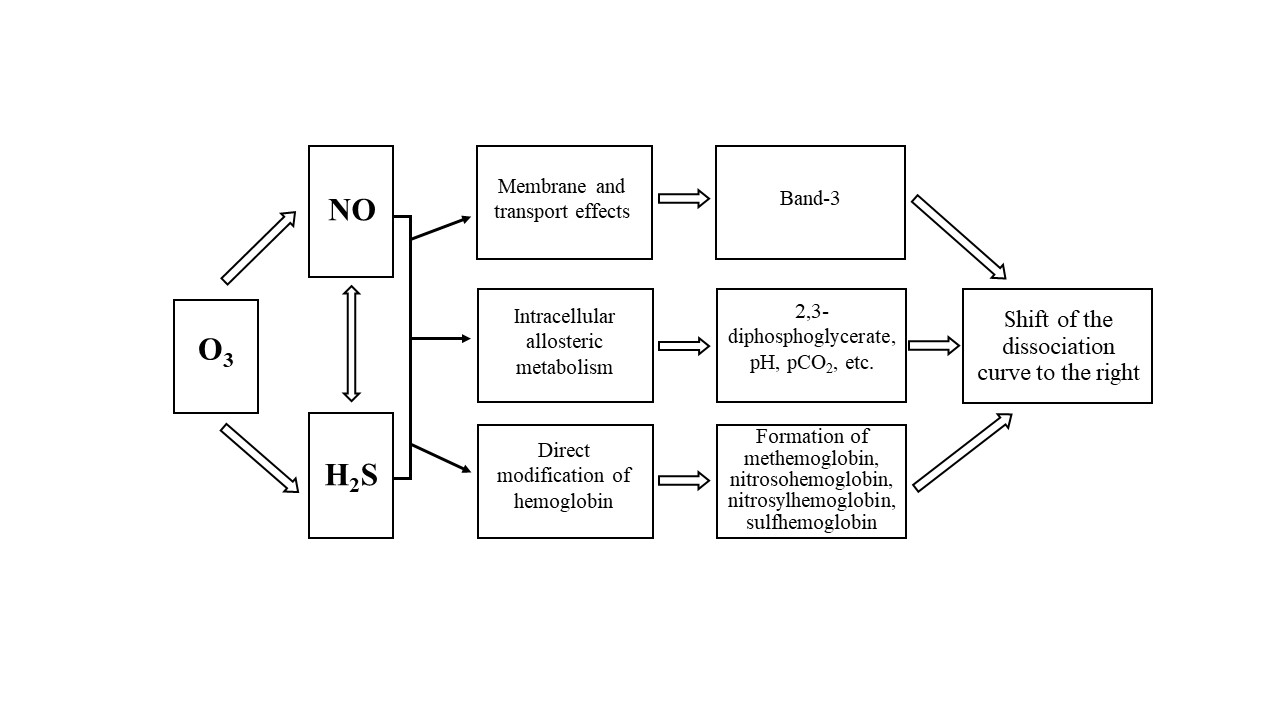
Ozone therapy is increasingly used across clinical fields, yet the biological mechanisms underlying its effects on tissue oxygenation remain incompletely understood. This work aimed to synthesise current evidence on how ozone affects blood oxygen transport, focusing on haemoglobin oxygen affinity, gasotransmitters (nitric oxide [NO], hydrogen sulfide [H2S]), erythrocyte rheology, and oxidative–antioxidant balance. We searched PubMed, Scopus, and Web of Science (1995–2026; search date: August 2026) using terms related to ozone therapy, oxygen transport, haemoglobin affinity, p50, 2,3-diphosphoglycerate [2,3-DPG], NO, H2S, and erythrocyte deformability. We included peer-reviewed in vitro, animal, and human studies, as well as relevant narrative and systematic reviews. We applied no language restriction a priori; however, inclusion was practically limited to languages accessible to the authors. Two authors performed study selection and data extraction; they resolved discrepancies through discussion. At therapeutic concentrations, ozone induces mild, transient oxidative stress that may trigger adaptive responses, including a rightward shift of the oxyhaemoglobin dissociation curve (decreased oxygen affinity), increased erythrocyte deformability, and upregulation of antioxidant enzymes. These effects appear dose-dependent and are most consistently observed in in vitro and animal models, with more limited and heterogeneous human mechanistic data. Proposed mechanisms involve NO, H2S, 2,3-DPG, and adenosine triphosphate, but their relative contributions in humans remain uncertain. Available experimental and early clinical data suggest that NO- and H2S-mediated modulation of haemoglobin affinity, improved erythrocyte rheology, and enhanced antioxidant capacity may contribute to ozone’s effects on oxygen transport. Robust, standardised human studies are needed to clarify mechanisms and clinical relevance.
Akbudak, I. H., Kucukatay, V., Kilic-Erkek, O., & Gokalp, G. (2019). Investigation of the effects of major ozone autohemotherapy application on erythrocyte deformability and aggregation. Clinical Hemorheology and Microcirculation, 71(3), 365-372. https://doi.org/10.3233/CH-180417
Alimohammadi, M., Khoshnazar, S. M., Khajehpour, H., Einollahi, B., & Hushmandi, K. (2025). Effect of ozone therapy on oxidative stress indices in chronic inflammatory diseases: A systematic review and meta-analysis of randomized clinical trials. Advances in Redox Research, 17, 100143. https://doi.org/10.1016/j.arres.2025.100143
Cattel, F., Giordano, S., Bertiond, C., Lupia, T., Corcione, S., Scaldaferri, M., Angelone, L., & De Rosa, F.G. (2021). Ozone therapy in COVID-19: A narrative review. Virus Research, 291, 198207. https://doi.org/10.1016/j.virusres.2020.198207
Cenci, A., Macchia, I., La Sorsa, V., Sbarigia, C., Di Donna, V., & Pietraforte, D. (2022). Mechanisms of action of ozone therapy in emerging viral diseases: Immunomodulatory effects and therapeutic advantages with reference to SARS-CoV-2. Frontiers in Microbiology, 13, 871645. https://doi.org/10.3389/fmicb.2022.871645
Coppola, L., Giunta, R., Verrazzo, G., Luongo, C., Sammartino, A., Vicario, C., & Giugliano, D. (1995). Influence of ozone on haemoglobin oxygen affinity in type-2 diabetic patients with peripheral vascular disease: In vitro studies. Diabetes & Metabolism, 21(4), 252-255.
de Sire, A., Marotta, N., Ferrillo, M., Agostini, F., Sconza, C., Lippi, L., Respizzi, S., Giudice, A., Invernizzi, M., & Ammendolia, A. (2022). Oxygen-Ozone Therapy for Reducing Pro-Inflammatory Cytokines Serum Levels in Musculoskeletal and Temporomandibular Disorders: A Comprehensive Review. International Journal of Molecular Sciences, 23(5), 2528. https://doi.org/10.3390/ijms23052528
Fernández-Cuadros, M.E., Albaladejo-Florín, M.J., Peña-Lora, D., Álava-Rabasa, S., & Pérez-Moro, O.S. (2020). Ozone (O3) and SARS-CoV-2: Physiological bases and their therapeutic possibilities according to COVID-19 evolutionary stage. SN Comprehensive Clinical Medicine, 2(8), 1094-1102. https://doi.org/10.1007/s42399-020-00328-7
Franzini, M., Valdenassi, L., Ricevuti, G., Chirumbolo, S., Depfenhart, M., Bertossi, D., & Tirelli, U. (2020). Oxygen–ozone immunoceutical therapy for patients with COVID-19: Preliminary evidence reported. International Immunopharmacology, 88, 106879. https://doi.org/10.1016/j.intimp.2020.106879
Giunta, R., Coppola, A., Luongo, C., Sammartino, A., Guastafierro, S., Grassia, A., Giunta, L., Mascolo, L., Tirelli, A., & Coppola, L.. (2001). Ozonized autohemotransfusion improves hemorheological parameters and oxygen delivery to tissues in patients with peripheral occlusive arterial disease. Annals of Hematology, 80(12), 745-748. https://doi.org/10.1007/s002770100377
Harapan, B. N., & Harapan, T. (2023). The role of ozone therapy in severe acute respiratory syndrome coronavirus 2 (SARS-CoV-2) infection and coronavirus disease 2019 (COVID-19): A review. Medical Gas Research, 13(4), 165-171. https://doi.org/10.4103/2045-9912.369237
Inguscio, C.R., Cisterna, B., Carton, F., Barberis, E., Manfredi, M., & Malatesta, M. (2023). Modifications of blood molecular components after treatment with low ozone concentrations. International Journal of Molecular Sciences, 24(24), 17175. https://doi.org/10.3390/ijms242417175
Inguscio, C. R., Pozza, E. D., Dando, I., Tabaracci, G., Angelini, O., Picotti, P. M., Malatesta, M., & Cisterna, B. (2026). Dose-related structural and functional modifications of mitochondria are induced in vitro by low ozone concentrations. International Journal of Molecular Sciences, 27(5), 2267. https://doi.org/10.3390/ijms27052267
Jeyaraman, M., Jeyaraman, N., Ramasubramanian, S., Balaji, S., Nallakumarasamy, A., Patro, B. P., & Migliorini, F. (2024). Ozone therapy in musculoskeletal medicine: A comprehensive review. European Journal of Medical Research, 29(1), 398. https://doi.org/10.1186/s40001-024-01976-4
Khalid, A., Sala, A., Forlino, A., & Besio, R. (2026). Impact of oxygen–ozone mixture on cellular functions: A biochemical perspective across cell types. Molecular Medicine, 32, 82. https://doi.org/10.1186/s10020-026-01475-8
Magalhaes, F. N. O., Dotta, L., Sasse, A., Teixera, M. J., & Fonoff, E. T. (2012). Ozone therapy as a treatment for low back pain secondary to herniated disc: A systematic review and meta-analysis of randomized controlled trials. Pain Physician, 15(2), E115-E129. https://doi.org/10.36076/ppj.2012/15/E115
Martinez-Sanchez, G., Al-Dalain, S. M., Menendez, S., Re, L., Giuliani, A., & Leon, O. S. (2005). Therapeutic efficacy of ozone in patients with diabetic foot. European Journal of Pharmacology, 523(1–3), 151-161. https://doi.org/10.1016/j.ejphar.2005.08.020
Martinez-Sanchez, G., Delgado-Roche, L., Diaz-Batista, A., Perez-Davison, G., & Re, L. (2012). Effects of ozone therapy on haemostatic and oxidative stress index in coronary artery disease. European Journal of Pharmacology, 691(1–3), 156-162. https://doi.org/10.1016/j.ejphar.2012.07.010
Osikov, M.V., Davydova, E.V., Kaigorodtseva, N.V., Fedosov, A.A., Il’inykh, M.A., Savchuk, K.S., & Vorgova, L.V. (2022). Influence of rectal ozone application on the intensity of free radical destruction of lipids and intestinal proteins in the dynamics of experimental colitis. Bulletin of Experimental Biology and Medicine, 173(1), 24-27. https://doi.org/10.1007/s10517-022-05485-4
Rahimzadeh, P., Imani, F., Azad Ehyaei, D., & Faiz, S. H. R. (2022). Efficacy of oxygen–ozone therapy and platelet-rich plasma for the treatment of knee osteoarthritis: A meta-analysis and systematic review. Anesthesia and Pain Medicine, 12(4), e127121. https://doi.org/10.5812/aapm-127121
Re, L., Mawsouf, M. N., Menendez, S., Leon, O. S., Sanchez, G. M., & Hernandez, F. (2008). Ozone therapy: Clinical and basic evidence of its therapeutic potential. Archives of Medical Research, 39(1), 17-26. https://doi.org/10.1016/j.arcmed.2007.07.005
Smith, N. L., Wilson, A. L., Gandhi, J., Vatsia, S., & Khan, S. A. (2017). Ozone therapy: An overview of pharmacodynamics, current research, and clinical utility. Medical Gas Research, 7(3), 212-219. https://doi.org/10.4103/2045-9912.215752
Travagli, V., & Iorio, E. L. (2023). The biological and molecular action of ozone and its derivatives: State-of-the-art, enhanced scenarios, and quality insights. International Journal of Molecular Sciences, 24(10), 8582. https://doi.org/10.3390/ijms24108465
Viebahn-Haensler, R., & León Fernández, O. S. (2021). Ozone in Medicine. The Low-Dose Ozone Concept and Its Basic Biochemical Mechanisms of Action in Chronic Inflammatory Diseases. International Journal of Molecular Sciences, 22(15), 7890. https://doi.org/10.3390/ijms22157890
Wen, Q., Liu, D., Wang, X., Zhang, Y., Fang, S., Qiu, X., & Chen, Q. (2022). A systematic review of ozone therapy for treating chronically refractory wounds and ulcers. International Wound Journal, 19(4), 853-870. https://doi.org/10.1111/iwj.13687
Zinchuk, V. V., & Biletskaya, E. S. (2023a). Impact of ozone on the oxygen affinity blood properties and prooxidant–antioxidant balance under effect of H2S-generating system. Journal of Evolutionary Biochemistry and Physiology, 59, 960-968. https://doi.org/10.1134/S0022093023030274
Zinchuk, V., & Biletskaya, E. (2023b). Effect of ozone on oxygen transport and pro-oxidant–antioxidant balance of red blood cell suspension. Acta Chimica Slovenica, 70(2), 226-230. https://doi.org/10.17344/acsi.2023.8032